Viewing results 1 - 6 of 53
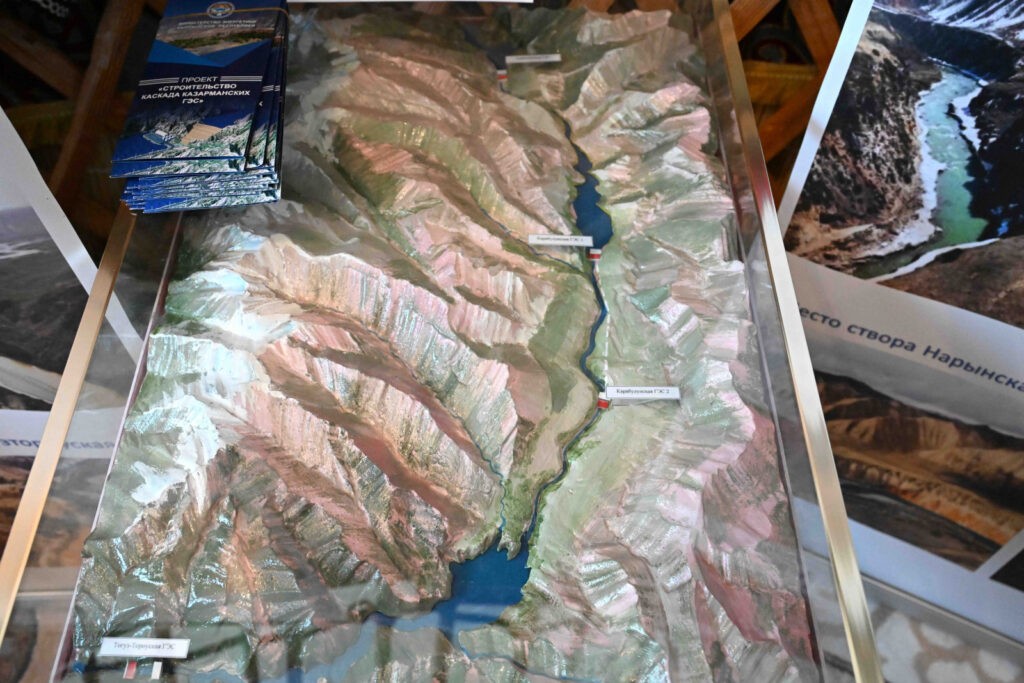
The construction of the Kambarata hydroelectric power plant (HPP)-1 on Kyrgyzstan’s Naryn River was at the forefront at the Third Tashkent International Investment Forum attended by Uzbekistan’s Prime Minister Abdulla Aripov and representatives of international organizations and financial institutions. At the panel session on energy, on 2 May, Chairman of the Cabinet of Ministers of the Kyrgyz Republic Akylbek Japarov, outlined the master plan behind Kambarata HPP-1, investment indicators, and its potential benefits to water resources management and Central Asia’s electricity market. Japarov explained that generated by hydropower, almost all electricity in Kyrgyzstan is green, but stated, “We have so far used only about 13% of our existing potential. Taking into account global challenges and trends in the development of green energy, the Cabinet of Ministers of the Kyrgyz Republic has actively begun to implement infrastructure energy projects. The large-scale construction of Kambarata HPP-1, strategically important for the entire region, will up the pace of development in this field.” Kyrgyzstan, Kazakhstan, and Uzbekistan recently signed a Roadmap for joint construction of Kambarata HPP-1. If completed, Kambarata HPP-1 will have a capacity of 1860 MW and will generate 5.6 billion kWh of electricity per year. A forum for further discussions on foreign investment in the project is scheduled for early June in Vienna . Turning to plans for hydroelectric power plants elsewhere in the country, Kyrgyzstan’s Prime Minister, stated, “Work is underway to implement projects for the construction of a cascade of hydroelectric power plants on the Chatkal River, as well as a cascade of Kazarman hydroelectric power plants on the Naryn River. Our country needs foreign investment to develop energy, which is the main sector of the economy. We invite foreign companies to consider the possibility of participating in the construction of small and medium-sized hydroelectric power stations and renewable energy sources in Kyrgyzstan.”
At a meeting with President Kassym-Jomart Tokayev on April 8th, Kazakhstan’s Minister of Industry and Construction Kanat Sharlapayev reported on plans regarding geological prospecting and the use of subsoil. According to the minister, Kazakhstan is poised to auction rights for subsoil use at 100 solid minerals deposits. Sharlapayev also highlighted a 2.5-fold growth in private investment in geological exploration of solid minerals. With the introduction of the digital platform “E-Qazyna.kz,” auctions are now conducted electronically, resulting in a significant increase in transparency and accessibility. In a statement, the minister stressed, “Participation in the auctions by major global companies, including Rio Tinto and Fortescue, indicates increasing competition for the opportunity to explore potentially resource-rich, but as yet undeveloped fields in Kazakhstan.” Major international companies including Arras Minerals, Rio Tinto, IG Kazakhstan, Fortescue, East Star Resources, Pallas Resources, Sarytogan Graphite, and Esan Eczacibasi have now invested at least 41 billion tenge on the excavation of areas amounting to 25 thousand square kilometres.
Following a meeting on March 12th with the Board of Directors of Kazakh Invest, Kazakhstan’s Prime Minister Olzhas Bektenov announced that foreign investment had been secured for the launch of over 40 projects this year. Kazakh Invest, a national company aimed to attract foreign investment in priority sectors of the economy, currently supports 200 projects. Worth $27.3 billion, the projects have created 68,800 jobs. One of the most significant projects is the manufacture of medical equipment by the American company GE Healthcare in Astana. Products include ultrasound and CT machines for Kazakhstan’s hospitals as well as for export. The American company also plans to provide educational programs for staff in the Kazakh healthcare system. Other forthcoming projects include the production of anticancer drugs by the Swiss company Roche in Almaty, and the manufacture of ceramic tiles, dry building mixes and construction adhesives by the Austrian company Lasselsberger in Astana. The latter’s new plant will create over 200 jobs and reduce the country’s dependence on imported products. As instructed by the prime minister, Kazakh Invest is focused on attracting investment in projects with high added value; specifically, grain processing, the production of in-demand types of plastics, and the domestic production of oil and gas equipment. Looking ahead, Bektenov stressed that to achieve the target set by the head of state to increase the economy to $450 billion by 2029, at least $150 billion of foreign investment must be attracted during the intervening period.