• KGS/USD = 0.01144 0%
  • KZT/USD = 0.00205 0%
  • TJS/USD = 0.10722 0%
  • UZS/USD = 0.00008 0%
  • TMT/USD = 0.28490 0%
  • KGS/USD = 0.01144 0%
  • KZT/USD = 0.00205 0%
  • TJS/USD = 0.10722 0%
  • UZS/USD = 0.00008 0%
  • TMT/USD = 0.28490 0%
  • KGS/USD = 0.01144 0%
  • KZT/USD = 0.00205 0%
  • TJS/USD = 0.10722 0%
  • UZS/USD = 0.00008 0%
  • TMT/USD = 0.28490 0%
  • KGS/USD = 0.01144 0%
  • KZT/USD = 0.00205 0%
  • TJS/USD = 0.10722 0%
  • UZS/USD = 0.00008 0%
  • TMT/USD = 0.28490 0%
  • KGS/USD = 0.01144 0%
  • KZT/USD = 0.00205 0%
  • TJS/USD = 0.10722 0%
  • UZS/USD = 0.00008 0%
  • TMT/USD = 0.28490 0%
  • KGS/USD = 0.01144 0%
  • KZT/USD = 0.00205 0%
  • TJS/USD = 0.10722 0%
  • UZS/USD = 0.00008 0%
  • TMT/USD = 0.28490 0%
  • KGS/USD = 0.01144 0%
  • KZT/USD = 0.00205 0%
  • TJS/USD = 0.10722 0%
  • UZS/USD = 0.00008 0%
  • TMT/USD = 0.28490 0%
  • KGS/USD = 0.01144 0%
  • KZT/USD = 0.00205 0%
  • TJS/USD = 0.10722 0%
  • UZS/USD = 0.00008 0%
  • TMT/USD = 0.28490 0%

Viewing results 1 - 6 of 1117

Kazakhstan Advances Digital Transformation with U.S. Partnerships

Kazakhstan, Central Asia’s largest economy, is rapidly positioning itself as a regional leader in digital transformation. Increasingly, United States partners no longer view Kazakhstan solely as a source of natural resources. Instead, future cooperation is expected to expand into digital technologies and artificial intelligence (AI). Advances in Digitalization In October, Kazakhstan reaffirmed its digital ambitions with a major technological breakthrough. Kaspi, the country’s leading fintech firm and a systemically important bank, launched Kaspi Alaqan, a palm-based payment system that requires no phone, card, or internet connection. The service will debut in December 2025 through dedicated ATMs in Almaty before expanding nationwide. Analysts say the innovation puts Kaspi on par with Amazon One and China’s WeChat, highlighting Kazakhstan’s readiness to adopt cutting-edge global technologies. Traditionally associated with oil, gas, and uranium, Kazakhstan is now investing heavily in becoming Central Asia’s digital hub, an evolution that presents strategic opportunities for the U.S. Partnerships in digital governance, AI, and innovation ecosystems align closely with Washington vision for expanded cooperation in Eurasia. According to the United Nations, Kazakhstan ranked 24th globally in digital development as of June 2025, placing in the top 10 for online public services. Services such as school enrollment, vehicle registration, and passport issuance have been fully digitized, requiring minimal citizen effort. In some cases, the process is faster than in many Western countries. Kazakhstan’s government aims to double its GDP to $450 billion by 2029, a target that will require more than a 2.5-fold increase in investment. Digital technologies are central to this strategy. To manage this transformation, a new Investment Board was established in October 2025 to oversee large-scale projects and determine economic priorities. In September, the Mazhilis (lower house of parliament) passed a landmark law on artificial intelligence. Deputies highlighted fairness, transparency, and the protection of personal data as key legal principles. The newly launched National Artificial Intelligence Platform hosts over 100 AI agents that support e-government functions and expand access to technology. Additionally, in July, Kazakhstan introduced a supercomputer powered by NVIDIA H200 GPUs. With performance reaching 2 exaflops (FP8), it is the most powerful computing system in Central Asia. Startups, universities, and research centers now have access to this infrastructure. The language models KazLLM and Alem LLM have also been introduced, capable of generating content in Kazakh, Russian, English, and Turkish. For the U.S., Kazakhstan’s AI ecosystem offers a valuable partner for collaborative research, ethical framework development, and State Department–supported initiatives using AI for sustainable development. Investing in the Future U.S.–Kazakhstan cooperation in digital innovation is already accelerating. In September, Amazon announced a $200 million investment in Kazakhstan’s internet infrastructure. A distribution agreement with Kazakhtelecom will bring Amazon’s Kuiper satellite network to the republic, improving connectivity and driving economic growth. Additionally, 24 startups from Central Eurasia have joined U.S. accelerator programs such as AlchemistX and Silicon Valley Residency. These initiatives, launched in September in Palo Alto, connect regional teams with U.S. venture capital and technology ecosystems. Kazakhstan is also advancing blockchain infrastructure. Astana recently launched the...

Kazakhstan Expands Grain Exports to Europe and Beyond

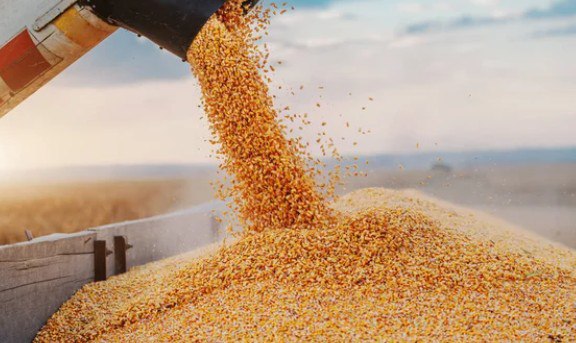
Kazakhstan is entering new grain export markets, including the United Kingdom, Norway, and Portugal, as part of a broader push to diversify its agricultural trade, Agriculture Minister Aidarbek Saparov has announced. Saparov reported that the 2025 harvest has been one of the strongest in recent years, with 27.1 million tons of grain crops harvested from 16 million hectares. The average yield reached 17 centners per hectare, and wheat production totaled 20.3 million tons, an increase of 500,000 tons compared to last year. “We plan to maintain the level of wheat exports. This year, we have begun supplying markets that have not traditionally received Kazakh grain, Belgium, Portugal, Poland, Norway, the United Kingdom, Vietnam, the United Arab Emirates, as well as Morocco, Algeria, and Egypt in North Africa. Additionally, we have resumed shipments to Iran, Azerbaijan, Armenia, and Georgia,” Saparov said. Kazakhstan exported 13.4 million tons of grain during the last marketing year (September 1, 2024, August 31, 2025), a 47% increase compared to the 2023-2024 season. As of the latest data, 2.2 million tons of grain from the new harvest have already been exported, marking a 21% year-on-year increase. New Investments in Deep Grain Processing To support long-term export potential and value-added production, Kazakhstan is implementing five major investment projects aimed at deep grain processing. According to the Ministry of Agriculture, these initiatives will enable the additional processing of approximately 2.5 million tons of grain products annually. Among the most significant is a $1.5 billion investment by China’s Hopefull Grain & Oil Group to build a deep grain processing plant in the Akmola region. The project was discussed by Deputy Minister Yermek Kenzhehanuly and Hopefull’s local project manager, Yao Yao. The project will be rolled out in two phases. The first phase includes constructing a combined heat and power plant to generate renewable energy. The second phase will launch a high-tech facility to produce citric acid, glucose-fructose syrups, bioethanol, and protein concentrates. The company is also considering establishing an industrial park equipped with transport, energy, and engineering infrastructure. Focus on the Chinese Market As previously reported by The Times of Central Asia, Kazakhstan also aims to increase grain exports to China to two million tons per year. This expansion into Asia complements the country’s growing presence in European and Middle Eastern markets.

Kazakhstan Courts Global Investment with Critical Minerals and Green Energy Push

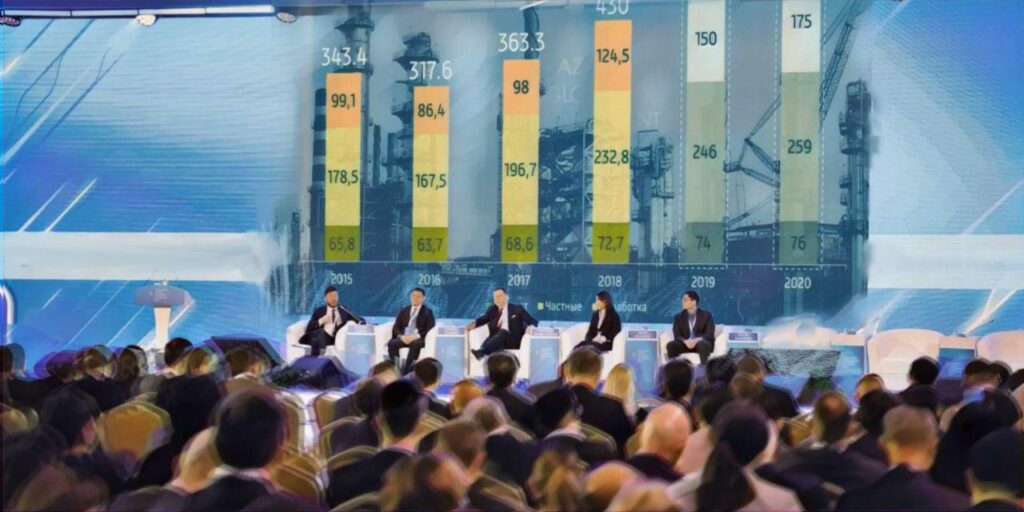
Since gaining independence, Kazakhstan has established itself as a reliable global supplier of raw materials. Today, the country's economic structure is evolving as it positions itself as a high-added-value hub for industrial production. These developments are closely tied to Kazakhstan’s transition to a green economy and its role in global supply chains for critical minerals. Creating a Favorable Investment Climate Kazakhstan has taken significant steps to create a transparent, predictable investment environment and enhance its business competitiveness. Among these measures is the introduction of investment agreements that guarantee legislative stability for up to 25 years for large projects exceeding $60 million. The legal framework has also undergone reforms, procurement procedures have been modernized, and judicial reforms have created separate cassation courts and redefined the Supreme Court’s role. These reforms have drawn the attention of international investors and rating agencies. In 2024, Moody’s upgraded Kazakhstan’s long-term credit rating to the highest level in the country's history, citing macroeconomic stability and policy predictability. In the first nine months of 2025, GDP grew by 6.3%, while investment in fixed capital rose by 13.5% to reach $26 billion. Moody’s analysts also highlighted Kazakhstan’s stronger economic outlook compared to other hydrocarbon-exporting nations, attributing this to ongoing reforms that enhance the country’s competitiveness. One key driver is the rapid development of the transport and logistics sector, particularly through the Trans-Caspian International Trade Route, also known as the Middle Corridor. This corridor is attracting foreign investors across a range of non-oil sectors, including automotive, pharmaceuticals, food production, and construction materials. Kazakhstan is also home to the Astana International Financial Centre (AIFC), a platform that operates under English common law. The AIFC offers tax exemptions, simplified labor regulations, and digital arbitration. It currently ranks first in Eastern Europe and Central Asia in the Global Financial Centres Index. More than 4,200 companies from 80 countries, including over 60 American firms, are registered with the AIFC. Strategic Projects Take Shape Kazakhstan’s diversification strategy and focus on critical minerals were prominently showcased during the 8th Kazakhstan Global Investment Roundtable (KGIR-2025), held in Astana in October. The event attracted over 1,000 participants from 55 countries, resulting in the signing of 49 agreements worth $7.5 billion. A key session focused on critical minerals and the energy transition, signaling the country’s long-term growth trajectory. Among the highlights was a meeting between the government and Mohammad Vahid Sheikhzadeh Najjar, CEO of FakoorSanat Tehran Engineering Co., to explore cooperation in mining and metallurgy, including new technologies for processing mineral raw materials. Sheikhzadeh Najjar noted that the global market for critical minerals, currently valued at $328 billion, is expected to double by 2032. He emphasized that Kazakhstan is well-positioned to lead this growth. Environmental initiatives, such as a project to process 55 billion tons of mining waste, offer additional economic potential. Meanwhile, Chinese investor Zhang Jintao, founder of Chengdu Sepmem Energy, proposed a long-term plan to develop an LNG cluster in Kazakhstan. The project envisions a nationwide network of LNG plants and supporting infrastructure to reduce emissions...

Kazakhstan’s Development Bank Launches $1 Billion Program for Rare Earth Metals Processing

The Bank for Development of Kazakhstan (BDK) has announced the launch of a $1 billion program to finance projects for the extraction and processing of rare, rare earth, and critical materials between 2025 and 2030. According to a press release from the bank, the new program is intended to support the mining and metallurgical industries as part of Kazakhstan’s strategic push into high-tech sectors. The minimum project financing threshold has been reduced to $9.4 million, down from the usual $13 million. Funding will be available in various currencies, including dollars, euros, and yuan, for terms of up to 20 years. The bank stated that it will not charge commissions for organizing or altering the terms of financing under this initiative. Borrowers will also benefit from grace periods. BDK described the program as strategically important for diversifying Kazakhstan’s industrial base and integrating the country into global value chains. It will also support the implementation of the 2024-2028 Comprehensive Development Plan for the Rare and Rare Earth Metals Industry. “The launch of the program reflects BDK’s strategic focus on supporting new growth points in the economy. We are creating conditions for Kazakhstan to become a producer of finished products with high added value. This will allow us to form new technological chains, increase the competitiveness of domestic industry, and strengthen the country's position in the global market for critical materials,” said Marat Yelibaev, Chairman of the Board of BDK. The financing will target projects in the metallurgical industry, including mining enterprises with processing capabilities. All applicants must confirm reserves in accordance with the JORC international standard, which governs reporting on geological exploration, mineral resources, and ore reserves. Eligible materials include lanthanides, scandium, yttrium, lithium, cobalt, tungsten, germanium, gallium, graphite, and other critical elements used in advanced technologies, green energy, and electronics. Separately, Kazakhstan’s Minister of Industry and Construction, Yersayin Nagaspayev, announced during the Kazakhstan Global Investment Roundtable (KGIR) that the country plans to launch more than $6 billion worth of mining projects. “Investments in this sector have already reached $3.6 billion. In the near future, we plan to implement five major projects worth over $6 billion, which will create about 8,000 new jobs,” he said. Nagaspayev emphasized Kazakhstan’s global standing in reserves of tungsten, uranium, and chrome ores, and its role as a top producer of manganese, silver, and zinc. In 2024, the mining sector accounted for 8% of GDP, with total production surpassing $29 billion and metallurgical exports totaling $21 billion. “Today, Kazakhstan is one of the key suppliers of non-ferrous, ferrous, and rare earth metals. We are actively working to diversify both our export products and sales markets,” Nagaspayev noted. Recent geological studies suggest that Kazakhstan's rare earth metal reserves exceed previous estimates, bolstering the country’s potential as a global supplier of these strategic resources. To support this shift from raw material exports to domestic processing, Kazakhstan also plans to open an internationally accredited rare earth metals laboratory.

Kyrgyzstan Highlights Water Crisis at FAO’s Rome Water Dialogue

Kyrgyzstan requires $1.2 billion in investment to resolve drinking water supply issues in 960 villages nationwide, Minister of Water Resources, Agriculture, and Processing Industry Bakyt Torobayev announced during the Rome Water Dialogue 2025. The event took place at the headquarters of the Food and Agriculture Organization of the United Nations (FAO) in Rome. According to the ministry, Kyrgyzstan has 2,014 villages, but only 796 currently have access to clean drinking water. While pipeline construction is underway in 258 villages, 960 remain without a reliable supply. “If we don’t invest the necessary funds today, restoring the lost potential tomorrow will cost three times as much. It’s time to give water the same level of attention as oil and gas,” Torobayev told the international forum. The minister emphasized that the conservation and rational use of water resources is one of the most urgent challenges in Central Asia. Accelerated climate change and population growth are intensifying water shortages and threatening food security across the region. Torobayev noted that approximately 10 million people in Central Asia still lack access to clean drinking water. He also cited figures showing that 80% of the region’s water infrastructure is outdated, with water losses reaching up to 55%. He underscored the importance of protecting Kyrgyzstan’s mountain glaciers, which serve as critical water sources for major regional rivers that supply neighboring countries, including Kazakhstan, Tajikistan, and Uzbekistan. Another urgent issue, according to the minister, is the declining water level in Lake Issyk-Kul, a body of water with regional environmental and climatic significance. “The tragic example of the Aral Sea shows that the loss of natural resources can lead to irreversible consequences. Water security is not only an environmental issue but also a matter of national and global sustainable development,” Torobayev warned.

Uzbekistan Signs $5.9 Billion Deal to Build Central Asia’s First Green Aviation Fuel Plant

Allied Biofuels FE LLC Uzbekistan has signed key land and water agreements with the Khorezm regional government, marking a significant step toward building Central Asia’s first integrated biorefinery for zero-carbon aviation fuel. The announcement was made during the International Investment Forum in Khiva, where Khorezm Governor Jurabek Rakhimov met with a company delegation led by Chairman and Managing Director Alfred Benedict. The $5.9 billion project will be located in Tuproqqal’a district in the city of Khorezm, and aims to establish a climate-aligned aviation fuel supply chain in Uzbekistan. Once operational, the facility is expected to produce 382,000 tonnes of Sustainable Aviation Fuel (SAF), 152,000 tonnes of Electro-Synthetic SAF (e-SAF), and 11,000 tonnes of renewable green diesel annually. The refinery will be supported by 2 GW of PEM electrolysers, making it one of the largest initiatives of its kind in the region. Benedict described the agreements as “a landmark moment for Allied Biofuels and for Khorezm,” emphasizing that the project combines international expertise with local support to help Uzbekistan achieve its net-zero emissions target by 2030. “This facility will not only supply sustainable aviation fuel at scale but also foster economic growth in the region,” he said. Uzbekistan has committed to becoming carbon-neutral by the end of the decade, and the Khorezm biorefinery is expected to play a central role in that transition. By producing zero-carbon fuels for transport and industry, the project aims to reduce fossil fuel dependency and lower greenhouse gas emissions. Rakhimov welcomed the decision to site the project in Khorezm, highlighting its significance for regional development. He stated that the initiative will create hundreds of skilled jobs, strengthen Khorezm’s position as a hub for green energy, and boost the local economy. Rakhimov also pledged to personally oversee the allocation of land and infrastructure needed to ensure successful implementation.