• KZT/USD = 0.00216
  • TJS/USD = 0.10800
  • UZS/USD = 0.00009
  • TMT/USD = 0.29850
  • KZT/USD = 0.00216
  • TJS/USD = 0.10800
  • UZS/USD = 0.00009
  • TMT/USD = 0.29850
  • KZT/USD = 0.00216
  • TJS/USD = 0.10800
  • UZS/USD = 0.00009
  • TMT/USD = 0.29850
  • KZT/USD = 0.00216
  • TJS/USD = 0.10800
  • UZS/USD = 0.00009
  • TMT/USD = 0.29850
  • KZT/USD = 0.00216
  • TJS/USD = 0.10800
  • UZS/USD = 0.00009
  • TMT/USD = 0.29850
  • KZT/USD = 0.00216
  • TJS/USD = 0.10800
  • UZS/USD = 0.00009
  • TMT/USD = 0.29850
  • KZT/USD = 0.00216
  • TJS/USD = 0.10800
  • UZS/USD = 0.00009
  • TMT/USD = 0.29850
  • KZT/USD = 0.00216
  • TJS/USD = 0.10800
  • UZS/USD = 0.00009
  • TMT/USD = 0.29850
19 August 2026

Viewing results 1 - 6 of 50

New Checkpoint Opens on Kyrgyzstan’s Border With China

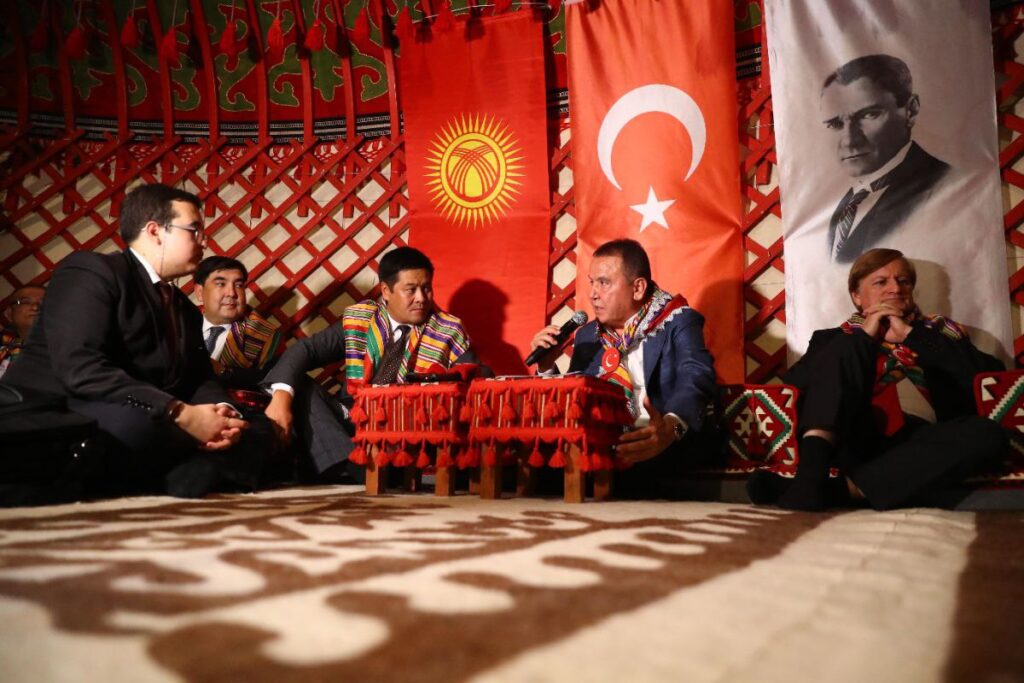
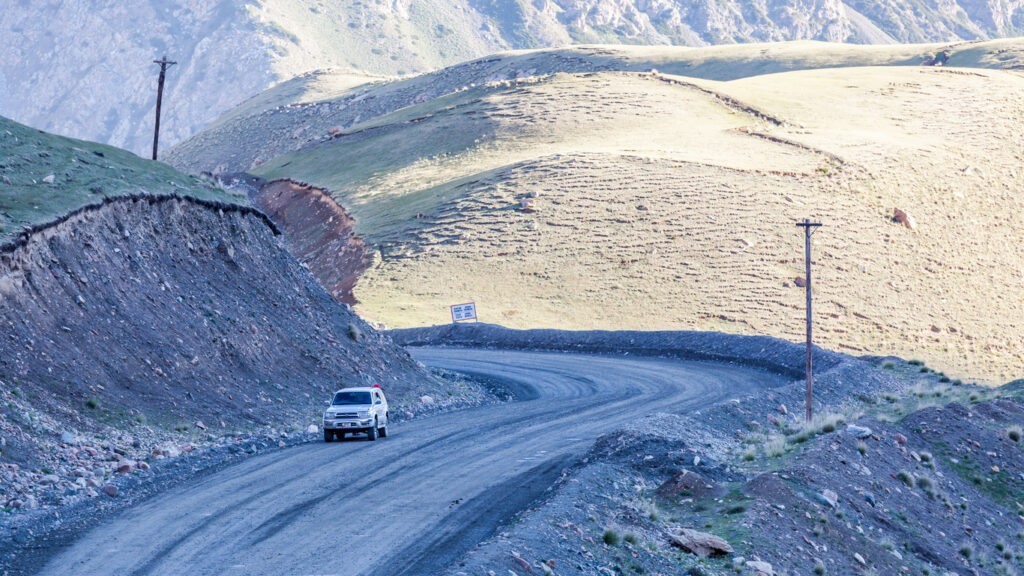
A new checkpoint has opened along the Kyrgyz-Chinese border, in the settlement of Bedel in the Issyk-Kul region. Kyrgyz president Sadyr Japarov called the event historic and significant for the country. In his address, Japarov emphasized that opening the Bedel checkpoint is a significant achievement that opens new opportunities for strengthening ties with China, one of the world's leading economies. This step, he said, will significantly increase Kyrgyzstan's transport and logistics potential, and strengthen the strategic partnership with China, symbolizing a new stage in bilateral relations. The issue of opening the Bedel checkpoint has been discussed since 1996, but agreements were reached only last year, during Japarov's state visit to China. The new checkpoint is the third checkpoint on the border between Kyrgyzstan and China. It is located in the remote southeastern region of Kyrgyzstan, about equidistant from the Kyrgyz town of Karakol and the district of Aksu in China's Xinjiang Uygur Autonomous Region. Historically, travelers and traders used this pass on the Silk Road. The opening of the Bedel border station is expected to significantly improve trade ties between the two countries, and relieve pressure on existing border crossings.

Villages Evacuated After Lake Bursts in Kyrgyzstan

On August 21, 2024, a mountain lake, Zyndan, burst in the Ton district of the Issyk-Kul region of Kyrgyzstan. This caused a sharp rise in the water level in the Ton River and led to flooding of nearby settlements, including Tuura-Suu village and a section of the Tuura-Suu - Temir-Kanat highway. A state of emergency was declared due to the threat of flooding. More than 400 residents of Tuura-Suu village were evacuated and temporarily accommodated in schools in the neighboring towns of Eshperov and Ak-Sai. Using special equipment, rescuers and local authorities channeled Lake Zyndan's waters into the Ton River bed to prevent further destruction. Ministry of Emergency Situations officials, police, and local government officials are continuing to monitor the situation around the clock. Two excavators and three loaders, as well as other necessary equipment to repair the consequences of the breach, are involved in the operation. The breach was caused by intense precipitation and glacial melt, which increased pressure on the lake and led to its erosion. This event attracted the attention of local authorities and international organizations concerned about climate change and its impact on the region. Yesterday, TCA reported on a meeting between the heads of the national emergency departments of Kyrgyzstan, Kazakhstan, Tajikistan and Uzbekistan which was held last week in Cholpon-Ata, Issyk-Kul, which was aimed at broadening cooperation. Following this meeting, powerful mudslides caused by heavy rain struck the region once again, flooding the streets of Cholpon-Ata.  

Pavel Durov’s Visit to Issyk-Kul Sparks Investment Hopes

Pavel Durov, the founder of Telegram and VK, has visited the Issyk-Kul region in Kyrgyzstan, generating significant interest amidst speculations about a potential investment in a large-scale project. The government are currently keen on attracting investment in the Three Peaks ski resort, and local authorities believe that his involvement could substantially enhance the potential of the project. Durov’s presence as an investor is seen as a strategic move that could attract additional capital and provide invaluable advertising support. Durov is traveling with Russian blogger Huseyn Gasanov, whom sources suggest could play a mediating role in the negotiations with the local authorities. The presence of Durov and Gasanov has not gone unnoticed by locals. The pair were recently spotted at the Petroglyphs Park in Cholpon-Ata, sparking rumors and excitement among residents. Many hope that this high-profile visit will lead to concrete investment plans and significantly boost the local economy.

Two Arrested Over Calls for Milk Riots in Kyrgyzstan

In the Issyk-Kul region, citizens suspected of calling for mass riots have been detained; this was reported by 24.kg citing the State Committee for National Security (GKNB) press center. According to the GKNB, two citizens used WhatsApp messenger to agitate local farmers and organize riots in groups with over a thousand participants, calling for blockades and taking milk truck drivers hostage. These actions are related to the seasonal decrease in milk prices due to its low-fat content. Experts confirmed the presence of calls to organize mass riots in the audio recordings. A criminal case has been opened, and an investigation is underway. The GKNB urged citizens to observe public order and not to give in to provocations spread through social networks.

Kyrgyzstan Lifts Ban on Mining of Uranium and Thorium

Deputies of the Kyrgyz Parliament have approved a bill lifting the ban on mining uranium and thorium by 69 votes in favor to three against. Parliamentarians are confident that the legislative changes will bring significant economic dividends to the country. The law banning uranium and thorium mining was passed in 2019. At that time, authorities wanted to sell the license to develop a deposit, but faced a significant pushback from residents who feared the project could harm the environment and damage the water table. The result was a complete ban on the entire territory of the Republic. In the Issyk-Kul region of Kyrgyzstan alone, 150,000 cubic meters of radioactive waste were accumulated from uranium mining in the last century. According to the Ministry of Emergency Situations, the country has 92 burial sites, with 23 tailing dumps containing uranium elements. Kyrgyzstan's total volume of poisonous and hazardous substances stands at 2.9 million cubic meters. The notes behind the new bill indicate that alternative sources of income are needed due to severe economic impacts over recent years. However, these activities must strictly comply with environmental norms and standards in uranium and thorium mining. Speaking in parliament, Minister of Natural Resources, Environment, and Technical Supervision, Melis Turganbayev assured deputies that the bill's passage would not harm the environment or the health of Kyrgyz citizens. “For uranium mining to be profitable, a deposit needs 40-50 tons. Kyrgyzstan lacks such reserves. There are occurrences from 0.01 to 0.08% in 83 locations. Our goal is not the uranium, but the associated metals,” Turganbayev said. Authorities plan to mine titanomagnetite, which is accompanied by uranium and thorium. Both elements will be processed at the Kara-Balta Combine in Chui Oblast. Thorium will be stored, while uranium will be sold to other states. Iskhak Masaliyev, one of the three deputies who voted against the bill, reminded his colleagues of discussions in the early 2000s on ecology. However, only now has it been possible to begin to eliminate harmful waste. Doctor of Geological and Mineral Sciences, academician Rozalia Jenchuraeva told The Times of Central Asia that the 2019 law banning mining was “a big folly” as it suspended all waste activities and impacted jobs, leaving hazardous materials lying no more than 20 meters deep are slowly contaminating the soil and water. “If they pull it all out, it will be wonderful. It will clean up the land. This is work for the Kara-Balta Combine. I think the government has decided to develop Kyzyl-Ompol, which is the right thing to do,” Jenchuraeva said. Jenchuraeva believes that Kyrgyzstan has qualified personnel who have previously worked at uranium sites, know how to mine uranium and thorium, and can develop the deposits using their expertise and resources. Earlier, President Japarov met with residents near the Kyzyl-Ompol deposit. “The development of Kyzyl-Ompol will create over a thousand jobs. This mine will become the second Kumtor (gold deposit). The local budget will cease to be subsidized, and the people will get richer,” the president said. Kyzyl-Ompol is...

Russia to Allocate Over $23 Million for Remediation of Uranium Tailings in Kyrgyzstan

Kyrgyz members of parliament have approved an agreement between Kyrgyzstan and Russia on funds for the remediation of sites contaminated with uranium tailings. The ratification corresponds to a previous deal by the Kyrgyz government and Russian state company Rosatom under the framework of a Commonwealth of Independent States (CIS) program to rehabilitate territories affected by uranium production. Kyrgyz Deputy Emergency Situations Minister Azamat Mambetov, speaking at the session of the Kyrgyz parliament, described the details of the agreement with Russia regarding the uranium tailings ponds. "At our request, the Russian Federation will allocate an additional 2.141 million rubles ($23.1 million). According to the draft agreement submitted for approval, these funds will be used for work and delivery of equipment, [and] they are exempt from taxes. Five facilities in Kyrgyzstan will be rehabilitated," Mambetov said. According to the deputy minister, these are three tailing dumps left over from uranium mining in western Kyrgyzstan, and two tailing dumps in the south of the country. According to some sources, the first Soviet atomic bomb was filled with uranium mined in the south of Kyrgyzstan in the Batken region. It should be noted that the tailings dumps in Chatkal district (western Kyrgyzstan) currently threaten the ecology of not only Kyrgyzstan, but also of neighboring Uzbekistan. The Chatkal River, which flows near the tailings dams, is a transboundary river that flows into one of Uzbekistan's reservoirs -- and from which Tashkent and the Tashkent region draw their drinking water. Mr. Mambetov said that today the reclamation of uranium tailings sites in southern Issyk-Kul region and in Naryn region is almost completed. When the interstate program for reclamation of territories was drawn up in 2013, these tailings were considered the most problematic. According to Rosatom, 450,000 cubic meters of radioactive waste were concentrated in the Naryn region when work began. The work there is complicated by the fact that there is the risk of landslides in the area of the tailing dump. However, Russian specialists promise to fully complete the reclamation process by August 2024. The volume of accumulated radioactive waste in the Issyk-Kul region is 150 thousand cubic meters. Uranium mining there was conducted from 1952 to 1966. After the mining was completed, the surface of the site was covered with a special layer of soil. But over time, the ground has been eroded by surface waters and the site began to pose a threat to the local environment once again. The works there should also be completed this year. Recall that Lake Issyk-Kul, located just a few hundred meters from the facility, is Kyrgyzstan's main tourist attraction. According to the Kyrgyz Ministry of Emergency Situations, there are 92 burial sites of toxic and radioactive substances in the country. Of these, 23 tailings sites contain uranium elements, while the remaining ones contain radioactive rock residues, heavy metals and cyanide. The total volume of poisonous and hazardous substances is 2.9 million cubic meters. As reported by Rosatom, there are currently more than 40 large legacy nuclear...