• KGS/USD = 0.01144 0%
  • KZT/USD = 0.00215 0%
  • TJS/USD = 0.10640 0.76%
  • UZS/USD = 0.00008 0%
  • TMT/USD = 0.28530 0%
  • KGS/USD = 0.01144 0%
  • KZT/USD = 0.00215 0%
  • TJS/USD = 0.10640 0.76%
  • UZS/USD = 0.00008 0%
  • TMT/USD = 0.28530 0%
  • KGS/USD = 0.01144 0%
  • KZT/USD = 0.00215 0%
  • TJS/USD = 0.10640 0.76%
  • UZS/USD = 0.00008 0%
  • TMT/USD = 0.28530 0%
  • KGS/USD = 0.01144 0%
  • KZT/USD = 0.00215 0%
  • TJS/USD = 0.10640 0.76%
  • UZS/USD = 0.00008 0%
  • TMT/USD = 0.28530 0%
  • KGS/USD = 0.01144 0%
  • KZT/USD = 0.00215 0%
  • TJS/USD = 0.10640 0.76%
  • UZS/USD = 0.00008 0%
  • TMT/USD = 0.28530 0%
  • KGS/USD = 0.01144 0%
  • KZT/USD = 0.00215 0%
  • TJS/USD = 0.10640 0.76%
  • UZS/USD = 0.00008 0%
  • TMT/USD = 0.28530 0%
  • KGS/USD = 0.01144 0%
  • KZT/USD = 0.00215 0%
  • TJS/USD = 0.10640 0.76%
  • UZS/USD = 0.00008 0%
  • TMT/USD = 0.28530 0%
  • KGS/USD = 0.01144 0%
  • KZT/USD = 0.00215 0%
  • TJS/USD = 0.10640 0.76%
  • UZS/USD = 0.00008 0%
  • TMT/USD = 0.28530 0%

Viewing results 1 - 6 of 84

Bridges, Not Blocs: Japan’s Central Asia Approach

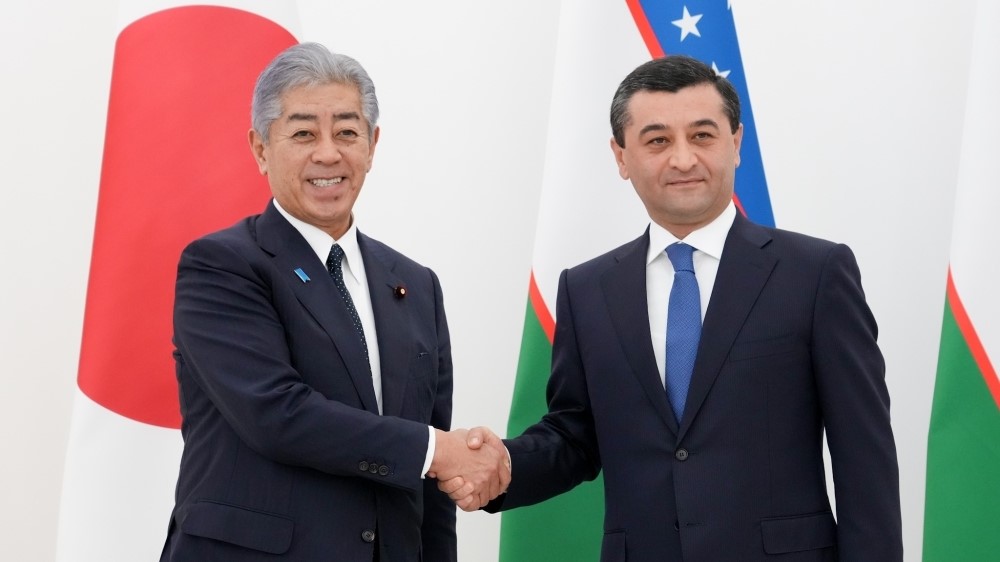
Japan is one of the countries that has been most active in recent years in terms of deepening political and economic relations with the republics of Central Asia. However, the geopolitical and ideological grounds for Tokyo's activism have received less attention than those of other countries. In early August 2024, then Prime Minister Fumio Kishida was scheduled to visit the region, but the visit was cancelled at the last minute due to the risk of a major earthquake that could have struck Japan at that time. During his visit, Kishida was also expected to announce the launch of an economic aid package for the Central Asian republics. As confirmed by the Ministry of Foreign Affairs in Tokyo, Japanese Foreign Minister Takeshi Iwaya is visiting the region over the coming days, landing in Kazakhstan on August 24, before moving on to Uzbekistan until August 28. In the two countries, he will meet with his Kazakh and Uzbek counterparts, Murat Nurtleu and Bakhtiyor Saidov, respectively, with the aim in both cases of strengthening bilateral relations. Japan's interest in Central Asia is long-standing: the Central Asia Plus Japan Dialogue format was launched back in 2004, a platform that has been emulated by several countries in the following years. From a political point of view, this is a very smooth relationship, as confirmed to The Times of Central Asia by Timur Dadabaev, Professor of International Relations at the University of Tsukuba. “Japan’s engagement with Central Asia is driven less by immediate material gain and more by its pursuit of trust-building diplomacy,” Dadabaev told TCA. “It is a relationship rooted in Japan’s desire to be seen as a reliable, non-imperial partner that supports the sovereignty, stability, and regional agency of Central Asian states. Unlike other powers, Japan positions itself as a ‘distant neighbor without hidden agendas,’ which makes its initiatives particularly well-received. Over the years, this has translated into Japan being perceived not as a competing hegemon, but as a partner that invests in the region’s human capital, infrastructure, and governance in ways that reinforce independence rather than dependence.” The relationship between Japan and the Central Asian republics is based on many concrete elements - cooperation on energy, migrant workers, and connectivity - which, as Tomohiko Uyama, Professor of Modern History and Politics of Central Asia at Slavic-Eurasian Research Center at the Hokkaido University pointed out to TCA, represent the basis for broader diplomatic engagement. “The relationship between Japan and Central Asia is based on geopolitical factors. For Japan, Central Asia is a region that shares troublesome neighbors, Russia and China,” Uyama said. “Increasing Japan's presence in this region is important for curbing the excessive expansion of China and Russia’s global influence. However, strengthening diplomatic relations requires fostering economic and human relations. Therefore, in addition to its traditional technical cooperation, Japan is seeking to promote decarbonization, transportation connectivity, and human resource development.” Professor Dadabaev also stresses that the two dimensions - the one linked more to concrete elements and the one that has more to...

Japanese Language Courses Launched to Support Kyrgyz Labor Migration to Japan

On August 8, the Center for Pre-Departure Orientation and Reintegration of Migrants in Bishkek officially launched an intensive Japanese language course aimed at improving the employability of Kyrgyz job seekers in Japan. The course is a joint initiative of the Kyrgyz Ministry of Labor, Social Security and Migration’s Center for Employment of Citizens Abroad and the Japan Association for Construction Human Resources (JAC). The program is part of ongoing efforts to develop Japan as a new destination for Kyrgyz labor migration, diversifying the country’s overseas employment market. This collaboration follows the signing of a memorandum of cooperation on labor migration between Kyrgyzstan and Japan. The first group of students was 30 mainly young participants from across Kyrgyzstan. Expanding Employment Pathways Kyrgyzstan is deepening labor migration ties with Japan as part of a broader strategy to create safe, legal, and skills-based employment opportunities for its citizens abroad. The Ministry’s Center for Employment of Citizens Abroad is working with JAC, which facilitates the recruitment of specified skilled workers for Japan’s construction industry. Both sides have also discussed plans to establish a specialized training center in Kyrgyzstan to prepare construction professionals according to Japanese industry standards. While Russia remains the main destination for Kyrgyz labor migrants, recent years have seen growing interest in alternative destinations, including Turkey, South Korea, Japan, and several European countries.

Kyrgyzstan Expands Labor Cooperation with Japan to Promote Safe Migration

Kyrgyzstan is strengthening labor migration ties with Japan as part of a broader strategy to diversify employment opportunities for its citizens abroad. The Ministry of Labor, Social Security and Migration is working to establish safe, legal, and skills-based pathways for Kyrgyz workers to access the Japanese labor market, in line with international labor standards and Japan’s workforce demands. On July 2, officials from the Ministry’s Center for Employment of Citizens Abroad met in Bishkek with representatives from the Japan Association for Construction Human Resources (JAC), an organization that facilitates the recruitment of specified skilled workers in Japan’s construction sector. The two sides discussed plans to create a specialized training center in Kyrgyzstan to prepare construction professionals according to Japanese industry standards. They also agreed to develop free Japanese language courses to enhance the employability of Kyrgyz job seekers. In May, Kyrgyz Minister of Labor Ravshanbek Sabirov held talks with Hitoshi Kanamori, President of IM Japan, the largest Japanese organization overseeing the technical intern training program. The discussions focused on expanding structured employment pathways for Kyrgyz nationals in Japan. The Kyrgyz side reiterated its commitment to training workers in fields currently in high demand in Japan, including IT, social services, hospitality, and skilled trades such as welding. Both parties stressed the importance of integrating vocational training with Japanese language instruction. Minister Sabirov also emphasized the need to ensure labor protections for Kyrgyz citizens working abroad. “It is important that Kyrgyz specialists not only secure employment but also have access to social insurance, legal protection, and consistent communication with Kyrgyz government bodies,” he said. While Russia remains the primary destination for Kyrgyz labor migrants, recent years have seen growing interest in alternative destinations such as Turkey, South Korea, Japan, and parts of Europe.

Japan-Backed Tunnel Project Begins on Kyrgyzstan’s Bishkek–Osh Highway

Construction has begun on a 750-meter tunnel along Kyrgyzstan’s vital Bishkek–Osh highway, the country’s only overland route connecting the northern and southern regions. The project marks a major step in modernizing national transport infrastructure and improving safety in an area prone to rockfalls, landslides, and harsh weather conditions. The tunnel is being built at the 400-kilometer mark of the highway by Japan’s Takenaka Civil Engineering & Construction Co., using advanced Japanese technologies designed to meet the region’s complex geological challenges. A formal groundbreaking ceremony took place on June 19, attended by Kyrgyz Transport and Communications Minister Absattar Syrgabayev and Japanese Ambassador to Kyrgyzstan Hideki Goda. Minister Syrgabayev described the tunnel as a key solution to the dangers posed by the mountainous terrain. “In this area, the risks are high. A tunnel is the safest and most reliable solution,” he said. Stretching 655 kilometers, the Bishkek–Osh highway runs through the regions of Chui, Talas, Jalal-Abad, and Osh, linking the capital with the country’s second-largest city. It plays a crucial role in both domestic mobility and regional trade, forming part of international corridors that connect Kyrgyzstan with Kazakhstan, Uzbekistan, Tajikistan, and China. The tunnel reflects the government’s continued efforts to strengthen the safety and reliability of one of its most important infrastructure assets.

UNDP and Japan Launch Initiative in Uzbekistan to Reduce Emissions and Boost Energy Efficiency

Uzbekistan has launched a new international initiative aimed at cutting greenhouse gas emissions and improving energy efficiency in public infrastructure. Spearheaded by the United Nations Development Programme (UNDP) in partnership with the Government of Japan and Uzbekistan’s Ministry of Economy and Finance, the project targets key sectors including schools, hospitals, kindergartens, and public transportation.z According to UNDP Uzbekistan, the initiative seeks to bolster the country’s resilience to energy-related challenges driven by increasingly extreme weather conditions. Many public buildings in Uzbekistan suffer from outdated infrastructure and significant energy loss, resulting in elevated emissions and burdensome utility expenses. The project will focus on upgrading facilities with thermal insulation, energy-efficient windows, heat pumps, and solar panels to address these inefficiencies. A central objective is to enhance indoor comfort throughout the year, particularly in regions experiencing extreme seasonal temperatures. The installation of modern heating and cooling systems is expected to make classrooms and hospital wards more sustainable and livable. The initiative will also extend to green mobility, supporting the introduction of electric buses, the development of charging infrastructure, and the deployment of air pollution monitoring systems along urban transport routes. A distinctive feature of the program is its use of the Joint Credit Mechanism (JCM), which provides Uzbekistan with access to advanced Japanese technology and investment. This mechanism facilitates international collaboration on carbon reduction and supports the country's transition toward cleaner technologies. The initiative aligns with Uzbekistan’s climate commitments under the Paris Agreement. The government has pledged to cut greenhouse gas emissions by 35 percent and raise the share of clean energy to 25 percent by 2030. According to UNDP representatives and officials from the National Agency for Energy Efficiency, the project is not only designed to meet environmental targets but also to improve public health and alleviate the financial strain caused by inefficient energy systems. This latest endeavor builds on previous sustainable development projects in Uzbekistan. Notably, a European Union and UNDP-backed program has supported the country’s fish farming industry by providing eco-friendly equipment to enhance water quality and reduce energy consumption.

Ashgabat May Have a Metro System by 2035

Vladimir Petruk, managing director of Interbudmontazh Company, told the CIET-2024 international conference that a metro system may be built in Turkmenistan's capital Ashgabat by 2035. Petruk said that specialists from the Japanese company Sumitomo, the Japanese Subway Association, and the German consulting group K2 have studied Ashgabat's geological and seismic conditions. The study's results confirmed the possibility of building the subway using reinforced concrete structures. The Ashgabat metro plan calls for an environmentally friendly transportation solution. In the future, it could connect the capital with the “smart city” Arkadag and the settlements of Geokdepe and Anau. According to forecasts, construction could be completed by 2035. “Given the growing wealth and the increasing number of cars, the metro will become essential to solve the city's transportation problems,” Petruk emphasized, noting the successful experience of operating metros in seismically active regions. Consultations with the Ministry of Construction and Architecture of Turkmenistan are ongoing, and the UN mission plans to cooperate with the country to support the urban infrastructure development program. Turkmenistan currently does not have a metro. The idea of building a metro in Ashgabat has been discussed since 2008 when the city mayor's office attracted companies from St. Petersburg to the project. In 2014, then-President Gurbanguly Berdymuhamedov instructed the Ukrainian construction association Interbudmontazh to consider the possibility of realizing this project. In 2020, the company presented the Ashgabat metro construction project developed jointly with Sumitomo and K2. However, specific dates for the start of construction and commissioning of the metro in Ashgabat have not yet been announced.