• KZT/USD = 0.00218
  • TJS/USD = 0.10820
  • UZS/USD = 0.00009
  • TMT/USD = 0.29760
  • KZT/USD = 0.00218
  • TJS/USD = 0.10820
  • UZS/USD = 0.00009
  • TMT/USD = 0.29760
  • KZT/USD = 0.00218
  • TJS/USD = 0.10820
  • UZS/USD = 0.00009
  • TMT/USD = 0.29760
  • KZT/USD = 0.00218
  • TJS/USD = 0.10820
  • UZS/USD = 0.00009
  • TMT/USD = 0.29760
  • KZT/USD = 0.00218
  • TJS/USD = 0.10820
  • UZS/USD = 0.00009
  • TMT/USD = 0.29760
  • KZT/USD = 0.00218
  • TJS/USD = 0.10820
  • UZS/USD = 0.00009
  • TMT/USD = 0.29760
  • KZT/USD = 0.00218
  • TJS/USD = 0.10820
  • UZS/USD = 0.00009
  • TMT/USD = 0.29760
  • KZT/USD = 0.00218
  • TJS/USD = 0.10820
  • UZS/USD = 0.00009
  • TMT/USD = 0.29760
24 August 2026

Viewing results 1 - 6 of 67

Japan to Offer Aid to Central Asia

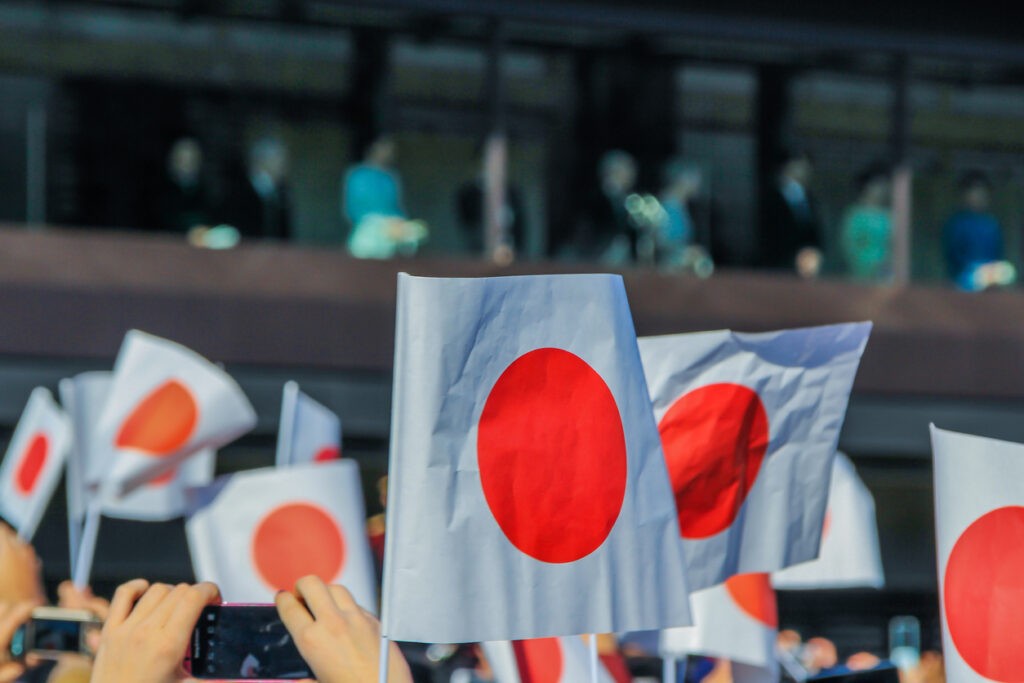
Japanese Prime Minister Fumio Kishida is set to announce an economic aid package for Central Asia. According to The Japan Times, details will be revealed during the Japanese prime minister's meeting with heads of  the five Central Asian states during his visit to Uzbekistan, Kazakhstan, and Mongolia from August 9 to 12. Tokyo is seeking to strengthen ties with the region by helping to create a trade route across the Caspian Sea that would link Central Asia and Europe, bypassing Russia. According to the Japanese government, the initiative will reduce the heavy influence of both Russia and China on the region and afford Central Asia economic independence. Kishida is expected to announce the economic support package in a joint statement following the six-party summit in Kazakhstan on  implementing a new trade route, helping to decarbonize the economy, and promoting people-to-people exchanges. Japanese companies will also help Kazakhstan and other Central Asian countries reduce their dependence on coal by providing technology and loans to develop natural gas production and processing. In exchange, the Central Asian states will send skilled labor to Japan.

Turkmenistan Strengthens Cooperation with Japanese Investors

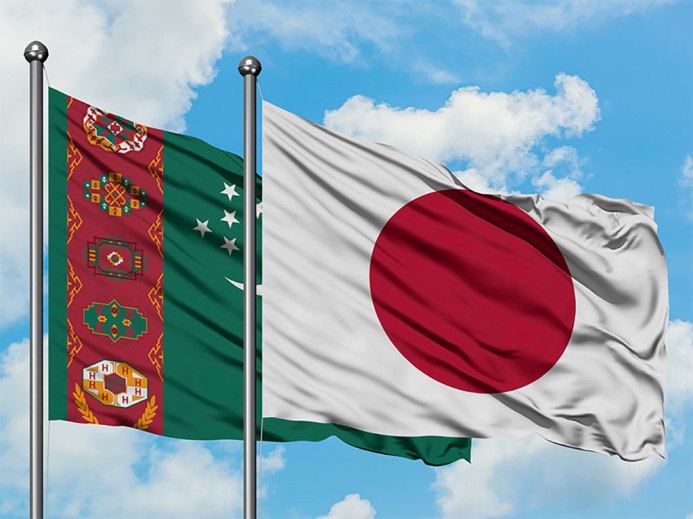
As reported by TDH, Gurbanguly Berdimuhamedov, chairman of the Halk Maslahaty of Turkmenistan, recently engaged in a meeting with representatives of Japan's Kawasaki Heavy Industries Ltd., including Senior Strategic Advisor Tatsuya Watanabe and Executive Director Kenji Sanada. During the meeting,  Japan's role as an important strategic partner for Turkmenistan in the Asia-Pacific region was noted, with particular regard to bilateral cooperation between the two countries and within the framework of international organizations, including the UN. A long-term partnership has been established with Kawasaki Heavy Industries Ltd., and several major projects have been implemented, including a plant for producing gasoline from natural gas in Ovadandepe, a urea plant in Mary province, and the Keliati cement plant. New opportunities for cooperation were discussed alongside Turkmenistan's plans to produce and process natural gas. The importance of using advanced technologies and observing environmental standards in the implementation of projects was emphasized.

Uzbekistan Opens New  Museum Commemorating WW2 Japanese POWs

On 30 April, Uzbekistan Minister of Ecology, Environmental Protection and Climate Change Aziz Abdukhakimov  joined by Ambassador of Japan to Uzbekistan Hatori Takashi, founder and director of the museum, Jalil Sultanov, and representatives of the Japan Society in Uzbekistan to celebrate the opening of a new museum in Tashkent commemorating Japanese prisoners of war. Over 20,000 Japanese POWs captured by the Soviet Union during the second world war, were interned in Uzbekistan between 1945-1950. During this period, the prisoners were dispersed across the country to construct buildings, dams, and roads in regions including Angren, Bekabad, and Kokand, and in Tashkent, built the Alisher Navoi Opera Theatre, the Mukini Theatre, the Central Telegraph and Ministry of Culture, as well as barracks still in use today. According to estimates, 817 died in the process. The new premises, under construction since 2023, replace the original museum founded in May 1998. Housing photographs, documents, and artefacts, such as prisoners’ workwear and a wooden crib made for the local market, the collections testify to the lives of Japanese POWs in Uzbekistan, and given a new lease of life, are expected to become a major draw for Japanese tourists visiting the country.

Seismologists From Japan to Study Earthquakes in Almaty

Japanese experts in the field of seismology will come to Almaty, Kazakhstan's largest city, to study the nature of recent earthquakes there. According to the foreign ministry, a seminar on seismic safety will be organized by the Kazakh Agency for International Development (KazAID). "The co-organizers of the event are the Japanese International Development Agency (JICA), the Kazakh Research and Design and Experimental Institute of Earthquake Engineering (KazNIISA) and the Center for Emergency Situations and Disaster Risk Reduction," a statement said. Japanese seismologists will share their experience with Central Asian counterparts. They will present advanced technologies and standards of seismic isolation, as well as discuss possible cooperation in seismic construction practices. Japanese seismologists will also study the recent earthquakes in Almaty, to allow Kazakh specialists to develop strategies to prevent risks in the future. As previously reported, on January 23 and March 4 in Almaty, sensors recorded tremors with magnitudes of more than five points on the Richter scale. Experts say that the fluctuations of the Earth's crust had an unusual structure for the region.

Japan and UN WFP Support Vulnerable Citizens in Kyrgyzstan

An agreement has been signed by Gulnara Baatyrova, Kyrgyzstan’s Minister of Labour, Social Security and Migration, Hideki Goda, Ambassador of Japan to Kyrgyzstan, and Kojiro Nakai, Country Director of the UN World Food Program (WFP) in the Kyrgyz Republic, to enhance self-sufficiency amongst Kyrgyzstan’s most vulnerable citizens. An allocation of $3.5 million will be invested in a basic infrastructure to provide import-dependent food products such as flour and vegetable oil, and improve skills in entrepreneurship and agriculture amongst low-income residents of Batken, Issyk-Kul, Jalal-Abad, Naryn, and Osh. Expressing her gratitude for aid pledged by the Government of Japan and the UN, Minister Baatyrova said: “This program is aimed at strengthening the food security of vulnerable groups and will boost the development of sustainable economic independence, thereby contributing to economic and social stability in the country. Supported by the Japanese government, existing enterprises for the production of apricot oil in the Batken region, and the processing of medicinal herbs in the Naryn region, have already created additional jobs.”

Japan-Funded Project Helps Tajikistan Manage Its Border With Afghanistan

Japan has long been a "steadfast supporter of Tajikistan, contributing tens of millions of dollars to the country’s development through the United Nations Development Programme (UNDP)." The Japanese government, through its Japan International Cooperation Agency (JICA), is also funding the “Border Management Project” – an initiative to support the Tajik Government in controlling its national border with Afghanistan, UNDP Tajikistan reports. The project aims to both secure the length of the Tajik-Afghan border and facilitate cross-border trade. It was initially launched in 2015, and will run until 2025. Since its launch the parties have constructed a new border checkpoint at Langar, and modernized the old checkpoints at Khumrogi and Shogun. Toshihiro Aiki, Japan’s ambassador to Tajikistan, recently commented: “We have had favorable relationships with the government of Tajikistan since its first steps of independence. Japan supports Tajikistan in many ways, considering strategic aspects, especially in light of the changed political landscape involving the whole Eurasian continent. There are some challenges that not only Tajikistan but most of the countries face.”  Given the problem of drug trafficking at the Tajik-Afghan border, the initiative is also supporting Tajikistan in disrupting illicit activities, protecting border communities from the harmful effects of the drug trade.