• KGS/USD = 0.01143 0%
  • KZT/USD = 0.00205 0%
  • TJS/USD = 0.10724 0.09%
  • UZS/USD = 0.00008 0%
  • TMT/USD = 0.28571 0%
  • KGS/USD = 0.01143 0%
  • KZT/USD = 0.00205 0%
  • TJS/USD = 0.10724 0.09%
  • UZS/USD = 0.00008 0%
  • TMT/USD = 0.28571 0%
  • KGS/USD = 0.01143 0%
  • KZT/USD = 0.00205 0%
  • TJS/USD = 0.10724 0.09%
  • UZS/USD = 0.00008 0%
  • TMT/USD = 0.28571 0%
  • KGS/USD = 0.01143 0%
  • KZT/USD = 0.00205 0%
  • TJS/USD = 0.10724 0.09%
  • UZS/USD = 0.00008 0%
  • TMT/USD = 0.28571 0%
  • KGS/USD = 0.01143 0%
  • KZT/USD = 0.00205 0%
  • TJS/USD = 0.10724 0.09%
  • UZS/USD = 0.00008 0%
  • TMT/USD = 0.28571 0%
  • KGS/USD = 0.01143 0%
  • KZT/USD = 0.00205 0%
  • TJS/USD = 0.10724 0.09%
  • UZS/USD = 0.00008 0%
  • TMT/USD = 0.28571 0%
  • KGS/USD = 0.01143 0%
  • KZT/USD = 0.00205 0%
  • TJS/USD = 0.10724 0.09%
  • UZS/USD = 0.00008 0%
  • TMT/USD = 0.28571 0%
  • KGS/USD = 0.01143 0%
  • KZT/USD = 0.00205 0%
  • TJS/USD = 0.10724 0.09%
  • UZS/USD = 0.00008 0%
  • TMT/USD = 0.28571 0%

Viewing results 1 - 6 of 14

Opinion: Tokayev’s National Kurultai Address: A Moral Message, Not a Political One

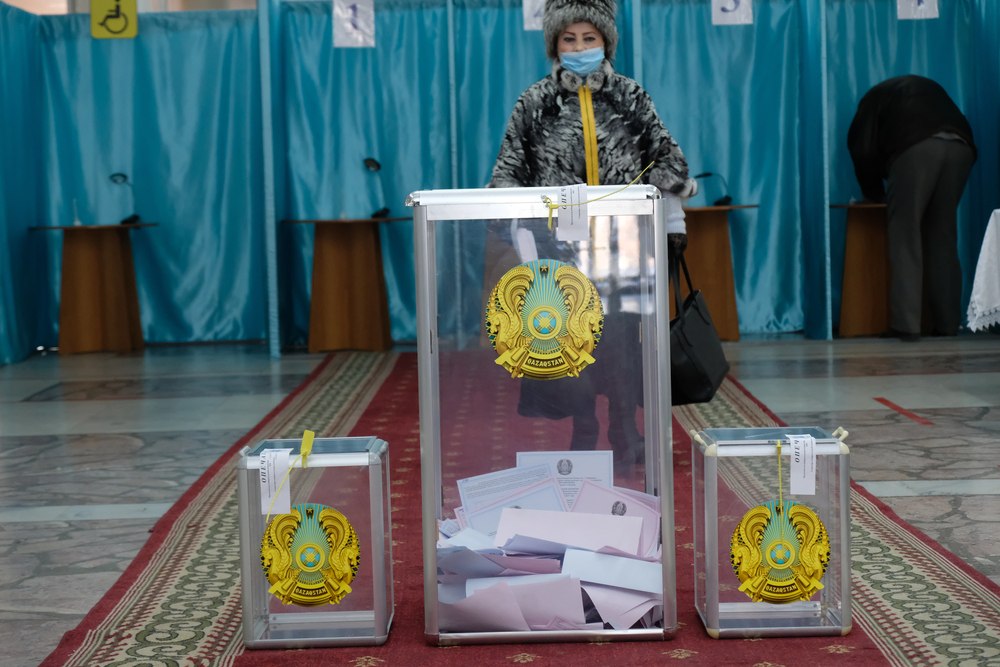
On January 20, 2026, Kassym-Jomart Tokayev, the President of Kazakhstan, addressed the nation at a session of the National Kurultai, an age-old platform for public dialogue, akin to a wise men’s council – at any rate, that’s how it’s often billed. To no one’s surprise, Tokayev pressed ahead with his stated agenda of political reform, highlighting foreign, economic, and development policies and goals. While not devoid of interest, those parts of the speech felt like little more than window dressing that tended to obscure the address’s underlying fire and true import. Tokayev’s oration seemed at points to echo Alexis de Tocqueville’s ideas in Democracy in America: nations endure only when citizens pair civic participation with moral virtue and personal responsibility, because unchecked individualism ultimately weakens free societies and institutions, regardless of the presence of law and order. On closer examination, Tokayev’s thinking reflects Tocqueville’s view that building democracy is hard but doable. As Tocqueville wrote: “nothing is more wonderful than the art of being free, but nothing is harder to learn how to use than freedom,” pointing towards the belief that nation-building depends on freedom bound to virtue. Tokayev’s Kurultai message went far beyond a list of technical fixes, platitudes about the economy, and empty cheerleading. Nor did it read as a sleight of hand or bait-and-switch tactic to preserve power in the face of a failing democracy. Those familiar with Tokayev know he has called for Tocquevillian-like responsible citizenship for years, which, to be sure, requires at times tough love. Tokayev drove home a familiar theme, that the nation’s fate rests on the character and outlook of its people—not just on its economy, wealth, and politics. He maintained that traditional values present the vital adhesive of society, without which, every effort at statecraft withers—or worse, becomes easy prey to unsavory ambitions or certain secular ideologies which have taken on religious force in modern culture. At the heart of Kazakhstan’s future, Tokayev thinks, there must lie a commitment to enduring human principles and timeless truths: unity, selflessness, sharing, mutual understanding, patience, compromise, and common sense. These values are not solely theoretical constructs but qualities evident for successful outcomes. They positively shape family formation, social relations, conflict resolution, and citizens’ engagement with the state and outsiders. What’s more, economic and institutional strength is only possible when built upon a society united by common values, clarity of purpose, and a spirit of service. Transforming Public Consciousness President Tokayev stressed that changing minds matters more than changing laws and hollow pep talks. Without a common moral compass, nation-building is fragile. Strong cultural and spiritual roots foster social cohesion, building trust, identity, and civic duty. Towards this end, he urged the older generation “to promote the values of work and enterprise, and wean young people from verbosity, glorification, laziness, indifference, and idleness.” Tokayev’s strategy for consolidating national consciousness focuses on two core investments: on advancing cultural infrastructure (museums, theatres, libraries) and creative capital, thereby recharging towns and schools as sites of learning, dialogue, and shared...

Analysis: Three Decades of Parliamentary Reform in Central Asia — and What Changed

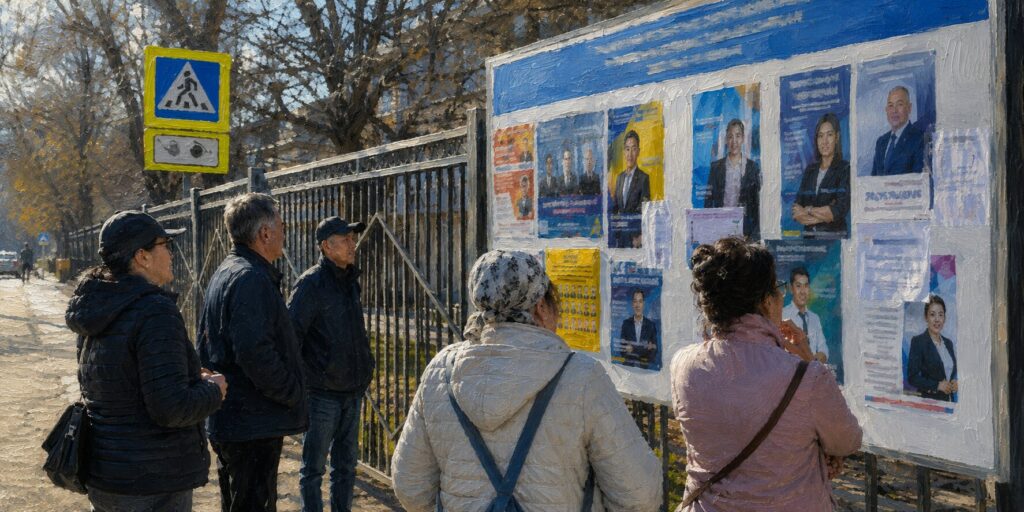
Kazakhstan’s President Kassym-Jomart Tokayev announced his reform plans on January 20, including structural changes to the government. Arguably, one of the least consequential of those changes is replacing the current bicameral parliament with a unicameral parliament. Across Central Asia, over the last 35 years, parliaments have repeatedly switched from unicameral to bicameral parliaments, or vice versa, the number of deputies has increased and decreased, and in some cases, parallel bodies have come into existence and later disappeared. Kazakhstan When the Soviet Union collapsed in late 1991, each of the former republics, including the Central Asian countries of Kazakhstan, Kyrgyzstan, Tajikistan, Turkmenistan, and Uzbekistan, had a unicameral, republican Supreme Soviet elected in 1990. These Supreme Soviets continued functioning after independence until 1994, and in the case of Kyrgyzstan and Tajikistan, until 1995. In Kazakhstan, in December 1993, the majority of the 360 deputies in the Supreme Soviet voted to dissolve the body. In March 1994, there were elections to the new parliament (Supreme Kenges) that had 177 seats. During the tumultuous year of 1995, the parliament was dissolved by then-President Nursultan Nazarbayev, who ruled by decree until snap parliamentary elections in December of that year. However, on August 29, 1995, voters approved a new constitution in a national referendum. That constitution created a bicameral parliament with 67 deputies in the Mazhilis, the lower house, and 50 deputies in the Senate, 10 of them directly appointed by the president. Deputies to the Mazhilis were chosen in popular elections. Senators were chosen in indirect elections involving deputies from local, provincial, and municipal councils of large cities. In the snap parliamentary elections of October 1999, 10 seats were added and chosen by party lists, while the original 67 continued to be contested in single-mandate districts. That structure lasted until 2007. Constitutional amendments adopted in late May that year increased the number of seats in the Mazhilis to 107, of which 98 were to be chosen by party lists. Nazarbayev’s Nur-Otan party won all 98 of the party list seats in the August elections. The remaining nine representatives came from the Assembly of Peoples of Kazakhstan, a group representing the various ethnic groups in Kazakhstan that Nazarbayev created in 1995. Eight additional members of the Assembly were given seats in the Senate. The Assembly held its own elections to fill those seats. Kazakhstan conducted a constitutional referendum in June 2022, in part aimed at mollifying discontent that lingered from the mass unrest in early January that year, which left 238 people dead. Some amendments stripped away powers in the executive branch that had accumulated during the 28 years Nazarbayev was president, and more power was given to parliament. Another amendment removed the nine Mazhilis seats reserved for members of the Assembly of Peoples of Kazakhstan. One amendment reduced the number of Senate members appointed by the president back to 10, after it had been raised to 15 under a 2007 amendment. Kyrgyzstan A referendum in Kyrgyzstan on constitutional amendments in October 1994 created a bicameral...

Tokayev Proposes a New Constitutional Architecture

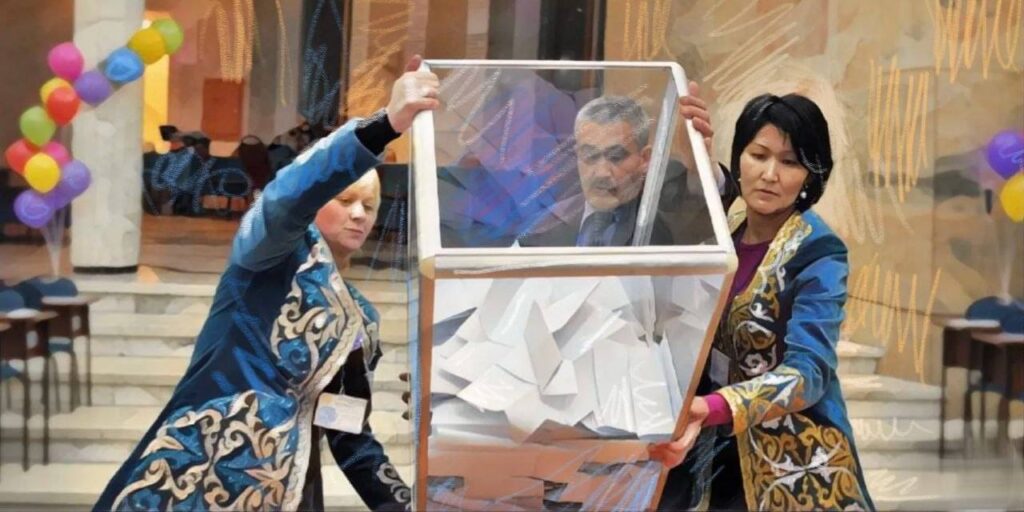
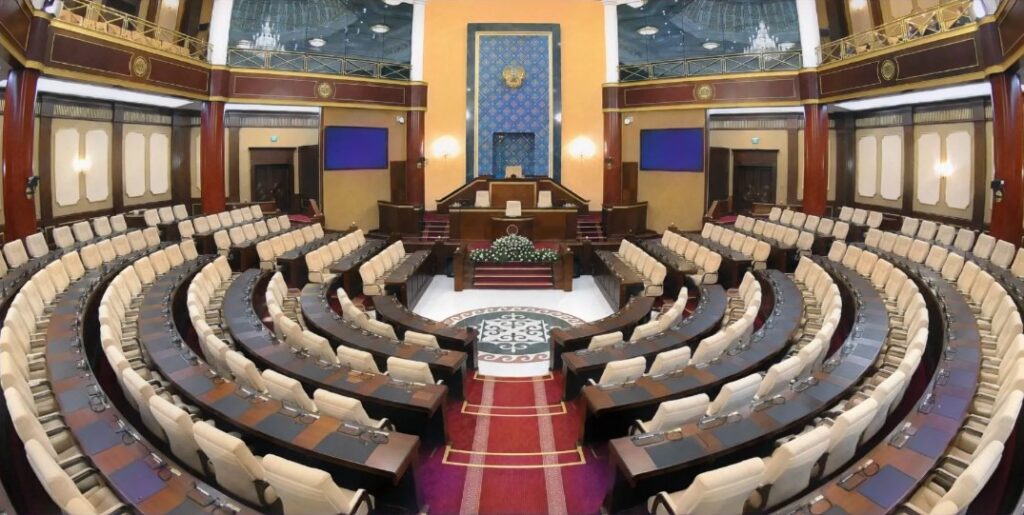
In mid-January 2026, President Kassym-Jomart Tokayev moved Kazakhstan’s parliamentary reform agenda onto a deeper constitutional track. He framed the emerging package as comparable, in substance, to adopting a new constitution rather than making a bounded set of amendments. He also presented it as a further move away from the institutional logic of the 1995 framework and as the logical next step after the 2022 referendum changes, with the legislative branch identified as the main site of redesign. Tokayev laid out a two-stage pathway. First, a Constitutional Commission of more than 100 members is to consolidate proposals and draft a coherent text. The work is organized through the Constitutional Court leadership, and the participant pool is expected to include representatives of the National Kurultai, legal experts, media figures, maslikhat chairs, and regional public councils. The commission was established by decree shortly after Tokayev’s public rollout of the initiative, with early reporting identifying its chair and senior officers as part of the process’ initial institutionalization. Second, the resulting draft is to be submitted to a nationwide referendum, with timing to be set once the commission produces an implementable package. This is an architecture exercise before it is a policy program. The direction is clear enough to describe, but the operative meaning will depend on still-undetermined details, including how headline concepts are translated into constitutional language and how the referendum track shapes that drafting process. The Kurultai Plan and the Lawmaking Design Tokayev’s central institutional move is to abolish the current bicameral parliament and replace it with a single chamber, the Kurultai, combining functions now divided between the Mazhilis and the Senate. The change is publicly presented as consolidation, with unicameralism framed as a simplification of legislative structure that still keeps parliament as the focal representative institution within a presidential system. The package also sketches a streamlined internal design. Tokayev stated that the new chamber should comprise 145 deputies, with up to three deputy speakers and no more than eight committees. Public reports on the working-group discussions remark that earlier concepts ranged more widely before converging on 145; the current Mazhilis and Senate total 148 members. Tokayev indicated that deputies would be elected by proportional representation at the national level, while majoritarian rules would be retained at the regional level. He also signaled the removal of quota and appointment mechanisms associated with the existing system, including the elimination of a small number of presidentially appointed seats. A unicameral legislature raises a predictable design problem. Consolidation can increase legislative throughput unless procedures are structured to preserve deliberation. Allies of the reform have therefore emphasized a shift to a three-reading format, presented as a way to make lawmaking more deliberative. In practice, the decisive criteria here are implementation choices that are not yet public. These include final electoral rules, the internal allocation of committee jurisdiction, and procedural requirements governing readings, hearings, and amendments. Those choices will determine whether the Kurultai becomes a stronger site of relatively autonomous bargaining and scrutiny or a more efficient transmission...

Tokayev Unveils Major Political Reforms as Kazakhstan Moves to Replace the National Kurultai

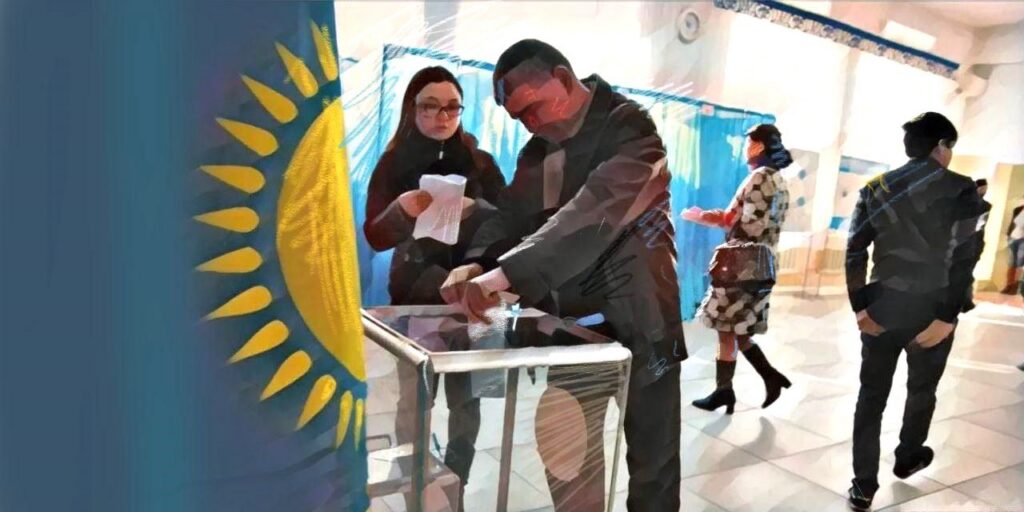
The fifth and final session of the National Kurultai in Kazakhstan, held on January 20, marked the announcement of plans to dismantle and replace two key institutions: the National Kurultai and the Assembly of the People of Kazakhstan, structures that have played central roles in the country’s civic dialogue, particularly over the past three decades. In a sweeping address, President Kassym-Jomart Tokayev declared that these legacy institutions would be replaced by new mechanisms for state-society interaction, crafted with an eye toward modern governance models and constitutional reform. The move reflects Tokayev’s long-running criticism of consultative bodies that, while symbolically inclusive, have often duplicated functions or lacked clear decision-making authority. Tokayev’s address, which included references to U.S. President Donald Trump, prompted analysts to draw deeper geopolitical and institutional parallels. As Tokayev enters the second phase of his presidency, analysts note a shift in strategy and control. His first term (2019-2022) was marked by attempts to correct the excesses and structural stagnation of his predecessor, Nursultan Nazarbayev. At the time, Tokayev faced entrenched resistance from the political establishment, with some officials reportedly appealing directly to Nazarbayev to circumvent presidential directives. The January 2022 unrest, an attempted power shift, marked a turning point. Tokayev consolidated power and launched a comprehensive reform agenda across the political and economic spectrum. The analogy with Trump, some analysts argue, lies in this dual-phase leadership: an initial struggle with the establishment, followed by a more assertive, transformation-driven second term. Since then, Tokayev has framed political reform as a safeguard against elite capture and institutional paralysis, arguing that fragmented authority contributed to the crisis. Yet Tokayev continues to face political resistance, particularly to structural reforms. Political analyst Daniyar Ashimbayev, commenting on Tokayev’s Kurultai speech, described the president’s evolving approach as both methodical and tactical. “Sometimes, the head of state announces strategic steps he has been considering for over a year, but only unveils them at the last moment, when no one has the opportunity to influence the message,” Ashimbayev observed. He cited Tokayev’s September 2025 proposal for a unicameral parliament as an example of such strategic maneuvering, an initiative that caught even senior officials by surprise. Ashimbayev argues that Tokayev’s aim was to sideline speculation about succession by announcing long-term institutional reforms. The president further solidified this strategy by reviving the position of vice president, abolished under Nazarbayev, while proposing the dissolution or merging of overlapping structures such as the Senate, the Assembly of the People, and the Kurultai into a proposed National People’s Council. This consolidation, Ashimbayev notes, serves both symbolic and strategic purposes. “The image of a 'lame duck' has vanished, and a self-confident Uncle Scrooge, so to speak, with complex plans, has returned. Everyone expected the discussions to take a year or a year and a half, but the president decided to seize the initiative again and unexpectedly moved the Kurultai to January, where he announced a huge package of new ideas,” he remarked. The announcement of the vice presidency, one of the most consequential changes, reportedly...

Tokayev Floats Vice President Post at National Kurultai as Kazakhstan Weighs Political Overhaul

President Kassym-Jomart Tokayev used the fifth session of Kazakhstan’s National Kurultai on January 20 to propose creating a vice president’s post and embedding the new institution in the constitution, as part of a broader package of political reforms aimed at reshaping the country’s system of governance. Under the proposal, the vice president would be appointed by the president and confirmed by parliament by a simple majority vote. The president would define the vice president’s authority, which could include representing Kazakhstan at international forums and negotiations, representing the head of state in parliament, and engaging with domestic and international organizations in political, scientific, cultural, and educational fields. “The establishment of this position will stabilize the process of state governance, and will also bring final clarity regarding the hierarchy of power,” Tokayev said at the Kurultai. Kazakhstan does not currently have a vice president. Executive authority is vested in the presidency, while the government is led by a prime minister, with succession procedures defined by the constitution. Tokayev said the key provisions governing the new post, including its functions, should be enshrined directly in the constitution. The vice presidency was presented as part of a wider administrative restructuring. Tokayev said several administrative structures that support the current parliament would be abolished, along with the position of state counselor. He added that the functions, structure, and management system of the Presidential Administration would be reformed in line with practical needs. The Kurultai session in Kyzylorda took place as the administration advances a more far-reaching overhaul of the legislature. Tokayev has promoted a transition from Kazakhstan’s bicameral parliament, composed of the Senate and the Mazhilis, to a unicameral system, arguing that the change would simplify governance and shorten decision-making chains. [caption id="attachment_42476" align="aligncenter" width="1280"] President Tokayev at the National Kurultai; image: Akorda.kz[/caption] He outlined parameters for a future unicameral parliament, saying it could consist of around 145 deputies, be led by three vice-chairs, and operate with no more than eight standing committees. He also proposed renaming the legislature the “Kurultai,” saying the term reflects historical traditions of popular representation. The parliamentary reform agenda is being developed by a working group that began reviewing constitutional options in late 2025. The idea of moving to a unicameral system was first raised in Tokayev’s national address on September 8, 2025. On January 19, Tokayev held a meeting with the working group on parliamentary reform in Astana, where aides reported that the group had reviewed constitutional approaches to reshaping the legislature and discussed key approaches to constitutional reform based on proposals from citizens, experts, and civil organizations. Tokayev has tied the parliamentary overhaul to a nationwide vote. He reaffirmed that citizens would make the final decision through a referendum and said Kazakhstan is targeting 2027 for a public vote on abolishing the Senate and moving to a unicameral legislature. The latest reform proposals build on constitutional changes adopted after the unrest of January 2022. In June 2022, Kazakhstan held a nationwide referendum on proposed constitutional amendments, with more...

Kazakhstan Debates Parliamentary Reform as Inflation Pressures Living Standards

The Kazakh government is actively developing the framework for a future unicameral parliament, working to define its status, powers, and functions. Currently, Kazakhstan’s legislative branch consists of two chambers: the Senate and the Mazhilis.  The proposed transition to a unicameral system has been positioned by authorities as a step toward democratization. However, many citizens remain unclear about the details and implications of the reform, particularly as inflation and declining living standards dominate public concern. Uncertain Details of Reform In September 2025, President Kassym-Jomart Tokayev proposed holding a nationwide referendum on transitioning to a unicameral parliament in 2027. While some analysts have speculated about a faster timeline, no official acceleration beyond 2027 has been announced. "The establishment of a parliamentary republic is not under consideration. The foundational model of a 'Strong President, Influential Parliament, Accountable Government' remains unchanged," Tokayev previously stated. According to political analyst Gaziz Abishev, pivotal developments are expected on January 20, when the National Kurultai (Assembly) convenes. He believes this meeting will outline the contours of constitutional reform and potentially signal a date for the referendum. “If the decree on holding a referendum is signed during the Kurultai, the vote could be held on March 22 [2026],” Abishev stated. Under the current system, the Senate represents regions and appointive quotas, reviewing legislation passed by the Mazhilis and serving as a constitutional buffer. Any move to unicameralism would require redefining how regional interests are represented and how legislative oversight is maintained without an upper chamber. The National Kurultai serves as a platform for dialogue between the government and society, addressing national identity, economic development, social justice, and improving the quality of life. Historically, the Kurultai was a gathering of Turkic and Mongol tribes. Over 500 Public Proposals Submitted Public discussion around the proposed unicameral parliament has been active. Since the launch of a dedicated “Parliamentary Reform” section on the state portals e-Otinish and Egov, over 500 proposals have been submitted by citizens, experts, and public organizations. Despite this engagement, tangible benefits for ordinary citizens remain vague, aside from a potential reduction in government spending. Globally, more than half of national parliaments operate as unicameral systems. According to IPU Parline, 107 out of 188 legislatures follow this model, primarily in unitary states with smaller populations. Unicameral systems are often praised for faster legislative processes, lower administrative costs, and increased transparency. Kazakhstan previously had a unicameral legislature under the 1993 Constitution. Following the invalidation of the 1994 elections, the Supreme Council was dissolved. In 1995, the country transitioned to its current bicameral system. The Senate, as the upper house, plays a stabilizing and arbitration role. Analysts caution that without a second chamber, legislative processes may be vulnerable to hasty or populist decisions. Potential for Early Elections Abishev suggests that a referendum in March 2026 could prompt an early electoral cycle. "Under the current schedule, the next Mazhilis elections are set for January 2028. However, they could be moved up to summer 2026 if Parliament adopts a constitutional amendment package in April...