• KGS/USD = 0.01143 0%
  • KZT/USD = 0.00216 0%
  • TJS/USD = 0.10684 -0.28%
  • UZS/USD = 0.00008 0%
  • TMT/USD = 0.28571 0%
  • KGS/USD = 0.01143 0%
  • KZT/USD = 0.00216 0%
  • TJS/USD = 0.10684 -0.28%
  • UZS/USD = 0.00008 0%
  • TMT/USD = 0.28571 0%
  • KGS/USD = 0.01143 0%
  • KZT/USD = 0.00216 0%
  • TJS/USD = 0.10684 -0.28%
  • UZS/USD = 0.00008 0%
  • TMT/USD = 0.28571 0%
  • KGS/USD = 0.01143 0%
  • KZT/USD = 0.00216 0%
  • TJS/USD = 0.10684 -0.28%
  • UZS/USD = 0.00008 0%
  • TMT/USD = 0.28571 0%
  • KGS/USD = 0.01143 0%
  • KZT/USD = 0.00216 0%
  • TJS/USD = 0.10684 -0.28%
  • UZS/USD = 0.00008 0%
  • TMT/USD = 0.28571 0%
  • KGS/USD = 0.01143 0%
  • KZT/USD = 0.00216 0%
  • TJS/USD = 0.10684 -0.28%
  • UZS/USD = 0.00008 0%
  • TMT/USD = 0.28571 0%
  • KGS/USD = 0.01143 0%
  • KZT/USD = 0.00216 0%
  • TJS/USD = 0.10684 -0.28%
  • UZS/USD = 0.00008 0%
  • TMT/USD = 0.28571 0%
  • KGS/USD = 0.01143 0%
  • KZT/USD = 0.00216 0%
  • TJS/USD = 0.10684 -0.28%
  • UZS/USD = 0.00008 0%
  • TMT/USD = 0.28571 0%

Viewing results 1 - 6 of 1687

Kyrgyz Still Suffering From Ban on Russian Bank Cards

The head of Kyrgyzstan's cabinet of ministers, Akylbek Japarov, has told media that it wasn't his decision to terminate the interbank agreement with Russia's MIR payment system. According to him, the Interbank Processing Center (IPC) that services the Kyrgyz payment system Elkart -- which previously had a contract with the Russian MIR system -- does not belong to the government, but rather is run by commercial banks. He added that Kyrgyz authorities learned of the system's disconnection only after it occurred. Japarov commented: "Even the National Bank does not have control over the MPC, which is more than 54 percent owned by commercial banks. I assume that these commercial banks may have feared sanctions... It would be good if the MPC coordinated this issue with the cabinet, because there are more than a million of our citizens in Russia. All of them used the MIR card." Japarov emphasized that while Kyrgyz citizens benefited from MIR's presence in Kyrgyzstan, the closure of the system will have almost no effect on Russians. He said that work is already underway to find alternatives. On April 5 the IPC informed the Kyrgyz public about the shutdown of MIR "in order to minimize [the risk of] secondary sanctions" by the United States. Many travel companies in Kyrgyzstan have sounded the alarm -- about 90% of all tourists coming to Kyrgyzstan are from Russia.

As Bishimbayev Case Continues, Kazakhstan Toughens Domestic Violence Laws

While a court in Astana tries former economy minister Kuandyk Bishimbayev for murdering his wife Saltanat Nukenova, the Kazakhstani Senate has passed a law strengthening protections for women and children against domestic violence. The new law, if properly implemented, can hand out much harsher punishments to those who abuse those closest to them. In particular, a term of life imprisonment has been introduced for the murder of a minor child.   In the Face of Widespread Indifference The trial of Bishimbayev – and his relative Bakhytzhan Baizhanov, who is accused of failing to report the murder - has uncovered an uncomfortable truth. Many people already knew that Bishimbayev beat his wife, who died last November. Relatives and close acquaintances of the victim recounted details in court about bruises on Nukenova's face. On the day of her death, a number of witnesses saw Bishimbayev arguing with, and possibly beating, Nukenova. Many of these witnesses are employees of the restaurant where the alleged murder took place. Baizhanov admitted under interrogation that he saw blood as Nukenova was laying motionless, but, on the orders of Bishimbayev, had the restaurant's surveillance tapes deleted, and then drove Nukenova's phone around the city, so that it would seem later that she was still alive at the time. According to Baizhanov, he "did not know and did not realize" that Nukenova was dying. However, a forensics expert testified in court that the nature of Nukenova's injuries indicated serious beatings, not "light slaps and falls," as Bishimbayev had previously claimed. Examinations confirmed that Nukenova died of multiple brain injuries and a lack of oxygen, likely as a result of asphyxiation.   Will the New Law Help Stop Violence?  Kazakhstanis are closely following the legal proceedings that have resulted from Nukenova's death, and are organizing viral online actions and rallies in her memory in cities across Europe. Human rights activists and ordinary Kazakhstanis fought long and hard for domestic violence to be criminalized. Under the new law, criminal liability will be applied to any intentional infliction of harm to health, however minor. The Code "On marriage (matrimony) and family" establishes the legal status of family support centers and the functions they perform, and establishes helplines for information and psychological assistance relating to women's and children's rights. The law also contains many measures aimed at protecting children in public and online. Activists are still cautious about the new law, and argue that much will depend on its practical application and the amount of funds allocated to it. Support centers for victims of violence receive many calls per day, and physically cannot provide assistance to all those in need.   Central Asia's Changing Attitudes to Domestic Violence The other countries in Central Asia face a similar, and perhaps more difficult, situation. Uzbekistan, for example, adopted a law last year to give women and children more protection against domestic violence. Domestic violence in Uzbekistan is subject to administrative and criminal liability, and harassment has been made a crime. The sentences for sexual...

Kyrgyzstan Remains Import-Dependent

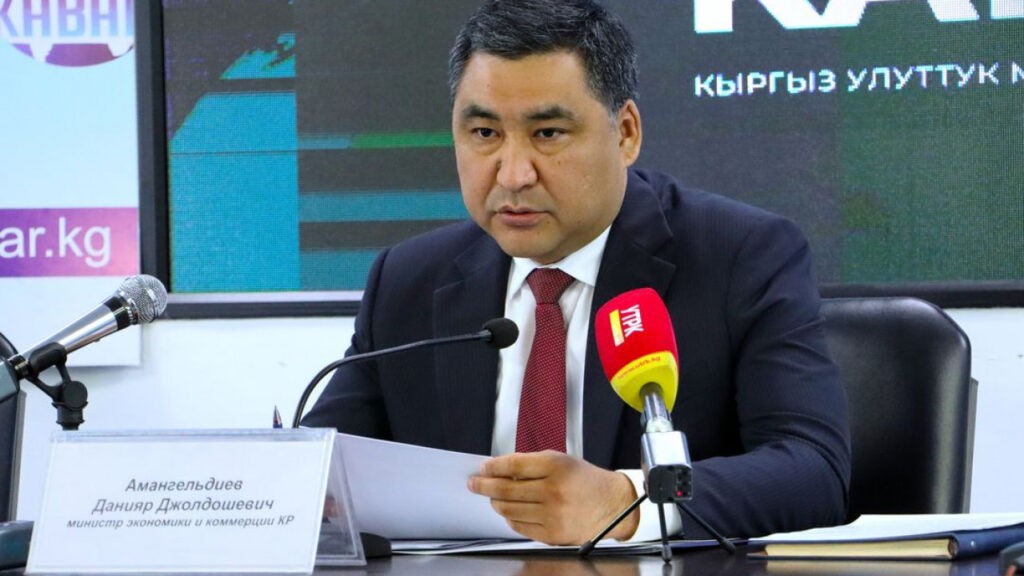
At a press conference on April 11, Minister of Economy and Commerce of the Kyrgyz Republic Daniyar Amangeldiev reported that amounting to $2.255 billion in January- February, Kyrgyzstan’s foreign trade turnover had increased by a 28.3% compared to the previous year. Kyrgyzstan’s exports increased by 18.4% to $307.5 million and imports rose by 30%, to $1.947 billion. At the beginning of the year, Kyrgyzstan’s trade with fellow members of the Eurasian Economic Union (EAEU) — Armenia, Belarus, Kazakhstan, and Russia — amounted to $482.7 million, illustrating a fall of 17.9% compared to the same period in 2023. Most of the country’s trade with the EAEU was with Russia (69.4%) and Kazakhstan (28.2%). Compared to January-February 2023, Kyrgyzstan’s trade with other countries grew 1.5-fold and reached $1.8 billion.

Kyrgyzstan Ranked 6th Largest Importer of Chinese Cars

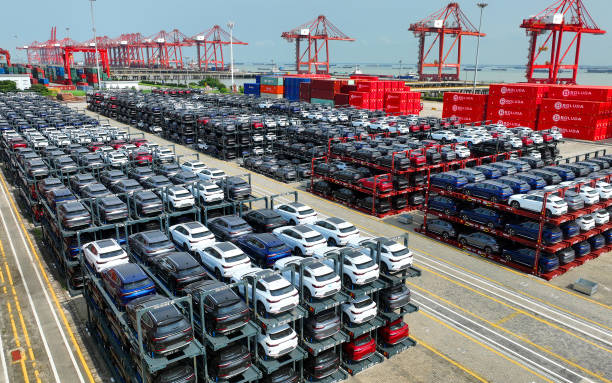
According to China’s customs statistics, in January-February 2024, Kyrgyzstan imported cars from China worth $510.3 million. Rising from 43rd place in 2023, Kyrgyzstan was ranked the world’s 6th largest buyer of Chinese cars at the beginning of this year. Only 5 countries exceeded Kyrgyzstan’s expenditure on Chinese cars in the same period: Russia, $1.5 billion; Belgium, $1.1 billion; UK, $1 billion; Mexico, $660 million; and Brazil, $590 million. As reported by Kyrgyzstan’s National Statistics Committee, in 2023 Kyrgyzstan imported 79,131 cars worth around $1.2 billion from China, an almost 45-fold increase compared to the 1,773 cars imported in 2022. One of the key reasons for the recent steep rise in Kyrgyzstan’s importation of Chinese cars is the war in Ukraine. As a result of Western sanctions, China has fast become Russia’s main supplier of new cars, a large percentage of which are re-exported to the country by Central Asia, especially Kyrgyzstan.

World Bank Boosts Kyrgyzstan’s Agricultural Productivity and Climate Resilience

The World Bank has announced funding of $30 million to help boost the productivity and climate resilience of Kyrgyzstan’s dairy and horticulture agri-food clusters. The project will be complemented by a $5 million grant from the Global Agriculture and Food Security Program. “Recognizing agriculture as a cornerstone of the Kyrgyz Republic's economy, the World Bank prioritizes the sector alongside energy and water in its new 2024-2028 Country Partnership Framework. The new project marks the beginning of a series of initiatives designed to support the Cabinet of Ministers' vision for a modernized, competitive, and climate-resilient agricultural sector," reported Tatiana Proskuryakova, World Bank Regional Director for Central Asia. Running until 2029, the initiative will help producers, processors, and other value chain participants to improve the quality and volume of their produce, access to markets through investment loans, training and capacity building, seed system enhancement, breeding, and information management. It will also focus on enhancing climate adaptation and mitigation through the promotion of climate-smart technologies as well as the employment of digital technology for accessing market information. The project will directly support 8,000 beneficiaries including individual farmers and producers, producer groups, small and medium processors, and other value chain participants in the agri-food clusters of dairy and horticulture. Indirect beneficiaries, numbering 20,000, will comprise farming communities and households of loan and training recipients, in addition to members of broader rural communities who will be afforded better jobs and opportunities to generate income.

Kyrgyzstan Continues to Combat Drug Shortages

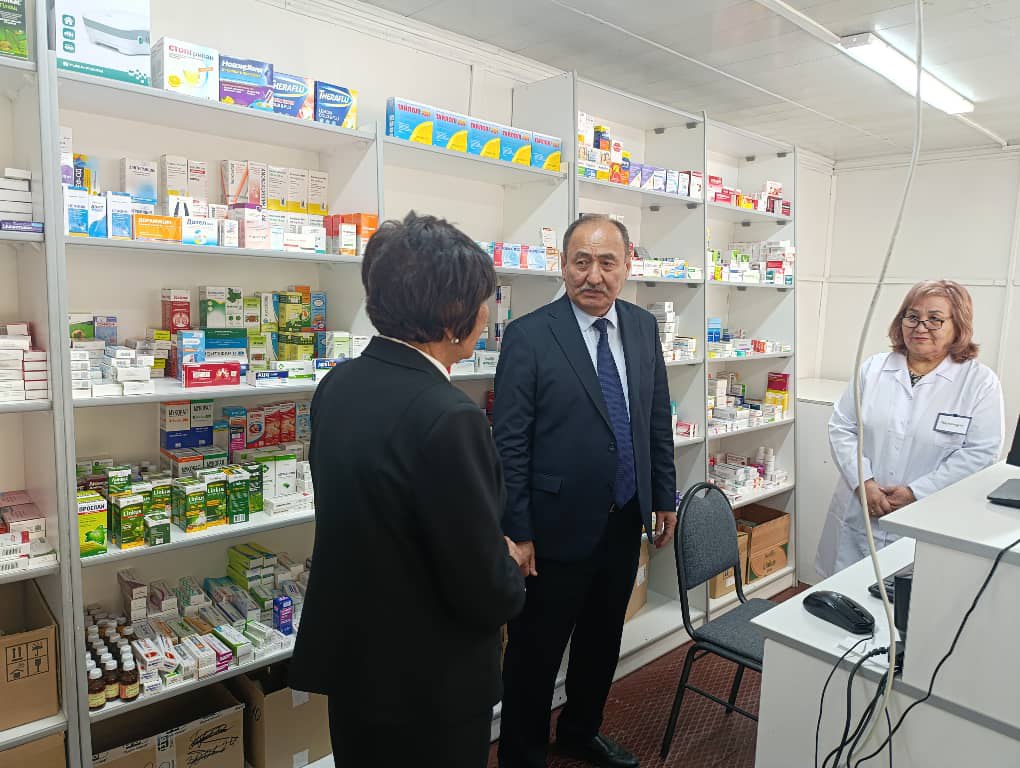
Health Minister of the Kyrgyz Republic, Alymkadyr Beishenaliyev has told local media that hospitals are 70-80% stocked with medicines, with hospitals in the Issyk-Kul region suffering the worst from short supplies. "There is a list of vital medicines, which we provide 100%. But doctors prescribe drugs which I, a medic, have never heard of; these are scarce drugs. Doctors used to get bonuses from private pharmacies [for prescribing them] - we are fighting this and it is impossible to change it in a short time," Beishenaliyev said. Kyrgyzstan's medical trade union reported that the country's hospitals lacked basic medicines and basic drugs. As of today, 290 medical organizations have applied for the necessary drugs, but are yet to receive them. Earlier this week, the Times of Central Asia reported about the difficult situation concerning the availability of drugs. Minister Beishenaliyev emphasized that the government is working to ensure hospitals have all the necessary drugs for the second quarter of 2024, promising that the problem would be resolved by 15 April. However, the head of Kyrgyzstan's medical trade union, Bermet Baryktabasova, criticized the statement made by the minister, saying that antibiotics, hormones, diuretics, anti-epileptic, psychotropic, cardiac and anti-asthma drugs are needed every day. It's medically advisable to have a three-month supply on hand, she said, adding that intensive care units need these drugs every minute, not next quarter. This year, to ensure timely and quality medical care, the Compulsory Medical Insurance Fund (CMIF) allocated 443.7 million sum ($5 million) for the purchase of medicines and medical devices.