• KGS/USD = 0.01144 0%
  • KZT/USD = 0.00213 0%
  • TJS/USD = 0.10714 0.09%
  • UZS/USD = 0.00008 0%
  • TMT/USD = 0.28571 0%
  • KGS/USD = 0.01144 0%
  • KZT/USD = 0.00213 0%
  • TJS/USD = 0.10714 0.09%
  • UZS/USD = 0.00008 0%
  • TMT/USD = 0.28571 0%
  • KGS/USD = 0.01144 0%
  • KZT/USD = 0.00213 0%
  • TJS/USD = 0.10714 0.09%
  • UZS/USD = 0.00008 0%
  • TMT/USD = 0.28571 0%
  • KGS/USD = 0.01144 0%
  • KZT/USD = 0.00213 0%
  • TJS/USD = 0.10714 0.09%
  • UZS/USD = 0.00008 0%
  • TMT/USD = 0.28571 0%
  • KGS/USD = 0.01144 0%
  • KZT/USD = 0.00213 0%
  • TJS/USD = 0.10714 0.09%
  • UZS/USD = 0.00008 0%
  • TMT/USD = 0.28571 0%
  • KGS/USD = 0.01144 0%
  • KZT/USD = 0.00213 0%
  • TJS/USD = 0.10714 0.09%
  • UZS/USD = 0.00008 0%
  • TMT/USD = 0.28571 0%
  • KGS/USD = 0.01144 0%
  • KZT/USD = 0.00213 0%
  • TJS/USD = 0.10714 0.09%
  • UZS/USD = 0.00008 0%
  • TMT/USD = 0.28571 0%
  • KGS/USD = 0.01144 0%
  • KZT/USD = 0.00213 0%
  • TJS/USD = 0.10714 0.09%
  • UZS/USD = 0.00008 0%
  • TMT/USD = 0.28571 0%

Viewing results 1 - 6 of 1687

Forthcoming Official Visit of Kyrgyz President to Kazakhstan

On April 9, Kazakh Prime Minister Olzhas Bektenov attended a meeting in Bishkek with the Chairman of the Cabinet of Ministers of Kyrgyzstan, Akylbek Japarov, to discuss an official visit by the President of Kyrgyzstan, Sadyr Japarov to Kazakhstan, on April 18-19. Akylbek Japarov emphasized the existing potential to increase the volume of trade turnover between the two countries which already amounts to $2 billion this year. In 2023, trade between Kazakhstan and Kyrgyzstan amounted to $1.317 billion, an increase of 11.6% compared to 2022. Bektenov, in turn, stated Kazakhstan’s readiness to increase its exports by $260 million. The parties noted that the planned launch of an Industrial Trade and Logistics Complex on the Kazakh-Kyrgyz border promised a multiplier effect and additional impetus to trade, economic, and investment cooperation. As the use of transboundary water resources for irrigation remains a vital issue in bilateral relations, the Kazakh prime minister emphasized the importance of approving operating modes of water management facilities for interstate use for the growing season of 2024. The meeting also addressed the need for collaboration to increase the transit capacity of the Kazakh-Kyrgyz border. The Concept for the Development of the Transit and Transport Potential of Kazakhstan, in place until 2030, covers the construction and reconstruction of checkpoints of Karasu, Besagash, Aukhatty, Sartobe, Aisha Bibi, Sypatai Batyr, and Kegen.

Kyrgyzstan Delivers Humanitarian Aid to Flood-Affected Kazakhstan

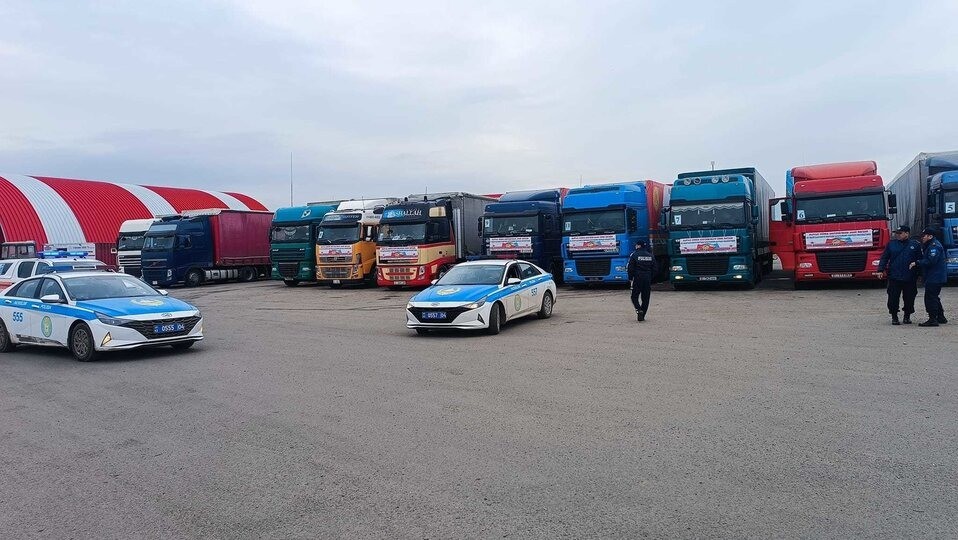
In response to the devastation caused by Kazakhstan’s unprecedented floods, on April 4, Chairman of the Cabinet of Ministers of the Kyrgyz Republic, Akylbek Japarov, announced that Kyrgyzstan would reach out a helping hand to its neighbour. A convoy of 15 trucks carrying 300 tons of humanitarian aid from Kyrgyzstan duly arrived in the city of Aktobe in Kazakhstan on 8 April. Emergency supplies include sunflower oil, sugar, rice, pasta, confectionery, as well as locally-produced mattresses and tents. As reported by the Kyrgyz Ministry of Emergency Situations, aid will be distributed amongst the four regions of Kazakhstan worst hit by unprecedented spring floods. Three trucks are headed the Kostanay region, 4 to the Aktobe region, 4 to the Ural region, and 4 to the Atyrau region. In a statement, Japarov recalled that following the explosion at the Bishkek thermal power plant on 2 February, which left the city without hot water and heating for several days, President of Kazakhstan Kassym-Jomart Tokayev sent 2,000 tons of diesel fuel. Expressing his gratitude for the help offered by Kazakhstan, he explained, “we will also send them humanitarian aid, even if they did not ask.”

Bishkek Locals Bemoan Corruption Which Yields Terrible Roads

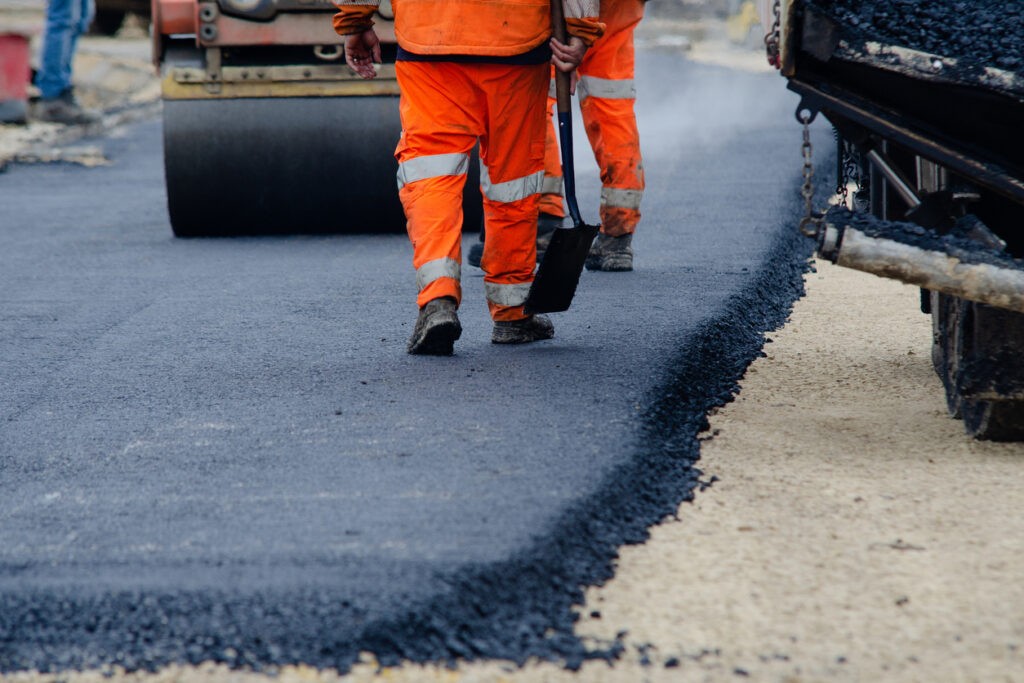
Residents of Bishkek are outraged by the condition of roads in the city. In their opinion, every spring the asphalt literally disappears. President Sadyr Japarov has said he shares the citizens' dissatisfaction. Responding to the criticism, representatives of the Ministry of Transport and Communications said that the presence of potholes and holes on highways is a natural process. "The situation depends on many factors, including weather and climatic conditions and the intensity of road traffic. The Ministry of Transport and Communications makes every effort to repair and properly maintain the roads of international state and local importance on its balance sheet and tries to fulfill the adopted plan for their construction and maintenance as much as possible, even exceeding this plan," the press service of the Ministry of Transport said. The ministry stressed that only 19,000 kilometers of roads are on the balance sheet of the Ministry, whilst the quality of the remainder of Kyrgyzstan's roads is monitored by municipal authorities in cities - and therefore Bishkek residents should complain to the city authorities. The capital's municipal services were also criticized by President Japarov, who said in an interview that it was time to change the system of road construction and maintenance completely. "How did the Ministry of Transport work in road construction for 30 years? If they needed to asphalt a road 100 kilometers long, they attracted private companies, calculated the cost of the work and demanded 10% of that amount from those same companies. Of course, they did not pay this 10% to the ministry, but into their own pockets. And after the private companies completed construction, they gave [more] money in order to put it into operation," Japarov stated. The President instructed the government to change the rules: roads should be repaired not by private companies, but by government agencies. The government is now allocating funds to buy its own equipment to help solve the problem of corruption, he said. Consequently, over the past two years, about 300 units of special equipment have been purchased and distributed to the regions. Another 450 special vehicles are expected to be delivered this year. The quality of roads will improve, though not immediately, Japarov said. Finding qualified personnel and strengthening their technical know-how will take time. "We have not increased funds for asphalting roads. The result is due to the fact that we started to build it ourselves... Of course, there are certain shortcomings in quality. However, as the saying goes, 'everything has its time,' and our transport workers will gradually achieve high quality. I think this process will take three to five years," the President concluded. This year, the capital's municipal authorities have barely reacted to the complaints of citizens; roads in Bishkek are being repaired slowly with the arrival of spring. However, after harsh criticism from the head of state, the situation has changed. Mayor of Bishkek, Aibek Junushaliyev recently went on an inspection to check construction work. "Bishkeksafalt service [has been tasked with] monitoring the quality of...

Experts in Kyrgyzstan Sound Alarm Over Acute Shortage of Medicines

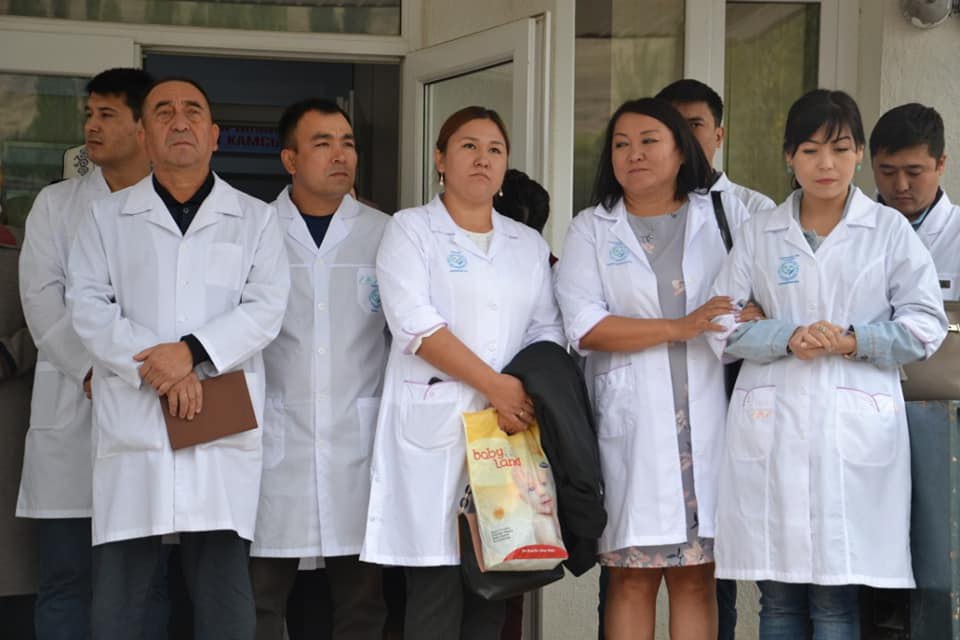
Doctors in the Central Asian republic are saying that medical institutions lack emergency, intensive care, pediatric, and cardio-pulmonary drugs, as well as contraceptives and the supplies needed for safe medical abortions. Kyrgyzstan's hospitals lack basic medicines and basic daily medications, according to Bermet Baryktabasova, head of the Kyrgyz Medical Trade Union. The Health Ministry cannot solve the problem on its own, she said, so resolution of the issue must involve the government, members of parliament (MPs) and national security services - otherwise, there will be a social catastrophe. "There are distress signals from all regions - there are no medicines, or they are running out. Requests to [Kyrgyzpharmacy] for the supply of medicines according to needs have been lying for the second quarter since the beginning of the year... The medicines arrive without accompanying documents (delivery notes, certificates, without specifying the purchase price and other financial and authorization papers)," Baryktabasova posted on social media. In March last year, the Kyrgyz authorities created the state enterprise, Kyrgyzpharmacy, to implement a new approach to providing hospitals with medicines at an affordable price. Later, the Cabinet of Ministers decided that the supply of drugs to public clinics will be handled by a single operator. Kyrgyzpharmacy also controls the quality of medicines, their storage and delivery, adding a 5% mark-up on the cost of goods. "State and municipal health care organizations pay for medicines and medical devices supplied to the state enterprise Kyrgyzpharmacy from the funds provided in the budget of the organizations for the relevant year. They may also purchase medicines not on the list from Kyrgyzpharmacy if supplies are available," the new law states. Problems with drug availability began mainly because of a decree prohibiting the importation of medicines that had not previously passed state registration and were not included in the relevant lists. The document was supposed to reduce the risks of importing low-quality medicines. However, most foreign pharmaceutical companies did not go through the complicated registration procedure; they often aren't interested in Kyrgyzstan's small market. Dastan Bekeshev, a member of the Supreme Council (Jogorku Kenesh), conducted a survey among citizens to find out what medicines are in short supply. As a result, the MP made a list of 50 items. "I decided to find out what is the reason for the shortage of medicines and sent a list of necessary medicines to the Ministry of Health. As it turned out, the geopolitical situation and the lack of registration of many drugs are to blame. The registration procedure should be simplified: if a medicine is registered in the U.S., U.K., Europe, Japan or Russia, we should by default register it in our country. So far, the bureaucratic procedure is more important than the lives of citizens," Bekeshev said. Responding to the deputy, the Ministry of Health explained that 30 "items" from the list are not registered in the Kyrgyz Republic. That means these drugs cannot be imported into the country. "In the absence of a prescribed drug in pharmacy organizations, citizens...

Chinese Businesses Making Inroads into Kyrgyzstan’s Energy Sector

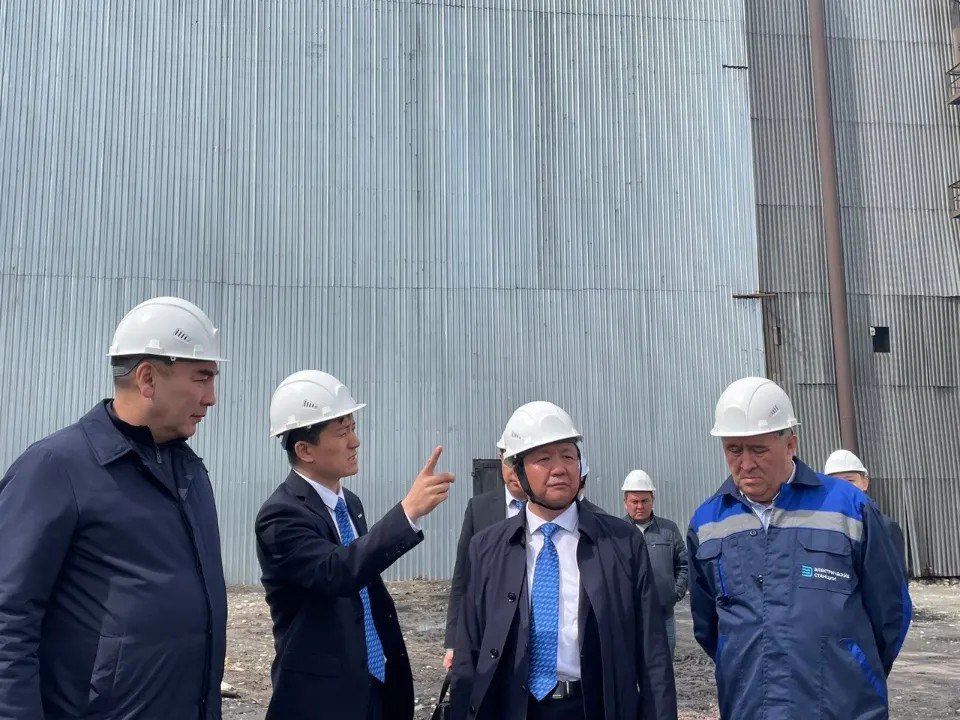
Chinese companies will repair two units of the Bishkek combined heat power plant (CHPP) and plan to invest more than $1 billion in other energy projects. Representatives of the Chinese company, TBEA visited the Bishkek CHPP, where it was decided that TBEA will send its specialists to overhaul the third and fourth power units, as well as train local specialists, the Ministry of Energy of Kyrgyzstan reported. TBEA chairman, Zhang Xin, together with the Kyrgyz Energy Minister, Taalaibek Ibraev, visited the Bishkek CHPP the previous day. The main topic under discussion was how to increase the electricity and heat capacity of the CHPP. Bishkek CHPP provides electricity to Bishkek and its suburbs, as well as heat to most apartment complexes in the capital. In 2017, TBEA built four new boiler units at the Bishkek CHPP with a total capacity of 300 MW. The Eximbank of China allocated a loan of $386 million back in 2013 for this purpose. After the accident at the CHPP in February this year, the Kyrgyz authorities decided to overhaul the old boilers. As a result, despite the corruption scandal in 2017, the same Chinese company will repair units three and four. Information on the reconstruction costs for the units has not yet been disclosed. When fully operational, Bishkek CHPP has 18 boiler units with a total capacity of 812 MW. Following the accident this winter, swathes of equipment failed and the total capacity of the CHPP was decreased by a large factor. Meanwhile, a Kyrgyz-Chinese business forum was held in Bishkek and attended by more than 60 companies, with contracts totaling $1.15 billion signed with various Chinese companies, mostly from the Xinjiang Autonomous Region. According to the Kyrgyz Government, a project to build a coal logistics center with a conveyor belt on the border of the two countries has been agreed upon and signed. The Chinese company, Dachenglongyuan, will invest $440 million in the project. The same company is reportedly to invest another $700 million to build a wind farm in southern Kyrgyzstan. Contracts for coal exploration and mining were also signed. Some experts attribute the accident at the Bishkek CHPP to low-quality coal mined in the Issyk-Kul region of Kyrgyzstan. One of President Japarov's campaign promises in 2020 was to end winter power outages and ensure the country's energy security. Despite the great opportunities for Chinese investors, however, many economists in Kyrgyzstan have warned against Kyrgyzstan's growing dependence on China. According to official data, as of January 1, 2024, Kyrgyzstan's debt stood at $6.3 billion, with about 40% of that owed to China's Eximbank.

Kyrgyzstan and China’s Xinjiang Expand Economic Cooperation

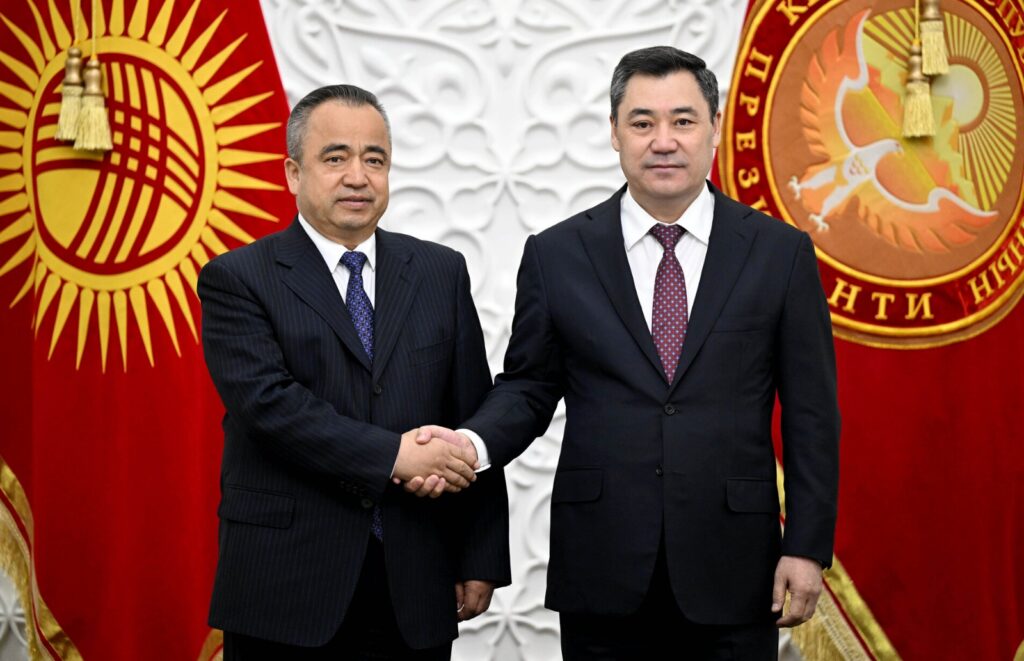
On April 2nd, President of the Kyrgyz Republic Sadyr Japarov met Chairman of the Government of China’s western Xinjiang Uyghur Autonomous Region, Erkin Tuniyaz in Bishkek. With the participation of business representatives of more than 50 Chinese companies, discussions focused on proposals for digitalization, transport, logistics, investment, agriculture, and humanitarian projects. President Japarov stated that China is one of his country’s main trade and investment partners and noted the successful progress of the construction of the China-Kyrgyzstan-Uzbekistan railway; the largest joint project to date. He also emphasized the importance of increasing cooperation with the XUAR and accelerating the practical implementation of further joint projects, adding that Kyrgyzstan is ready to expand and strengthen cooperation with China within the Belt and Road initiative and the Central Asia-China format. A key topic of discussions was the expansion of bilateral cooperation in rare metals mining, the opening of a new air route between the Kyrgyz city of Osh and Xinjiang’s Kashgar, and the establishment of joint commercial and industrial parks. Erkin Tuniyaz also met the Chairman of the Kyrgyz Cabinet of Ministers Akylbek Japarov, who said that “In trade and economic cooperation, we rely on Xinjiang; this region of China is for us a kind of gateway to your country.” According to Chinese statistics, trade turnover between the two countries in 2023 amounted to $19.8 billion; an increase of 30% since 2022.