• KGS/USD = 0.01144 0%
  • KZT/USD = 0.00213 0%
  • TJS/USD = 0.10767 0.09%
  • UZS/USD = 0.00008 0%
  • TMT/USD = 0.28490 0%
  • KGS/USD = 0.01144 0%
  • KZT/USD = 0.00213 0%
  • TJS/USD = 0.10767 0.09%
  • UZS/USD = 0.00008 0%
  • TMT/USD = 0.28490 0%
  • KGS/USD = 0.01144 0%
  • KZT/USD = 0.00213 0%
  • TJS/USD = 0.10767 0.09%
  • UZS/USD = 0.00008 0%
  • TMT/USD = 0.28490 0%
  • KGS/USD = 0.01144 0%
  • KZT/USD = 0.00213 0%
  • TJS/USD = 0.10767 0.09%
  • UZS/USD = 0.00008 0%
  • TMT/USD = 0.28490 0%
  • KGS/USD = 0.01144 0%
  • KZT/USD = 0.00213 0%
  • TJS/USD = 0.10767 0.09%
  • UZS/USD = 0.00008 0%
  • TMT/USD = 0.28490 0%
  • KGS/USD = 0.01144 0%
  • KZT/USD = 0.00213 0%
  • TJS/USD = 0.10767 0.09%
  • UZS/USD = 0.00008 0%
  • TMT/USD = 0.28490 0%
  • KGS/USD = 0.01144 0%
  • KZT/USD = 0.00213 0%
  • TJS/USD = 0.10767 0.09%
  • UZS/USD = 0.00008 0%
  • TMT/USD = 0.28490 0%
  • KGS/USD = 0.01144 0%
  • KZT/USD = 0.00213 0%
  • TJS/USD = 0.10767 0.09%
  • UZS/USD = 0.00008 0%
  • TMT/USD = 0.28490 0%

Viewing results 1 - 6 of 109

Uzbekistan to Send 7,000 Workers to Russia Under New Agreements

Uzbekistan and Russia have agreed to establish a new system for regulating labor migration. The decision was reached during a meeting in Moscow between the director of Uzbekistan’s Migration Agency, Behzod Musayev, and the head of Russia’s Federal Agency for Labor and Employment, Mikhail Ivankov. A key component of the agreement is the creation of specialized training centers in Uzbekistan to prepare citizens for employment in Russia. These centers will provide essential skills and qualifications to facilitate the transition for Uzbek labor migrants. Additionally, Uzbek workers will now be able to take a required Russian language exam in Tashkent before traveling to Russia. The exam, which is necessary for obtaining a work permit, will be administered at the Tashkent branch of the Sakharov Multifunctional Migration Center. To simplify employment procedures, Uzbekistan has signed agreements with several major Russian companies, including Ant Yapi, Ozon Community, PEK, and SPAR Middle Volga. Under these agreements, 7,000 Uzbek citizens will be provided with official employment in Russia. The Migration Agency has reviewed working conditions and salaries, and candidate selection will take place across Uzbekistan in February. Meanwhile, Russia is tightening immigration regulations, potentially affecting millions of Central Asian migrants. A proposed law from the Russian Ministry of Education would require migrant children to pass a Russian language test. Those who fail must enroll in a three-month language program at their parents’ expense. Families that do not comply may face investigations and administrative penalties. As of September 1, 2024, nearly four million Central Asian migrants were officially residing in Russia. Amid increasing restrictions, challenges for migrant workers continue to mount. The Times of Central Asia previously reported that some Central Asian migrants have signed contracts with the Russian Ministry of Defense to participate in the war in Ukraine, primarily for financial reasons. However, economic hardship is not the only factor driving recruitment. Central Asians with Russian citizenship have also faced threats of imprisonment if they refuse to fight. Separately, Ukraine has reported that approximately 30 Central Asian citizens have been taken prisoner since the start of Russia’s invasion in February 2022. Ukrainian Justice Minister Olha Stefanishyna disclosed this information in response to an inquiry from Radio Free Europe/Radio Liberty’s Novosti Priazovya project. However, their current status remains unclear. According to Ukraine’s Justice Ministry, prisoner nationality is often determined based on personal statements, as many detainees lack documents confirming their citizenship. The ministry emphasized that all prisoners of war, regardless of nationality, are granted the same legal status under both international and national law.

More Kyrgyz Labor Migrants Head to the UK

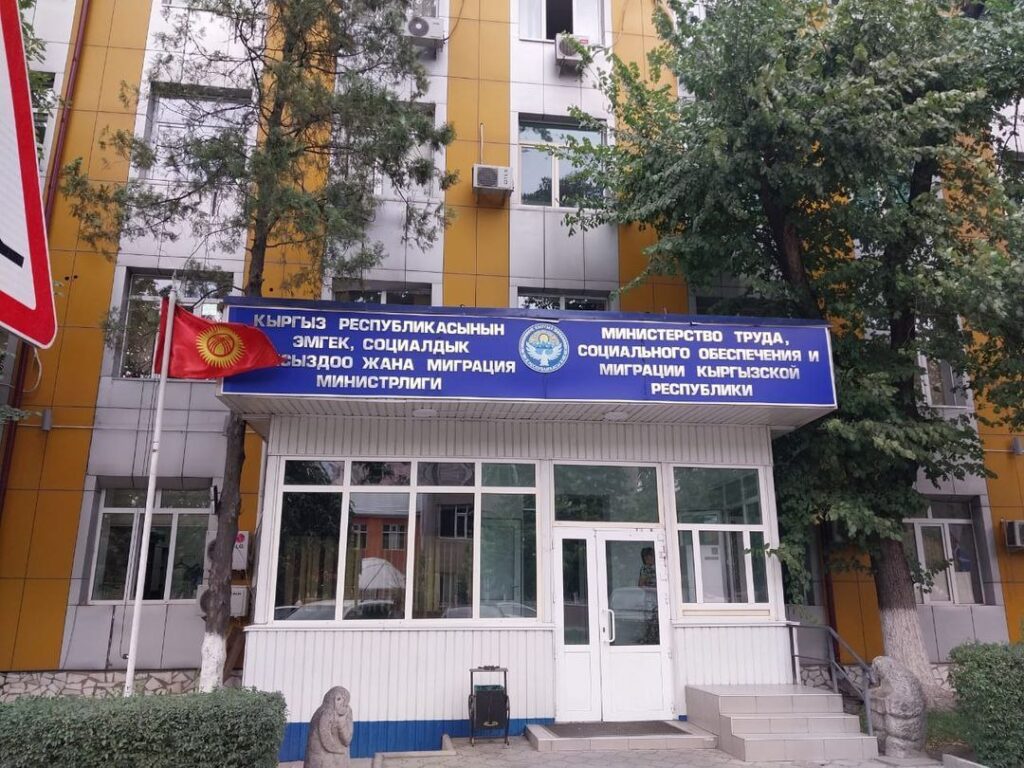
The number of Kyrgyz citizens working as seasonal agricultural laborers in the UK has continued to rise, reaching 8,131 in 2024, up from 5,200 in 2023 and 1,492 in 2022. These figures were announced by Kyrgyzstan’s Minister of Labor, Social Security, and Migration, Ravshanbek Sabirov, during a January 28 meeting with the British Ambassador to Kyrgyzstan, Nicholas Bowler. Expanding Labor Migration Cooperation The meeting focused on Kyrgyz-British cooperation in labor migration. Minister Sabirov requested the ambassador’s assistance in increasing the quota for Kyrgyz seasonal workers and reducing additional fees associated with British visa applications. Ambassador Bowler acknowledged the discipline and reliability of Kyrgyz migrant workers, noting that they return home in the same numbers as they arrive, complying with UK immigration laws. Economic Impact and Employment Conditions According to Minister Sabirov, remittances from Kyrgyz workers in Britain’s agricultural sector are expected to exceed $100 million. He emphasized that even with a relatively small workforce, these remittances significantly contribute to Kyrgyzstan’s economic growth. The Kyrgyz Ministry of Labor’s Center for Employment of Citizens Abroad, which oversees seasonal labor placements in the UK, reports that Kyrgyz workers receive a wage of £11.44 per hour and are guaranteed a minimum of 32 hours per week. In Britain, most Kyrgyz migrants are employed on strawberry farms. Shift Away from Russia For the past 30 years, Russia has been the primary destination for Kyrgyz labor migrants, with estimates ranging from 500,000 to over a million. However, Russia’s economic downturn, stricter migration policies, and increasing hostility toward Central Asian workers have prompted many Kyrgyz migrants to seek alternative destinations. As a result, more Kyrgyz workers are heading to Kazakhstan, Turkey, Germany, South Korea, the United States, and Great Britain, reflecting a broader shift in Kyrgyzstan’s labor migration patterns.

New Labor Code Comes Into Force in Kyrgyzstan

A new Labor Code has been implemented in Kyrgyzstan, introducing significant changes to labor relations in the country. The updated code includes provisions for remote work, digital labor records, and streamlined labor contracts. Additionally, relations between employees and employers will now be regulated by a separate law, “On Social Partnership.” President Sadyr Japarov signed the new Labor Code into law following its approval by Kyrgyzstan’s parliament. The reforms aim to modernize the nation’s labor practices by accelerating the digitalization of processes. Under the new code, paper labor contracts are no longer mandatory. Instead, electronic contracts will suffice for official use and inspection purposes. One of the notable provisions in the code allows for remote and hybrid work arrangements. “The labor contract, by agreement of the parties, may establish both remote work and combined remote work,” states the law, marking a shift toward more flexible employment practices. The reforms also address labor books, which traditionally served as a lifelong record of an individual’s work history. Citizens now have the option to use digital labor books, though paper versions remain valid. However, the exact platform or system for storing the digital data has yet to be determined. Another change eliminates the longstanding practice of shifting days off to accommodate public holidays. Previously, the Ministry of Labor, Social Security, and Migration could declare surrounding weekdays as non-working days. Under the new code, this practice has been discontinued, reducing the total number of non-working holidays. The Labor Code introduces several worker protections. Employers are now required to provide lump-sum benefits in the event of labor-related injuries or the death of an employee. A single penalty rate of 0.25% has been established for late payments of wages, vacation pay, severance pay, and other compensation. Employees will also have a three-year limitation period to file wage-related disputes. Additionally, the code prohibits the employment of pregnant women and nursing mothers in hazardous or physically demanding jobs, further strengthening workplace protections for vulnerable groups. These reforms are expected to streamline labor relations, improve worker protections, and align Kyrgyzstan’s labor policies with modern international standards.

Migrants from Kyrgyzstan Anticipate Tougher Conditions for Work in Russia

A majority of Kyrgyz citizens believe that working conditions for migrants in Russia will deteriorate significantly in the near future, according to a recent survey by the FOCUS Alliance of Euro-Asian Sociologists. Survey Findings The survey results paint a grim outlook for migrant workers from Kyrgyzstan: 61.5% of respondents believe that conditions for migrant workers in Russia will worsen significantly. 14.7% think the situation will remain the same. 10.7% are confident that despite challenges, migrants will adapt. Only 4.4% are optimistic, expecting improved conditions for foreign workers. Another 8.9% found it difficult to predict the future of migrant labor in Russia. A similar sentiment was observed in Uzbekistan. According to the same survey: 35% of Uzbek respondents believe it will become impossible for migrants to find work in Russia. 28% believe the situation will remain stable. 22% are confident that migrant workers will overcome challenges. 6% expect conditions to improve. The survey, which included 1,433 participants, used a random sampling method with a margin of error of 3%. Stricter Migration Policies in Russia Russia has tightened its migration policies in recent months, with the State Duma passing multiple bills aimed at increasing oversight of foreign nationals. The crackdown on migration follows a terrorist attack at Moscow's Crocus City Hall, which reignited debates around national security and the regulation of foreign labor. Russian President Vladimir Putin emphasized that the interests of Russian citizens must take priority in drafting migration laws. He also stressed the importance of migrants adhering to local legislation and having knowledge of the Russian language. These developments reflect a growing trend in Russia to limit migration and impose stricter conditions on foreign workers. Kyrgyzstan’s Response Despite the challenges, Kyrgyzstan remains committed to labor migration as a critical aspect of its economy. Deputy Chairman of the Cabinet of Ministers Edil Baisalov reassured that the country will continue to export labor to Russia. Russia is a key destination for Kyrgyz migrant workers, with remittances from workers abroad making up a significant portion of Kyrgyzstan’s GDP. However, with stricter migration laws and a shifting labor market, the ability of Kyrgyz workers to sustain their livelihoods in Russia may face serious obstacles. The survey results highlight widespread pessimism among Kyrgyz and Uzbek citizens regarding the future of migrant work in Russia. Stricter migration policies and a focus on prioritizing Russian citizens are contributing to uncertainty for Central Asian migrant workers. While Kyrgyzstan continues to rely on labor migration to support its economy, adapting to the evolving conditions in Russia will require resilience and potentially new strategies to protect its migrant workforce.

Employees in Uzbekistan to be Rewarded with Company Shares

Uzbekistan is to introduce an initiative to reward employees with shares in companies, under a  regulation  developed by The National Agency for Perspective Projects (NAPP). According to the NAPP, the transfer of shares to employees, as part of additional incentive programs, including bonuses, will help increase employee interest in the company's sustainable development and improve labor relations. The main goal of the initiative, modelled on ESOP (Employee Stock Ownership Plan) successfully applied in other countries, is to improve the population's welfare and develop the domestic capital market. Although joining in the Stock Ownership Plan will be voluntary, its development will be mandatory for joint stock companies with more than 50% state participation. The presidential decree on capital market development, issued in September 2023, envisioned the implementation of ESOP. Funds of up to one month's salary used to purchase shares will not be subject to personal income tax.

World Bank: Uzbekistan Must Tackle Gender Inequality

The World Bank Uzbekistan has published a new “Country Gender Assessment Report: Uzbekistan” on gender assessment in the country. This report (CGA) was produced with financial support from Great Britain. This report examines gender equality in Uzbekistan in various areas such as education, health, economic activity, protection from gender-based violence, marriage, divorce, and participation in public life. CGA examines social norms, assessing cultural attitudes and practices that affect women’s rights and understandings in Uzbek society. The report makes recommendations to close the gender gap and promote inclusive prosperity. CGA notes that since 2017, significant progress has been made in terms of gender equality in Uzbekistan. Notable achievements include the 2022 Labor Code, which provides for equal pay for women and removes job restrictions. In addition, 2023 amendments to the Criminal Code criminalize domestic violence. Consequently, the “Women, business and Rights” index released annually by the World Bank recognized Uzbekistan as one of the top five countries in terms of gender equality in 2024. Women’s access to education and health services has improved significantly. For example, during the period 2017-2022, the number of admissions to higher education institutions increased significantly, the number of men increased by three times to 29%, and the number of women increased by four times – to 27.4%. Young women face higher unemployment rates than males (15.5% vs 10%), and the share of young women who were not in employment, education, or training (NEET) has reached 42%, compared to 8.8% for males. In addition, the gender pay gap is significant, with women earning 34% less than men, which is more than the global average of 20%. Women’s low wages and employment rates directly hinder economic growth and exacerbate poverty in Uzbekistan. If women participated in the country’s economy on an equal basis with men, the national income in Uzbekistan would increase by 29%. Simply equalizing men’s and women's wages would lift more than 700,000 people out of poverty. However, gender norms, which place women primarily in charge of caregiving and household tasks, hinder progress towards gender equality and inclusive economic growth. The report states that the authorities must address gender inequality to realize Uzbekistan’s full economic potential. These include entrenched social norms that limit women’s economic participation, disparities in access to higher education in STEM fields, health care limitations, deteriorating family planning options, incomplete protection from gender-based violence, and the disparity of women in leadership roles.