• KGS/USD = 0.01144 0%
  • KZT/USD = 0.00202 0%
  • TJS/USD = 0.10618 -0.28%
  • UZS/USD = 0.00008 0%
  • TMT/USD = 0.28490 -0.28%
  • KGS/USD = 0.01144 0%
  • KZT/USD = 0.00202 0%
  • TJS/USD = 0.10618 -0.28%
  • UZS/USD = 0.00008 0%
  • TMT/USD = 0.28490 -0.28%
  • KGS/USD = 0.01144 0%
  • KZT/USD = 0.00202 0%
  • TJS/USD = 0.10618 -0.28%
  • UZS/USD = 0.00008 0%
  • TMT/USD = 0.28490 -0.28%
  • KGS/USD = 0.01144 0%
  • KZT/USD = 0.00202 0%
  • TJS/USD = 0.10618 -0.28%
  • UZS/USD = 0.00008 0%
  • TMT/USD = 0.28490 -0.28%
  • KGS/USD = 0.01144 0%
  • KZT/USD = 0.00202 0%
  • TJS/USD = 0.10618 -0.28%
  • UZS/USD = 0.00008 0%
  • TMT/USD = 0.28490 -0.28%
  • KGS/USD = 0.01144 0%
  • KZT/USD = 0.00202 0%
  • TJS/USD = 0.10618 -0.28%
  • UZS/USD = 0.00008 0%
  • TMT/USD = 0.28490 -0.28%
  • KGS/USD = 0.01144 0%
  • KZT/USD = 0.00202 0%
  • TJS/USD = 0.10618 -0.28%
  • UZS/USD = 0.00008 0%
  • TMT/USD = 0.28490 -0.28%
  • KGS/USD = 0.01144 0%
  • KZT/USD = 0.00202 0%
  • TJS/USD = 0.10618 -0.28%
  • UZS/USD = 0.00008 0%
  • TMT/USD = 0.28490 -0.28%
12 February 2026

Viewing results 1 - 6 of 296

Fugitive Oligarchs Ablyazov and Khrapunov Ordered to Return $32 Million to Kazakhstan by U.S. Court

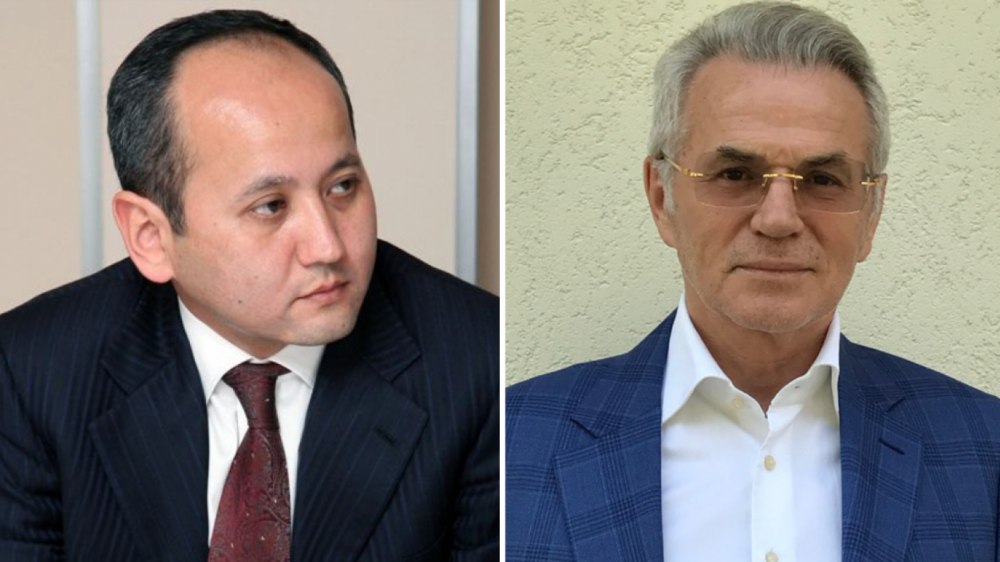
Kazakhstan has secured a victory in the United States against Felix Sater and his companies, which were involved in investing money stolen by Mukhtar Ablyazov from BTA Bank. The jury in the U.S. District Court for the Southern District of New York awarded over $32 million in favor of BTA and the city of Almaty. In addition, the Kazakh oligarch and former Mayor of Almaty and Minister of Emergency Situations, Viktor Khrapunov, was reported by BTA's press service to have caused multi-billion-dollar damages through his actions. After a three-week trial, the jury recognized BTA Bank and the city of Almaty as victims of Sater's unlawful activities, which included the misappropriation of property, unjust enrichment, and obtaining money fraudulently. The compensation awarded exceeded the requested amount, totaling more than $32 million including interest. The trial, which began on June 10, 2024, demonstrated that Mukhtar Ablyazov abused his position at BTA Bank by issuing fictitious loans worth billions of dollars, leading to the bank’s collapse. At the time, BTA was the third-largest bank in Kazakhstan. Ablyazov also privatized state land and sold it at undervalued prices to companies he controlled. In addition, the Khrapunov's fraudulent actions, meanwhile, caused over $300 million in damages to Almaty, leaving significant urban land undeveloped, whilst other assets were sold to the Khrapunovs shell companies for significantly less than their market value through fictitious tenders. Evidence presented in court showed that Ablyazov and Khrapunov combined their stolen funds, with Ilyas Khrapunov, Viktor’s son and Ablyazov’s son-in-law, accused of laundering a substantial part of these funds. In September 2018, a UK court fined Ilyas Khrapunov $500 million for helping Ablyazov breach an asset freezing order. The Bayrock Group, Inc., Global Habitat Solutions (both owned by Sater), and MeM Energy Partners LLC (owned by Mendel Mochkin) were found to have facilitated the laundering of the stolen money into the U.S. financial system. The jury determined that Sater and Mochkin knowingly laundered the funds stolen by Ablyazov and Khrapunov. Additionally, the jury, having been presented with comprehensive evidence of Ablyazov's fraud against BTA Bank, returned a unanimous verdict against his co-conspirators. For the first time, a U.S. jury also unanimously ruled in favor of the city of Almaty concerning fraud committed by Viktor Khrapunov. Sater was not the only defendant in the asset laundering case. Daniel Ridloff and RRMI-DR LLC were also ordered to return assets to BTA and the Almaty Akimat. Ferrari Holdings LLC, another defendant, is in default, but Almaty Akimat and the bank plan to seek a judgment against it. In Kazakhstan, in 2018 Mukhtar Ablyazov was sentenced in absentia to life imprisonment for organizing a murder and embezzling funds from depositors of BTA Bank. In the same year, Viktor Khrapunov and his wife, Leila Khrapunova, were also sentenced in absentia to 17 and 14 years in prison, respectively. Back in December 2022, the Southern District Court in New York ruled against Ablyazov and his associates in the amount of $218 million. In total, Ablyazov stands accused of...

Inside Turkmenistan: What Self-Isolation Reveals About the Nation

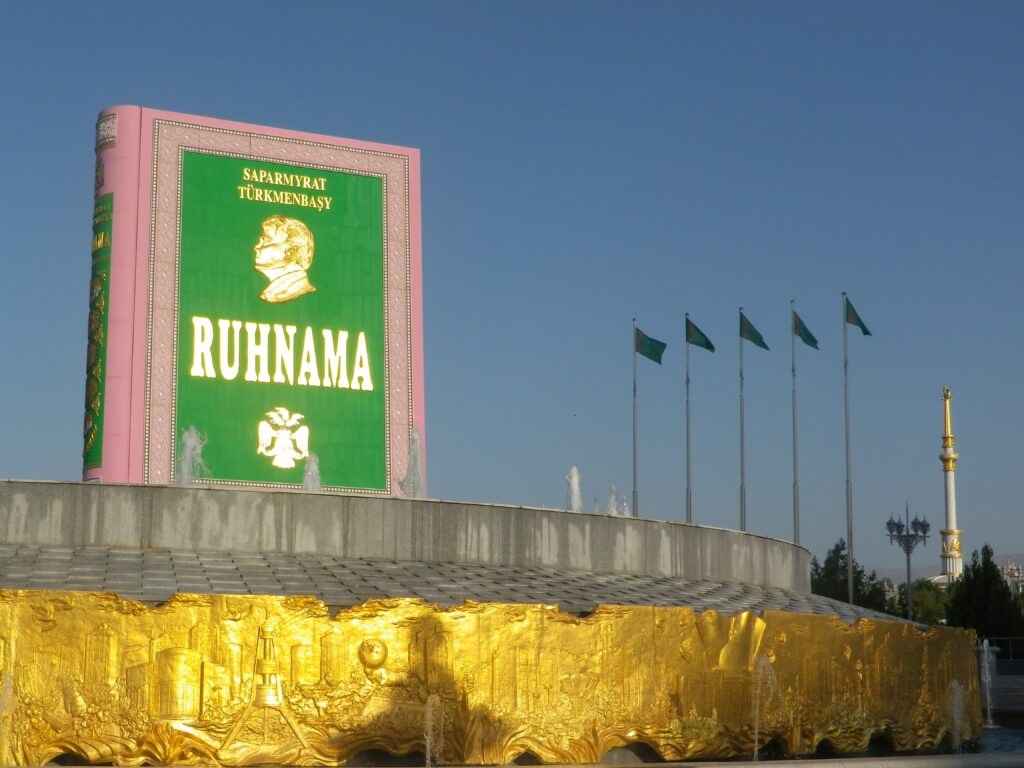
Getting into Turkmenistan has always been a complex undertaking. For most foreigners, the only option available is to apply through an accredited Turkmen travel firm, meaning a 'guide' will trail ones every move. Alternately, there is a five day transit visa, though these are denied more often than they are issued. Arguably the second most insular state in the world after North Korea, it is fair to say that Turkmenistan really isn't in the market for tourists. Frozen in time The first leader of independent Turkmenistan was Saparmurat Niyazov, who climbed up the ladder in the Soviet nomenklatura (administration) and held such positions as First Secretary of the Ashgabat City Committee of the Communist Party of the Turkmen SSR; Chairman of the Council of Ministers of the Turkmen SSR (i.e., Prime Minister); and First Secretary of the Central Committee of the Communist Party of the Turkmen SSR before the collapse of the Soviet Union. From First Secretary, he became President of Turkmenistan for life, as formalized legislatively in 1999. In the second half of 1993, the Democratic Party of Turkmenistan (formerly the Communist Party of the Turkmen SSR) proposed the extension of Niyazov's powers until 2002 - a second term without re-election - and in January 1994, 99.9% of voters purportedly supported this in a nationwide referendum. From 1994 to 1995, Turkmenistan considered renaming the president's office "Shah" and declaring the republic a Shahdom. However, the idea did not find favor with the elders. Niyazov's strained relationship with his son was also taken into account, and the idea was buried. Declaring himself "Turkmenbashi" (father of the Turkmen people," Niyazov began to rain down a cavalcade of decrees including bans on lip-syncing, car radios, cinema, clowns and the playing of recorded music at weddings. Long hair on men and beards were outlawed, citizens with gold teeth ordered to have them extracted. "I watched young dogs when I was young," Niyazov stated. "They were given bones to gnaw to strengthen their teeth. Those of you whose teeth have fallen out did not chew on bones. This is my advice." All hospitals outside of Ashgabat were shut and the funds were instead spent on a $20 million new leisure center for horses. Compulsory education was cut by a year so students could no longer qualify to study abroad. The opera house and ballet boarded up, in place of culture came such fanciful projects as the $50 million dollar Turkmenbashi’s World of Fairytales theme park and the world’s largest shoe. Six meters long and one and a half meters tall, it was manufactured to symbolize the "great strides" Turkmenistan had made under Niyazov’s leadership. Numerous editions of Niyazov's, Ruhnama, (book of the soul) - his version of Mao’s Little Red Book - were released. A heady cocktail of pseudo-spiritual cogitations and revisionist history, the book claimed the Turkmen people to be the inventors of the wheel and heirs to Earth’s oldest civilisation. Within a year, most bookstores carried nothing but the Ruhnama, and novelists...

Kuandyk Bishimbayev Murder Sentence Appeal Rejected

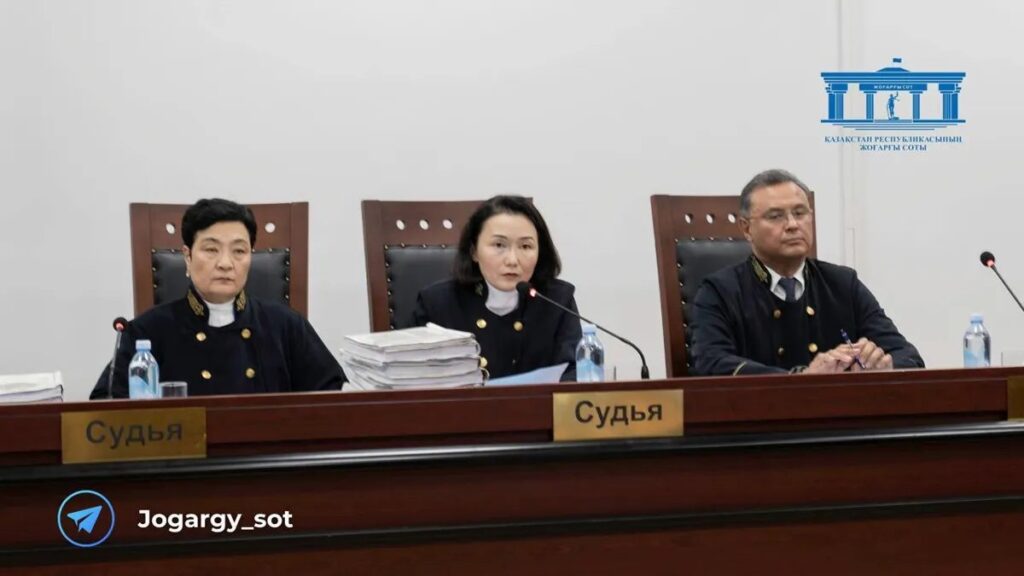
On June 26 an appeal court in Kazakhstan's capital Astana upheld the 24-year prison sentence for murder handed down to the country's former minister of national economy, Kuandyk Bishimbayev. On 13 May Bishimbayev, a minister in the government of Kazakhstan's first president Nursultan Nazarbayev, was found guilty of killing his common-law wife, Saltanat Nukenova, at a restaurant in Astana late last year. The appeal court ruling states: "The judicial board decides that the verdict of the Specialized Interdistrict Court on criminal cases of Astana from May 13, 2024, in respect of Kuandyk Bishimbayev, made with the participation of jurors, should be left unchanged." The owner of the restaurant where Nukenova was murdered, Bakhytzhan Baizhanov, was found guilty of harboring a particularly serious crime. Baizhanov was sentenced to four years in prison in a medium security penal institution. His sentence has also been upheld. During the trial, as public outrage over Nukenova’s killing simmered in Kazakhstan, president Kassym-Jomart Tokayev signed a new law in April in line with OECD standards which tightens the penalties for domestic violence and provides more help for survivors. The legislation became widely-dubbed, “Saltanat’s Law.” Bishimbayev's lawyer, Nazken Kusainova, has commented that Bishimbayev intends to make further appeals to the Supreme Court of Kazakhstan and the Human Rights Committee.

Doctor Shortage in Turkmenistan’s Prisons

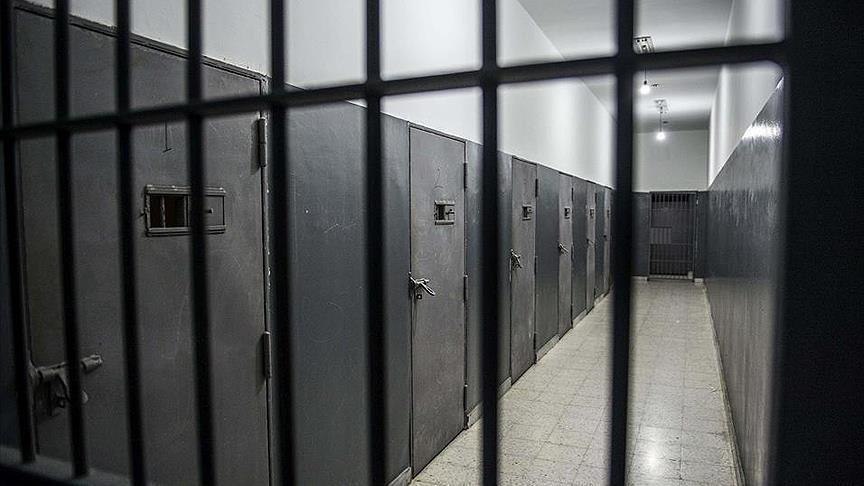
As outlined in a report in Turkmen Newsed, the Turkmenistan's Ombudsman Yazdursun Gubannazarova has recently published a paper highlighting concerns following visits to detention centres and meetings with prisoners in 2023. Throughout the past year, the Ombudsman conducted investigations in both the MR-E/14 detention centre and the MR-B/15 prison hospital in the Maryam region. The detention centre consists of two rooms with 160 and 150 beds, built in 1964 and 1984. Inspections showed that conditions in the dormitories required updating to meet modern sanitary and hygiene standards. Staffing in the prison hospital is a serious issue. Vacancies remain unfilled, creating a chronic shortage of medical personnel and on occasion, leaving inmates to administer their own injections and IVs (intravenous injections). Nevertheless, according to feedback on group and individual meetings with the hospital's prisoners,  “Except for the convicts' remorse and requests (for)parole, no complaints were made". It was a different situation in the prison. The Ombudsman reports that 562 written complaints were submitted in 2023: 457  by Turkmens, 65 by Uzbeks, 46 by Russians, and 13 by Azerbaijanis, 3 by  Tatars, 6 by Mordovians and Ukrainians, 2 by Persians, and one each by Armenians, Kazakhs, and Germans.  Requests for help from the Human Rights Ombudsman  from the  Baloch ethnic minority, who living in the Meri province, are frequent targets of violence, were either not received or ignored. Perhaps this is unsurprising given that only 17 of the complaints were addressed whilst the rest went ignored.

Uzbekistan to Protect Children from Religious Extremism

The Legislative Chamber of the Oliy Majlis (Supreme Assembly of Uzbekistan) has adopted a draft law to further strengthen children's rights and prevent their becoming "victims of ideas of religious extremism, separatism and fanaticism." The bill states that "the transfer of a child for religious education to unregistered or unlicensed organizations or persons who have no special religious education and who provide religious education without permission from the central governing body of religious organizations in Uzbekistan is prohibited." Parents or guardians registering children in illegal religious education will be fined the equivalent of up to $270 and repeated offenses could result in administrative arrest for up to 15 days.  

Kazakhstan’s Attempts to Address Disinformation and Media Freedom

On June 19, President Tokayev signed amendments to the law governing Kazakhstan's mass media. Meanwhile, public debate on foreign and domestic media that allegedly receive financing from abroad continues. While human rights activists focus on the principle of freedom of speech, political analysts are concerned about a string of disinformation campaigns attempting to destabilizing the country. The respective changes to legislative acts affect a wide range of issues. In particular, a new and broader concept of mass media has been introduced which includes internet resources. It is envisaged that a Unified Media Platform will be created to implement the state’s information policy, including grants for non-state media and accreditation of journalists to state bodies and organizations through a simplified accreditation procedure. In addition, the statute of limitations for claims brought against the media to refute information that does not correspond to facts and defames honor, dignity, and business reputation has been reduced to one year. Under the new law, Kazakhstan's Ministry of Foreign Affairs has the right to deny accreditation to foreign journalists "in case of a threat to the national security of the Republic of Kazakhstan." A few months ago, the Ministry did not issue accreditation to 36 correspondents from Azattyk. The publication subsequently filed a lawsuit, and in April, the media outlet and the Ministry reached a mediation agreement. While the new law focuses mainly on foreign funded domestic media, experts cite recent examples of pressures on Kazakhstan’s society and authorities through disinformation campaigns that mostly originated from abroad. For instance, a week ago in Kyiv, Ukrainian authorities claimed an assassination attempt was made on Kazakhstani national Aidos Sadykov, the creator of a YouTube channel called Bәse. Sadykov and his wife Natalya were placed on the wanted list in Kazakhstan in October 2023 for “inciting social, national, clan, racial, class, or religious discord.” Their inclusion on the list is linked to the January 2022 coup attempt and riots, as well as their ties to controversial fugitive billionaire Mukhtar Ablyazov, who currently has judgements against him in U.S. and UK courts exceeding $5 billion. Ablyazov faced murder charges in Kazakhstan following the death of the CEO of a local bank that he later took over and reportedly defrauded. According to government authorities, Sadykov repeated Ablyazov's calls for violence surrounding the January 2022 coup attempt as well as the Mazhilis elections in March 2023, where the channel openly called for organizing riots. Furthermore, on the one-year anniversary of the January 2022 events, his Bәse channel gave instructions to overthrow the government in Kazakhstan, following the example of events in Ukraine. The four-minute video includes information on how to create coordination committees for regime change. Natalya Sadykova has also worked for the Respublika newspaper, allegedly funded by Ablyazov. Aidos Sadykov had previously served two years in Kazakhstan for hooliganism and fled to Kyiv in 2014. The alleged perpetrators of the attack on Sadykov, Meiram Karataev and Altai Zhakanbaev, are Kazakhstani citizens. Shortly after the purported assassination attempt, Natalya Sadykova accused Kazakhstan’s...