• KGS/USD = 0.01144 0%
  • KZT/USD = 0.00212 0%
  • TJS/USD = 0.10549 -0.28%
  • UZS/USD = 0.00008 0%
  • TMT/USD = 0.28530 0%
  • KGS/USD = 0.01144 0%
  • KZT/USD = 0.00212 0%
  • TJS/USD = 0.10549 -0.28%
  • UZS/USD = 0.00008 0%
  • TMT/USD = 0.28530 0%
  • KGS/USD = 0.01144 0%
  • KZT/USD = 0.00212 0%
  • TJS/USD = 0.10549 -0.28%
  • UZS/USD = 0.00008 0%
  • TMT/USD = 0.28530 0%
  • KGS/USD = 0.01144 0%
  • KZT/USD = 0.00212 0%
  • TJS/USD = 0.10549 -0.28%
  • UZS/USD = 0.00008 0%
  • TMT/USD = 0.28530 0%
  • KGS/USD = 0.01144 0%
  • KZT/USD = 0.00212 0%
  • TJS/USD = 0.10549 -0.28%
  • UZS/USD = 0.00008 0%
  • TMT/USD = 0.28530 0%
  • KGS/USD = 0.01144 0%
  • KZT/USD = 0.00212 0%
  • TJS/USD = 0.10549 -0.28%
  • UZS/USD = 0.00008 0%
  • TMT/USD = 0.28530 0%
  • KGS/USD = 0.01144 0%
  • KZT/USD = 0.00212 0%
  • TJS/USD = 0.10549 -0.28%
  • UZS/USD = 0.00008 0%
  • TMT/USD = 0.28530 0%
  • KGS/USD = 0.01144 0%
  • KZT/USD = 0.00212 0%
  • TJS/USD = 0.10549 -0.28%
  • UZS/USD = 0.00008 0%
  • TMT/USD = 0.28530 0%

Viewing results 1 - 6 of 304

Uzbekistan to Protect Children from Religious Extremism

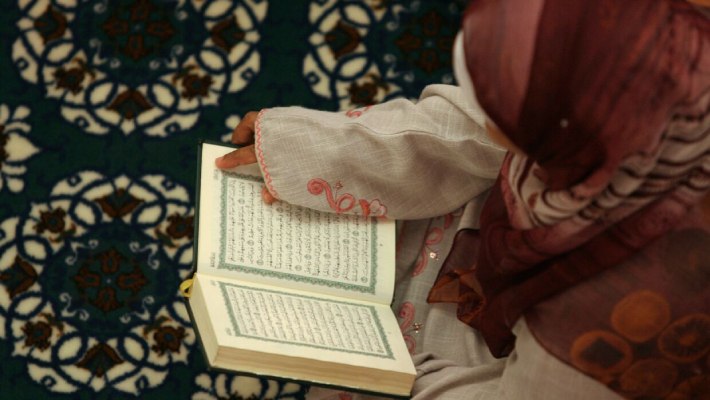
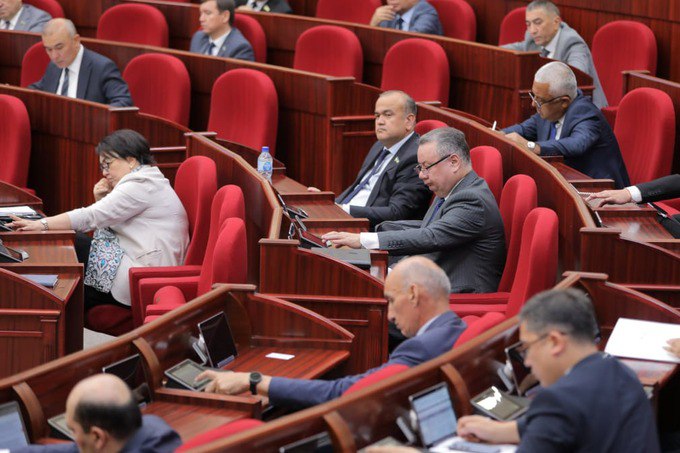
The Legislative Chamber of the Oliy Majlis (Supreme Assembly of Uzbekistan) has adopted a draft law to further strengthen children's rights and prevent their becoming "victims of ideas of religious extremism, separatism and fanaticism." The bill states that "the transfer of a child for religious education to unregistered or unlicensed organizations or persons who have no special religious education and who provide religious education without permission from the central governing body of religious organizations in Uzbekistan is prohibited." Parents or guardians registering children in illegal religious education will be fined the equivalent of up to $270 and repeated offenses could result in administrative arrest for up to 15 days.  

Kazakhstan’s Attempts to Address Disinformation and Media Freedom

On June 19, President Tokayev signed amendments to the law governing Kazakhstan's mass media. Meanwhile, public debate on foreign and domestic media that allegedly receive financing from abroad continues. While human rights activists focus on the principle of freedom of speech, political analysts are concerned about a string of disinformation campaigns attempting to destabilizing the country. The respective changes to legislative acts affect a wide range of issues. In particular, a new and broader concept of mass media has been introduced which includes internet resources. It is envisaged that a Unified Media Platform will be created to implement the state’s information policy, including grants for non-state media and accreditation of journalists to state bodies and organizations through a simplified accreditation procedure. In addition, the statute of limitations for claims brought against the media to refute information that does not correspond to facts and defames honor, dignity, and business reputation has been reduced to one year. Under the new law, Kazakhstan's Ministry of Foreign Affairs has the right to deny accreditation to foreign journalists "in case of a threat to the national security of the Republic of Kazakhstan." A few months ago, the Ministry did not issue accreditation to 36 correspondents from Azattyk. The publication subsequently filed a lawsuit, and in April, the media outlet and the Ministry reached a mediation agreement. While the new law focuses mainly on foreign funded domestic media, experts cite recent examples of pressures on Kazakhstan’s society and authorities through disinformation campaigns that mostly originated from abroad. For instance, a week ago in Kyiv, Ukrainian authorities claimed an assassination attempt was made on Kazakhstani national Aidos Sadykov, the creator of a YouTube channel called Bәse. Sadykov and his wife Natalya were placed on the wanted list in Kazakhstan in October 2023 for “inciting social, national, clan, racial, class, or religious discord.” Their inclusion on the list is linked to the January 2022 coup attempt and riots, as well as their ties to controversial fugitive billionaire Mukhtar Ablyazov, who currently has judgements against him in U.S. and UK courts exceeding $5 billion. Ablyazov faced murder charges in Kazakhstan following the death of the CEO of a local bank that he later took over and reportedly defrauded. According to government authorities, Sadykov repeated Ablyazov's calls for violence surrounding the January 2022 coup attempt as well as the Mazhilis elections in March 2023, where the channel openly called for organizing riots. Furthermore, on the one-year anniversary of the January 2022 events, his Bәse channel gave instructions to overthrow the government in Kazakhstan, following the example of events in Ukraine. The four-minute video includes information on how to create coordination committees for regime change. Natalya Sadykova has also worked for the Respublika newspaper, allegedly funded by Ablyazov. Aidos Sadykov had previously served two years in Kazakhstan for hooliganism and fled to Kyiv in 2014. The alleged perpetrators of the attack on Sadykov, Meiram Karataev and Altai Zhakanbaev, are Kazakhstani citizens. Shortly after the purported assassination attempt, Natalya Sadykova accused Kazakhstan’s...

Kyrgyzstan Raises Doctors’ Salaries

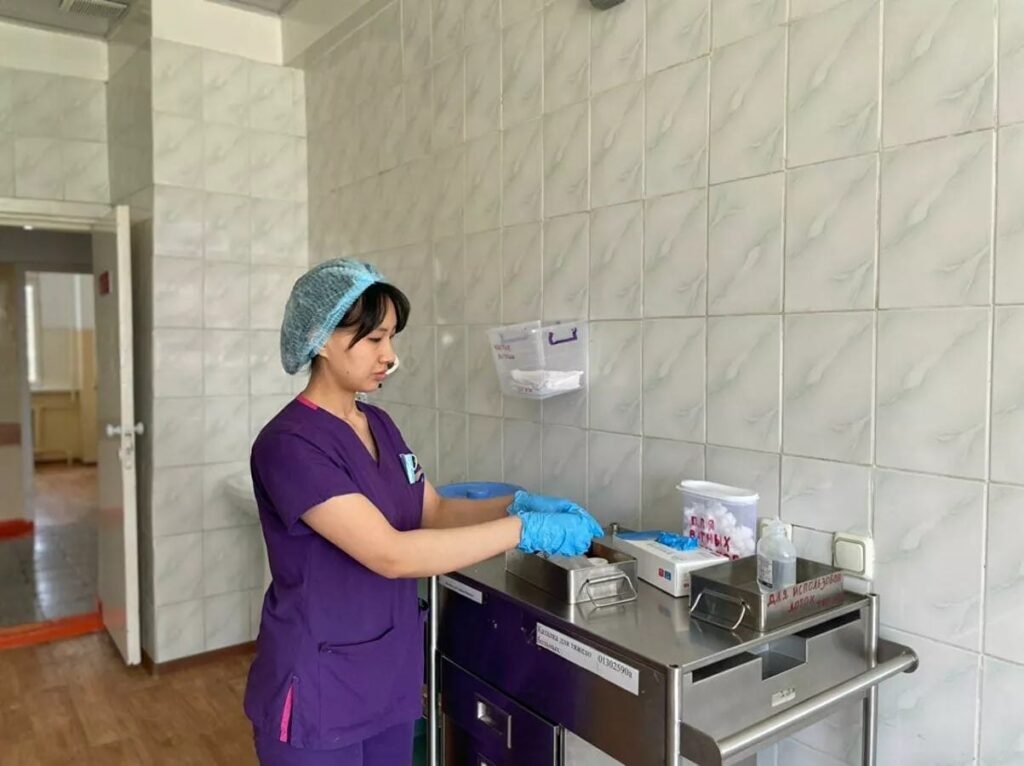
The First Deputy Minister of Health of Kyrgyzstan, Mederbek Ismailov has newly announced that medical workers' wages will be raised by 10 -50 percent from September this year. Selected specialists will also receive bonuses of up to 20,000 KGS ($220). "The ministry will work directly to raise medics' salaries. We will review tables of staffing and workloads over the past two years and depending on results, may raise salaries," commented a ministry spokesman, adding that the average doctor's salary will rise to 35,000 KGS ($400) after the increase. Local MPs, however, expressed their dissatisfaction with the government's decision, deeming the rises in medical workers' salaries inadequate. "The health minister promised us that doctors would receive 80,000 KGS ($900) each," complained MP Vinera Raimbachayeva.

Mirziyoyev Discusses Cooperation with Russian Minister of Internal Affairs

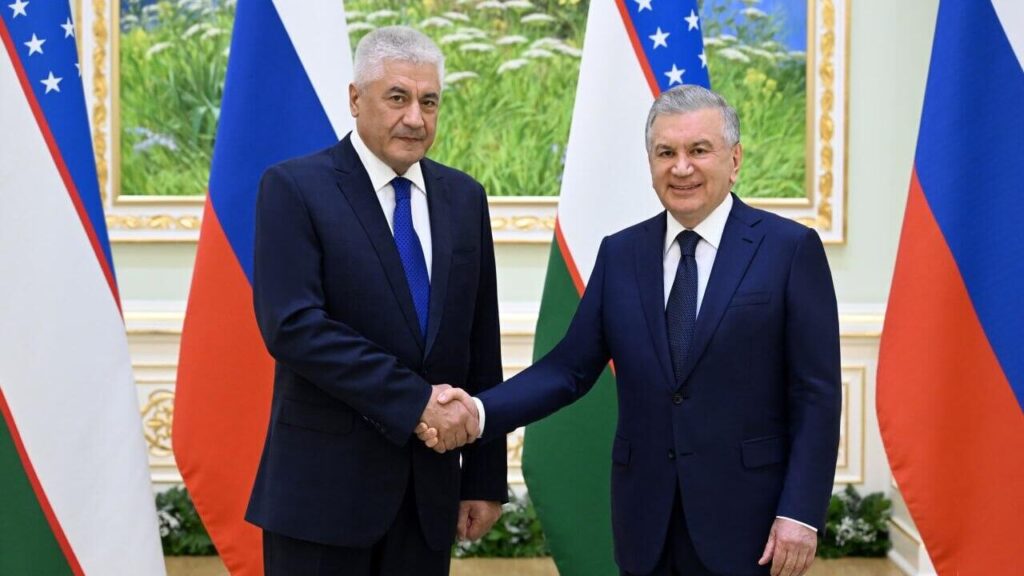
On June 25, Shavkat Mirziyoyev received the Russian Minister of Internal Affairs, Vladimir Kolokolsev, who was in Uzbekistan on a business visit, the president’s press service has reported. At the outset of the meeting, Mirziyoyev expressed his condolences and words of encouragement to the family members of the law enforcement officers who died in the recent terrorist attack in Dagestan. During the meeting, the practical implementation of agreements between the two countries was high on the agenda. Current aspects of cooperation in the fight against terrorism, extremism, drug trafficking, organized crime, cyber security and digital expertise were discussed. Particular attention was paid to the issue of increasing the effectiveness of cooperation mechanisms in the field of migration. On the same day, Ziroat Mirziyoyeva, the First Lady of Uzbekistan and chairman of the board of trustees of the Zamin Foundation, met with Hans Kluge, the director of the European regional office of the World Health Organization. At the meeting, issues of cooperation between the World Health Organization and the Zamin Foundation on improving children's medical services, including those suffering from oncological diseases, their rehabilitation, and the development of palliative care in Uzbekistan were discussed. Special attention was paid to developing and improving environmental protections, including the involvement of international experts in developing international air quality and drinking water quality standards.

Uzbekistan Launches Mechanism for Recognizing Foreign Citizens as “Undesirable” Elements

In its second and third readings, the Legislative Chamber of the Oliy Majlis (parliament) approved amendments to the law regulating the legal status of foreign citizens and stateless persons within the country. The key innovation was a move to recognize foreign citizens as undesirable elements who will not be permitted to stay in Uzbekistan. The grounds for declaring the stay of foreign citizens and stateless persons unacceptable may be public calls or actions that contradict state sovereignty, territorial integrity and security of the country, provoke interstate, social, national, racial, and religious enmity, or discredit the honor, dignity, and history of the people of Uzbekistan. The law provides for a five-year ban on such persons entering Uzbekistan, opening bank accounts, acquiring real estate, participating in the privatization of state property, and entering into financial and contractual relations. The document also defines the procedure for deporting persons not permitted to stay in the country. Before this new law can enter into force, it must be approved by the Senate and signed by the president.

Results of Visit of the U.S. Trade Representative to Kazakhstan

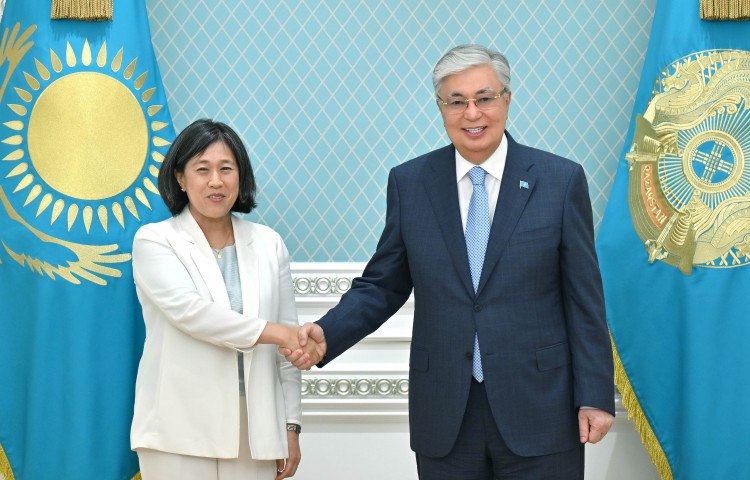
By Vagit Ismailov President of Kazakhstan Kassym-Jomart Tokayev, Deputy Prime Minister Serik Zhumangarin, Minister of Trade and Integration Arman Shakkaliev, Minister of Labor and Social Protection Svetlana Zhakupova, and other officials met with U.S. Trade Representative Catherine Tye. The United States and Kazakhstan reaffirmed their commitment to expanding and diversifying bilateral trade relations. Both sides pledged to deepen cooperation in agriculture and make progress in the near term. This includes increasing U.S. meat and poultry production capacity, optimizing the issuance of digital export certificates, and facilitating increased shipments of U.S. agricultural equipment to Kazakhstan. Tye noted Kazakhstan's interest in repealing the Jackson-Vanik amendment and expressed support for the U.S. Congress' efforts to update the Generalized System of Preferences program. She also recognized the program's importance in diversifying Kazakhstan's trade. The U.S. and Kazakhstan pledged to strengthen joint work on regional connectivity and increase the capacity of the Trans-Caspian Trade Route. The parties discussed increasing bilateral engagement to create diverse, secure, and sustainable supply chains. They stressed the importance of continuous cooperation in trade facilitation, including the harmonization and digitization of customs processes. Tye noted the contribution of U.S. companies' supply of high-quality products and the development of alternative trade routes. She also thanked Kazakhstan for the success of the 15th meeting of the Board of the U.S.-Central Asia Trade and Investment Framework Agreement (TIFA). The working groups noted progress on several issues, including sanitary and phyto-sanitary measures, customs procedures, intellectual property protection, women's economic empowerment, and digital trade. Tye further emphasized the importance of a transparent and consultative regulatory process in regional harmonization. Kazakhstan and the U.S. reaffirmed their commitment to utilize the TIFA mechanism further to deepen trade and investment ties between the U.S. and Central Asia. The U.S. also expressed interest in working closely with Kazakhstan to support internationally recognized labor rights, including promoting workers' rights to freedom of association and collective bargaining. The United States and Kazakhstan pledged to continue working to achieve concrete trade results, maintaining the positive momentum of the bilateral trade and investment relationship.