• KZT/USD = 0.00216
  • TJS/USD = 0.10800
  • UZS/USD = 0.00009
  • TMT/USD = 0.29760
  • KZT/USD = 0.00216
  • TJS/USD = 0.10800
  • UZS/USD = 0.00009
  • TMT/USD = 0.29760
  • KZT/USD = 0.00216
  • TJS/USD = 0.10800
  • UZS/USD = 0.00009
  • TMT/USD = 0.29760
  • KZT/USD = 0.00216
  • TJS/USD = 0.10800
  • UZS/USD = 0.00009
  • TMT/USD = 0.29760
  • KZT/USD = 0.00216
  • TJS/USD = 0.10800
  • UZS/USD = 0.00009
  • TMT/USD = 0.29760
  • KZT/USD = 0.00216
  • TJS/USD = 0.10800
  • UZS/USD = 0.00009
  • TMT/USD = 0.29760
  • KZT/USD = 0.00216
  • TJS/USD = 0.10800
  • UZS/USD = 0.00009
  • TMT/USD = 0.29760
  • KZT/USD = 0.00216
  • TJS/USD = 0.10800
  • UZS/USD = 0.00009
  • TMT/USD = 0.29760
31 August 2026

Viewing results 1 - 6 of 180

As Two Wars Reach the Caspian, Central Asia’s Middle Corridor Holds

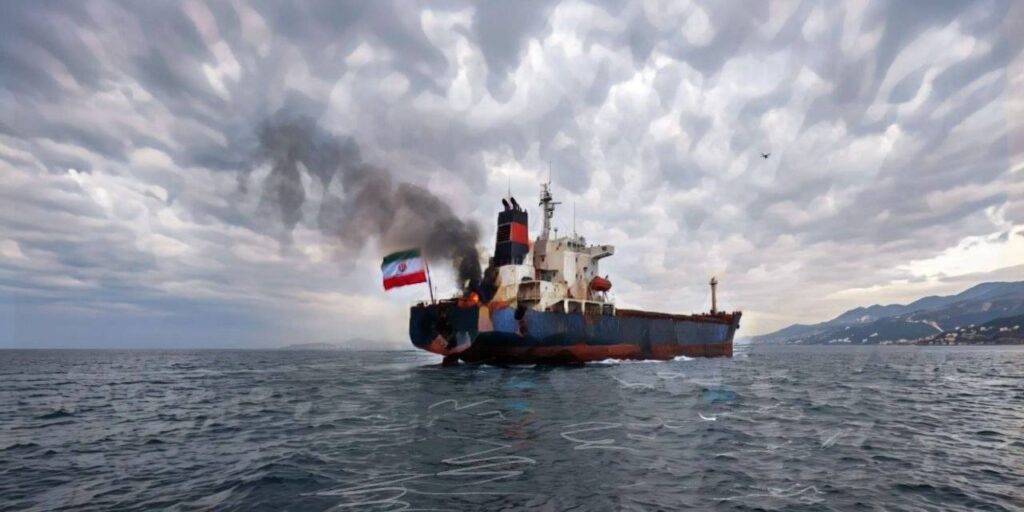
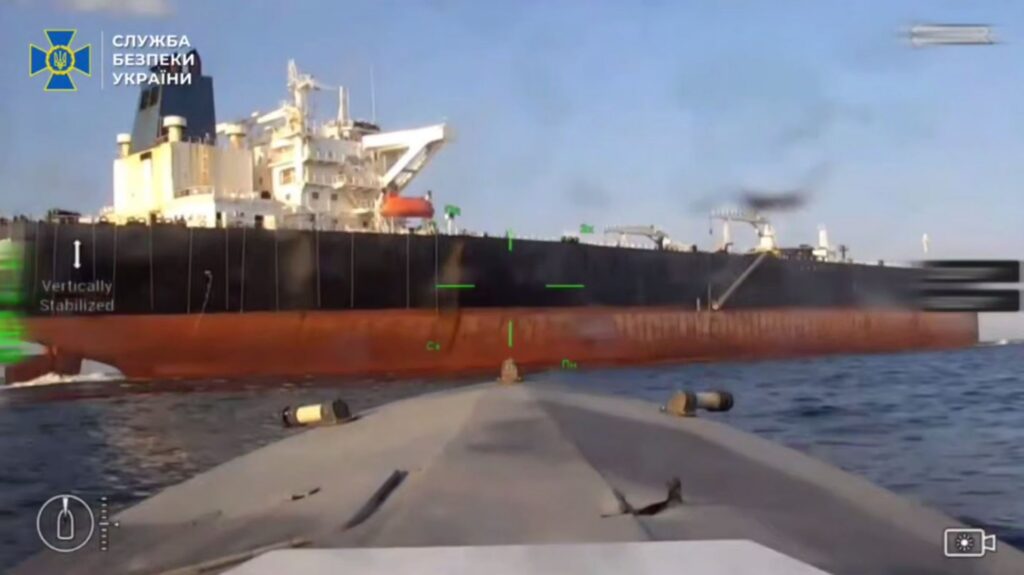
On July 25, two wars met in waters that Central Asian governments had tried to keep apart. Ukraine reported successful long-range strikes in the Caspian Sea. President Volodymyr Zelenskyy said the targets included vessels involved in carrying military cargo from Iran and a warship. Tehran said an Iranian commercial vessel had been struck, killing one sailor and injuring another, and accused Kyiv of trying to widen the war. It remains unclear whether the vessel identified by Iran was among the targets described by Zelenskyy. Diplomacy produced a limited off-ramp. On July 28, Ukrainian Foreign Minister Andrii Sybiha told his Iranian counterpart, Abbas Araqchi, that the strike on the Iranian ship was unintended. Both governments said they wanted to avoid further escalation. The call reduced the immediate risk of retaliation, but it did not remove the new danger. The Caspian is now one of the places where Russia’s war against Ukraine and the war involving Iran, Israel, and the United States intersect. Central Asia is exposed through the infrastructure and trade routes linking them. A “Sea of Peace” Under Pressure Turkmenistan responded to the incident with unusually direct language. Its Foreign Ministry called attacks on vessels in the Caspian “inadmissible” and described the waterway as a “sea of peace, harmony and good-neighborliness.” Ashgabat did not name Ukraine or endorse Iran’s account. Its restraint was characteristic, but the public criticism was unusual. Turkmenistan’s permanent neutrality normally produces guarded statements during external conflicts. The intervention showed that Ashgabat viewed the attack as a challenge to the regional order. Turkmenistan faces Iran across a 1,148-kilometer land border and the southern Caspian. Turkmenbashi port is also central to its plans for a larger role in Eurasian trade. The principle is set out in the Convention on the Legal Status of the Caspian Sea, signed in Aktau in 2018. Its text calls for the peaceful use of the sea, prohibits the use or threat of force, and bars armed forces belonging to non-Caspian states. The convention has not entered into force because Iran has not ratified it. Its provisions were designed to govern relations among the five littoral states. They do not address a long-range strike carried out by a non-littoral state. But modern drones can cross distances that once provided strategic shelter. A landlocked sea can no longer be assumed to sit beyond the reach of surrounding wars. The Iran-Russia Link Ukraine has clear military reasons to look toward the Caspian. Iran has supplied Russia with drone technology used against Ukrainian cities and infrastructure. The sea also provides a direct commercial route between Iranian ports and Russia’s Volga region. Kyiv now treats vessels on that route carrying military cargo as part of Russia’s military logistics. Iran described the vessel struck on July 25 as civilian. The dispute over the ship’s cargo is central because commercial and military supply chains can overlap. A vessel may be civilian by flag and registration while carrying goods that Ukraine considers part of Russia’s war effort. That uncertainty reaches beyond...

Turkmenistan Condemns Strike on Iranian Ship in Caspian Sea

Turkmenistan has criticized an attack on an Iranian vessel in the Caspian Sea that the Iranian government blamed on Ukraine. In a statement on Monday, Turkmenistan’s Ministry of Foreign Affairs referred to media reports of an attack on a ship in the Caspian on July 25 and described “such actions” as unacceptable. “As a Caspian littoral state and the country with a status of permanent neutrality recognized by the United Nations, Turkmenistan underlines that the Caspian Sea is a sea of peace, harmony and good-neighborliness,” the ministry said, without specifically referring to Ukraine or Iran. The Caspian Sea is critical to Turkmenistan´s ambition to play a larger role in the Middle Corridor, a trade network linking Asia and Europe via Central Asia and the Caucasus. Iran had blamed Ukraine for the attack that it said resulted in an explosion on an Iranian commercial vessel, killing one sailor and injuring another. It described the attack as “an act of aggression that could further inflame and expand the ongoing conflict.” Ukrainian President Volodymyr Zelenskyy has said the Ukrainian military’s deep strike range is more than 3,000 kilometers, indicating that the Caspian Sea is within reach. “We also have very good results from long-range strikes in the waters of the Caspian Sea,” Zelenskyy said on July 25. “In particular, these are vessels that were involved in transporting military cargo from Iran, and a warship.” Iran has provided drone technology to Russia since its full-scale invasion of Ukraine in February 2022. The attack in the Caspian Sea comes amid heightened Mideast tension and open conflict between Iran and the United States. Earlier in July, Kazakhstan had condemned drone strikes on oil infrastructure in the Black Sea that is critical to Kazakhstan’s energy exports. Ukraine has said it was targeting Russian interests in the Black Sea. On July 25, in a meeting with Russian President Vladimir Putin, Kazakh President Kassym-Jomart Tokayev called for a freeze of the Russia-Ukraine war in some of his strongest comments about ending the fighting.

Uzbekistan Seeks More Freight Capacity Through Kazakhstan’s Caspian Ports

Kazakhstan and Uzbekistan have instructed their national railway companies to draw up a plan to increase Uzbek freight shipments through the ports of Aktau and Kuryk, expanding Tashkent’s access to markets across the Caspian Sea. Kazakh Prime Minister Olzhas Bektenov and his Uzbek counterpart, Abdulla Aripov, discussed the plan during a July 23 visit to the Aktau International Sea Trade Port. The volume of Uzbek freight handled through Aktau and Kuryk increased by more than 60% in 2025, according to the Kazakh government. “Our task is to provide cargo from Central Asian countries with fast and reliable access to the markets of the Caucasus, Turkey, and Europe,” Bektenov said. Aktau and Kuryk are the main Kazakh ports on the Trans-Caspian International Transport Route, commonly known as the Middle Corridor. The rail-and-sea route links China and Europe through Kazakhstan, the Caspian Sea, Azerbaijan, Georgia, and Turkey. For Uzbekistan, one of the world’s two double-landlocked countries, the Kazakh ports provide access to the western section of the corridor. Freight is carried by rail to the Caspian coast before being transferred to ships bound for Azerbaijan. The two governments did not say how much additional freight they expect to carry or when the railway companies must complete their plan. Further growth will depend on tariffs, the availability of railcars and vessels, border procedures, and the capacity of railway lines serving the ports. The combined infrastructure capacity of Aktau and Kuryk is about 22 million metric tons a year, according to Yelzhas Otynshiyev, chairman of Kazakhstan Temir Zholy, the state railway company. Aktau alone can handle as much as 12 million tons annually and operates throughout the year. Container transit through the Kazakh ports on the Middle Corridor increased 3.8-fold between 2022 and 2025, the government said. The first phase of a container hub with annual capacity of 140,000 twenty-foot equivalent units has opened at Aktau. A second phase, due in 2027-2028, is expected to lift capacity to 240,000 TEUs. Kazakhstan has also ordered six container vessels. Four are due for delivery in 2027 and two more in 2028. The additional ships are intended to reduce dependence on the limited pool of vessels operating on the Caspian Sea. Capacity constraints remain at the ports and on the rail network. Falling Caspian Sea levels have made it harder for fully loaded vessels to enter some harbors and increased the need for dredging. Kazakhstan completed dredging at Kuryk in 2025 and plans to finish similar work at Aktau by the end of 2026. The World Bank lists port capacity, rail access, and delays at the Kazakhstan-Uzbekistan border among the main bottlenecks affecting the Middle Corridor. Some freight operators use longer routes because existing border crossings and rail links cannot handle demand efficiently. The bank has also called for additional berths and modern cargo-handling equipment at Aktau as the Caspian becomes shallower. Kazakhstan is upgrading the Shalkar-Beineu and Beineu-Mangystau railway sections that carry traffic to Aktau and Kuryk. In February 2026, the World Bank approved an $846...

Resources, Capacity, Connectivity: Kazakhstan and the Critical Minerals Nexus

Kazakhstan’s place in diversified critical mineral supply chains rests on an unusual combination: a broad resource base, an established mining and metallurgical sector, and transport infrastructure extending across Eurasia. The task is to make these assets work together. Their strategic value depends on converting resources into financeable projects, existing capacity into internationally qualified products, and geographic connectivity into contractually reliable delivery. Kazakhstan approaches this task with an established industrial base. The world’s leading uranium producer, it also has production or processing capabilities in chromite and ferroalloys, titanium sponge, copper, zinc, aluminum, beryllium, molybdenum, rhenium, and other strategic materials.  Much of that base was established during the Soviet period and extends beyond mines and plants to freight rail and experienced technical personnel. These assets reduce the burden of greenfield development for projects able to use them economically. By joining the U.S.-led Pax Silica initiative in June 2026 as its first Central Asian participant, Kazakhstan brought these questions into a wider strategic setting. Pax Silica connects critical minerals and energy to an industrial agenda extending from semiconductor production to artificial-intelligence infrastructure. Membership creates an institutional opening for higher-value processing and technology cooperation. For Kazakhstan, the opportunity is to retain more value domestically through technology transfer, skilled employment, and a broader range of processed exports. From Resources to Financeable Projects Mineral abundance makes projects possible but not automatically bankable. Current drilling and internationally recognized resource statements must first establish the size, grade, and confidence level of the resource. Feasibility work must then show that it can be developed, and permits must authorize development. The project must still secure an off-taker and financing able to withstand commodity and construction risk. Predictable permitting and clear ownership help lenders assess risk. Traceability is important to lenders and buyers alike. Kazakhstan has begun to make its geological information more usable. More than 4.6 million primary geological records have been digitized. In 2025, the country also developed 20 projects for detailed 1:50,000 surveys covering 100,000 square kilometers; the government plans approximately $470 million in exploration spending during 2026–28. Digitization can open inherited records, but surveys and spending acquire commercial relevance only through completed fieldwork and usable results. Those results must then support economically recoverable reserves and financeable projects. Bankability also depends on the institutions through which capital is raised and transactions governed. The Kazakhstan Stock Exchange and Astana International Exchange give issuers access to investors. The Astana International Financial Centre operates under a legal framework based on common law and has a separate court. Parties may also agree to international arbitration. Kazatomprom’s initial public offering in London and Astana demonstrated access to global capital for a mature national producer. Glencore’s controlling stake in Kazzinc and production by Central Asia Metals at Kounrad since 2012 provide evidence of sustained foreign participation. Taken together, these cases show that Kazakhstan’s system can support substantial transactions and long-term partnerships. Still, each new venture must establish its own economics under commodity and construction risk. From Industrial Capacity to Qualified Products The OECD identifies...

Kazakhstan Begins Importing European Jet Fuel via the Middle Corridor

Kazakhstan has resumed importing European jet fuel through Georgia’s Batumi Oil Terminal after an eight-year break. The route gives the country another source as domestic demand continues to exceed production. The Batumi Oil Terminal, owned by Kazakhstan’s state pipeline operator KazTransOil, has resumed handling Jet A-1 fuel produced by European refineries. The first shipment, totaling 10,000 metric tons, arrived via the Black Sea and is awaiting onward transport by rail to Kazakhstan along the Trans-Caspian International Transport Route, also known as the Middle Corridor. Kazakhstan needs the additional supply because its refineries cannot meet domestic demand. As previously reported by The Times of Central Asia, jet fuel demand is expected to reach about 1.18 million metric tons in 2026. Domestic refineries are projected to produce around 750,000 metric tons, leaving a large shortfall to be covered by imports. The shortfall has grown this year amid maintenance at the Atyrau refinery and rising air traffic. Fuel supplies from Russia have also tightened. Moscow introduced temporary export restrictions to stabilize its domestic market. The restrictions created uncertainty for countries that have traditionally relied on Russian fuel. Kazakhstan has responded by looking for other import routes and expanding storage capacity. The Batumi terminal offers one alternative. On Georgia’s Black Sea coast, it connects maritime shipments with rail routes through the South Caucasus and across the Caspian Sea. The terminal is a major logistics hub on the Middle Corridor. According to KazTransOil, the terminal can handle up to 11 million metric tons of cargo a year. Its 132 storage tanks have a combined capacity of more than 585,000 cubic meters. During the first half of 2026, the Batumi Oil Terminal handled approximately 725,000 metric tons of petroleum products. Along with aviation fuel, it transships crude oil and refined products, including diesel and gasoline. The terminal also handles fuel oil and liquefied petroleum gas. The Batumi route reopened while global jet fuel supplies remain tight. Reuters reported this week that European inventories had fallen below one month’s supply, leaving the market vulnerable to disruptions caused by tensions in the Middle East. European buyers have turned to the United States and other suppliers in Africa and Asia. Kazakhstan is also expanding domestic storage capacity. The government has approved new aviation fuel facilities at airports to guard against shortages and build larger reserves. The first shipment will meet only a small part of Kazakhstan’s annual jet fuel demand. The Middle Corridor carries exports from Central Asia to Europe. The Batumi shipment shows that the corridor can also bring refined petroleum products into the region.

Daines’s Tour Signals an Emerging U.S. Caspian Corridor Strategy

Senator Steve Daines’s July 7–9 visit to Azerbaijan, Kazakhstan, and Turkmenistan brought three bilateral relationships into a single, compressed Caspian itinerary. In Baku, he met President Ilham Aliyev and senior economic and foreign-policy officials; in Astana, President Kassym-Jomart Tokayev and representatives of government and business; and in Ashgabat, President Serdar Berdimuhamedov, Foreign Minister Rashid Meredov, and Gurbanguly Berdimuhamedov. Although official accounts treated each stop separately, the sequence suggests a regional pattern whose significance exceeds any single announcement. Daines had already supplied the clearest public articulation of the governing logic in his June 11 speech to the Caspian Policy Center’s Trans-Caspian Forum. There he joined Central Asia and the South Caucasus in a discussion about westward connectivity, investment, and supply-chain diversification. Daines identified critical minerals, energy, telecommunications, and physical and digital infrastructure as fields for public and private investment, while calling for TRIPP, a Caspian gas interconnector, and a continuous route from Central Asia to Western markets that avoids Russia and Iran. Together, these sectors give the proposed route both commercial and strategic content, though not the form of a single named program. Read against the June speech, Daines’s itinerary marks an emerging corridor-centered effort aligned with the Trump administration’s broader Caspian engagement, even without a formal declaration of purpose. Azerbaijan Anchors the Corridor’s Western Connections Baku gives the corridor logic its strongest institutional and bilateral footing. Aliyev and Daines discussed Azerbaijan’s geopolitical role, regional peace, and TRIPP’s importance for transport connectivity. Separate meetings with Foreign Minister Jeyhun Bayramov and Economy Minister Mikayil Jabbarov extended the agenda to economic cooperation. With SOCAR President Rovshan Najaf, Jabbarov and Daines took up the Middle Corridor, energy, transport, digital development, and critical-mineral extraction and processing. Across the meetings, political, commercial, and technical portfolios converged around Azerbaijan’s place at the corridor’s western Caspian egress. The U.S.–Azerbaijan Strategic Partnership Charter, signed in February, places the Middle Corridor alongside energy, trade, transit, digital connectivity, and critical-mineral movement. It identifies Azerbaijan as an energy, transport, trade, and logistics hub for the Caspian region. Working groups regularize cooperation on trade, energy, connectivity, digital development, and security. The charter also calls for project lists and implementation roadmaps within three months of signing and for meetings at least once a year. In June, the first Azerbaijan-U.S. Economic Dialogue began translating that direction into an operational agenda. Government, financial institutions, and private-sector participants met on regional connectivity and transit, energy security, investment, artificial intelligence, and digital infrastructure. The agenda connected the Middle Corridor and TRIPP with logistics, the Southern Gas Corridor, critical mineral supply chains, transport and energy investment, and the Alat Free Economic Zone. Closing documents covered digital infrastructure, technology transfer, and industrial solutions. The workstreams are clear, but the consolidated project portfolio and its financing have yet to take public form. Azerbaijan’s role also rests on physical infrastructure already in use. The established Middle Corridor crosses Kazakhstan and the Caspian before passing through Azerbaijan and Georgia, then onward toward Türkiye or Europe via the Black Sea. At Alat, 70 kilometers...