• KZT/USD = 0.00223
  • TJS/USD = 0.10820
  • UZS/USD = 0.00009
  • TMT/USD = 0.29760
  • KZT/USD = 0.00223
  • TJS/USD = 0.10820
  • UZS/USD = 0.00009
  • TMT/USD = 0.29760
  • KZT/USD = 0.00223
  • TJS/USD = 0.10820
  • UZS/USD = 0.00009
  • TMT/USD = 0.29760
  • KZT/USD = 0.00223
  • TJS/USD = 0.10820
  • UZS/USD = 0.00009
  • TMT/USD = 0.29760
  • KZT/USD = 0.00223
  • TJS/USD = 0.10820
  • UZS/USD = 0.00009
  • TMT/USD = 0.29760
  • KZT/USD = 0.00223
  • TJS/USD = 0.10820
  • UZS/USD = 0.00009
  • TMT/USD = 0.29760
  • KZT/USD = 0.00223
  • TJS/USD = 0.10820
  • UZS/USD = 0.00009
  • TMT/USD = 0.29760
  • KZT/USD = 0.00223
  • TJS/USD = 0.10820
  • UZS/USD = 0.00009
  • TMT/USD = 0.29760
22 September 2026

Viewing results 1 - 6 of 184

Central Asia’s C6 Takes Shape in Washington as Ambassadors Push for Practical Integration

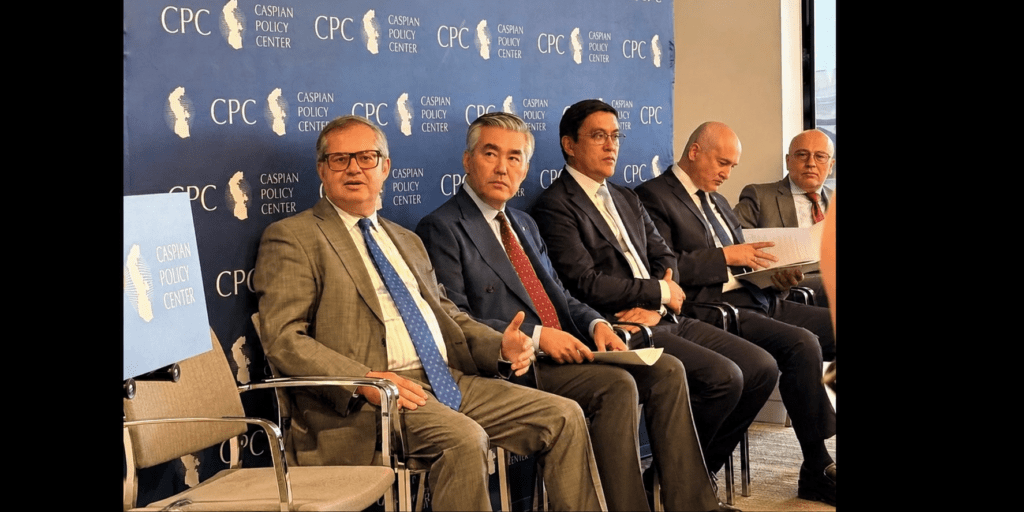
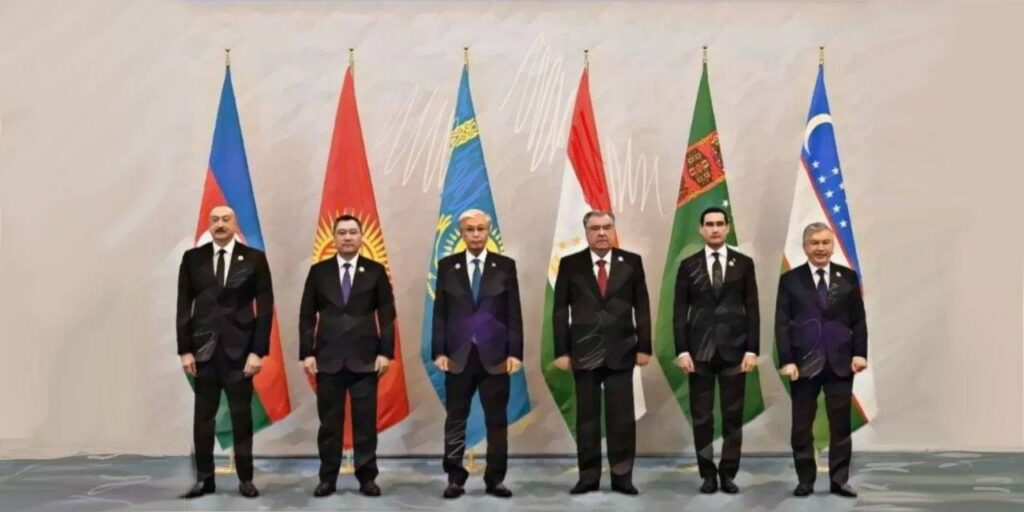
Less than two weeks after regional leaders gathered in Cholpon Ata, diplomats from the emerging C6 grouping used a discussion in Washington to shift the focus from declarations of unity to the mechanics of integration: customs, railways, digitalized trade, access to European markets, and stronger links across the Caspian. The sharpest political message came from Kyrgyzstan’s ambassador to the United States, Edil Baisalov, who said that Central Asian states were increasingly recognizing that they were “enough for each other,” and that resolving differences within the region had become a pragmatic national interest. His comments gave unusually direct language to a trend that has accelerated since the region’s consultative meetings began in 2018. The August 12 event at the Caspian Policy Center brought together the U.S.-based ambassadors of Azerbaijan, Kazakhstan, Kyrgyzstan, Turkmenistan, and Uzbekistan. Tajikistan, the sixth country in the emerging C6 framework, was not listed among the participants. The event followed a late-July meeting in Cholpon Ata, where leaders concentrated on transport, energy security, investment, and foreign-policy coordination. The C6 label remains shorthand rather than the name of a formal organization. Its political basis, however, has become more concrete since Azerbaijan was admitted as a full participant in the Consultative Meeting of the Heads of State of Central Asia in November 2025. The shift extended a format once focused on relations among the five Central Asian republics across the Caspian Sea. From Regional Dialogue to Regional Agency Azerbaijan’s ambassador, Khazar Ibrahim, presented Cholpon Ata as evidence that the six states increasingly see themselves as part of one political and economic space. “We are finally holistic. We are all together,” he said. He argued that Azerbaijan’s presence changes the geography of the grouping by turning the Caspian from a dividing line into a connecting space between Central Asia and the South Caucasus. That idea has been developing for some time. TCA has previously examined how Azerbaijan’s entry could turn the C6 framework into a platform for common rules on transport, tariffs, customs systems, and digital data, rather than another layer of summit diplomacy. Kazakhstan’s ambassador, Magzhan Ilyassov, put the emphasis on building an “economically active neighborhood.” He pointed to the frequency of regional meetings and said the value of the current process lies partly in maintaining an inclusive conversation among the Central Asian states. Kazakhstan has also pushed for stronger coordination on transport planning as the consultative format develops. For Uzbekistan, the discussion was more explicitly about market access. Ambassador Furqat Sidiqov said cooperation with Azerbaijan could give Uzbekistan wider access to European and other export markets. He also called for further digitalization of the Middle Corridor. Sidiqov said Uzbekistan had close to 300 joint ventures with Central Asian countries in 2017, and now has about 1,500 with neighboring states. Corridors Become the Practical Core Digitalizing the Trans-Caspian route is not a new proposal. The countries of the UN Special Programme for the Economies of Central Asia, which already brings together the five Central Asian states and Azerbaijan, endorsed a digitalization...
Landlocked Kazakhstan Builds a Logistics Network from China to the Black Sea

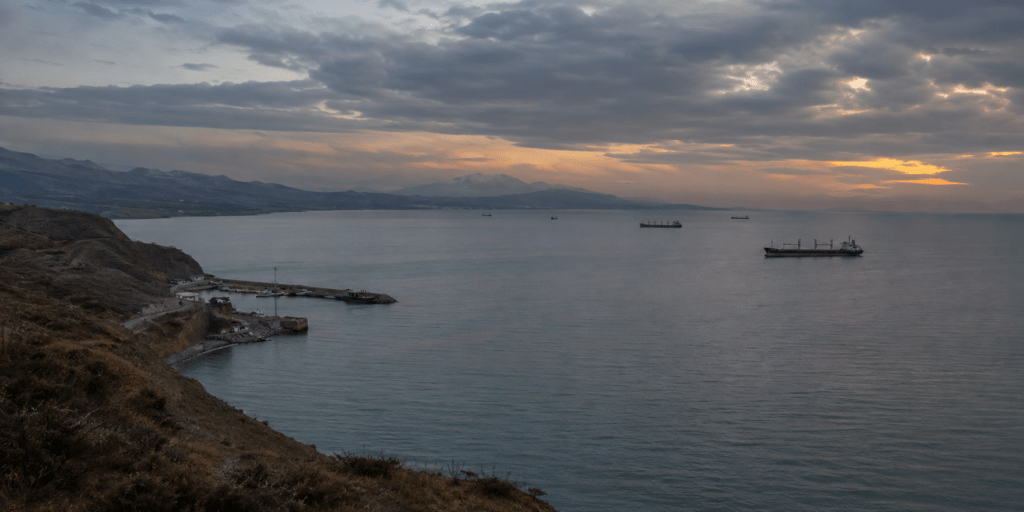
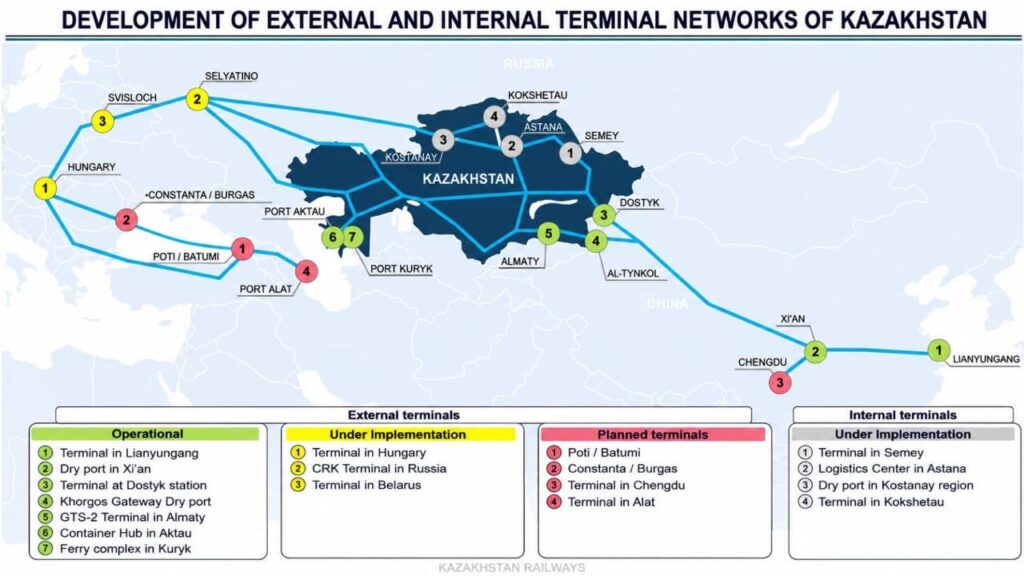
Although Kazakhstan is landlocked, companies based in the country already hold stakes in logistics terminals at Lianyungang on China’s Yellow Sea coast and in Poti on the Black Sea. Projects farther west are at various stages of development. The strategy allows Kazakhstan-based operators to remain involved as freight travels between Asian ports and European markets, including beyond Kazakhstan’s borders. One of the main facilities is at the Chinese port of Lianyungang. The China-Kazakhstan Logistics Cooperation Base began operating in May 2014. It was jointly developed by Lianyungang Port and Kazakhstan Temir Zholy (KTZ), Kazakhstan’s national railway operator. Cargo arriving by sea can be transferred to rail for shipment through Kazakhstan toward Central Asia and Europe. In a written response to The Times of Central Asia, Kazakhstan’s Ministry of Transport said the Lianyungang terminal handled 2.39 million twenty-foot equivalent units (TEU) from 2015 through 2025. Annual throughput rose from 167,000 TEU in 2015 to 271,700 TEU in 2025. A further 140,100 TEU passed through the terminal during the first half of 2026, down 3.2% year on year. According to Samruk-Kazyna, the network extends inland to a terminal in Xi’an and includes Khorgos Gateway at the Kazakhstan-China border. The fund said a dry port in Chengdu would be added in 2027. At the western end, Kazakhstan-based PTC Holding and Georgian partners developed a multimodal terminal that opened in Poti in June 2025 after investment of more than $30 million. The operator currently lists annual throughput capacity at up to 100,000 TEU. Between the terminals in China and Georgia lies Kazakhstan’s rail network, which carries cargo to the Caspian ports of Aktau and Kuryk. These links form Kazakhstan’s section of the Trans-Caspian International Transport Route, known as the Middle Corridor. The route connects China with Europe across the Caspian Sea and the South Caucasus. Kazakhstan is pursuing further terminal projects along the route. In July 2026, Kazakhstan and Azerbaijan were preparing to begin construction of a joint intermodal terminal at Alat. Work was awaiting completion of the Port of Baku’s updated master plan. In June 2026, Kazakhstan’s government said work would begin on terminals in Budapest and Constanța. Later that month, KTZ Express signed an agreement with Midia Marine Terminal for a joint project at Romania’s Port of Midia. The European projects have yet to reach the operating stage. The value of this terminal network becomes clearer from the way the Middle Corridor operates. Containers must move between rail and ships for the Caspian crossing, so faster transit across Kazakhstan cannot determine the total journey time. The World Bank has identified the Caspian and Black Sea crossings as bottlenecks requiring greater vessel availability and higher port productivity. Transit times vary by destination. Turkish officials reported in August 2025 that a freight train from China had reached Turkey in 15 days, while earlier journeys often took more than 20 days because of customs procedures and weather on the Caspian Sea. A 15-day journey should therefore be treated as a benchmark rather than a guaranteed...

Central Asia and Azerbaijan Extend Cooperation Across the Caspian

Central Asia’s presidential forum now spans both shores of the Caspian. Kazakhstan and Azerbaijan anchor the principal Caspian crossing at the center of the Middle Corridor, the rail-and-sea network linking Central Asia to European markets through Azerbaijan, Georgia, and Türkiye. Azerbaijan’s full participation brings the corridor’s eastern and western Caspian gateways into the same regular political setting. The six governments can use it to coordinate the transport, energy, digital, and investment links already developing across the Caspian, even though Georgia and Türkiye remain essential to the route’s westward operation. On July 31, 2026, the presidents of Kazakhstan, Kyrgyzstan, Tajikistan, Turkmenistan, Uzbekistan, and Azerbaijan signed the Cholpon-Ata Declaration at an informal Consultative Meeting of the Heads of State of Central Asia and Azerbaijan in Kyrgyzstan. The Declaration gave formal political expression to cooperation that had already been developing. Official accounts said the leaders emphasized expanded regional cooperation, including trade, transport and logistics, and energy. The full text has not been released, so those priorities come from official accounts rather than the declaration itself. Proposed by Uzbekistani President Shavkat Mirziyoyev in 2017 and first convened in Astana in March 2018, the Consultative Meetings brought together the five Central Asian states in an informal presidential format. They expanded in November 2025 with Azerbaijan’s admission as a full-fledged participant, while retaining their consultative character. Azerbaijan attended in 2023 and 2024 as a guest; Cholpon-Ata was its first informal meeting in the new capacity. Official documents continue to call the format “Central Asia and Azerbaijan.” C6 is analytical shorthand for the enlargement, not the name of a new bloc or formal organization. Azerbaijan’s admission follows several years of practical cooperation. At a ministerial meeting in Aktau on November 25, 2022, Kazakhstan, Azerbaijan, Georgia, and Türkiye signed a 2022–2027 roadmap for the simultaneous elimination of bottlenecks and development of the Middle Corridor. At its 2023 Baku summit, the UN Special Programme for the Economies of Central Asia (SPECA) adopted a digitalization roadmap and established a multi-partner trust fund, followed by work on digital data exchange and port-to-port cooperation. The transport roadmap includes Georgia and Türkiye, while SPECA also includes Afghanistan; neither is institutionally identical to C6. The enlarged format gives the six governments a regular political setting in which to coordinate existing transport, digital, and investment mechanisms. The Trans-Caspian International Transport Route Association reports that freight through the seaports of Kazakhstan and Azerbaijan reached 3.3 million tons in 2024, 20% above the 2023 level, while container traffic within the same scope rose 176% to 56,500 twenty-foot equivalent units (TEU). Freight remains the principal basis of integration. Oil transit, prospective electricity links, and joint investment instruments are extending cooperation into adjacent sectors. Kazakhstan's use of the route for oil exports is also rising: according to KazMunayGas reports, Kazakhstani oil shipments from Aktau through the Baku–Tbilisi–Ceyhan route increased by 34% to 1.4 million tons in 2024. At COP29 in Baku on November 13, 2024, Azerbaijan, Kazakhstan, and Uzbekistan signed a strategic-partnership agreement on producing and transmitting green energy,...

Black Sea Risks Elevate Azerbaijan and Turkey in Kazakhstan’s Export Strategy

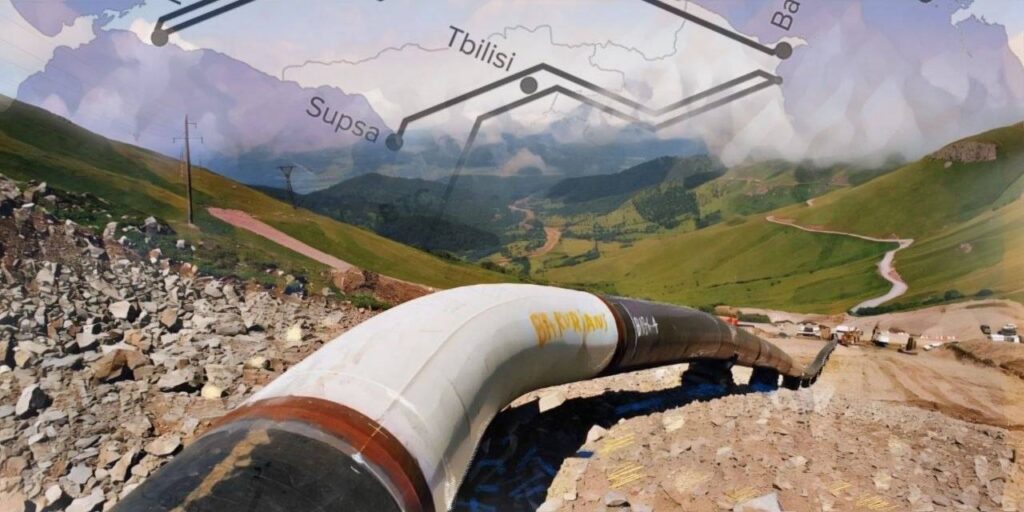
Bloomberg reported on August 8 that the Turkish authorities were withholding or delaying transit permission for some vessels bound through the Dardanelles for Novorossiysk. Some applicants were reportedly told that permits were not being issued, while others faced additional review. The practice appeared selective: vessels bound for some other Black Sea destinations continued to transit, while some Ukraine-bound vessels were also reportedly affected. On August 9, however, Turkish officials told Reuters that shipping through the Turkish Straits was proceeding smoothly and described the actions as temporary security measures rather than an ongoing restriction. The reported restrictions followed a sharp increase in attacks on commercial shipping around the Black Sea, including Turkish-linked vessels near Novorossiysk. Turkey’s Foreign Ministry expressed concern after attacks on the Turkish-owned Yaşar and Nadezhda and called on Russia and Ukraine to ensure navigational safety. Novorossiysk is especially important for Kazakhstan, because the Caspian Pipeline Consortium (CPC) terminal there handles the overwhelming majority of its oil exports. Although the CPC pipeline itself remains operational, the episode showed how quickly traffic serving Kazakhstan’s principal oil-export outlet could face an additional constraint. The events shed light on an export strategy Kazakhstan began developing several years before the current problems. Tokayev’s July 2022 instructions addressed both oil-export diversification through the Trans-Caspian route and alternative transport chains for other cargo. In particular, he called for greater use of Kazakhstan’s Caspian ports and the development of alternative railway routes. Later that year, KazMunayGas (KMG) and SOCAR established a framework for moving Kazakhstani oil from Aktau across the Caspian Sea and onward through the Baku–Tbilisi–Ceyhan pipeline, initially for up to 1.5 million tons annually. Kazakhstan, Azerbaijan, Georgia, and Turkey also adopted a 2022–2027 roadmap to remove bottlenecks along the Middle Corridor. Kazakhstan continued to develop transport links with Russia and China as it expanded Trans-Caspian routes through Azerbaijan, Georgia, and Turkey. The strategy extended Kazakhstan’s longstanding geopolitical multi-vector policy, which balances relations with partners in multiple directions, into the geoeconomic sphere. Tokayev made the combination explicit in his 2023 State of the Nation address. Relations with Turkey had meanwhile been elevated to an enhanced strategic partnership in May 2022, including transport cooperation and the Baku–Tbilisi–Kars railway. Kazakhstan and Azerbaijan deepened their strategic and allied cooperation later that year, likewise emphasizing transport and logistics. Closer ties with Azerbaijan and Turkey widened Kazakhstan’s options without displacing established routes through Russia. The CPC pipeline remains so dominant in Kazakhstan’s oil exports that no other existing route approaches its present scale. Of the 78.7 million tons of oil that Kazakhstan exported in 2025, the Energy Ministry reported the volume moving through the CPC pipeline at 64.8 million tons (the CPC itself reported about 63 million tons), meaning that more than four-fifths of Kazakhstan’s exported oil depended on the CPC system. Kazakhstan moved only about 1.4 million tons through the Aktau–Baku–Ceyhan (ABC) route in 2024, and about 1.3 million tons in 2025. Diversification cannot at present mean replacing CPC. The Baku–Tbilisi–Ceyhan (BTC) pipeline gives Kazakhstani oil a westbound egress...

Iran Moves to Ratify Caspian Sea Agreement Amid Tensions

Iran wants its parliament to ratify a long-delayed agreement among the littoral states of the Caspian Sea that it says could facilitate economic cooperation. The initiative comes as tensions between Iran and the United States remain high, increasing pressure on the Iranian economy. The Iranian government’s plan to submit the Convention on the Legal Status of the Caspian Sea for ratification in the parliament “follows changes in the security environment” around the sea, according to Kazem Gharibabadi, deputy foreign minister for legal and international affairs. Gharibabadi was quoted in an interview published by the state-run Islamic Republic News Agency, or IRNA, on Saturday. The IRNA report did not go into detail about those security changes, but Iran had blamed Ukraine for a Caspian Sea attack last month that it said resulted in an explosion on an Iranian commercial vessel, killing one sailor and injuring another. Ukraine has acknowledged conducting long-range strikes in the Caspian, saying it was targeting vessels transporting military cargo linked to Iran, an ally of Russia. The Iranian move in the parliament, which is dominated by conservatives, comes ahead of Iran´s reported plan to host a meeting of the Caspian littoral states next week. In 2018, the Convention on the Legal Status of the Caspian Sea was signed in Aktau, Kazakhstan, by Azerbaijan, Iran, Kazakhstan, Russia, and Turkmenistan. The convention includes security provisions, including a ban on the presence of armed forces from non-littoral states. It also aims to assign territorial waters and regulate access to resources, including fisheries and offshore oil. However, some details were not clarified and, unlike the other countries, Iran´s parliament did not ratify the deal. Some critics in Iran had argued that the convention left the country at a disadvantage. Iran’s recent decision to urgently submit the convention to its parliament “comes amid public debate over the convention’s provisions, Iran’s rights and interests in the Caspian, and questions surrounding the country’s share of the sea,” IRNA reported. It quoted Gharibabadi as saying that, in addition to Caspian security concerns, there is a need to increase economic cooperation among the littoral states and resolve legal issues concerning the sea. Some Iranian commentators say Iran is under pressure to make concessions and could end up compromising the country’s rights in the Caspian. In the IRNA interview, Gharibabadi sought to downplay criticism, saying Iranian parliamentary ratification would have “no impact on the delimitation of the seabed and subsoil of the body of water,” and that those issues would have to be resolved through negotiations among states with adjacent Caspian coastlines. “By ratifying the Convention, Tehran could gain certain advantages, including legal certainty regarding the Caspian Sea and the preservation of its partnership with Moscow, which is pushing for the issue to be resolved. At the same time, the potential costs for Iran appear more significant,” said the Regional Center for Democracy and Security, a research center in Armenia, a South Caucasus country that could be affected by developments in the Caspian Sea. The center’s analysis this month...

Aral–Caspian Highway Project Advances Kazakhstan’s Bid for Eurasian Logistics Leadership

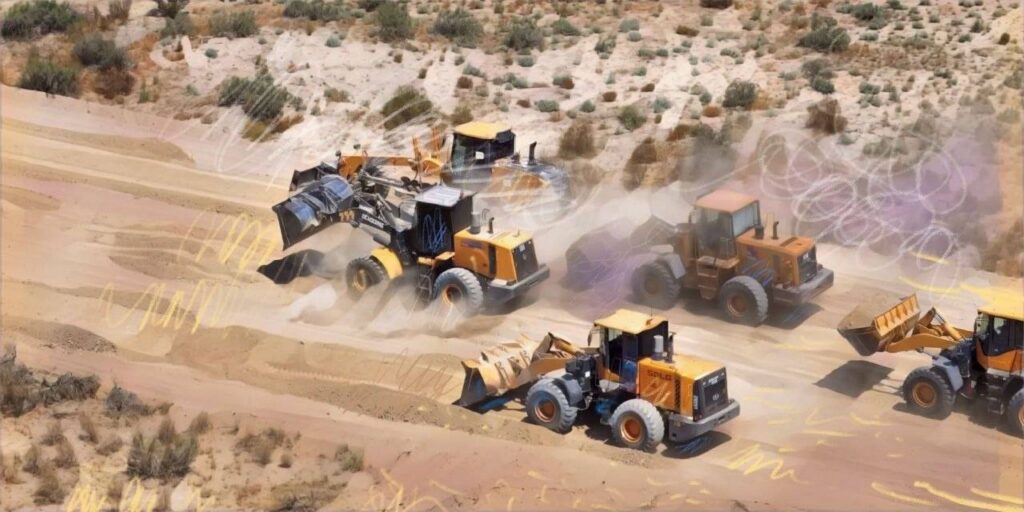
Kazakhstan has begun building an 800-kilometer highway that will give freight moving east and west a shorter road connection to the Caspian ports of Aktau and Kuryk. The government says the project could cut nearly 1,000 kilometers and up to three days from journeys between Europe and China, while improving Kazakhstan’s access to European and regional markets. President Kassym-Jomart Tokayev launched construction of the Beineu–Saksaulsk highway on August 3, and ordered its completion by 2029. He proposed calling it the Aral–Caspian Highway because it will run from Saksaulsk, near the Aral Sea, west to Beineu and the road network serving Kazakhstan’s Caspian ports. At Saksaulsk, three routes meet. The Kyzylorda road runs southeast to the Western Europe–Western China highway. The Ulgaysyn road continues northwest toward Aktobe. The new highway will run west to Beineu, from where roads lead to Aktau and Kuryk. The result is a more direct connection between southern Kazakhstan, the Aktobe corridor, and the Caspian coast, as outlined in the government’s wider road program. The government is reconstructing and expanding the Kyzylorda–Saksaulsk and Ulgaysyn–Saksaulsk sections alongside the new highway. The three projects cover a combined 1,574 kilometers. The authorities expect annual freight volumes along the routes to rise 2.5-fold to 13.2 million tons and say construction will create more than 10,000 jobs. Tokayev described the change as adding “horizontal connections” to Kazakhstan’s historically “vertical transportation networks.” His stated goal is to transform Kazakhstan into “one of the leading logistics hubs connecting Europe and Asia.” The road will feed into the Trans-Caspian International Transport Route, or Middle Corridor. Goods can move west from Kazakhstan across the Caspian, Azerbaijan, Georgia, and Türkiye, or east along the same route into Central and East Asia. The corridor gives European companies another path into Central Asian markets and gives Kazakhstan additional options for reaching Europe. The corridor is often presented as a China–Europe land-bridge, but the World Bank’s analysis expects most of its future traffic to be generated within the corridor region. Its modeling projects trade between Kazakhstan, Azerbaijan, and Georgia and the European Union to rise by 28% by 2030, while intercontinental freight remains below 40% of total volume. The commercial case therefore includes Kazakh exports moving west, European goods moving east, and regional cargo that never travels the full distance between Europe and China. Europe is already supporting parts of the network. The EU’s €30 million Trans-Caspian transport program backs preparatory work for the modernization of the Beineu–Saksaulsk road and improvements at Aktau. In June, Kazakhstan and European partners announced $462 million in transport agreements, including financing for the Aktobe–Ulgaysyn road and cooperation with A.P. Moller-Maersk on container shipping along the Middle Corridor. Kazakhstan also enters the competition with infrastructure already in use. It has a direct border with China, established railways carrying freight across the country, and operating Caspian ports. Uzbekistan is advancing the China–Kyrgyzstan–Uzbekistan railway and other routes, but The Times of Central Asia has previously reported that Kazakhstan retains the stronger position for now because several of...