• KZT/USD = 0.00220
  • TJS/USD = 0.10820
  • UZS/USD = 0.00009
  • TMT/USD = 0.29850
  • KZT/USD = 0.00220
  • TJS/USD = 0.10820
  • UZS/USD = 0.00009
  • TMT/USD = 0.29850
  • KZT/USD = 0.00220
  • TJS/USD = 0.10820
  • UZS/USD = 0.00009
  • TMT/USD = 0.29850
  • KZT/USD = 0.00220
  • TJS/USD = 0.10820
  • UZS/USD = 0.00009
  • TMT/USD = 0.29850
  • KZT/USD = 0.00220
  • TJS/USD = 0.10820
  • UZS/USD = 0.00009
  • TMT/USD = 0.29850
  • KZT/USD = 0.00220
  • TJS/USD = 0.10820
  • UZS/USD = 0.00009
  • TMT/USD = 0.29850
  • KZT/USD = 0.00220
  • TJS/USD = 0.10820
  • UZS/USD = 0.00009
  • TMT/USD = 0.29850
  • KZT/USD = 0.00220
  • TJS/USD = 0.10820
  • UZS/USD = 0.00009
  • TMT/USD = 0.29850
08 September 2026

Viewing results 1 - 6 of 29

How Tokayev’s Kazakhstan Bridges Global Powers

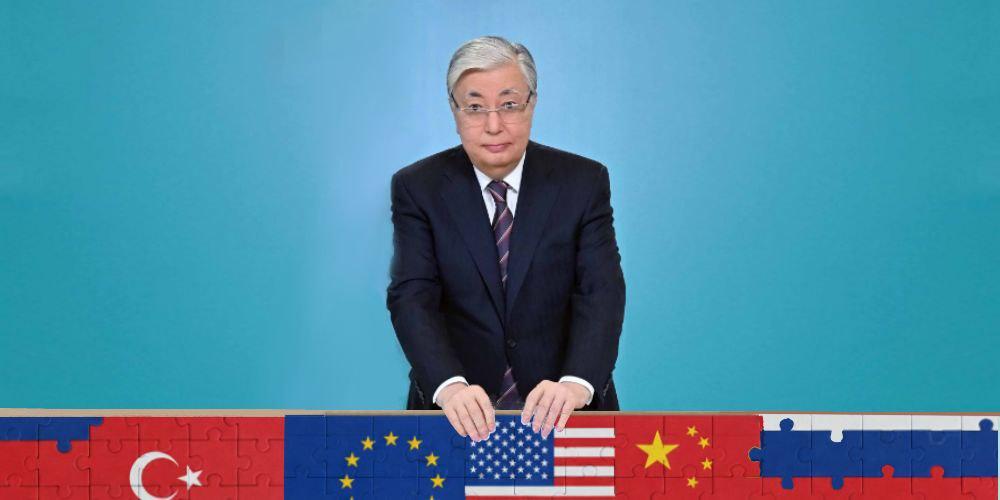
Amid the ongoing reshaping of the global order, Kazakhstan is seeking to enhance its role as an emerging middle power. Preserving strong relations with all key geopolitical actors, strengthening its position as a de facto leader in Central Asia, and developing closer ties with other influential states on the world stage appear to be Astana’s top foreign policy priorities. The largest Central Asian state is one of the few countries that maintains good relations with geopolitical rivals such as China and the United States, as well as Russia and the European Union. At the same time, Astana is actively developing closer ties with the Turkey-led Organization of Turkic States, while firmly upholding its longstanding commitment to international law. It is, therefore, no surprise that, during the recently held EU- Central Asia summit in Samarkand, Kazakhstan, along with Turkmenistan and Uzbekistan, backed two UN resolution from the 1980s that reject the unilaterally-declared independence of the Turkish Republic of Northern Cyprus and deem all secessionist actions there legally invalid. Such a policy perfectly aligns with Kazakhstan President’s Kassym-Jomart Tokayev’s 2022 statement, in which he affirmed Astana’s non-recognition of Taiwan, Kosovo, South Ossetia, or Abkhazia, and the entities he described as quasi-states, namely Luhansk and Donetsk. “In general, it has been calculated that if the right of nations to self-determination is actually realized throughout the globe, then instead of the 193 states that are now members of the UN, more than 500 or 600 states will emerge on Earth. Of course, it will be chaos,” Tokayev stressed. In other words, Kazakhstan upholds the principle of territorial integrity for all UN-member states, a stance similar to China’s policy. Despite their history of often supporting the right to self-determination over the principle of territorial integrity, Russia and the West do not seem to oppose Tokayev’s approach. As a result, the President of Kazakhstan remains one of the few world leaders who can attend the May 9 Victory Day parade in Moscow, regularly meet with EU officials, and participate in China-led initiatives. As the first Central Asian leader to speak with newly elected U.S. President Donald Trump in December 2024, Tokayev is also signaling his intention to deepen relations with the United States. All these actions demonstrate that, for Kazakhstan under Tokayev, the well-known multi-vector foreign policy remains without an alternative at this point. Although it is Nursultan Nazarbayev, Kazakhstan’s first president, who initiated this approach, it is Tokayev who has been actively implementing it since he came to power in 2019. That, however, does not mean that "multivectorism" has become Astana’s official ideology. It is rather a tool the energy-rich nation’s policymakers are using to improve their country’s position in the international arena. Nowhere is that more obvious than at the Astana International Forum – an annual summit taking place in Kazakhstan’s capital – where leaders from diverse countries, often with differing goals and values, come together to discuss global challenges, foster dialogue, and seek common ground. The fact that this year Astana will host...

How Kazakhstan and Azerbaijan Are Rewiring the Middle Corridor

Kazakhstan's acceleration of its strategic alignment with Azerbaijan signals more than bilateral convergence. It reflects a deeper structural reconfiguration of Eurasian connectivity, a reconfiguration that is not additive but integrative. As documented in multiple announcements and institutional moves across March 2025, their cooperation has crossed the threshold from parallel development to systemic coordination. This evolving dynamic illustrates the emergence of a regionally endogenous axis that, without proclaiming itself as such, is shaping the wider functional geometry of Eurasia. At the material core of this shift is the Middle Corridor — the Trans-Caspian International Transport Route (TITR) — linking China to Europe via Central Asia, the Caspian Sea, and the South Caucasus. While long viewed as a technical alternative to the Northern and Southern corridors, the Middle Corridor is now exhibiting the dynamics of what in systems theory would be called self-amplifying dynamic feedback loops. (The technical term is “autopoiesis,” literally “self-creation” of “self-production.”) In particular, institutional feedback, infrastructure reinforcement, and regulatory adaptation are all feeding into one another in ways characteristic of an autonomously emergent macroregional logic. Kazakhstan’s announcement in December 2024 of the financing of a new terminal at Alat port in Azerbaijan, on which construction began in 2025, illustrates this logic in material form. Simultaneously, Kazakhstan is upgrading its Aktau port, backed by Chinese capital from Lianyungang, to triple its container throughput by 2028. This situation exemplifies the transformation of quantity into quality. Specifically, the upgrades are instantiating a network strategy that values not only volumes but also redundancy, flexibility, and strategic optionality. The new fiber-optic cable agreement signed in March 2025 further reinforces this convergence. A 380-kilometer undersea connection between Sumqayit and Aktau — part of the broader Digital Silk Road — will reduce latency between the two countries from hours to milliseconds. In system-theoretic terms, this is not merely a technical augmentation. It converts the corridor from a physical transit route into a distributed digital platform capable of supporting real-time adaptive coordination. This shift from “throughput” to “synchronization” is foundational. It also deepens the infrastructure-energy-information triad that has become characteristic of new macroregional systems. Kazakhstan’s expanded use of the Baku-Tbilisi-Ceyhan (BTC) pipeline, projected to carry 1.7 million tons of its oil in 2025, is not simply diversification. It is the strategic concretization of Azerbaijan’s role as a downstream node for Central Asian hydrocarbons. This is occurring alongside green transition signaling, including a modest floating solar project at Lake Boyukshor and a trilateral renewable energy agreement between Kazakhstan, Azerbaijan, and Uzbekistan. The repurposing of hydrocarbon corridors for hybrid energy flows is not substitution but overlay, in effect a dual-pathway system. Meanwhile, capital commitment is reinforcing the commercial aspect. A $300 million joint investment fund announced by the two countries has already designated the construction of an intermodal terminal at Alat as its inaugural project. Additional integration comes from the UAE-backed $50 million grain terminal at Kuryk, which will further diversify the system's carrying capacity by drawing agro-logistics into the corridor's functionality. In my recent article on the...

Middle Power Policy in Global Confrontation Environment

The current polycrisis fundamentally damaged the whole architecture of the Modern World Order, in particular, the Economics and Global Governance. Global tensions peaked during the 2019 pandemic crisis, and the 2022 war in Ukraine not only reduced the post-Cold War dynamics of international cooperation but changed its very nature. The Global Risks Report, issued by the 2023 Davos World Economic Forum, explains that a polycrisis dominated by the cost-of-living crisis, climate crisis, and political instability threatens to reverse hard-fought gains in development and growth, “The biggest turmoil is geopolitical... We have already entered a multipolar world in which each region has its own issues and role in global politics” (Jeffrey Sachs, The New World Economy, January 10, 2023). The era of a favorable climate for international trade, investment promotion in emerging markets, and the liberalization of international cooperation—beginning with the breakdown of the socialist bloc—is likely coming to an end.  We have now entered a poly-crisis in which multiple risks exert force equally. The increasing number and dynamics of these crises are of deep concern for global governance actors, as unresolved old threats are now compounded by new ones, creating additional difficulties. What is essential is the widening imbalance between crisis management and development in global governance. Global management today focuses primarily on crisis regulation while playing a diminishing role in development programs. This is evident in the financial resource allocation for the Ukrainian crisis and UN funds for sustainable development: total bilateral aid from the US and EU for Ukraine between January 24, 2022, and June 30, 2024, amounts to $75.1 billion and $39.38 billion, respectively. In contrast, as of January 2017, only 22 joint UN programs had been approved with a total budget of $69.36 million. Global governance priorities are increasingly skewed toward security, while the socio-economic component steadily declines due to rising global conflicts. We have entered a fragmented, polarized world that lacks consensus on many critical international issues. Globalization is taking on features of deglobalization. The war in Ukraine has divided the world into two camps—the Global North (Western nations) and the Global South (Eastern nations)—each with differing visions for the contemporary world order. This division now permeates nearly all aspects of international and national life. The return of President Trump’s Administration in January 2025 raises several new questions and expectations regarding the future status of global partnerships. The updated American strategy urgently requires a deep and comprehensive political and academic analysis. This includes recent US actions such as withdrawing from certain UN institutions (e.g., the UN Human Rights Council and the World Health Organization, with UNESCO possibly following), imposing trade tariffs among major global trading partners, and introducing other new initiatives. These changes have already become a reality. At the same time, we observe a decline of the United Nations' effectiveness in resolving the acute problems of Global Security and Sustainable Development. Consequently, new global development initiatives have emerged, spearheaded by the United States and the European Union (PGII), as well as China (GDI, GSI,...

Kazakhstan’s High-Stakes Balancing Act in the Aktau Crash Investigation

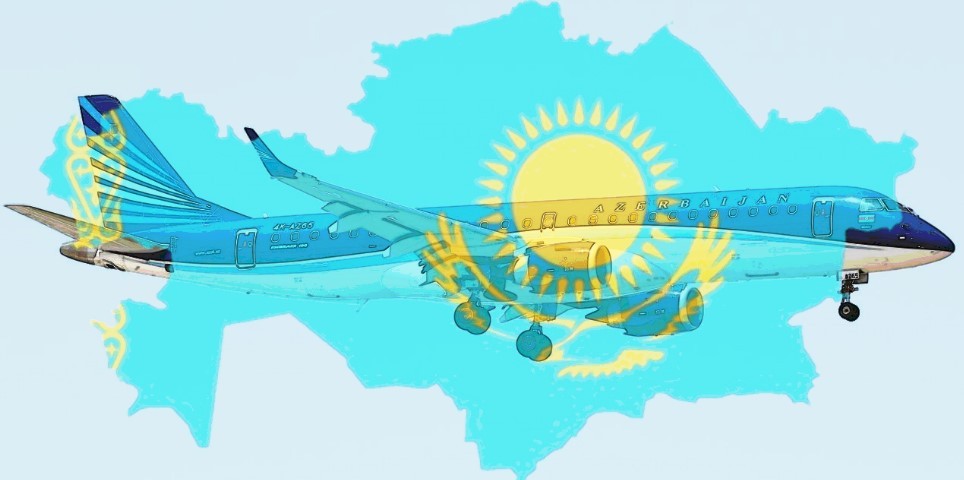
The Aktau crash of the Azerbaijan Airlines Embraer 190 aircraft, which killed 38 people on 25 December, was a tragic event with significant international repercussions. This devastating accident not only claimed lives but also raised critical questions about aviation safety and the handling of sensitive investigations. As investigators sought to determine its cause, Kazakhstan faced an important decision regarding the handling of the flight recorder. Ultimately, the country chose to transfer the recorder to Brazil, the manufacturer of the aircraft, rather than to the Interstate Aviation Committee (IAC) of the Commonwealth of Independent States (CIS), as Russia had proposed. This decision reflected both technical and diplomatic considerations, marking a crucial moment in the unfolding investigation. By taking this decision, Kazakhstan adhered to established industry procedures for aviation safety investigations. Such a step highlights the country's commitment to transparency and global norms in aviation. The move is typical of the country's foreign policy under President Kassym-Jomart Tokayev, whose long diplomatic experience leads him to emphasize a rules-based approach over political considerations and to act in accord with established procedural norms. This choice ensured that the investigation would follow established international practices, thereby lending credibility to the process and reassuring global aviation stakeholders. This behavior is also in line with Kazakhstan's broader commitment to international law and a rules-based global order. Another notable example of this approach was its endorsement of the principles of sovereignty and territorial integrity through its refusal to recognize Russia’s annexation of Crimea or the independence of the Donbas regions. These decisions were not necessarily easy ones, given Kazakhstan’s economic and security ties with Russia, but they reinforced its commitment to global standards. While some observers might frame decisions like the Aktau recorder transfer as a “snub” to Russia, such characterizations would miss the point. Like Kazakhstan’s refusal to recognize Donbas as independent and its efforts to prevent the flow of military components in violation of Western sanctions, its actions are not meant to be about rejecting one partner in favor of another. Rather, acting in its own autonomous interests, Kazakhstan seeks to "do the right thing," because this maintains a consistent international profile with a steady foreign-policy course grounded in international law and practice. Kazakhstan’s mediation efforts extend beyond formal multilateral forums, showcasing its active engagement in regional and global diplomacy. The country provided a neutral platform for discussions between opposing factions in the conflict over Syria; and it has also worked to ease tensions between Armenia and Azerbaijan, hosting purely bilateral consultations and thus demonstrating its capacity to engage constructively in regional conflicts without taking sides. These efforts are in line with Kazakhstan’s larger foreign-policy strategy to act as a principled and impartial intermediary on the global stage, fostering dialogue and reducing hostilities. Similarly, Kazakhstan’s leadership in the Conference on Interaction and Confidence-Building Measures in Asia (CICA) reflects its dedication to multilateralism and peaceful conflict resolution. Kazakhstan exemplifies the rising middle-power archetype also through its significant contributions to global nuclear non-proliferation. Its foreign policy operates on...

How Kazakhstan and Uzbekistan Anchor a Strategic Middle-Power Hub in Central Asia

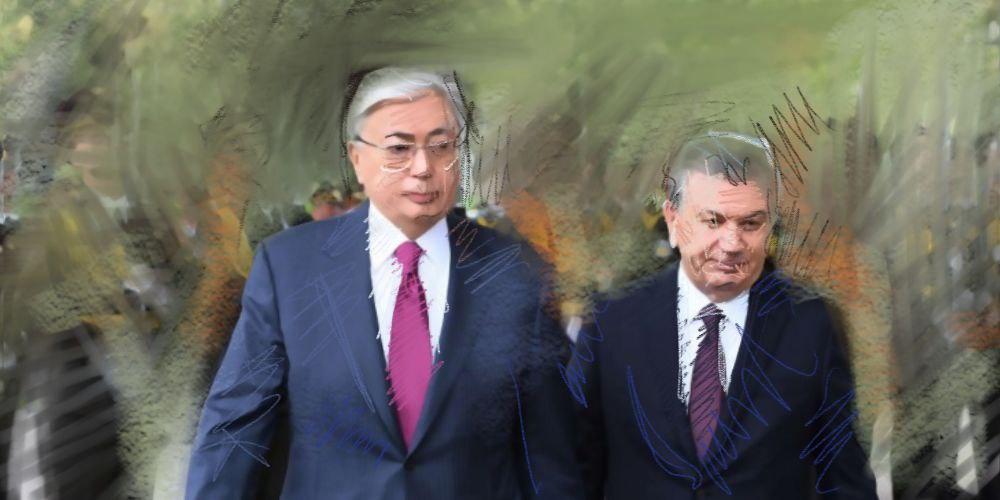
Kazakhstan and Uzbekistan are driving Central Asia’s global significance. Together, they are turning Central Asia into a strategic middle-power hub. The two countries increasingly act as central nodes in a region key to global supply chains and, inevitably, geopolitical competition. However, they are not merely reactive to changes around them, but are highly dynamic. What does it mean to say that the region is emerging as a strategic middle-power "hub"? The notion of a hub extends beyond the national profiles of the two principals, Kazakhstan and Uzbekistan, to include the aggregation of collective influence. Central Asia is recognized as a cohesive entity in global forums. Kazakhstan’s energy wealth combines with Uzbekistan’s demographic strength, creating an influential synergy beneficial to the entire region. The interplay between their respective strengths allows them to amplify Central Asia’s voice in international institutions and negotiations collectively. By integrating their regional strategies within global frameworks — such as the Organization of Turkic States (OTS), the Shanghai Cooperation Organization (SCO), and the Conference on Interaction and Confidence Building Measures in Asia (CICA) — Kazakhstan and Uzbekistan enhance the region’s geopolitical relevance. Kazakhstan, for example, has successfully advocated for the Trans-Caspian International Transport Route (TITR, also called the "Middle Corridor"). This transcontinental trade route is emerging as a lynchpin in Eurasian logistics, connecting China to Europe via the Caspian Sea. Uzbekistan, for its part, has emphasized the integration of transport and energy infrastructure. These initiatives align with the broader vision of a unified Central Asia. The leadership of Kazakhstan and Uzbekistan has reinforced the region's collective identity as the "C5" group, also including Kyrgyzstan, Tajikistan, and Turkmenistan. This regional bloc has become a diplomatic focal point for major powers like the United States, China, Germany, and Japan. All of them engage with Central Asia through structured consultations within the C5 framework. These meetings have given the region traction in international diplomacy. The elevation of the C5 group reflects the region's new prominence. The United States engages with the C5 on issues ranging from regional security to sustainable development, emphasizing its commitment to a secure and prosperous Central Asia. China’s cooperation under the C5+1 mechanism complements its transcontinental infrastructure initiatives. Germany focuses on sustainable energy and governance, while Japan prioritizes infrastructure and technology transfers. Kazakhstan and Uzbekistan together have over two-thirds of the region's gross domestic product and two-thirds of its population. Kazakhstan's vast natural resources undergird its economic influence, while its geographic expanse (as the ninth-largest country in the world) makes it central to major connectivity initiatives. Through President Kassym-Jomart Tokayev's nuanced foreign policy, Kazakhstan has adeptly balanced relationships with major powers, ensuring that it remains a key partner for Russia, China, and the European Union. Uzbekistan has surged to prominence through its ambitious domestic reforms and proactive engagement for regional cooperation under the leadership of President Shavkat Mirziyoyev, who has implemented market liberalization measures attracting foreign investment and reinvigorating its economy. As the most populous country in Central Asia, Uzbekistan is an indispensable actor in regional affairs....

British Think Tank: Kazakhstan is a Key Strategic Partner for the UK

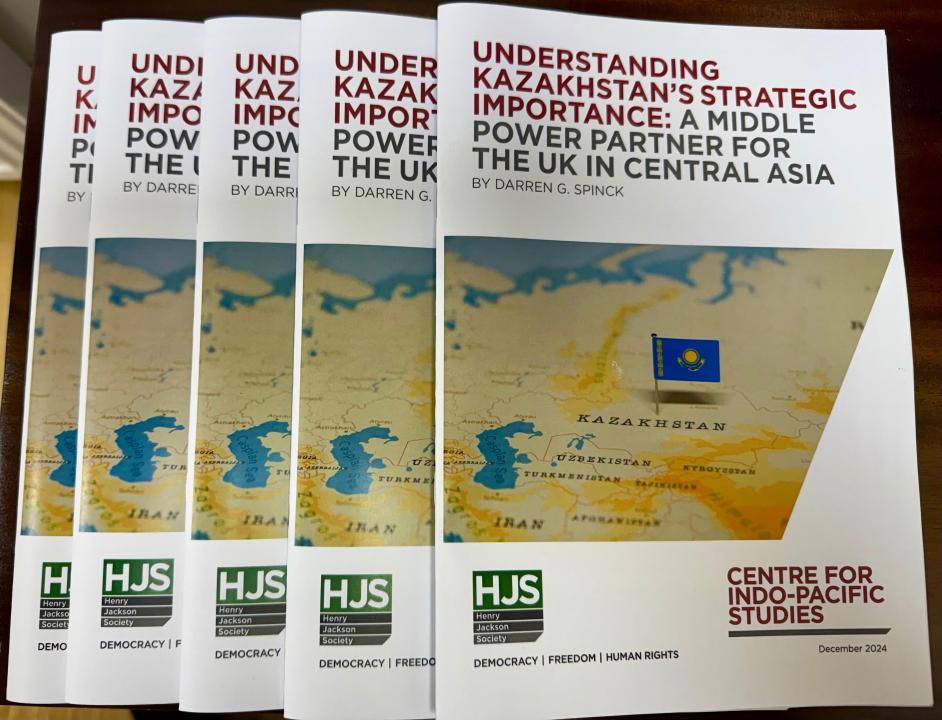
On December 10, the British think tank the Henry Jackson Society presented its research report, “Understanding Kazakhstan’s Strategic Importance: A Middle Power Partner for the UK in Central Asia,” in the UK Parliament. The event was attended by members of both houses of the British Parliament and featured speeches by prominent figures, including Nusrat Ghani MP, Principal Deputy Speaker of the House of Commons; Magzhan Ilyassov, Ambassador of Kazakhstan to the United Kingdom; Darren Spinck, the report’s author and associate research fellow at the Henry Jackson Society; Ekaterina Miroshnik, Director for Eurasia Infrastructure at the European Bank for Reconstruction and Development (EBRD); and Enzo Satkuru-Granzella, business analyst at the UK Critical Minerals Association. Exploring Kazakhstan’s Strategic Role Darren Spinck emphasized that the report examines Kazakhstan’s evolving role as a middle power on the international stage, highlighting its advancements in political reforms and sustainable economic development. It also explores opportunities for enhancing trade and investment between the UK and Kazakhstan, particularly in critical minerals and transit-transport routes. The report includes recommendations for the British Government and Parliament to strengthen this partnership. Nusrat Ghani MP shared her personal efforts to deepen UK-Kazakh relations during her time as Business and Trade Minister (2022–2024) and Minister of State at the Foreign Office (2024). She expressed confidence that the report would provide members of Parliament with valuable insights into Kazakhstan’s importance as a global actor and as a key partner for the UK in Central Asia. Kazakhstan’s Global Diplomacy and Strategic Partnerships Ambassador Magzhan Ilyassov highlighted Kazakhstan’s balanced, multi-vector foreign policy, which aims to safeguard national interests while promoting global security and dialogue. He provided updates on Kazakhstan’s international initiatives, including efforts on nuclear non-proliferation, the proposal to establish an International Agency for Biological Safety (IABS), and the creation of a UN Regional Hub for Sustainable Development Goals (SDGs) in Central Asia and Afghanistan. Ekaterina Miroshnik from the EBRD underscored Kazakhstan’s role in the Trans-Caspian International Transport Route (TITR), also known as the Middle Corridor. This trade route connects China with Europe and strengthens economic ties between Europe, Central Asia, and China. She highlighted the EBRD’s involvement in Middle Corridor projects, which are key to improving regional trade infrastructure. Enzo Satkuru-Granzella of the UK Critical Minerals Association noted Kazakhstan’s vast potential to contribute to the global supply chain of critical minerals. With its rich resource base, well-developed infrastructure, and skilled workforce, Kazakhstan is poised for long-term collaboration. He pointed to the Roadmap on critical minerals, signed between Kazakhstan and the UK in March 2024, as a solid foundation for mutual cooperation. Strengthening Bilateral Relations Participants at the event acknowledged Kazakhstan’s increasing geostrategic importance as a middle power and explored new avenues for strengthening ties between the two nations. A significant milestone in the bilateral relationship was the Strategic Partnership and Cooperation Agreement, signed by Kazakhstan’s Foreign Minister Murat Nurtleu and the UK’s David Cameron in Astana on April 24, 2024. Great Britain remains one of Kazakhstan’s top foreign investors. Since 2005, the UK has invested...