• KGS/USD = 0.01144 0%
  • KZT/USD = 0.00212 0%
  • TJS/USD = 0.10803 0%
  • UZS/USD = 0.00008 0%
  • TMT/USD = 0.28571 0%
  • KGS/USD = 0.01144 0%
  • KZT/USD = 0.00212 0%
  • TJS/USD = 0.10803 0%
  • UZS/USD = 0.00008 0%
  • TMT/USD = 0.28571 0%
  • KGS/USD = 0.01144 0%
  • KZT/USD = 0.00212 0%
  • TJS/USD = 0.10803 0%
  • UZS/USD = 0.00008 0%
  • TMT/USD = 0.28571 0%
  • KGS/USD = 0.01144 0%
  • KZT/USD = 0.00212 0%
  • TJS/USD = 0.10803 0%
  • UZS/USD = 0.00008 0%
  • TMT/USD = 0.28571 0%
  • KGS/USD = 0.01144 0%
  • KZT/USD = 0.00212 0%
  • TJS/USD = 0.10803 0%
  • UZS/USD = 0.00008 0%
  • TMT/USD = 0.28571 0%
  • KGS/USD = 0.01144 0%
  • KZT/USD = 0.00212 0%
  • TJS/USD = 0.10803 0%
  • UZS/USD = 0.00008 0%
  • TMT/USD = 0.28571 0%
  • KGS/USD = 0.01144 0%
  • KZT/USD = 0.00212 0%
  • TJS/USD = 0.10803 0%
  • UZS/USD = 0.00008 0%
  • TMT/USD = 0.28571 0%
  • KGS/USD = 0.01144 0%
  • KZT/USD = 0.00212 0%
  • TJS/USD = 0.10803 0%
  • UZS/USD = 0.00008 0%
  • TMT/USD = 0.28571 0%

Viewing results 1 - 6 of 50

Kazakhstan’s Diplomatic Dance: Securing Power in Turbulent Times

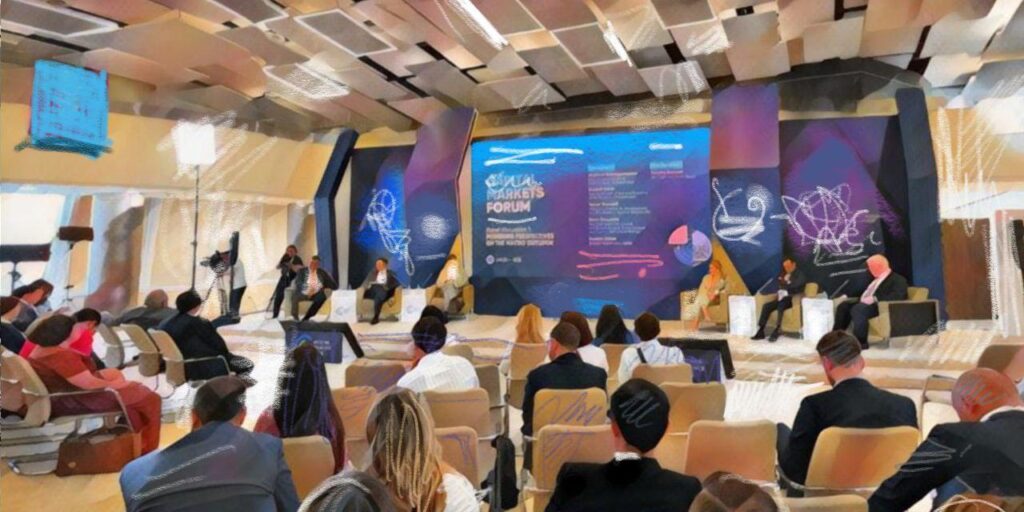
For Kazakhstan, strengthening ties with neighboring Central Asian states – as well as with Russia, China, and the West – is a top foreign policy priority. That, however, does not mean that the energy-rich nation is not also seeking to build stronger relations with other actors on the international stage. The largest regional country views itself as an aspiring middle power. As such, it intends to continue pursuing what Roman Vassilenko, Kazakhstan’s Deputy Foreign Ministry, describes as a “balanced, constructive and pragmatic foreign policy.” Yet, in an increasingly turbulent world, this approach comes with its own sets of challenges. One of them is undoubtedly the construction of the nation’s first nuclear power plant. Kazakhstan’s President Kassym-Jomart Tokayev has repeatedly stated that an international consortium with participation by companies from China, France, Russia, and South Korea should be responsible for that. But how realistic is that under the current geopolitical circumstances? “No decision of the composition of the consortium has been made yet, although we are actively negotiating with the companies interested in the construction,” Vassilenko told The Times of Central Asia, emphasizing that Tokayev has stressed that Kazakhstan will need more than one nuclear power plant. That is why, in Vassilenko’s view, there will likely be different types of consortiums building different types of nuclear plants. Such an approach perfectly illustrates the Central Asian nation’s “multi-vector” foreign policy. “As the ninth largest country in the world, with only 20 million people, and neighboring such superpowers as Russia and China, we can naturally depend only on the best diplomacy we can deploy,” Vassilenko stressed. For that reason, Kazakhstan has initiated the Astana International Forum (AIF) – an event that reflects today’s interconnected global challenges, ranging from energy security and the climate crisis to technological innovation, sustainable development, and geopolitical cooperation. This year, the AIF – taking place in the Kazakh capital on May 29-30 – will host leaders from nations such as Rwanda, Qatar, Albania, Croatia, and North Macedonia, among others. The fact that Astana will host leaders from several Balkan countries clearly suggests that Kazakhstan plans to strengthen ties with this part of Europe. According to Vassilenko, Kazakhstan’s policymakers view the Balkans as a “promising market” which is why the Central Asian nation plans to establish direct flights to Serbia later this year. “We already have direct flights to Montenegro, and we aim to connect Kazakhstan with other European countries as well,” Vassilenko said, adding that his nation has recently opened embassies in Albania and North Macedonia. This approach demonstrates that Astana sees not only the European Union but also the EU candidate countries as potential partners. Still, for Kazakhstan – a major oil and gas producer – energy plays an important role in its foreign policy strategy. Given that the Central Asian state supplies large quantities of crude oil and petroleum products to Europe via Croatia, it’s no surprise that the Prime Minister of the former Yugoslav Republic, Andrej Plenkovic, is among the major speakers at the Astana International...

Astana International Forum: Not Just Another Davos

Kazakhstan’s Astana International Forum (AIF) has quietly entered a new phase in its development. Set to convene again this month, it began in 2008 as a targeted economic forum. Over time it has gradually evolved into a broader diplomatic platform aspiring to serve the so-called “Global South” as a whole. The AIF seeks to offer a deliberately open space for structured yet flexible dialogue across economic, political, and security domains, in a world full of international gatherings either overdetermined by legacy institutions or narrowly focused on crisis response. The AIF does not model itself on any existing institution. It is meant neither to replicate global summits nor to impose consensus, nor to replace regional blocs or legacy mechanisms. Rather, it reflects Kazakhstan’s own diplomatic philosophy — what President Kassym-Jomart Tokayev calls “multi-vector foreign policy” — seeking to extend this philosophy outward through a forum that prioritizes engagement over alignment and dialogue over doctrine. The AIF’s early period, from 2008 through roughly 2015, was defined by foundational work. Then called the Astana Economic Forum, it brought together central bankers, financial policymakers, and development agencies. The scope was technocratic, focusing on macroeconomic modernization and public-sector reform. Even in this limited format, however, the initiative revealed Kazakhstan's national aspiration to connect with wider global trends in institutional development and governance. Those formative years correspond to what, in terms of complex-systems theory, might be called the Forum’s phase of “emergence”: a period of assembling functions, testing formats, and learning the rhythms of international convening. These years were not marked by geopolitical ambition, but they did set in motion a process of institutional self-recognition. Kazakhstan was not just hosting events; it was experimenting with a type of global presence that would grow more distinct in later years. From 2015 to 2022, the Forum entered a more self-defining stage. It retained its core economic focus, but it increasingly attracted participants from beyond financial and development sectors. This broadened its scope to include questions of connectivity, regional stability, and sustainable development. The shift was not an accident. It accompanied Kazakhstan’s growing involvement in regional diplomacy and its active participation in a range of other multilateral structures. During this second period, the Forum took on the character of an institution with internal momentum. (This is what complex-systems theorists might term “autopoiesis,” i.e., the ability of a system to reproduce and maintain itself.) By adapting to a wider field of participants and issues, the AIF began to articulate a mission no longer limited to showcasing Kazakhstan’s domestic reforms but extending toward the creation of new transnational linkages. The rebranding of the old Astana Economic Forum as the Astana International Forum affirmed this shift in mandate, scope, and ambition. That rebranding marked the beginning of what now appears to be a critical inflection point. The cancellation of the 2024 edition due to catastrophic flooding created a rupture; but the organizers, rather than rush a replacement, deferred the Forum and used the intervening time to clarify its structure and message. The...

Victory Day Diplomacy: Central Asia’s Balancing Act and Putin’s Diminished Spotlight

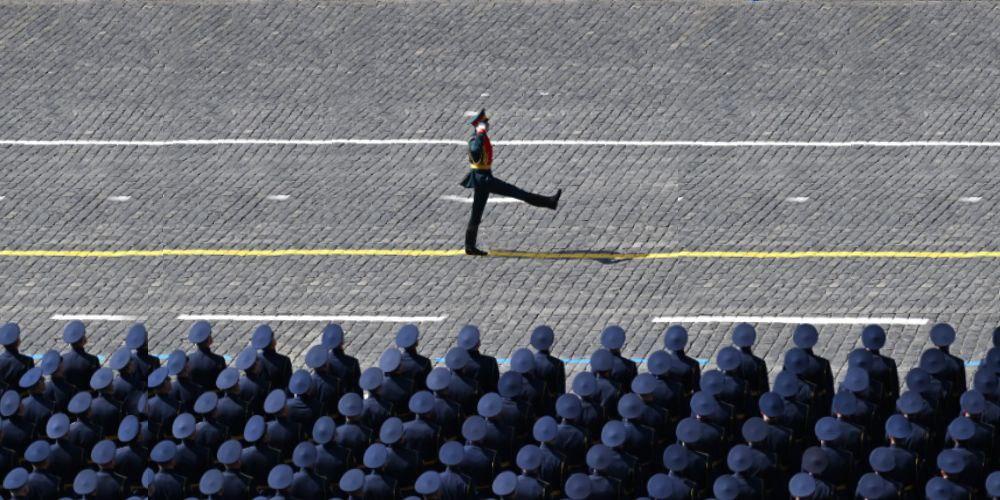
Every year, Moscow’s Red Square transforms into a stage for one of Russia's most celebrated traditions: Victory Day, an event which marks the Soviet Union’s triumph over Nazi Germany in World War II. Yet, as tanks roll through the cobblestone streets and military bands echo under the Kremlin walls, the occasion feels more heavily laden with geopolitical undertones than historical reminiscence these days. Against the backdrop of ongoing conflicts and shifting alliances, the presence of Central Asian leaders at this year’s event speaks to the region’s delicate relationship with the Russian Federation. But the question remains: amidst the pomp and circumstance, is there much for Vladimir Putin to celebrate? Central Asia’s Careful Balancing Act The attendance of Central Asian leaders at the Victory Day parade is a striking show of diplomatic choreography. On the surface, their presence will underscore the shared historical legacy of the Soviet era, when the sacrifices of the Central Asian republics contributed to the Allied victory in the Second World War. However, a more pragmatic lens reveals a balancing act that defines the region’s foreign policy. The region finds itself at the crossroads of global powers vying for influence in Central Asia. While Moscow leans on historical ties and cultural commonalities to retain its sway, Beijing’s economic clout continues to reshape the region’s trade networks and infrastructure projects. Meanwhile, as the inaugural EU-Central Asia Summit attests to, the European Union is eager to expand its reach, whilst hungry for Rare Earth Elements in which the region is rich, the U.S. is waiting in the wings. For Central Asian leaders, participating in Victory Day celebrations signals a nod to Russia’s historic role but also keeps the door open for economic and security cooperation. Amidst the shifting architecture of global politics, their diplomatic strategy remains one of pragmatism, seeking benefits from multiple partners while avoiding any over-alignment. What Does Russia Gain from the Optics? The presence of 29 leaders from across the globe – including Chinese President Xi Jinping - offers Moscow valuable optics at a time when its international relationships face significant strain. Last year, only nine attended. Isolated by Western sanctions over the invasion of Ukraine and with much of the world’s media painting Russia as cut off from the global stage, the impression of a united front with Central Asia helps the Kremlin portray the opposite. Victory Day, therefore, becomes a geopolitical tool, with the attendance of Central Asian leaders enabling Putin to send a message of shared unity within Russia’s historical sphere of influence. It tells both domestic and international audiences that Moscow retains significant allies, reinforcing the image of resilience despite ongoing challenges. How Much Does Moscow Truly Celebrate? The Victory Day parade is an event that is watched by an estimated three-quarters of the Russian public, drumming up patriotism as the state seeks to become the custodian of collective memory. Behind the spectacle, however, signs of disquiet are proving hard to ignore. Russia’s invasion of Ukraine has disrupted trade and migration flows...

How Tokayev’s Kazakhstan Bridges Global Powers

Amid the ongoing reshaping of the global order, Kazakhstan is seeking to enhance its role as an emerging middle power. Preserving strong relations with all key geopolitical actors, strengthening its position as a de facto leader in Central Asia, and developing closer ties with other influential states on the world stage appear to be Astana’s top foreign policy priorities. The largest Central Asian state is one of the few countries that maintains good relations with geopolitical rivals such as China and the United States, as well as Russia and the European Union. At the same time, Astana is actively developing closer ties with the Turkey-led Organization of Turkic States, while firmly upholding its longstanding commitment to international law. It is, therefore, no surprise that, during the recently held EU- Central Asia summit in Samarkand, Kazakhstan, along with Turkmenistan and Uzbekistan, backed two UN resolution from the 1980s that reject the unilaterally-declared independence of the Turkish Republic of Northern Cyprus and deem all secessionist actions there legally invalid. Such a policy perfectly aligns with Kazakhstan President’s Kassym-Jomart Tokayev’s 2022 statement, in which he affirmed Astana’s non-recognition of Taiwan, Kosovo, South Ossetia, or Abkhazia, and the entities he described as quasi-states, namely Luhansk and Donetsk. “In general, it has been calculated that if the right of nations to self-determination is actually realized throughout the globe, then instead of the 193 states that are now members of the UN, more than 500 or 600 states will emerge on Earth. Of course, it will be chaos,” Tokayev stressed. In other words, Kazakhstan upholds the principle of territorial integrity for all UN-member states, a stance similar to China’s policy. Despite their history of often supporting the right to self-determination over the principle of territorial integrity, Russia and the West do not seem to oppose Tokayev’s approach. As a result, the President of Kazakhstan remains one of the few world leaders who can attend the May 9 Victory Day parade in Moscow, regularly meet with EU officials, and participate in China-led initiatives. As the first Central Asian leader to speak with newly elected U.S. President Donald Trump in December 2024, Tokayev is also signaling his intention to deepen relations with the United States. All these actions demonstrate that, for Kazakhstan under Tokayev, the well-known multi-vector foreign policy remains without an alternative at this point. Although it is Nursultan Nazarbayev, Kazakhstan’s first president, who initiated this approach, it is Tokayev who has been actively implementing it since he came to power in 2019. That, however, does not mean that "multivectorism" has become Astana’s official ideology. It is rather a tool the energy-rich nation’s policymakers are using to improve their country’s position in the international arena. Nowhere is that more obvious than at the Astana International Forum – an annual summit taking place in Kazakhstan’s capital – where leaders from diverse countries, often with differing goals and values, come together to discuss global challenges, foster dialogue, and seek common ground. The fact that this year Astana will host...

How Kazakhstan and Azerbaijan Are Rewiring the Middle Corridor

Kazakhstan's acceleration of its strategic alignment with Azerbaijan signals more than bilateral convergence. It reflects a deeper structural reconfiguration of Eurasian connectivity, a reconfiguration that is not additive but integrative. As documented in multiple announcements and institutional moves across March 2025, their cooperation has crossed the threshold from parallel development to systemic coordination. This evolving dynamic illustrates the emergence of a regionally endogenous axis that, without proclaiming itself as such, is shaping the wider functional geometry of Eurasia. At the material core of this shift is the Middle Corridor — the Trans-Caspian International Transport Route (TITR) — linking China to Europe via Central Asia, the Caspian Sea, and the South Caucasus. While long viewed as a technical alternative to the Northern and Southern corridors, the Middle Corridor is now exhibiting the dynamics of what in systems theory would be called self-amplifying dynamic feedback loops. (The technical term is “autopoiesis,” literally “self-creation” of “self-production.”) In particular, institutional feedback, infrastructure reinforcement, and regulatory adaptation are all feeding into one another in ways characteristic of an autonomously emergent macroregional logic. Kazakhstan’s announcement in December 2024 of the financing of a new terminal at Alat port in Azerbaijan, on which construction began in 2025, illustrates this logic in material form. Simultaneously, Kazakhstan is upgrading its Aktau port, backed by Chinese capital from Lianyungang, to triple its container throughput by 2028. This situation exemplifies the transformation of quantity into quality. Specifically, the upgrades are instantiating a network strategy that values not only volumes but also redundancy, flexibility, and strategic optionality. The new fiber-optic cable agreement signed in March 2025 further reinforces this convergence. A 380-kilometer undersea connection between Sumqayit and Aktau — part of the broader Digital Silk Road — will reduce latency between the two countries from hours to milliseconds. In system-theoretic terms, this is not merely a technical augmentation. It converts the corridor from a physical transit route into a distributed digital platform capable of supporting real-time adaptive coordination. This shift from “throughput” to “synchronization” is foundational. It also deepens the infrastructure-energy-information triad that has become characteristic of new macroregional systems. Kazakhstan’s expanded use of the Baku-Tbilisi-Ceyhan (BTC) pipeline, projected to carry 1.7 million tons of its oil in 2025, is not simply diversification. It is the strategic concretization of Azerbaijan’s role as a downstream node for Central Asian hydrocarbons. This is occurring alongside green transition signaling, including a modest floating solar project at Lake Boyukshor and a trilateral renewable energy agreement between Kazakhstan, Azerbaijan, and Uzbekistan. The repurposing of hydrocarbon corridors for hybrid energy flows is not substitution but overlay, in effect a dual-pathway system. Meanwhile, capital commitment is reinforcing the commercial aspect. A $300 million joint investment fund announced by the two countries has already designated the construction of an intermodal terminal at Alat as its inaugural project. Additional integration comes from the UAE-backed $50 million grain terminal at Kuryk, which will further diversify the system's carrying capacity by drawing agro-logistics into the corridor's functionality. In my recent article on the...

Middle Power Policy in Global Confrontation Environment

The current polycrisis fundamentally damaged the whole architecture of the Modern World Order, in particular, the Economics and Global Governance. Global tensions peaked during the 2019 pandemic crisis, and the 2022 war in Ukraine not only reduced the post-Cold War dynamics of international cooperation but changed its very nature. The Global Risks Report, issued by the 2023 Davos World Economic Forum, explains that a polycrisis dominated by the cost-of-living crisis, climate crisis, and political instability threatens to reverse hard-fought gains in development and growth, “The biggest turmoil is geopolitical... We have already entered a multipolar world in which each region has its own issues and role in global politics” (Jeffrey Sachs, The New World Economy, January 10, 2023). The era of a favorable climate for international trade, investment promotion in emerging markets, and the liberalization of international cooperation—beginning with the breakdown of the socialist bloc—is likely coming to an end.  We have now entered a poly-crisis in which multiple risks exert force equally. The increasing number and dynamics of these crises are of deep concern for global governance actors, as unresolved old threats are now compounded by new ones, creating additional difficulties. What is essential is the widening imbalance between crisis management and development in global governance. Global management today focuses primarily on crisis regulation while playing a diminishing role in development programs. This is evident in the financial resource allocation for the Ukrainian crisis and UN funds for sustainable development: total bilateral aid from the US and EU for Ukraine between January 24, 2022, and June 30, 2024, amounts to $75.1 billion and $39.38 billion, respectively. In contrast, as of January 2017, only 22 joint UN programs had been approved with a total budget of $69.36 million. Global governance priorities are increasingly skewed toward security, while the socio-economic component steadily declines due to rising global conflicts. We have entered a fragmented, polarized world that lacks consensus on many critical international issues. Globalization is taking on features of deglobalization. The war in Ukraine has divided the world into two camps—the Global North (Western nations) and the Global South (Eastern nations)—each with differing visions for the contemporary world order. This division now permeates nearly all aspects of international and national life. The return of President Trump’s Administration in January 2025 raises several new questions and expectations regarding the future status of global partnerships. The updated American strategy urgently requires a deep and comprehensive political and academic analysis. This includes recent US actions such as withdrawing from certain UN institutions (e.g., the UN Human Rights Council and the World Health Organization, with UNESCO possibly following), imposing trade tariffs among major global trading partners, and introducing other new initiatives. These changes have already become a reality. At the same time, we observe a decline of the United Nations' effectiveness in resolving the acute problems of Global Security and Sustainable Development. Consequently, new global development initiatives have emerged, spearheaded by the United States and the European Union (PGII), as well as China (GDI, GSI,...