• KGS/USD = 0.01144 0%
  • KZT/USD = 0.00205 0%
  • TJS/USD = 0.10771 0%
  • UZS/USD = 0.00009 0%
  • TMT/USD = 0.28571 0.28%
  • KGS/USD = 0.01144 0%
  • KZT/USD = 0.00205 0%
  • TJS/USD = 0.10771 0%
  • UZS/USD = 0.00009 0%
  • TMT/USD = 0.28571 0.28%
  • KGS/USD = 0.01144 0%
  • KZT/USD = 0.00205 0%
  • TJS/USD = 0.10771 0%
  • UZS/USD = 0.00009 0%
  • TMT/USD = 0.28571 0.28%
  • KGS/USD = 0.01144 0%
  • KZT/USD = 0.00205 0%
  • TJS/USD = 0.10771 0%
  • UZS/USD = 0.00009 0%
  • TMT/USD = 0.28571 0.28%
  • KGS/USD = 0.01144 0%
  • KZT/USD = 0.00205 0%
  • TJS/USD = 0.10771 0%
  • UZS/USD = 0.00009 0%
  • TMT/USD = 0.28571 0.28%
  • KGS/USD = 0.01144 0%
  • KZT/USD = 0.00205 0%
  • TJS/USD = 0.10771 0%
  • UZS/USD = 0.00009 0%
  • TMT/USD = 0.28571 0.28%
  • KGS/USD = 0.01144 0%
  • KZT/USD = 0.00205 0%
  • TJS/USD = 0.10771 0%
  • UZS/USD = 0.00009 0%
  • TMT/USD = 0.28571 0.28%
  • KGS/USD = 0.01144 0%
  • KZT/USD = 0.00205 0%
  • TJS/USD = 0.10771 0%
  • UZS/USD = 0.00009 0%
  • TMT/USD = 0.28571 0.28%

Viewing results 1 - 6 of 13

Kazakhstan: The Key Link Connecting China and Europe

China is one of Kazakhstan’s key partners, particularly in the development of its transit potential, with Kazakhstan serving as a strategic gateway for goods moving from China to the Eurasian Economic Union, Central Asia, and the European Union. Today, more than 80% of freight transported by rail between China and Europe transits through Kazakhstan. Railway Connections This year marks the 35th anniversary of the connection between the railways of Kazakhstan and China when the Dostyk-Alashankou crossing became the first international transportation route established in the era of Kazakh independence. For many years, it remained the sole railway connection, until in 2012, a second international border crossing, Altynkol-Khorgos, was opened. Today, freight traffic through these two crossings continues to show consistent and significant growth. Last year, rail freight between the two countries exceeded 32 million tons, which is a historic high. In the first four months of 2025 alone, rail freight volume reached 11.4 million tons, a 13.3% increase compared to the same period in the previous year. According to Kazakhstan’s national railway company, Kazakhstan Temir Zholy (KTZ), the projected volume between the two countries for 2025 has been preliminarily agreed on at more than 33 million tons. To further increase capacity, Kazakhstan is building a second track on the Dostyk-Moyynty railway segment and constructing a bypass line around Almaty station. Both projects are scheduled for completion this year, which will boost throughput and significantly reduce delivery times for goods moving between Asia and Europe. Additionally, Kazakhstan is currently building the Bakhty-Ayagoz line, which will include the opening of a third border crossing, Bakhty-Chuguchak, which is expected to expand rail capacity with China by an additional 25 million tons. Maritime Development Kazakhstan’s maritime infrastructure on the Caspian Sea is a major focus of development and foreign investment. A key initiative currently underway is the creation of a container hub at the port of Aktau, being developed as a joint venture with the Chinese port of Lianyungang. Construction and installation work is actively in progress. According to the project plan, by the end of this year, the hub will feature a specialized cargo loading complex, a container terminal, and new cargo handling equipment. Once completed, the project is expected to increase container processing capacity from 140,000 TEU to 240,000 TEU, significantly enhancing Kazakhstan’s maritime logistics capabilities. Road Transport In addition to rail and sea, road transport is also a key pillar of Kazakhstan-China transportation cooperation. According to Kazakhstan’s Ministry of Transport, 2.8 million tons of cargo were moved by road for export/import purposes in 2024, a 41% increase from the previous year, whilst transit cargo volumes reached 3.6 million tons, marking a 68% year-on-year rise. In the first quarter of 2025 alone, road cargo volumes jumped by 83%, reaching 822,000 tons. A major driver of this growth is the continued development and operation of the Western Europe–Western China highway corridor. Kazakhstan is also considering the opening of two new border checkpoints to strengthen connectivity between the regions of East Kazakhstan and Almaty...

Diplomatic Renaissance: How Tokayev’s Visit to Mongolia Went

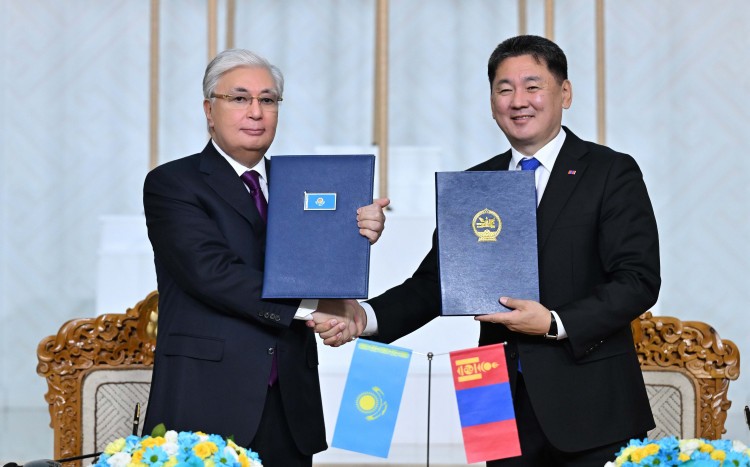
The recent state visit by Kassym-Jomart Tokayev to Mongolia, the first by a Kazakh president in 16 years, demonstrated an excellent approach to expanding Astana's strategic ties. After all, despite 32 years of diplomatic relations and a relatively extensive Kazakh diaspora in Mongolia, under the first president of Kazakhstan, Nursultan Nazarbayev, Astana's ties with Ulaanbaatar were essentially put on hold. This pause in relations likely arose due to Mongolia's political reputation in the region. Protests often erupt in the country, sometimes becoming particularly violent. In 2008, when the Kazakh authorities justified their failures in the economy with the outbreak of the global economic crisis, a state of emergency was imposed in Mongolia for four days in July. The reason was violent opposition protests against the results of the parliamentary elections. Protesters smashed the headquarters of the ruling party and set fire to several buildings in the center of Ulaanbaatar, killing five people and injuring 300. For Mongolia, with its population of 3.4 million, this was a significant shock, as it was for its neighbors in the Eurasian region, where three leaders fell between 2003 and 2005 -- Eduard Shevardnadze in Georgia, Leonid Kuchma in Ukraine, and Askar Akayev in Kyrgyzstan. All this was declared in the region as an “export of revolutions,” building around this notion, a conspiracy theory about the machinations of the U.S. State Department and George Soros. Tokayev's state visit to Mongolia 16 years after Nursultan Nazarbayev refers to the Kazakh leader's key idea about the renaissance of Central Asia. Mongolia is no stranger to the region in one way or another. The main thing for Kazakhstan is the strong Kazakh diaspora, which exceeds 117,000 people. This is the largest national minority in Mongolia and the second largest ethnic group after the titular one. A Kazakh newspaper is published in Mongolia, some Kazakh TV channels are shown on television, and there is an hour of radio news in Kazakh. In short, the basis for strengthening relations is powerful. Tokayev and the president of Mongolia, Ukhnaagiin Khurelsukh, who received him, spoke in both narrow and extended formats about reaching the level of strategic partnership. Tokayev and Khurelsukh, even before the one-on-one meeting, had revitalized diplomatic and trade ties between Kazakhstan and Mongolia. Data from the Statistics Committee of the Ministry of National Economy of Kazakhstan provides evidence. Since 2017, there has been a steady decline in trade turnover between the countries. In 2017, its level was $74.8 million; in 2018 - $67.4 million; in 2019 - $59.9 million. In 2020, it fell to $29.3 million. COVID restrictions can explain such a sharp drop. In 2021, the turnover reached almost $61 million, but at the end of 2023, the trade volume jumped to $150 million. Therefore, when Tokayev said at a joint press briefing that he and the Mongolian president had agreed to turn over $500 million in the “foreseeable future,” this did not seem overly optimistic. The Kazakh delegation did not come empty-handed; during Tokayev's visit, the parties...

First Kazakh Satellite for Mongolia

During Kazakh President Kassym-Jomart Tokayev’s visit to Mongolia on October 29, Kazakhstan and Mongolia signed a landmark agreement to jointly develop an Earth remote sensing satellite. This collaboration will allow each country to independently control the satellite, providing both with real-time data to monitor natural resources and advance agricultural development. At the signing ceremony, Zhaslan Madiyev, Kazakhstan's Minister of Digital Development, Innovation, and Aerospace Industry, commented: "This is the first export of a Kazakh satellite in the country's history. Fully developed by Kazakh engineers, the satellite will be adapted to Mongolia's needs, strengthening the regional satellite infrastructure and highlighting Kazakhstan's growing potential in space technology." Remote sensing technologies will allow both countries to monitor land conditions, manage water resources, and analyze environmental changes more effectively. The National Space Center of Kazakhstan will lead the project, working closely with Mongolian engineers. Throughout the initiative, Kazakh specialists will provide training to their Mongolian counterparts.

Kazakhstan and Mongolia plan nuclear cooperation

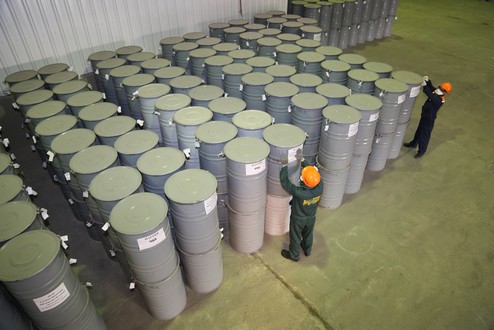
ASTANA (TCA) — Kazakhstan and Mongolia have pointed out some areas for cooperation in geological exploration, uranium mining and processing, and expressed interest in implementation of joint projects in the nuclear sector, Kazakhstan’s national atomic company Kazatomprom said on February 21. Continue reading

Centerra reports ‘important next step’ in advancing Mongolian gold project

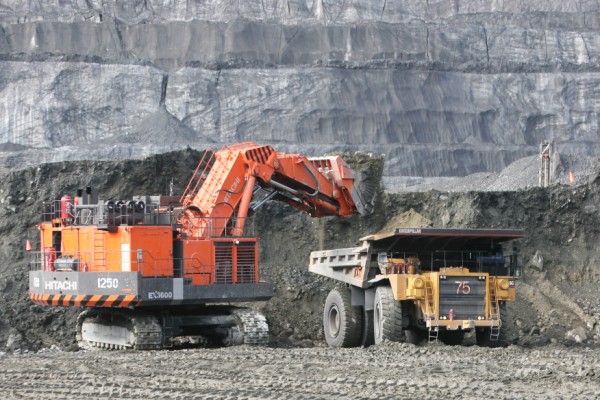
BISHKEK (TCA) — Canada-based Centerra Gold Inc., the largest Western-based gold producer in Central Asia which is also developing the Kumtor gold deposit in Kyrgyzstan, on February 4 announced that the Mongolian Parliament had passed a resolution setting the state ownership interest in the Gatsuurt Project at 34% and authorizing the Mongolian government to complete negotiations with Centerra on the terms of such ownership. Continue reading