• KZT/USD = 0.00219
  • TJS/USD = 0.10810
  • UZS/USD = 0.00009
  • TMT/USD = 0.29850
  • KZT/USD = 0.00219
  • TJS/USD = 0.10810
  • UZS/USD = 0.00009
  • TMT/USD = 0.29850
  • KZT/USD = 0.00219
  • TJS/USD = 0.10810
  • UZS/USD = 0.00009
  • TMT/USD = 0.29850
  • KZT/USD = 0.00219
  • TJS/USD = 0.10810
  • UZS/USD = 0.00009
  • TMT/USD = 0.29850
  • KZT/USD = 0.00219
  • TJS/USD = 0.10810
  • UZS/USD = 0.00009
  • TMT/USD = 0.29850
  • KZT/USD = 0.00219
  • TJS/USD = 0.10810
  • UZS/USD = 0.00009
  • TMT/USD = 0.29850
  • KZT/USD = 0.00219
  • TJS/USD = 0.10810
  • UZS/USD = 0.00009
  • TMT/USD = 0.29850
  • KZT/USD = 0.00219
  • TJS/USD = 0.10810
  • UZS/USD = 0.00009
  • TMT/USD = 0.29850
05 September 2026

Viewing results 1 - 6 of 26

Iran Proposes Defense Cooperation to SCO Partners at Bishkek Meeting

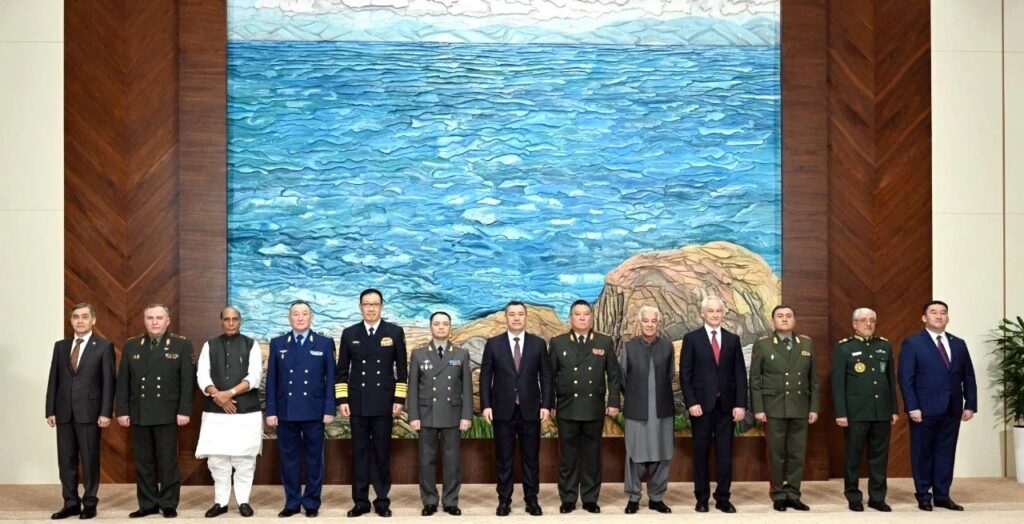
Iran used a Shanghai Cooperation Organization defense meeting in Bishkek to signal that it is ready to share military experience and defense capabilities with other SCO members, giving a sharper geopolitical edge to the gathering hosted by Kyrgyzstan under its current chairmanship of the bloc. The meeting of SCO defense ministers opened on April 28 at the Ala-Archa state residence in Bishkek. Defense officials from the organization’s member states attended, along with SCO Secretary General Nurlan Yermekbayev. Kyrgyzstan’s Defense Minister Ruslan Mukambetov chaired the session. Iran was represented by Deputy Defense Minister Reza Talaei-Nik. In a statement carried by Mehr News Agency, Talaei-Nik said Iran was ready to share its defense weapons capabilities and experience with “independent countries,” especially SCO member states. He also described the SCO as part of a wider shift away from what Tehran called a “unipolar” international order. The remarks came after weeks of fighting between Iran, the United States, and Israel, including Iranian drone and missile strikes on U.S. bases in the region and Israeli sites. A ceasefire announced earlier this month reduced hostilities, but efforts to reach a wider settlement have stalled. Talaei-Nik also used the meeting to frame the recent conflict as a lesson for other states, declaring, “We are ready to share our experiences in defeating America with other members of the organization.” The SCO meeting gave Tehran a platform inside a bloc that now includes China, Russia, India, Pakistan, Iran, Belarus, Kazakhstan, Kyrgyzstan, Tajikistan, and Uzbekistan. Iran became a full member in 2023. The SCO also has a wider circle of observer states and dialogue partners, including 15 dialogue partners listed by the organization’s secretariat. Kyrgyz President Sadyr Japarov received the SCO defense delegations before the ministerial session. He said Kyrgyzstan, as the SCO chair, attaches special importance to practical defense cooperation, including joint exercises, experience-sharing, and stronger coordination. He said agreements reached in Bishkek should strengthen defense cooperation and security across the SCO region. Kyrgyzstan’s SCO chairmanship is being held under the slogan “25 Years of the SCO: Together Towards Sustainable Peace, Development, and Prosperity.” Kyrgyzstan’s Defense Minister Mukambetov said the organization needed solidarity, mutual trust, and collective responsibility to respond to current security challenges. Kyrgyz state agency Kabar said the participants discussed military cooperation, regional security, and joint responses to current threats. The SCO began as a border-security framework. Its roots go back to agreements signed in 1996 and 1997 by Kazakhstan, China, Kyrgyzstan, Russia, and Tajikistan on military trust and troop reductions along border areas. Uzbekistan later joined, and the Shanghai Cooperation Organization was formally founded in 2001. Since then, the bloc has grown into a wider Eurasian platform covering security, defense contacts, counterterrorism, transport, energy, and economic cooperation. Talaei-Nik also held talks with Russian and Belarusian defense officials on the fringes of the Bishkek meeting, with both sides discussing continued cooperation with Tehran. For Central Asian governments, including non-SCO member Turkmenistan, the Bishkek meeting highlighted the pressures facing multi-vector diplomacy. All five have spent years balancing security...
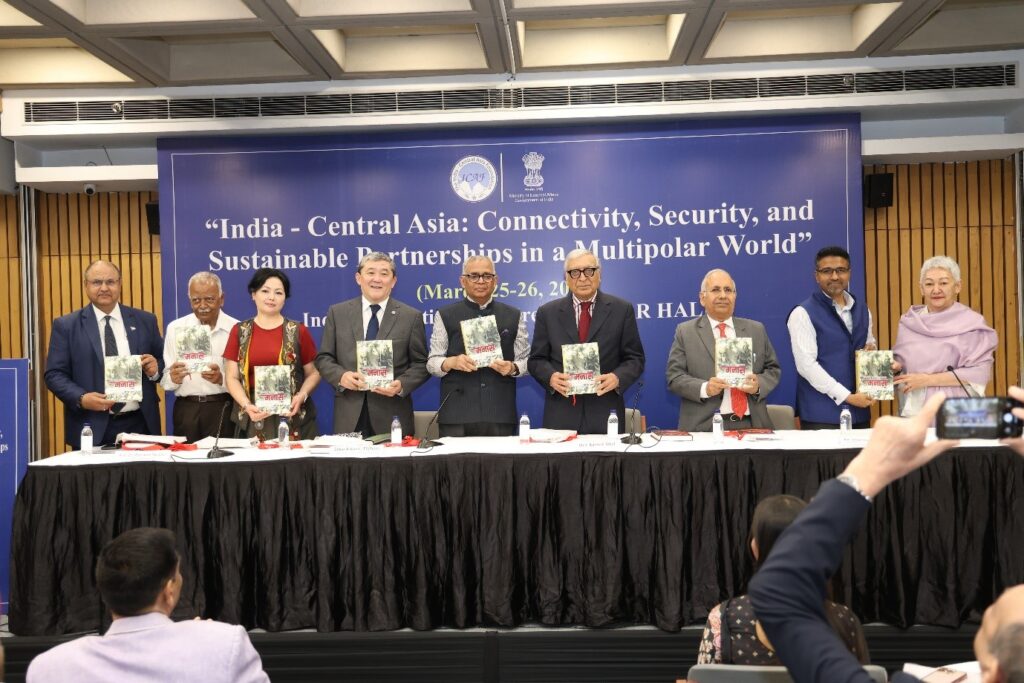
India–Central Asia: Connectivity, Security, and Sustainable Partnerships in a Multipolar World

A widening conflict in West Asia is forcing India and Central Asia to reassess trade routes, diplomacy, and regional security, with key projects such as Iran’s Chabahar port now facing growing uncertainty. These risks framed discussions in New Delhi on March 25–26, where experts gathered under the banner of “India–Central Asia: Connectivity, Security, and Sustainable Partnerships in a Multipolar World,” with The Times of Central Asia in attendance. The conference unfolded against the backdrop of two active Eurasian wars—the Russo-Ukrainian and the Israel/U.S.-Iran conflict. Central Asian and Indian participants agreed that the West Asian crisis is widening, putting not only ports and logistics routes but also economies across the globe under serious threat. India's Chabahar link to Afghanistan and Central Asia is now a high-risk, uncertain investment, weakening overall continental strategic thinking across Eurasia, including efforts to consolidate new trans-Caspian trade corridors. If the conflict cripples or destroys Chabahar, years of progress, hard-won partnerships, and millions in strategic investment would be erased. On the sidelines, some participants suggested that India could help cool what's becoming a dangerously global conflict. Unbeknownst to them, India had already held an all-party meeting on March 25 on the West Asia crisis. External Affairs Minister S. Jaishankar's message: India will not mediate. The revelation surprised some participants—others, not at all. In any event, Central Asian states, in principle, have backed any diplomatic push for peace. With West Asia in turmoil and platitudes in abundance, conference participants emphasized the need to rethink geopolitics, trade, security, and cultural ties beyond stale frameworks at a time of conflict. Four themes defined the Central and South Asian moment: the dangers of bloc politics, even as regional organizations continue to evolve and expand their influence, the ascendancy of national interests over external pressure, and the emergence of a firm refusal to pick sides in the midst of frictions between competing global pressures. Dr. Raj Kumar Sharma, a member of the India Central Asia Foundation, stated: “The conference provided an important platform to move beyond theoretical discussion and toward practical engagement. With Central Asia’s ambassadors to India present, we focused on exploring concrete mechanisms to promote peace through sustained diplomatic efforts. Despite the proximity of the conflict in West Asia to both Central Asia and India, participants expressed confidence that dialogue and restraint – buttressed by trade and investment – will ultimately guide outcomes, with particular concern for civilians and those enduring hardship. Notably, the crisis did not overshadow the conference’s primary agenda or its scholarly contributions. Overall, the gathering can be seen as a constructive step in reinforcing diplomatic initiatives dedicated to peace and stability in a conflict-affected region.” The conference witnessed the release of three significant publications on India–Central Asia relations: India – Kazakhstan Partnership in a Changing Geopolitical Order (eds. Ramakant Dwivedi, Lalit Aggarwal, Kuralay Baizakova), Manas: Kirgiz Vir Gatha Kavya by Ramakant Dwivedi & Hemchandra Pandey and India and Central, East and Southeast Asia: Enhancing the Partnership (eds. Ramakant Dwivedi & Lalit Aggarwal). [caption id="attachment_46364" align="aligncenter" width="1379"]...

Opinion: Abraham Accords Can Help Kazakhstan Reshape Its Energy Future

On 6 November 2025, after speaking with Kazakhstan’s President Kassym-Jomart Tokayev and Israel’s Prime Minister Benjamin Netanyahu, U.S. President Donald Trump announced that Kazakhstan would join the Abraham Accords. Astana and Jerusalem have maintained full diplomatic relations since 1992, but Kazakhstan’s entry pushes the Accords beyond the Middle East and North Africa and into the Eurasian heartland. This matters at a time when Washington wants to re-energize the initiative and deepen its C5+1 engagement with the region. Kazakhstan’s decision fits its multi-vector policy. The decision also builds on the country’s role as a key component of the Trans-Caspian International Transport Route (TITR, “Middle Corridor”), which links Chinese production to European markets. Cargo volumes reached about 4.5 million tons in 2024 and are expected to rise to around 5.2 million tons in 2025. A recent report by Boston Consulting Group expects rail freight through the Middle Corridor to quadruple by the decade’s end. The Accords do not change Kazakhstan’s formal status with Israel. The question is, rather, whether they unlock deeper economic cooperation. The Times of Central Asia has already reported on clear opportunities for cooperation in sectors such as water and agricultural efficiency, grid and industrial productivity, and cybersecurity and administrative modernization. In the energy sector, like the others, the Accords give Israeli companies a clearer political and legal framework for working with Kazakhstan’s energy and infrastructure sectors. Gulf Cooperation Council states, and the United Arab Emirates (UAE) in particular, could provide project finance as well. Hard Energy, Nuclear Fuel, and Israeli Technology Astana’s principal concern in the energy sector is how to raise net revenue: the goal here is to make the sector more resilient to external pressure without incurring prohibitive capital costs. Israeli firms can address that problem at an operational level. The PrismaFlow sensing system developed by Prisma Photonics is a proven technology that uses existing optical fiber as a sensing system. Thousands of kilometers of pipeline can be monitored in real time for leaks, third-party interference, and attempted theft, without having to install physical sensors along the route. KazTransOil and Prisma Photonics could develop a program through an Abraham Accords framework to overlay this technology on selected trunk network segments and on the systems that deliver crude to export pipelines. Energy-sector cybersecurity is another area where Israeli companies can help Kazakhstan’s hard-energy system. The Israeli firm Radiflow specializes in operational-technology (OT) cybersecurity for oil and gas installations, tailored to pipeline and production environments. Its systems provide continuous network visibility and better anomaly detection. Its risk-based threat management reduces both the likelihood and the cost of cyber incidents that might interrupt flows or force precautionary shutdowns. KazMunayGas, KazTransOil, and their joint ventures could implement a structured audit and remediation program with Radiflow as a strategic partner. The uranium sector presents another opportunity for Kazakhstan–Israel cooperation, potentially a more strategic one. OT security systems can provide monitoring and control layers for uranium mining, in-situ leaching fields, and logistics chains. Kazakhstan accounts for over 40% of the world's uranium...

Opinion: Multi-Vectorism 2.0 – Kazakhstan Seeks Balance in a Shifting Geopolitical Landscape

The world is reverting to the logic of bloc confrontation. Sanctions regimes, technological barriers, and deepening mistrust between major powers are compelling medium-sized states to chart independent courses. Kazakhstan stands at the center of this evolving geopolitical matrix. While Moscow remains a vital partner in defense and energy, Astana is simultaneously cultivating strong ties with other global power centers, including China, the U.S., Turkey, the European Union, and the Gulf states. Yet Kazakhstan refuses to align with any single bloc, adhering instead to a strategy of "flexible autonomy", cooperating broadly while preserving its sovereignty. Russia: Alliance with Strategic Boundaries On November 11-12, 2025, President Kassym-Jomart Tokayev met with Russian President Vladimir Putin in Moscow. The two leaders signed a declaration on a comprehensive strategic partnership and alliance, reaffirming cooperation on security, energy, and logistics projects. Key discussions included the gasification of border regions, the modernization of energy infrastructure, and the transit of Russian energy via Kazakhstan. Tokayev emphasized Kazakhstan’s interest in a stable and prosperous Russia, calling Putin a “statesman of global stature.” Still, this alignment does not supplant Kazakhstan’s multi-vector policy. The Moscow visit directly followed Tokayev’s talks in Washington, underscoring that Astana views relations with Russia as one of several strategic pillars. The U.S.: Investment and Critical Minerals Diplomacy During Tokayev’s visit to the U.S. in early November 2025, he and President Donald Trump oversaw the signing of 29 agreements totaling approximately $17 billion. The deals spanned industry, energy, digitalization, education, and innovation. Highlights in recent collaboration between Kazakhstan and the U.S. include a $2.5 billion John Deere production facility in Kostanay and Turkestan, a $1.1 billion development of tungsten deposits, and over $1 billion in digital infrastructure cooperation with companies such as Hewlett Packard Enterprise, Oracle, and Starlink. Leading global funds also pledged roughly $1 billion in new investments. These agreements reflect growing trust and a shared commitment to investment-driven, high-tech cooperation. China: Strategic Synergy and Technological Convergence China remains Kazakhstan’s largest trading partner and a cornerstone of its eastern vector. During Tokayev’s October 17, 2023 visit to Beijing, he and President Xi Jinping reaffirmed a “comprehensive strategic partnership” built on political trust and economic cooperation. In June 2025, Xi Jinping visited Astana for the second China-Central Asia Summit, where he and Kassym‑Jomart Tokayev reinforced their countries’ “comprehensive strategic partnership”, oversaw deals spanning energy, infrastructure, agriculture, and digital technology. Later that year, at the Shanghai Cooperation Organisation summit in Tianjin, the two leaders used the platform to deepen cooperation within a multilateral framework, promoting connectivity and regional trade under the Belt and Road Initiative. Turkey: Civilizational Ties and Strategic Growth Ties between Kazakhstan and Turkey are underpinned by shared cultural and historical foundations. At the fifth High-Level Strategic Cooperation Council meeting in Ankara on July 29, 2025, President Recep Tayyip Erdoğan welcomed Tokayev, reaffirming Turkey’s role as a major investor and educational partner. More than 12,000 Kazakh students are enrolled in Turkish universities. Defense cooperation is expanding under the Organization of Turkic States (OTS), and tourism and...

Kazakhstan’s Emerging Role in Global Rare-Earth Supply Chains

October 10 was one of the most consequential days for global trade policy and one of the most volatile for world markets since the U.S.–China tariff conflict first reignited. After China announced tighter export controls on rare earths, U.S. President Donald J. Trump first posted on Truth Social that “there seems to be no reason” anymore for him to meet with the Chinese leader Xi Jinping at the APEC summit in two weeks' time. Several hours later, the official White House account on X posted a message from Trump that he had learned that "effective November 1st, 2025, [China will] impose large-scale Export Controls [sic] on virtually every product they make, and some not even made by them." He then followed with the declaration that the U.S. will impose a 100% tariff on Chinese imports starting November 1, "or sooner," and launch export controls on critical software. As Washington and Beijing escalate their economic confrontation, the scramble for stable rare-earth supply chains has broadened beyond East Asia. Attention is shifting to Central Asia, where mineral potential and trade corridors align with the broader effort to reduce dependence on China. Kazakhstan has drawn particular attention, not as a single solution, but as a state seeking to leverage its Soviet-era industrial base and access to the Caspian to help meet emerging supply chain needs. Although Kazakhstan has made the most progress in translating its mineral reserves into a functioning mining industry, it remains part of a broader regional effort to diversify away from a single external partner, most notably China. Other Central Asian states are testing their own capabilities to meet global supply chain demands, though most remain constrained by infrastructure, financing, or lack of processing capability. Kazakhstan’s Position in the Emerging Supply Realignment On reserves, Kazakhstan’s rare-earth potential is rooted as much in continuity as it is in discovery. Decades of geological mapping under Soviet administration established its mineral profile, and recent joint surveys by Kazgeology and private firms have both confirmed and expanded those earlier findings. New delineated deposits in the east and center of the country, including the Zhana Kazakhstan site in Karagandy, have reinforced its status as a prospective non-Chinese source of critical materials, with verified concentrations of neodymium, praseodymium, dysprosium, terbium, and samarium. If current resource estimates are validated, the Zhana Kazakhstan deposit could rank among the largest rare-earth reserves in the world. These elements are essential inputs for high-efficiency magnets used in electric vehicles, wind turbines, and advanced defense systems. The U.S. Department of Defense classifies these rare earths as “critical defense materials,” a designation that underscores their strategic relevance rather than any immediate shift in supply. Both the Pentagon and the Defense Logistics Agency have begun increasing stockpiles and exploring alternative processing sources, but for now, the question in Kazakhstan is not geological endowment, which is established, but the terms under which that endowment can be brought to market. On processing capacity, Kazakhstan’s experience in large-scale mining of uranium, copper, and other critical minerals has...

Kazakhstan Consolidates Leadership at the Tianjin SCO Summit

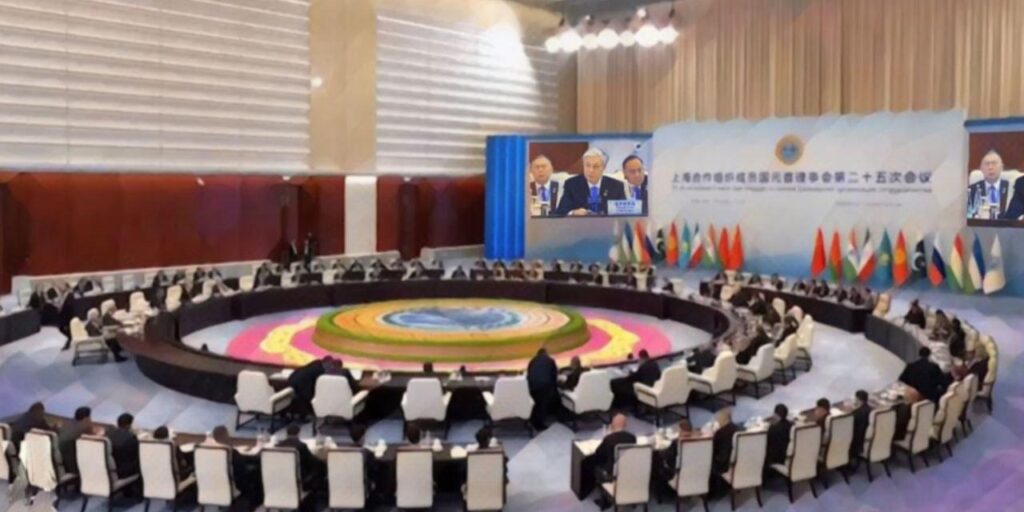
The 2025 Shanghai Cooperation Organization (SCO) Summit, which convened in Tianjin (also known as Tientsin) in China from August 31 to September 1, was the largest in the bloc’s twenty-five-year history. It gathered more than twenty heads of state and institutional leaders, among them China’s Xi Jinping, Russia’s Vladimir Putin, India’s Narendra Modi, Pakistan’s Shehbaz Sharif, Iran’s Masoud Pezeshkian, Kazakhstan’s Kassym-Jomart Tokayev, and UN Secretary-General António Guterres. The agenda ranged widely: counterterrorism, supply chain resilience, energy transition, and climate cooperation all featured. For Beijing, the event was the centerpiece of its SCO presidency. Chinese officials cast it as a demonstration of “true multilateralism” at a time when protectionism and bloc politics are resurgent. The summit’s final product, the Tianjin Declaration, mapped strategic priorities to 2035. It stressed four pillars: collective security, economic integration, digital transformation, and sustainable development. Underpinning this ambition was trade estimated to be worth over $512 billion between China and SCO members in 2024, illustrating the economic weight now embedded in the organization. Over the past year, Kazakhstan’s policy entrepreneurship has heightened the significance of its spell as chair spanning 2024-2025. The country's prominence derives not only from these initiatives but also from its structural position as the largest economy on the Caspian Sea, endowed with the world’s largest reserves of uranium and significant critical minerals. Thanks to its successful implementation of a multi-vector foreign policy aligning with its national strategy priorities, including new energy and transportation agendas, Kazakhstan was able to consolidate its leadership profile. Policy Initiatives and Prolific Activism As one of the six founding members, Kazakhstan had chaired the SCO through 2024. At the 2024 Astana Summit, Tokayev unveiled initiatives that set the foundation for Tianjin. He called for the establishment of a UN Regional Center for Sustainable Development Goals in Central Asia and Afghanistan, arguing that the region’s fragility requires a dedicated UN presence. He also proposed an International Agency for Biological Security, intended to manage risks exposed by the pandemic era, and the creation of an SCO Investment Fund to finance joint projects in infrastructure and technology. During that year, Kazakhstan organized over 140 events in security, economic, and cultural fields, a scale that exceeded most previous chairs. This activism reinforced Astana’s image as a policy entrepreneur within Eurasia’s multilateral institutions. Energy cooperation emerged as the most concrete innovation. In 2024, under Kazakhstan’s presidency and at its motivation, the organization produced a new “SCO Strategy for Energy Cooperation to 2030” committing members to mutual coordination not only in hydrocarbons but also in renewable energy deployment, cross-border grids, and green finance.  In Tianjin in 2025, this framework was carried forward as members endorsed an action plan translating the strategy into specific mechanisms for project financing, technical standards, and pilot cross-border infrastructure. In this way, Kazakhstan’s energy agenda was embedded into the SCO’s medium-term program going forward. Cultural diplomacy was another theme. The “Spiritual Shrines of SCO Countries” project, launched under Kazakhstan’s chairmanship, sought to catalogue and promote shared civilizational heritage. Tokayev also advanced...