• KGS/USD = 0.01143 0%
  • KZT/USD = 0.00205 0%
  • TJS/USD = 0.10433 0.1%
  • UZS/USD = 0.00008 0%
  • TMT/USD = 0.28577 0%
  • KGS/USD = 0.01143 0%
  • KZT/USD = 0.00205 0%
  • TJS/USD = 0.10433 0.1%
  • UZS/USD = 0.00008 0%
  • TMT/USD = 0.28577 0%
  • KGS/USD = 0.01143 0%
  • KZT/USD = 0.00205 0%
  • TJS/USD = 0.10433 0.1%
  • UZS/USD = 0.00008 0%
  • TMT/USD = 0.28577 0%
  • KGS/USD = 0.01143 0%
  • KZT/USD = 0.00205 0%
  • TJS/USD = 0.10433 0.1%
  • UZS/USD = 0.00008 0%
  • TMT/USD = 0.28577 0%
  • KGS/USD = 0.01143 0%
  • KZT/USD = 0.00205 0%
  • TJS/USD = 0.10433 0.1%
  • UZS/USD = 0.00008 0%
  • TMT/USD = 0.28577 0%
  • KGS/USD = 0.01143 0%
  • KZT/USD = 0.00205 0%
  • TJS/USD = 0.10433 0.1%
  • UZS/USD = 0.00008 0%
  • TMT/USD = 0.28577 0%
  • KGS/USD = 0.01143 0%
  • KZT/USD = 0.00205 0%
  • TJS/USD = 0.10433 0.1%
  • UZS/USD = 0.00008 0%
  • TMT/USD = 0.28577 0%
  • KGS/USD = 0.01143 0%
  • KZT/USD = 0.00205 0%
  • TJS/USD = 0.10433 0.1%
  • UZS/USD = 0.00008 0%
  • TMT/USD = 0.28577 0%

Viewing results 1 - 6 of 74

Tokayev Announces Referendum on New Power Plant

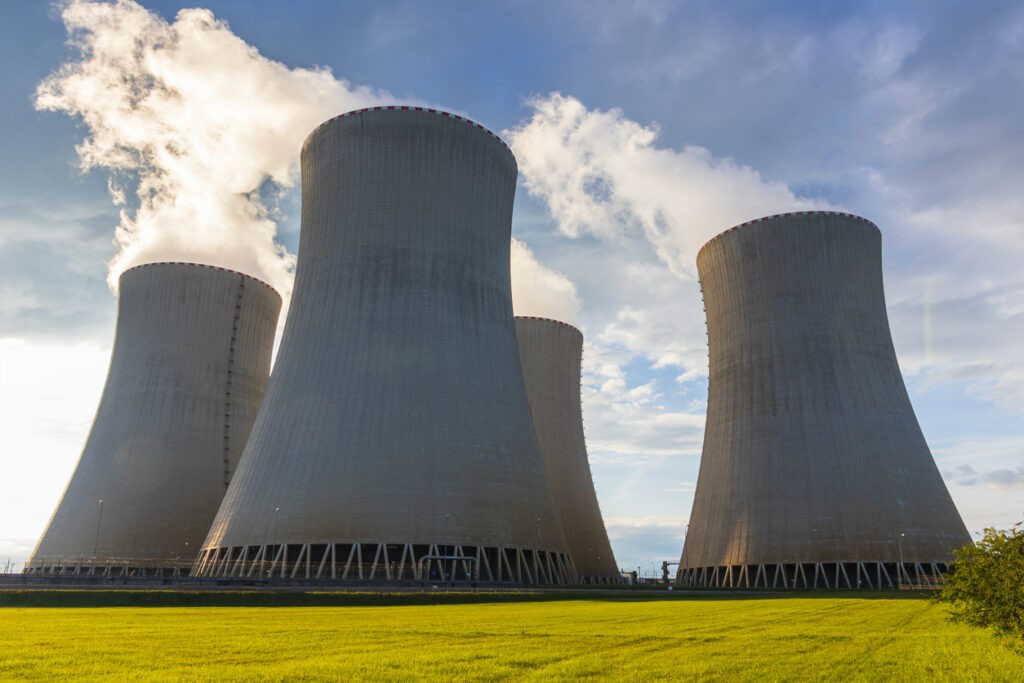
Kazakhstan's President Kassym-Jomart Tokayev has announced a referendum on constructing a nuclear power plant. The popular vote will be held in the fall of this year. "You know that economic development is impossible without a stable energy supply. Therefore, I was tasked to work on constructing a nuclear power plant. A wide discussion is underway, and different points of view are being expressed. Mass media should also take an active part in this process," Tokayev said during a speech at a ceremony to honor journalists. He noted that Kazakhstan has excellent opportunities to develop nuclear energy. "It is important to use them correctly and effectively. The people will decide on this issue, and the referendum will be held this fall. The government will determine the exact date," Tokayev said. Kazakhstan's intentions to build a nuclear power plant have been discussed for years. The Ulken settlement, located on the shore of Lake Balkhash, is tentatively chosen as the site.

Rosatom Begins Construction of NPP in Uzbekistan

Construction of a nuclear power plant has begun in Uzbekistan, 55 km from the border with Kazakhstan, near Tuzkon Lake in the Jizzakh region. The main contractor for this project is Rosatom, Russia's state-owned nuclear energy company. Uzbek companies are also participating. More than three million residents of Turkestan and Shymkent live near the planned site of the nuclear power plant. “The Russian reactor RITM-200N will be used at the new power plant," the Ministry of Energy of Kazakhstan stated. "The reactor, an adaptation of marine technology for land-based use, has a thermal output of 190 MW and an electrical output of 55 MW with a lifespan of up to 60 years. RITM-200 reactors are used on Russian icebreakers. Reactor safety is ensured by multi-level protection systems that prevent accidents.” Uzbekistan and Russia have been holding discussions on the NPP project since 2017. In 2019, a site near Tuzkon Lake was chosen for its development. In addition to a large nuclear power plant, there are plans to build small modular reactors with a total capacity of 330 MW.

First NPP Reactor in Uzbekistan May Start Before 2033

Spot.uz reports that the first reactor of the Small Nuclear Power Plant is planned to be operational in five years. The project will be built near Tuzkon Lake, Farish District, Jizzakh Region. The cost has yet to be disclosed. “The cost of the low-power nuclear power plant construction project based on six RITM-200N reactor units with an installed capacity of 330 MW is confidential information and will not be disclosed,” Uzatom told Spot.uz. The small nuclear power plant's first reactor will be commissioned 60 months after the completion of priority works, which should begin this summer. Each subsequent reactor will be commissioned within six months. The full commissioning will occur before 2033. “During the construction of a low-power nuclear power plant, local general industrial equipment, products, and components are used by the specifications specified in the project documents. Considering the long service life of the small nuclear power plant, it is necessary to use local raw materials,” Uzatom stated. The Times of Central Asia previously reported that the contract for the construction of the NPP was concluded on May 27th, during Russian President Vladimir Putin's visit to Tashkent, between the Directorate for NPP Construction under the Atomic Energy Agency and the Atomstroyexport joint stock company (Rosatom’s engineering department).

Nuclear Power in Uzbekistan Has a Political Aspect – Economist Behzod Hoshimov

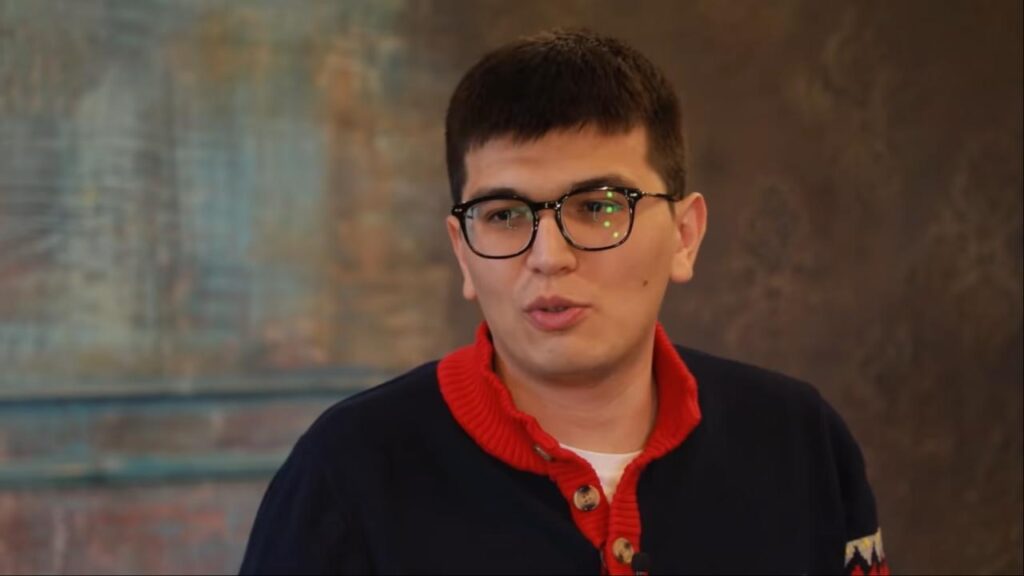
A Russian-built and managed nuclear power plant (NPP) is under construction in Uzbekistan's Jizzakh region. However, some experts are not convinced about the project's feasibility. One of them is Uzbek economist Behzod Hoshimov, who has been speaking recently about the economic and political aspects of Rosatom's foray into Uzbekistan. According to Hoshimov, the problem is not the lack of reform in the electricity and energy sectors, but rather poor policy and management. “Even now, without any nuclear power plants, we can import electricity or fuel for its production, and we can attract companies that produce solar energy at fairly normal prices. Therefore, the problem of "lack of electricity" results from artificially created, mismanaged, and wrongly constructed electricity policy. The construction of NPP is not a technological problem that can be solved,” the economist writes on his Telegram channel. He raises questions such as whether the decision to build a nuclear power plant was economically feasible, and how much money the Uzbek government will spend on its construction. “Will it be financed from other financial sources, including the state debt, and most importantly, if the state is building, how much will it cost the people of Uzbekistan?" The amounts intended to be used from all state and non-state financial sources must be fully and completely disclosed. This fiscal requirement is also defined in our constitution,” Hoshimov adds. “But more importantly, there are other conditions in the deal, which are more important than the station's price. We need to talk about them. It is very important who manages the station and at what price electricity is sold. In Turkey, Russia has built entirely at its own expense and made a deal for 12.5 cents per 1 kilowatt hour of energy. There is a reasonable question about whether we should take it under the same conditions. Today, if there are cheaper generation sources in Uzbekistan, how much more expensive nuclear energy is necessary?” Hoshimov has noted that there are also political aspects to the issue: “The second thing that applies to all state expenditures, especially large and important ones, is choosing a contractor. Did companies other than "Rosatom" participate in the tender? Countries like France and Japan have highly developed atomic energy, and they also build excellent stations. What did their companies offer to our government? Why "Rosatom?" The reason I ask this question is, of course, that there is no place for politics in such a thing. Europe has almost completely abandoned Russian energy – the reason for this was the full-fledged war in Europe. Once upon a time, Germany decided that Russian energy was cheap, not considering political calculations but relying only on economic calculations, and this decision cost a lot. But for a much smaller country like ours, the fact that the main contractor in the NPP is the Russian state and a state-owned enterprise should be a very big question.” He also points out: "If the Japanese and the Russians offer the same price, I would say that the Japanese should be...

Rosatom Set to Build Small Nuclear Power Plants in Uzbekistan

Russian state nuclear power corporation Rosatom is ready to offer lower-capacity nuclear power plant (NPP) projects to Uzbekistan. That's according to comments made by Denis Manturov, Russia's Minister of Trade and Industry, at the fourth annual international industrial exhibition, Innoprom, Central Asia. “Currently, the Rosatom state corporation and the Uzatom agency are working out the general contract for the construction of a nuclear power plant. This is a large-scale and complex project. Rosatom is ready to offer Uzbekistan additional solutions, including solutions related to low-power nuclear power plants,” Manturov said. According to Manturov, who is also a Deputy Prime Minister, the site for the construction of the NPP has already been chosen, and the spot is located near Tuzkon Lake in the Jizzakh region, which studies have confirmed is a favorable place. In addition, the optimal technical configuration for the project has already been determined. Rosatom plans to build a complex consisting of two power units with VVER-1200 reactors. “Now, together with Uzbek and international experts, technical issues related to the integration of the nuclear power plant into the energy system, cooperation with renewable energy sources, reducing the volume of water for the use of the plant and maximum production of electricity are being considered taking into account the climatic characteristics of the region,” Manturov stated.

What the Proposed U.S. Ban on Russian Uranium Imports Could Mean for Kazakhstan

On Monday, 11 December 2023, the U.S. House of Representatives passed a new bill banning imports of Russian uranium. While the bill would need to pass the U.S. Senate and be signed off by President Joe Biden in order to become law, this first step towards legality raises questions about the future of nuclear energy in the U.S., and which country could provide the resources necessary to facilitate it going forwards. This bill represents a significant opportunity for Kazakhstan, the world’s largest producer of uranium, which could potentially step into the breach and provide the mineral necessary to meet the U.S.' nuclear energy needs. If successfully made into law, the bill entitled the “Prohibiting Russian Uranium Imports Act” will see a complete ban on unirradiated low-enriched uranium (the type used to make nuclear fuel) that is produced in Russia, and annual caps on the amount of low-enriched uranium that can still be imported from the country until 2027. Waivers have been built into the wording of the legislation to allow the U.S. Department of Energy (DOE) to work around the ban if no feasible alternative is found to sustain the functioning of a nuclear reactor or nuclear company. However, the bill also guides the DOE to submit a report outlining the alternatives to Russian-produced uranium, which could be utilized over the next five years. One country sure to be on their radar is Kazakhstan. A former powerhouse of the Soviet Union’s nuclear weapons testing program, Kazakhstan was left with significant infrastructure for uranium mining after the collapse of the bloc in 1991. Its nuclear production is currently monopolized by one company, Kazatomprom, which has emerged as a global leader in the field. Although the U.S. mines its own uranium, it does not produce enough to meet its domestic demands for nuclear power, which in the year 2022 was over 20,100 metric tonnes in total. That year, the U.S. produced 75 metric tonnes of uranium ore from its own mines. By comparison, Kazakhstan produced 21,227 metric tonnes in the same time period. Mukhtar Dzhakishev, the former head of Kazatomprom, has spoken about the necessity of increasing the volume of production in Kazakhstan if it were to be a viable candidate for replacing Russia’s supply to the U.S. Greater resources would need to be directed towards mining if the country were to increase its annual uranium yield to make up for the lost volume of Russian uranium. If the U.S. were to seek a trade agreement with Kazakhstan to bolster its nuclear power supplies, it would indicate an alignment with the European Union, which recently expressed a desire to conduct increased trade with countries in Central Asia. Given that the largest exports from Central Asian countries to Europe are of natural resources such as oil, gas and metals, it is safe to assume that energy will be one of the key goals in any trade deals the EU tries to negotiate. These announcements have arisen in the wake of Russia’s war in...