• KZT/USD = 0.00209
  • TJS/USD = 0.10810
  • UZS/USD = 0.00008
  • TMT/USD = 0.29760
  • KZT/USD = 0.00209
  • TJS/USD = 0.10810
  • UZS/USD = 0.00008
  • TMT/USD = 0.29760
  • KZT/USD = 0.00209
  • TJS/USD = 0.10810
  • UZS/USD = 0.00008
  • TMT/USD = 0.29760
  • KZT/USD = 0.00209
  • TJS/USD = 0.10810
  • UZS/USD = 0.00008
  • TMT/USD = 0.29760
  • KZT/USD = 0.00209
  • TJS/USD = 0.10810
  • UZS/USD = 0.00008
  • TMT/USD = 0.29760
  • KZT/USD = 0.00209
  • TJS/USD = 0.10810
  • UZS/USD = 0.00008
  • TMT/USD = 0.29760
  • KZT/USD = 0.00209
  • TJS/USD = 0.10810
  • UZS/USD = 0.00008
  • TMT/USD = 0.29760
  • KZT/USD = 0.00209
  • TJS/USD = 0.10810
  • UZS/USD = 0.00008
  • TMT/USD = 0.29760

Viewing results 1 - 6 of 46

Russia’s Strategic Posturing and Putin’s November Visit to Kazakhstan

On November 27, 2024, Russian President Vladimir Putin’s state visit to Kazakhstan underscored the complex geopolitical and security challenges facing the region. Hosted by Kazakh President Kassym-Jomart Tokayev in Astana, the visit took place amidst heightened tensions following Russia’s deployment of its Oreshnik hypersonic missile in Ukraine on November 21. This escalation has reshaped the regional security environment, compelling Kazakhstan to confront potential spillover effects of the Ukraine conflict. Energy remained a central focus during the visit. Kazakhstan remains heavily reliant on oil exports through the pipeline of the Caspian Pipeline Consortium (CPC), which passes through southern Russia. This cooperation benefits Kazakhstan economically but, by tying Kazakhstan further into Russian energy networks, it further complicates Astana's efforts to balance relations with Moscow and Western powers. Following periodic closures of the CPC route on various pretexts, Kazakhstan has resolved to diversify its energy export strategy. It has increased shipments by barge across the Caspian Sea to enter the Baku-Tbilisi-Ceyhan (BTC) pipeline, which terminates on Turkey's coast in the eastern Mediterranean. One should not be surprised if ideas about the old Trans-Caspian Oil Pipeline (TCOP) project are taken out of deep storage for reanimation. The TCOP is an undersea link first discussed in the late 2000s between then-Presidents Nursultan Nazarbayev of Kazakhstan and Nicolas Sarkozy of France. It was shelved at the time because it did not seem geoeconomically necessary. Since then, relations between Russia and Kazakhstan have been complicated by the periodic CPC closures that, although they are given technical justification, appear politically motivated by Moscow to squeeze Astana. Kazakhstan's short-term solution, to increase oil shipments by barge across the Caspian Sea to Baku for insertion into the BTC pipeline, simply cannot attain the volumes necessary to provide a strategic alternative to the CPC. The BTC, at present, would be able to accommodate whatever volumes Kazakhstan would be able to transit to Azerbaijan including via a prospective TCOP, for export to world markets from Ceyhan. One would suppose that bilateral discussions also covered the possible participation of Rosatom in the construction and operation of Kazakhstan’s first nuclear power plant (NPP). However, no mention of this topic was made in public statements. Kazakhstan would prefer to escape the vise-like pressure between Russia and China on this matter. That is why Tokayev has discussed participation by the French firms Orano and EDF with France's President Emmanuel Macron. It has recently been suggested that it would be technically feasible for Kazakhstan to find a group of Western companies capable of executing the project. A Western consortium would have no reason to hesitate to include Kazatomprom in an appropriate role, not excluding capacity-building. The Russia-only and China-only options for the NPP's construction would be less welcoming to such a possibility. Kazakhstan's leadership has become properly sensitive to how energy partnerships are not just economic decisions, but strategic calculations in Central Asia's volatile geopolitical landscape. Indeed, Russia’s use of the Oreshnik missile against Ukraine has created an entirely new security situation. It has raised concerns that...

Who Will Build Kazakhstan’s Nuclear Power Plant?

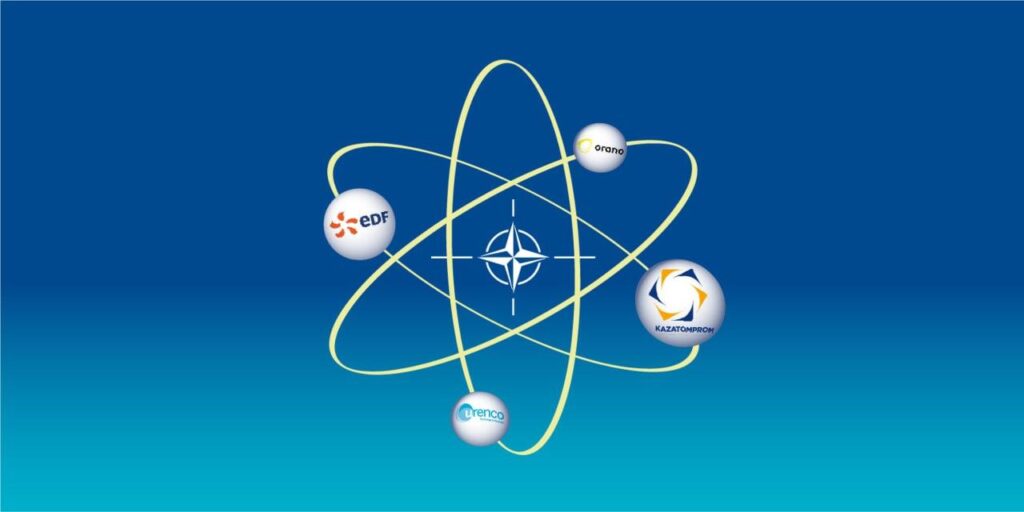
There are three generally discussed possibilities for construction of Kazakhstan’s newly approved nuclear power plant (NPP). One is that Russia is sole contractor. Another is that China is sole contractor. Each of these choices has its own rationale yet also geo-economic and geopolitical drawbacks for Kazakhstan. Third, Kazakhstan’s President Kassym-Jomart Tokayev has publicly stated that he favors an international consortium with participation by companies from China, France, Russia, and South Korea. This option, however, faces logistical challenges, particularly in dividing responsibilities among consortium members and determining the sourcing of critical components. Tokayev has already discussed with France’s President Emmanuel Macron the possible participation of the French companies Orano and EDF in particular. Orano focuses on various aspects of the nuclear fuel cycle, including uranium mining, enrichment, and waste management. EDF specializes in design, construction, and operational management. This opens the door to a fourth possibility. Orano, EDF and the British-German firm Urenco together can provide all the NPP construction and management services necessary to realize the project. But Kazatomprom, which focuses on mainly on mining and processing, has not been mentioned in any of these schemes. Such an alternative approach, involving Western companies like Orano, EDF, and Urenco, could ensure comprehensive services with strong Western involvement, possibly including Kazatomprom, thus boosting local capacity and creating a "demonstration project" for broader natural resource collaboration within NATO frameworks. This kind of partnership could help Kazakhstan reduce its dependency on single external actors, thereby enhancing its strategic autonomy. Moreover, by involving Kazatomprom, the project could focus on knowledge transfer and capacity building, fostering local expertise and reducing external dependencies over time. It is reasonable that an offer to take Kazatomprom into a Western consortium and to make capacity building in Kazakhstan, at Kazatomprom and elsewhere, an explicit goal of the project, would be welcome in Astana. Cooperation via NATO platforms could likewise offer Kazakhstan access not only to technical specialists from NATO countries but also to more joint training exercises and workshops, to complement an exchange of knowledge on best practices in nuclear safety and energy resilience. And that would be only a “demonstration project” for the constructive expansion of the energy component of NATO’s Partnership for Peace (PfP) into broader natural-resource and rare-earth domains. Indeed, there is no reason even to wait for the NPP project. Central Asia, especially Kazakhstan, is a periodic table of the elements, especially rare-earth elements, and their exploration and development has been under way for some time. Building upon the energy-security successes through NATO's PfP, this proposal suggests expanding cooperation with Caspian region Partner countries into the mining sector, specifically for rare-earth elements critical to defense. Extending PfP to include these resources aligns with NATO's and Partners' core security goals, offering broader opportunities to secure the supply chain and enhance collective defense capabilities. This extension also presents a strategic avenue to mitigate risks associated with supply disruptions and geopolitical tensions. Leveraging the extensive experience of partnership in energy security, NATO and its Partner countries could begin with...

Chinese Companies to Purchase Uranium Concentrates from Kazatomprom for $2.5 Billion

Shareholders of Kazatomprom, Kazakhstan’s national uranium producer, have approved agreements with two Chinese partners: CNNC Overseas and China National Uranium Corporation (CNUC). These agreements include a spot contract with CNNC Overseas and a long-term contract with CNUC. Under the terms of these deals, Kazatomprom plans to supply uranium concentrates to China valued at approximately KZT1.25 trillion (around $2.5 billion). While the company has not disclosed specific delivery timelines or volumes, the agreements mark a significant development in Kazakhstan-China nuclear energy cooperation. CNNC Overseas registered in Hong Kong, and CNUC, based in China, are both subsidiaries of the China National Nuclear Corporation, a state-owned entity responsible for operating nuclear power plants across China. Kazatomprom has been deepening its ties with China in the nuclear energy sector. In May 2023, a ceremony at the Fangchenggang Nuclear Power Plant marked the acceptance of fuel assemblies produced by Ulba-TVS LLP, a Kazakh-Chinese joint venture in Ust-Kamenogorsk. These assemblies, made from Kazakhstani uranium feedstock, are destined for use in Chinese nuclear power facilities.

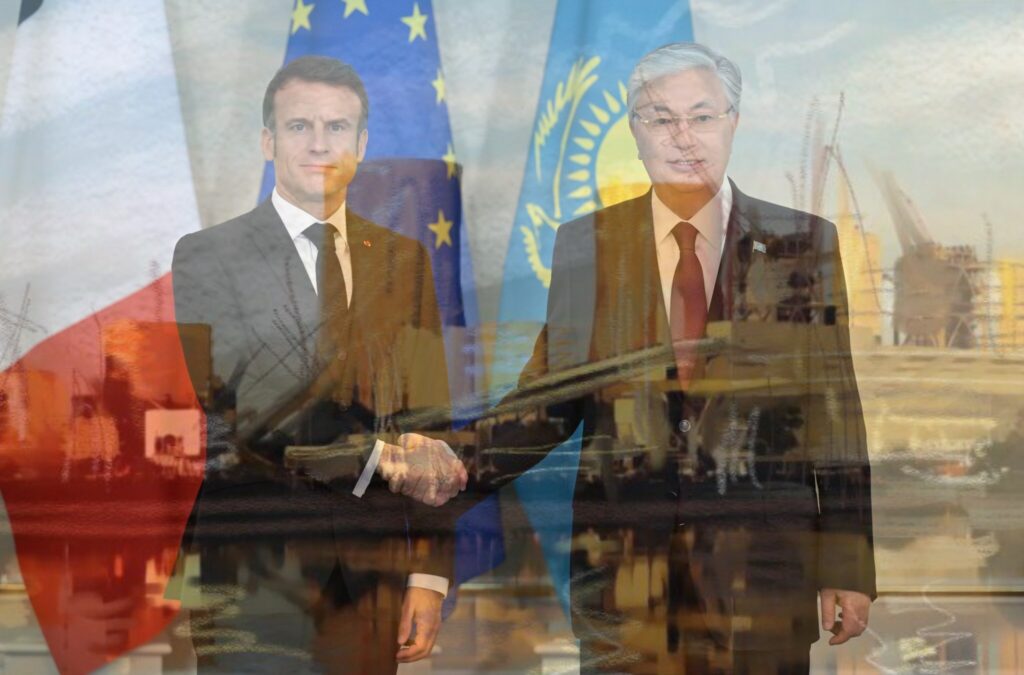
Kazakhstan’s Tokayev in France: It’s All About Nuclear Energy

For France – a country that gets around 70% of its electricity from nuclear energy – Kazakhstan’s decision to build its first nuclear power plant presents an ideal opportunity to strengthen economic ties with the Central Asian state. For Astana, potential cooperation with French nuclear corporations could help reduce dependence on Russia and its State Nuclear Energy Corporation, Rosatom. But will things really go that smoothly? In November 2023, following the meeting between Kazakh President Kassym-Jomart Tokayev and his French counterpart Emmanuel Macron, in Astana, it became clear that, for Paris, establishing a strong nuclear partnership with the largest Central Asian nation was the top priority with regard to Kazakhstan. The following year, Tokayev flew to Paris for another round of talks with Macron. Reports suggest that nuclear cooperation was once again one of the key topics the two leaders discussed. On November 4, a day prior to the Macron-Tokayev summit, French and Kazakh officials signed 24 documents on cooperation worth $2 billion. Unsurprisingly, energy was a central focus. Kazakhstan agreed to establish closer ties with two French nuclear giants: Orano and Électricité de France (EDF). According to Gabidulla Osspankulov, Chairman of the Investment Committee of the Kazakh Foreign Ministry, Orano’s great experience in uranium extraction makes it a key partner for Astana. That is why the former Soviet republic aims to use the company’s technologies and experience in uranium production in Kazakhstan. Ospankulov also expects both Orano and EDF to be part of a consortium that will build the nuclear power plant in the Central Asian country. Paris, on the other hand, is likely seeks to not only be involved in the construction of the nuclear facility, but also to get Kazakhstan’s spent nuclear fuel for reprocessing. In exchange, Astana – possibly the world’s largest uranium producer – can increase its uranium exports to France. From the French perspective, such an arrangement would be very beneficial, especially after Niger's military government revoked Orano’s permit to operate at its Imouraren uranium mine – one of the biggest in the world. The problem, however, lies in geography and logistics. On the eve of the Macron-Tokayev summit, the French train manufacturer Alotom and the Kazakhstan Temir Zholy Electric Locomotive Assembly Plant signed a deal on the supply of 117 French-made freight electric locomotives, weighing up to 9,000 tons, to the former Soviet republic. Will they be used for the transport of Kazakh uranium to France? Russia and China, as the Central Asian nation’s giant neighbors, could easily, under any pretext, block the transport of Kazakh nuclear materials through their territories to Europe. Rail remains the dominant mode of transport for Kazakhstan’s uranium exports, but its reliance on Russian and Chinese routes poses a strategic challenge for Astana. To avoid using the two nations’ railways, Astana would have to boost uranium and potentially also spent nuclear fuel exports via the Caspian Sea Route, primarily through the Middle Corridor. It is, therefore, no surprise that modernization of this network remains Kazakhstan’s primary objective. But...

Kazakhstan’s Return to Nuclear Power: TCA in Association with American Foreign Policy Council Hosts Inaugural Burgut Expert Talk

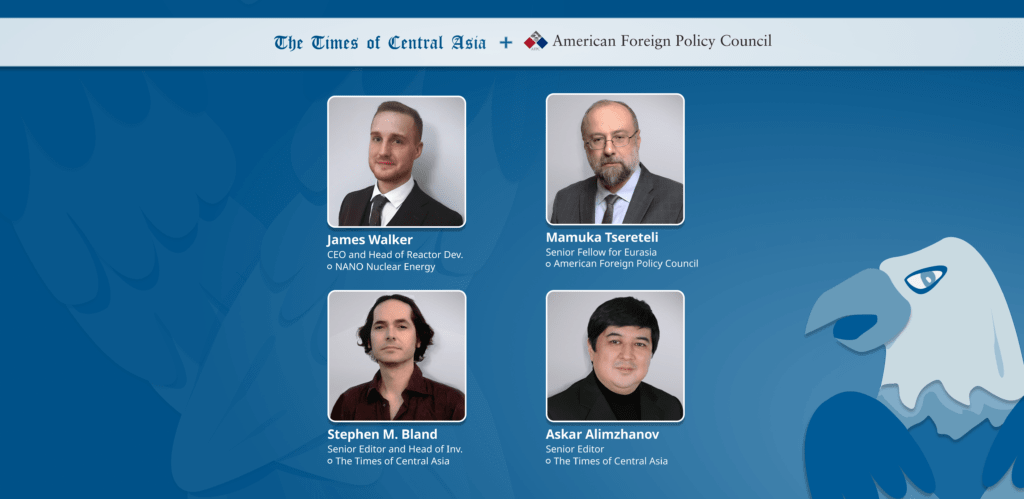
On October 6 of this year, the people of Kazakhstan participated in a referendum to decide whether nuclear power should become a part of their daily lives, or whether the haunting legacy of atomic testing would continue to limit the country’s progress in this area. The official preliminary results, released on October 7, showed that 71.12% of participants agreed to the construction of a nuclear power plant in Kazakhstan with a voter turnout of 63.66%. President Tokayev’s goal in holding a referendum was to ensure that arguments in favor of nuclear energy were compelling, and that citizens, scientists, and government officials were involved in the decision-making process. Tokayev has since suggested that an “international consortium made up of global companies equipped with cutting-edge technologies” should be involved in the project. In partnership with the American Foreign Policy Council, on October 30, 2024, The Times of Central Asia convened a virtual event to discuss what the referendum result means for energy security, geopolitics, and new business opportunities for both regional and global actors. Moderating this event was Mamuka Tsereteli, Senior Fellow for Eurasia at the American Foreign Policy Council, whilst the panel comprised Askar Alimzhanov, Senior Editor at The Times of Central Asia, Stephen M. Bland, Senior Editor and Head of Investigations at The Times of Central Asia, and James Walker, CEO and Head of Reactor Development at NANO Nuclear Energy. Focusing on a local perspective, Askar Alimzhanov told those in attendance that “Kazakhstan is in tough situation today regarding the issue of energy dependence. Because we have the largest nuclear test site in the world and during around 50 years there were just under 500 atomic tests, we all know about the possible consequence. As consumers, however, we’ve seen prices rise around 26% in one year. The population of the country is growing, so when we talk about the annual growth in energy consumption, this is a natural process. “Since the majority of voters have already made their decision, the main question which remains is who will build it? However, serious concerns persist within society including the fear of corruption, which can result in poor quality structures. As an example, we can talk about the light rail transportation network in Astana, which started in 2009 and still isn’t finished. The officials who stole the money, they still have those funds abroad.” [video width="1920" height="1080" mp4="https://timesca.com/wp-content/uploads/2024/11/Burgut-Expert-Talk-Kazakhstans-Return-to-Nuclear-Power1.mp4"][/video] Speaking about energy dependence and geopolitical considerations, Stephen M. Bland noted that “Kazakhstan's energy landscape is characterized by a reliance on aging thermal power plants, which are increasingly unable to meet the demands of a growing population and economy, with electricity shortages projected to worsen, particularly in the rapidly developing southern regions. The construction of a nuclear power plant, therefore, is seen as a crucial step toward alleviating these shortages, reducing dependence on overpriced imports from Russia, and achieving carbon neutrality goals. “The construction of Kazakhstan's first nuclear power plant presents both challenges and opportunities for the country's energy independence and regional influence. On one hand, developing a robust nuclear energy sector could...

Kazakhstan Referendum Approves First Nuclear Power Plant

More than 71 percent of voters have approved the October 6 referendum for constructing Kazakhstan’s first nuclear power plant (NPP). Turnout was over 63 percent, easily surpassing the 50-percent barrier for validation. This result closely tracks the results of a telephone survey conducted by the Democracy Institute on September 30 and released by the Kazakhstan Institute for Strategic Studies. That survey found 73 percent of those asked to favor construction of a nuclear power plant. It also found that 62 percent of respondents intended to vote, not far from the actual participation rate.  President Kassym-Jomart Tokayev had announced the referendum initiative in a message to the public in September 2023. In that address, he emphasized that Kazakhstan, as the world's largest producer of uranium, should also have its own nuclear-power generation capabilities. Following this announcement, a series of meetings between representatives of various government agencies and the public were organized across all regions of the country. During these meetings, the plans for constructing an NPP were discussed in detail, with an emphasis on the potential benefits of nuclear energy for Kazakhstan’s energy independence. Kazakhstan has held a significant position in the global nuclear-energy market since the late 2000s, accounting for approximately 40 percent of global uranium production. Despite this advantageous position, the country faces severe electricity shortages, which are projected to worsen by 2025, especially in the rapidly growing southern regions. Reliance on aging thermal power plants, many of which are equipped with components that have been in service for over 50 years, has only exacerbated the problem. Frequent energy shortages in multiple regions have left citizens without heat during harsh winter conditions, often with temperatures dropping well below zero. The proposed site for the nuclear power plant is in Ulken, located in the Almaty region. The shortlist of potential builders for the NPP includes companies from China, South Korea, Russia, France, and the United States. The inclusion of companies from multiple countries is aimed at ensuring competitive bidding and securing the best possible technology for the project. Tokayev has indicated a personal preference for an “international consortium made up of global companies equipped with cutting-edge technologies.” Developing an NPP will help the country to achieve energy independence and meet carbon-neutrality goals. Without an NPP, rolling blackouts will be necessary and dependence on electricity imports from Russia will continue. However, the legacy of the Semipalatinsk test site looms large, creating a challenging decision for Kazakh citizens. Kazakhstan's nuclear history spans from Soviet-era testing to present-day energy challenges. The Semipalatinsk nuclear test site, established in 1947, was where the Soviet Union conducted over 468 nuclear tests, leaving long-lasting environmental and health impacts on the local population. The fallout from these tests has burdened the national health-care system for decades, exacerbated by nuclear fallout from Chinese testing at Lop Nor. In response to these consequences, then-President Nursultan Nazarbayev closed the Semipalatinsk site in 1991, and by 1994, Kazakhstan had relinquished its nuclear arsenal and became a non-nuclear state. Nazarbayev’s rise to power...