• KGS/USD = 0.01144 0%
  • KZT/USD = 0.00216 0%
  • TJS/USD = 0.10659 0%
  • UZS/USD = 0.00008 0%
  • TMT/USD = 0.28530 0%
  • KGS/USD = 0.01144 0%
  • KZT/USD = 0.00216 0%
  • TJS/USD = 0.10659 0%
  • UZS/USD = 0.00008 0%
  • TMT/USD = 0.28530 0%
  • KGS/USD = 0.01144 0%
  • KZT/USD = 0.00216 0%
  • TJS/USD = 0.10659 0%
  • UZS/USD = 0.00008 0%
  • TMT/USD = 0.28530 0%
  • KGS/USD = 0.01144 0%
  • KZT/USD = 0.00216 0%
  • TJS/USD = 0.10659 0%
  • UZS/USD = 0.00008 0%
  • TMT/USD = 0.28530 0%
  • KGS/USD = 0.01144 0%
  • KZT/USD = 0.00216 0%
  • TJS/USD = 0.10659 0%
  • UZS/USD = 0.00008 0%
  • TMT/USD = 0.28530 0%
  • KGS/USD = 0.01144 0%
  • KZT/USD = 0.00216 0%
  • TJS/USD = 0.10659 0%
  • UZS/USD = 0.00008 0%
  • TMT/USD = 0.28530 0%
  • KGS/USD = 0.01144 0%
  • KZT/USD = 0.00216 0%
  • TJS/USD = 0.10659 0%
  • UZS/USD = 0.00008 0%
  • TMT/USD = 0.28530 0%
  • KGS/USD = 0.01144 0%
  • KZT/USD = 0.00216 0%
  • TJS/USD = 0.10659 0%
  • UZS/USD = 0.00008 0%
  • TMT/USD = 0.28530 0%

Viewing results 1 - 6 of 8

Singer MEREY on Kazakh-Language Music, Tradition, and a New Sound

Singer, poet, and lyricist MEREY is among a younger group of artists bringing a different sensibility to music in Kazakhstan. Her work is rooted in Kazakh-language expression, but it also pushes beyond familiar expectations of how a female singer should sound and present herself. In an interview with The Times of Central Asia, MEREY discusses the influence of poetry on her lyrics, the reaction to experimentation, and what she believes is missing from Kazakhstan’s contemporary music scene. TCA: Tell us a little about yourself. How did you get into music? MEREY: I came to music at 17, that’s when I wrote my first song in English. Before that, for as long as I can remember, I had been writing poetry; it was my first form of self-expression. During my school years, I also studied music more formally. I played in a national orchestra, where I both sang and performed dombra parts. That experience strongly shaped my sense of stage presence and musical language. Today, I position myself as a poet, singer, and lyricist. For me, text and music are inseparable. TCA: Who or what influenced your artistic development the most? MEREY: Since school, I have read the works of Mukaghali Makatayev, a classic of Kazakh poetry known for lyrical verses about love, homeland, and the human experience, and Fariza Ongarsynova, a prominent poet who wrote about emotions, time, and women’s lives. They left a deep mark on me as a poet, and echoes of their style can be found in my lyrics. As a teenager, I listened to Billie Eilish, Lana Del Rey, and The Neighbourhood. Later, Mitski, Zemfira, Valentin Strykalo, and Børns. Now I feel close to what Chappell Roan and Meg Myers are doing. My taste leans toward alternative music with an emphasis on vocals, lyrics, and guitar riffs, with a slightly detached aesthetic. This directly informs my own music. TCA: Your music is often described as a blend of traditional elements and modern electronics. How did this sound take shape? MEREY: I wouldn’t fully agree with the phrasing about electronics, but my sound is in many ways inspired by Darkhan Juzz. He was the first artist from Kazakhstan who truly impressed me with his sound. I come from a Kazakh-speaking background, so my lyrics tend to be more literary rather than conversational, unlike many artists of the new school. That’s thanks to my parents and my education in a Kazakh-language school. The modern side comes from my musical tastes, especially the Western scene. My sound combines a Western sensibility with precise, expressive Kazakh language. It’s a mix of Western thinking and Kazakh tradition and that is exactly what resonates with listeners. TCA: How important is it for you to preserve cultural roots in contemporary music? MEREY: It is fundamentally important. As I grow older, I become more conscious, and even stricter, about the Kazakh language and tradition. I’m glad that today national elements, ornaments, traditional clothing, interest in Tengriism, and the language itself, are once again becoming part of the cultural...
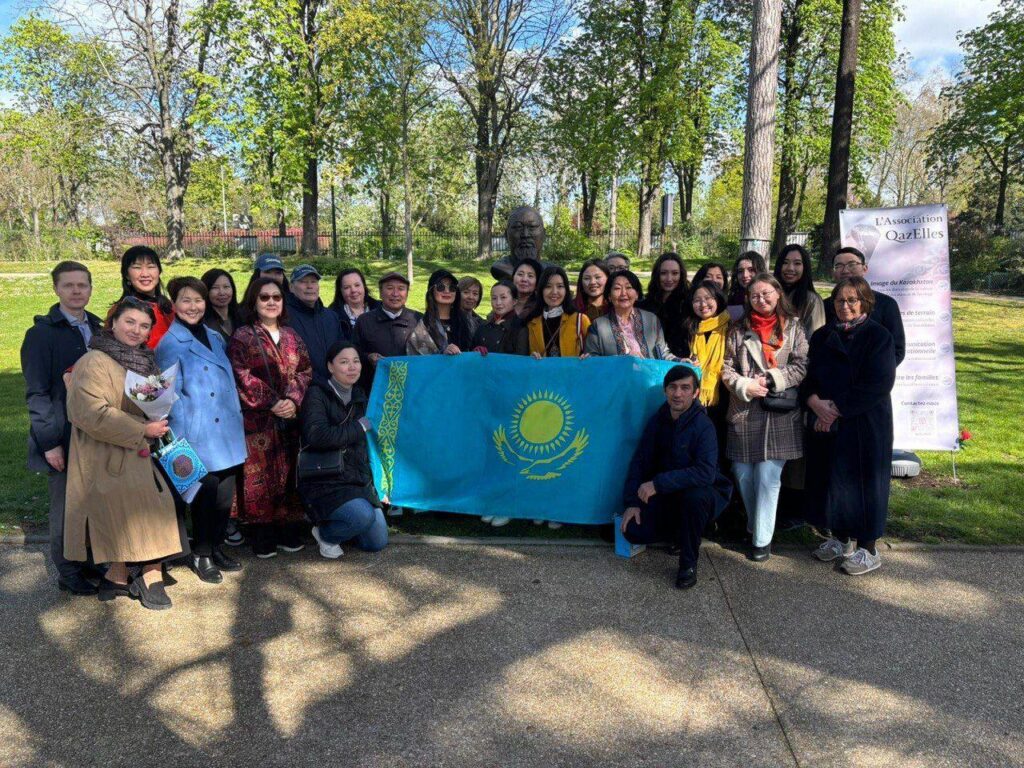
Poems by the Kazakh Poet Abay Recited in Paris in Nine Languages

The legacy of the Kazakh poet Abay Kunanbayev recently brought together representatives of different nations in Paris. His works were recited in Kazakh, French, Russian, Chechen, Buryat, Kalmyk, Ingush, Tuvan, and Yakut. The Association of Kazakh Women in France, “QazElles,” thus supported the recently announced proposal to include Abay’s work Words of Admonition on the UNESCO World Heritage List. “As you know, UNESCO’s headquarters are in Paris, so the news that one of Kazakhstan’s most significant literary monuments could officially become part of UNESCO’s World Heritage List is very personal to us. How can we support this? By bringing together those who are not yet familiar with Abay’s work and introducing them to his major poetic masterpieces. This year, Abay’s works will be presented in the languages of various diasporas living in France with whom we are friends,” said Madina Kulmanova, president of the “QazElles” association, in an interview with The Times of Central Asia. [caption id="attachment_46355" align="aligncenter" width="225"] QazElles photos archive[/caption] The monument to Abay, located in the Poets’ Square of the French capital, has become a regular meeting place for admirers of his work since its unveiling in 2021. For Kazakhs living in France, it has become a tradition to hold the “Abay Readings” annually at the poet’s bust to promote the legacy of the founder of Kazakh written literature. This time, Abay in Paris brought together not only Kazakh and French people, but also representatives of the peoples of the Caucasus, as well as Buryat and Kalmyk associations in France. Said Musa Batyrgereev, a representative of the Chechen diaspora: “I am here representing the Association ‘Guardians of Mountain Cultures in France’ and as a representative of the Chechen people. Today we have gathered at the monument to Abay Kunanbayev to honor his memory. Abay was a great poet and a wise man who taught kindness, respect, and humanity. And today I would like to thank the Kazakh people from the bottom of my heart for the help and support they provided to the Chechen people in 1944. We will never forget this.” Representatives of the “Peuple du Baïkal” association, which unites representatives of the peoples of Russia’s Baikal region, thanked the “QazElles” association for the invitation to the annual readings of Abay Kunanbayev’s poems. In the poem they chose to read, “Quiet Night Under the Moon” (“Jelsiz tünde jaryq ai”), the poet lovingly describes the beauty of nature and the tenderness of relationships. [caption id="attachment_46356" align="aligncenter" width="225"] QazElles photos archive[/caption] Radmila Boyer, a representative of the association, noted that listening to Abay’s poem immerses one in a world of beauty and love. “This poetic morning brought us, different peoples, closer together, gave us a wonderful mood, the joy of communication, and inspiration for future joint cultural projects,” she said. Tulips were laid at the Abay monument in honor of the readings. This served as a reference to another project by the “QazElles” association, which, with the support of the Shymkent city authorities, the Embassy of Kazakhstan in...

Belgian Rapper Performs Song Inspired by Turkmen Poet Makhtumkuli Fraghi

Belgian rap artist Tony has unveiled a new musical composition inspired by the poem Love Your People by the Turkmen poet Makhtumkuli Fraghi. The pop-rap song, performed in English, emphasizes themes of love and respect for one’s people, the protection of honor and dignity, and the preservation of traditions and moral values. The project was supported by the Embassy of Turkmenistan in Belgium, marking a continuation of Tony’s collaboration with the Turkmen diplomatic mission. Previously the artist released the track Turkmenistan Dreams, which celebrated the richness and beauty of Turkmen culture. The song's video, filmed at the Embassy of Turkmenistan in Brussels, received a warm reception. The lyrics for Turkmenistan Dreams were penned by diplomat Maral Rakhimova and highlighted the enduring spiritual legacy of Makhtumkuli Fraghi for the Turkmen people.

Kazakh Poet Bakhyt Kenzheev Dies at 74

Bakhyt Kenzheev, a famous poet from Kazakhstan, has died at the age of 74 after a long illness. Kenzheev was born in 1950 in Shymkent, Kazakhstan, studied at the Faculty of Chemistry of Moscow State University, and debuted as a poet in 1977. His works were published in the leading publications of the Soviet Union — including Komsomolskaya Pravda, Yunost, Moskovsky Komsomolets. In 1982, Kenzheev emigrated to Canada, and in 2008, to the United States. He is the author of more than 20 books of poetry and prose books, and was honored with the Anti-Booker, Moscow Transit and Russian Prize, and was twice nominated for the Nobel Prize in Literature. Kenzheev himself considered himself a true Kazakh. "I was taken from Kazakhstan as a three-year-old, I grew up in Moscow, I am a Russian poet, my mother is Russian, but I am Kazakh. It never occurred to me to take a pseudonym and become, for example, Boris Karasev. People say to me: 'You don't speak Kazakh.' I don't care, and I feel that way," Kenzheev stated in one of his interviews.