• KGS/USD = 0.01144 0%
  • KZT/USD = 0.00213 0%
  • TJS/USD = 0.10874 0.37%
  • UZS/USD = 0.00008 0%
  • TMT/USD = 0.28571 0%
  • KGS/USD = 0.01144 0%
  • KZT/USD = 0.00213 0%
  • TJS/USD = 0.10874 0.37%
  • UZS/USD = 0.00008 0%
  • TMT/USD = 0.28571 0%
  • KGS/USD = 0.01144 0%
  • KZT/USD = 0.00213 0%
  • TJS/USD = 0.10874 0.37%
  • UZS/USD = 0.00008 0%
  • TMT/USD = 0.28571 0%
  • KGS/USD = 0.01144 0%
  • KZT/USD = 0.00213 0%
  • TJS/USD = 0.10874 0.37%
  • UZS/USD = 0.00008 0%
  • TMT/USD = 0.28571 0%
  • KGS/USD = 0.01144 0%
  • KZT/USD = 0.00213 0%
  • TJS/USD = 0.10874 0.37%
  • UZS/USD = 0.00008 0%
  • TMT/USD = 0.28571 0%
  • KGS/USD = 0.01144 0%
  • KZT/USD = 0.00213 0%
  • TJS/USD = 0.10874 0.37%
  • UZS/USD = 0.00008 0%
  • TMT/USD = 0.28571 0%
  • KGS/USD = 0.01144 0%
  • KZT/USD = 0.00213 0%
  • TJS/USD = 0.10874 0.37%
  • UZS/USD = 0.00008 0%
  • TMT/USD = 0.28571 0%
  • KGS/USD = 0.01144 0%
  • KZT/USD = 0.00213 0%
  • TJS/USD = 0.10874 0.37%
  • UZS/USD = 0.00008 0%
  • TMT/USD = 0.28571 0%

Viewing results 1 - 6 of 284

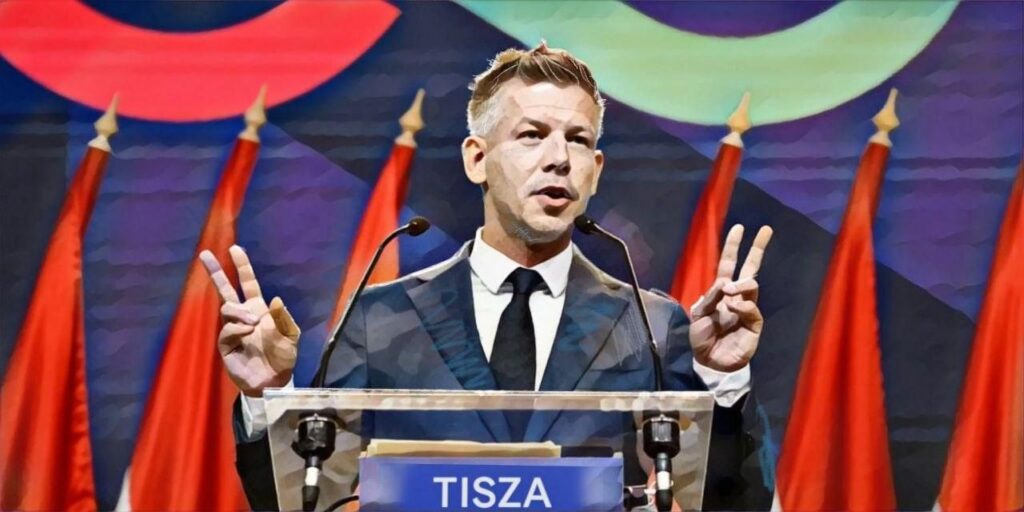
Hungary’s Political Shift Puts Central Asia Partnerships Under Scrutiny

Hungary’s political transition following the defeat of Viktor Orbán’s party and his resignation as prime minister is drawing attention not only in the EU and the United States, but also in Central Asia, where Budapest has built growing energy and investment ties. The key question is whether the policy of cooperation with Central Asia developed under Orbán will continue under the new leadership. In recent years, under Orbán, Budapest has actively developed its Central Asian foreign policy, primarily driven by the desire to find alternatives to Russian energy supplies. That push reflects Hungary’s long-standing reliance on Russian oil and gas, which has shaped its search for alternative suppliers beyond Europe. Resource-rich Kazakhstan, Uzbekistan, and Turkmenistan became natural partners for diplomatic engagement. Orbán succeeded in building trust-based relationships with the presidents of the Central Asian republics, grounded in what Hungary’s Minister of Foreign Affairs, Péter Szijjártó, described as “sincere friendship” in an interview with Uzbek media. “In Hungary, we have always viewed Central Asia as one of the fastest-growing regions in the world, with enormous potential. Our efforts to build these relations did not begin today, but decades ago,” he said. Hungary became the first Central European country to sign a strategic partnership with Kazakhstan in 2014. Currently, the Kazakhstan-Hungary Business Council is in operation, along with a joint agricultural direct investment fund. In 2024, bilateral trade approached $200 million, and from January to August 2025, it grew by another 22.1%, exceeding $164.6 million. Hungarian investments in Kazakhstan’s economy have surpassed $370 million, while the current investment portfolio includes 16 projects worth about $700 million in engineering, agriculture, and logistics. These links also intersect with wider efforts to expand east–west transport routes through the Caspian region, offering Hungary indirect access to Central Asian energy and trade flows. In May 2025, Uzbekistan’s President Shavkat Mirziyoyev held talks with Orbán in Budapest, where both sides highlighted rising trade volumes and a joint investment portfolio of about $500 million. Hungary’s OTP Bank entered into Uzbekistan’s financial market in 2023, acquiring a 73.71% stake in Ipoteka Bank, becoming its principal owner and the majority shareholder of the country’s fifth-largest bank. As early as 2019, Hungary had intensified cooperation with Turkmenistan. After talks at the Turkmen Foreign Ministry, Szijjártó told the media that Hungary views Turkmenistan as an important country from the perspective of European security. “We very much hope that Turkmenistan’s gas resources will be integrated into the overall energy flow of Central Europe,” he said. However, uncertainty remains over whether this policy direction will continue under Orbán’s successor, Péter Magyar. Oil and gas analyst Oleg Chervinsky has suggested that political changes in Hungary could affect cooperation with Kazakhstan’s national company KazMunayGas (KMG). Chervinsky notes that, having secured a constitutional majority in parliament, Magyar has a mandate to “implement reforms in both foreign and domestic policy [which could] reshape the constitutional structure of the right-wing populist authoritarian system built around Orbán.” The analyst points to Hungary’s oil and gas company MOL Group, which in recent...

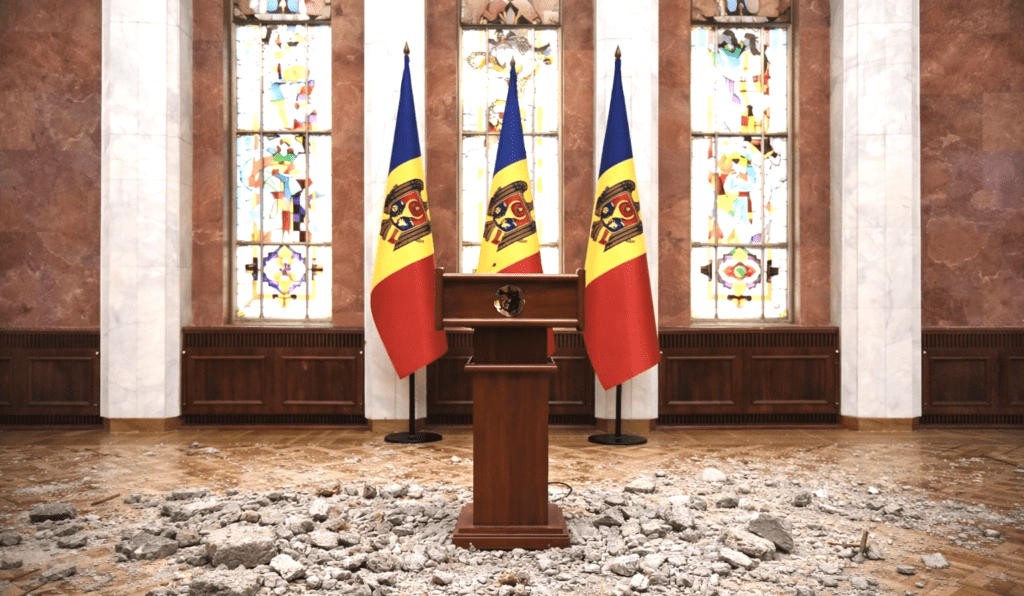
Moldova Moves to Leave CIS as Post-Soviet Bloc Loses Another Member

Moldova’s parliament approved, in final reading on April 2, the country’s withdrawal from the Commonwealth of Independent States (CIS), with 60 deputies voting in favor. President Maia Sandu then promulgated the denunciation decrees, which were published in the Official Journal on April 8 and entered into force, with the Foreign Ministry set to notify the CIS. If Moldova’s withdrawal takes full legal effect after notification and the relevant notice period, eight CIS member states would remain: Armenia, Azerbaijan, Belarus, Kazakhstan, Kyrgyzstan, Russia, Tajikistan, and Uzbekistan. The CIS was created immediately after the collapse of the Soviet Union as a framework to manage the breakup and maintain post-Soviet cooperation among former republics. Moldova’s denunciation concerns a structure originally formed by 11 former Soviet states, not all 15 Soviet republics. Moldova’s exit further weakens the CIS politically, though the bloc will continue to exist if the remaining member states stay in place. Moldova has already approved the denunciation of the 1991 Agreement on the Establishment of the CIS, the related Protocol, and the 1993 CIS Statute. The Moldovan authorities say the CIS’s core values and principles are no longer being respected, especially the recognition of territorial integrity and the inviolability of borders. They cite Russia’s war against Ukraine, acts of aggression against Georgia, and the illegal military presence of Russian troops on Moldovan territory. Chisinau says the move is consistent with Moldova’s European path, while the European Union remains its main economic partner. Economic ties with the Commonwealth have significantly declined: in 2025, CIS countries accounted for 5.9% of Moldova’s exports, while the European Union accounted for 67.5%. Moldova’s final withdrawal from the CIS may not, therefore, come as a surprise to its other members. On January 19, Deputy Prime Minister and Foreign Minister Mihai Popșoi announced the start of the process to denounce the three core CIS agreements underpinning Moldova’s membership. “We are already in the process of getting approvals for the denunciation of three agreements with the CIS. They are the agreements that form the basis of our affiliation to the CIS, namely: the CIS Statute, the CIS Founding Agreement, and the Annex to this agreement,” Popșoi said. He added that this would mean Moldova was no longer a CIS member legally, while participation had already been suspended de facto. Moldova set a course toward breaking its remaining ties with its Soviet past after the 2020 presidential elections, when new president, Maia Sandu, announced a path toward EU integration and refused to participate in CIS summits. Moldova has spent the past several years unwinding CIS-linked agreements. As of January 2026, Moldovan officials said the country had signed 283 CIS agreements, of which 71 had already been rescinded, and about 60 more were in process. On December 12, 2025, Moldova’s parliament approved the denunciation of the 1992 Bishkek agreement on visa-free travel for CIS citizens. For Uzbekistan, Kazakhstan, and several other states, visa-free travel with Moldova remains in place under bilateral agreements. Moldovan authorities said the denunciation of the Bishkek agreement would affect...

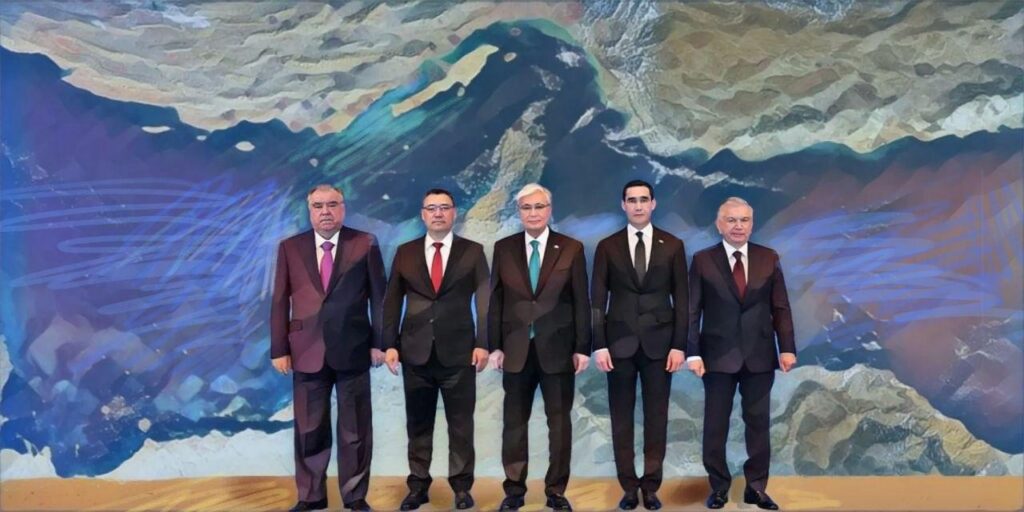
Central Asia Welcomes Ceasefire, Urges Talks as Energy Risks Persist

Central Asian governments have cautiously welcomed the two-week ceasefire between the United States and Iran, describing it as a necessary pause in a conflict that has already begun to affect regional stability, trade, and energy flows. Across the region, official statements struck a consistent balance: support for the truce, alongside calls to translate it quickly into negotiations rather than allow it to become a temporary pause in hostilities. Kazakhstan’s President Kassym-Jomart Tokayev described the agreement as a “ceasefire and truce” reached through international mediation, including efforts involving Pakistan’s leadership. According to the presidential press service, Tokayev said that “this agreement became possible due to the goodwill and wisdom of the President of the United States, Donald Trump, and the senior leadership of Iran, as well as all countries involved in the military conflict.” Tokayev went on to express his hope that the agreement would prove sustainable and contribute to global trade and economic stability. Uzbekistan’s Foreign Ministry described the ceasefire as an “important step toward de-escalating tensions” and stressed that it should serve as a pathway to a broader political settlement. Tashkent called for “all parties to exercise restraint, [and] refrain from actions that could further escalate the situation, warning that further escalation risks widening the conflict and undermining regional stability. The statement reaffirmed Uzbekistan's “unwavering position on the need to resolve conflicts exclusively by peaceful means in strict accordance with the principles of the Charter of the United Nations.” Tajikistan’s Foreign Ministry also welcomed the agreement, expressing hope that the ceasefire would open the way to a comprehensive and long-term peace. Dushanbe emphasized that the conflict has “no military solution and its continuation will only worsen the already difficult situation in the Middle East and cause colossal damage to all countries in the region.” The statement urged all parties to “abandon the use of force” and use political and diplomatic mechanisms in accordance with international law and the UN Charter. Kyrgyzstan’s Foreign Ministry said it “welcomes the achievement of a ceasefire agreement in the Middle East,” highlighting the role of Pakistan’s mediation efforts in reducing tensions. Bishkek reaffirmed that disputes must be resolved exclusively through political and diplomatic means on the basis of the UN Charter and international law, and expressed its “hope for achieving sustainable and long-term peace in the region.” Turkmenistan had not issued an official public statement on the ceasefire at the time of publication, in line with its longstanding policy of neutrality and cautious approach to external conflicts. Meanwhile, Azerbaijan’s Foreign Ministry also welcomed the “announced ceasefire” and praised the efforts of mediators who helped broker the agreement. Baku called on all parties to “engage in productive dialogue aimed at resolving existing problems and strengthening mutual trust” and signaled its readiness to “support initiatives aimed at strengthening lasting peace, security, and cooperation in the region.” The convergence in tone reflects more than diplomatic routine. The conflict has already spilled into Central Asia’s political and humanitarian agenda, prompting coordination on evacuations, aid deliveries, and contingency planning....

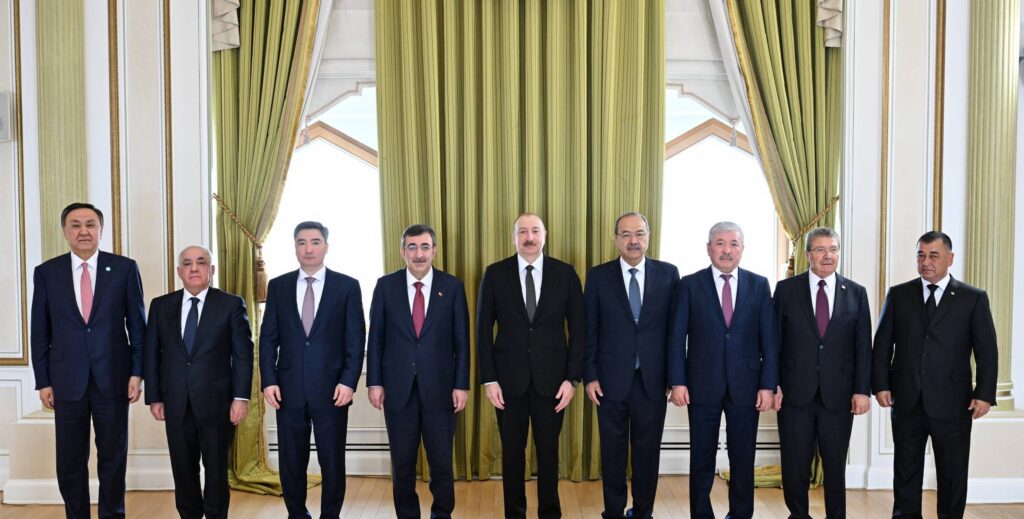
Meeting of the Organization of Turkic States Held in Baku

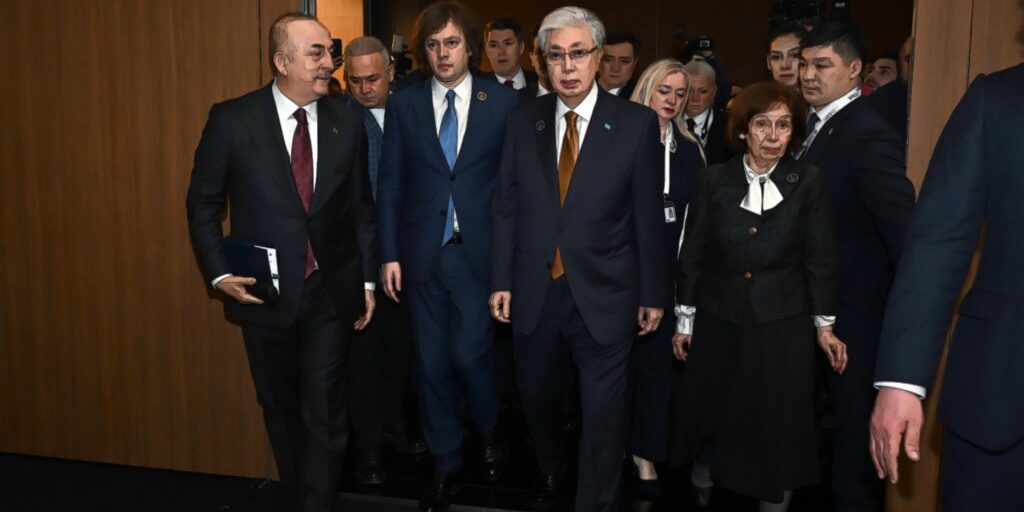
On April 2, Azerbaijani President Ilham Aliyev met with participants of a meeting of the heads of government of the Organization of Turkic States (OTS) in Baku, outlining key areas of cooperation. Among those attending were Turkish Vice President Cevdet Yılmaz, Uzbek Prime Minister Abdulla Aripov, Kazakh Prime Minister Olzhas Bektenov, Kyrgyz Prime Minister Adylbek Kasymaliev, Deputy Chairman of the Cabinet of Ministers of Turkmenistan Nokerguly Atagulyev, Prime Minister of the Turkish Republic of Northern Cyprus Unal Ustel, and OTS Secretary General Kubanychbek Omuraliev. Opening the meeting, Aliyev stressed the importance of dialogue. “This meeting of the heads of government of the Organization of Turkic States is being held in Baku. I warmly welcome you all,” he said. According to Aliyev, such meetings allow not only for the discussion of economic issues but also for reaffirming unity among member states. He noted that cooperation within the organization remains a priority of Azerbaijan’s foreign policy. He also reiterated a key message that ran throughout his speech: “We have repeatedly stated from various platforms that the Turkic world is our family; we have no other family,” Aliyev said. Special attention was devoted to economic cooperation. According to the president, trade between member states is growing, and investment volumes are increasing. He noted that Azerbaijan has invested more than $20 billion in the economies of OTS member states. Most of this has been directed to Turkey, though investment activity is expanding elsewhere. In particular, joint funds have been established with Uzbekistan, Kazakhstan, and Kyrgyzstan to support project implementation. Aliyev also thanked partners for their participation in the reconstruction of Karabakh. Facilities built with the support of OTS countries are already operational in the region, including the Mirza Ulugbek School, the Kurmangazy Children’s Creative Center, and the Manas School. In addition, a garment factory has been opened in Khankendi with the participation of Uzbekistan. He also highlighted mutual support among member states. Following the earthquake in Turkey, Azerbaijan financed the construction of the “Azerbaijani Quarter” in Kahramanmaraş, valued at $100 million. Transport and logistics projects were another key topic. According to the president, infrastructure development remains a top priority. These include the Middle Corridor, the Trans-Caspian route, and the Zangezur Corridor, all of which are gaining importance in the current geopolitical environment. Aliyev said that infrastructure within Azerbaijan is largely complete. Railways, the Baku port, highways, and airports are operational. Construction of the Zangezur Corridor is also progressing, with the highway nearly 90% complete and the railway approximately 70% complete. He also noted the construction of the Kars-Nakhchivan railway line in Turkey, which is expected to enable a new international route with an initial capacity of about 15 million tons of cargo. In conclusion, Aliyev said these projects are aimed not only at serving regional interests but also at expanding international transport connectivity. He expressed confidence that the meeting would contribute to the further development of the OTS and strengthen cooperation among member states.

Kyrgyzstan Moves Toward Power Consolidation Ahead of 2027 Election

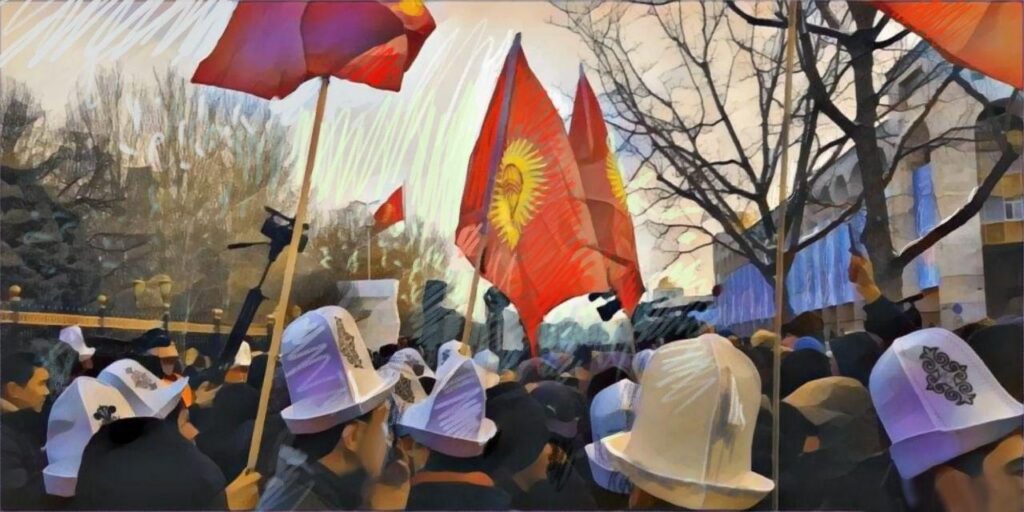
Kyrgyzstan has changed leaders more often than any other country in Central Asia, with power shifts since independence driven by both elections and unrest. With less than ten months remaining before the next presidential vote on January 24, 2027, recent political developments suggest the authorities are now moving to consolidate control well ahead of the contest. Against this backdrop, Russian political analyst Arkady Dubnov, citing sources in Kyrgyzstan, has suggested that recent political decisions, including the sudden removal of Kamchybek Tashiyev on February 10, may be linked to efforts to manage regional and institutional tensions within the country. In particular, discussions since that decision have focused on the long-standing dynamics between northern and southern elites. This dynamic has historically shaped political competition in the country. Recent personnel changes within state institutions have targeted individuals previously associated with former officials. Such administrative reshuffling is not uncommon ahead of major political milestones, including elections, and may reflect efforts to consolidate governance structures ahead of the upcoming election cycle. Kyrgyz political analyst Kanat Nogoybaev, speaking to a Kazakhstani outlet, commented on a petition signed by a group of public figures calling for early presidential elections. He noted that such initiatives typically reflect broader political maneuvering within elite circles. Since the petition was signed, some reports indicate that several individuals connected to this petition have faced legal scrutiny, though details remain unclear. President Sadyr Japarov has addressed the removal of Tashiyev, emphasizing the importance of maintaining stability within state institutions and avoiding internal divisions among public servants. “I believe that by making a swift decision, I ensured stability within the system,” Japarov said in earlier remarks, stressing that unity within government structures remains a priority. Separately, there have been discussions in political circles regarding the review of past high-profile legal cases. Former Jogorku Kenesh (parliamentary) deputy Iskhak Masaliev has suggested reassessing certain cases from recent years. One such case involves journalist Makhabat Tazhibek kyzy, whose legal proceedings have attracted significant public attention. In March, the Supreme Court remanded her case for retrial, and her pretrial detention was changed to house arrest. The case is part of a broader investigation involving media professionals detained in January 2024 on charges related to public unrest. Judicial proceedings in these cases remain ongoing. Economic developments have also intersected with recent political discussions. Investigations involving the state company, Kyrgyzneftegaz, have led to the detention of several individuals, including company executives and former officials. The Kyrgyz authorities have stated that these actions are part of broader efforts to ensure transparency and accountability in the management of state assets. Officials from the State Tax Service have addressed the case, noting that new conditions allowed for a comprehensive audit of the company. Subsequent legal actions were taken following the findings. These developments add an economic dimension to the broader political shifts underway. In parallel, Kyrgyzneftegaz has announced a general shareholders’ meeting scheduled for April 16 in Kochkor-Ata. The agenda includes governance changes, amendments to internal documents, and financial restructuring measures. While the...

Uzbekistan and Tajikistan Launch 10 Joint Projects During Rahmon’s State Visit

Uzbekistan's President Shavkat Mirziyoyev welcomed his Tajik counterpart Emomali Rahmon to Tashkent on March 26 for a state visit marked by high-level talks, and the launch of joint economic projects. Talks between the presidents followed, first in a one-on-one format and then during the inaugural meeting of the Supreme Interstate Council, a new platform aimed at deepening bilateral cooperation. Mirziyoyev described the visit as a landmark in bilateral relations, noting that the council would elevate cooperation and provide a mechanism for implementing joint initiatives. Both sides highlighted the increasing frequency of contacts between government institutions, parliaments, and agencies. In the lead-up to the visit, a series of events took place, including an intergovernmental commission meeting, an industrial exhibition, and forums involving regional leaders, academics, and youth. Uzbekistan also hosted Days of Tajik Culture and Cinema. During the discussions, Mirziyoyev and Rahmon reviewed opportunities to expand cooperation across key sectors, including trade, industry, transport, and water and energy security. Bilateral trade approached $1 billion last year, driven largely by the exchange of finished goods. The two countries aim to double this figure to $2 billion by 2030. Planned measures include accelerating the establishment of the Oybek-Fotekhobod border trade center, introducing digital certification systems and “E-Permit” mechanisms, and modernizing border infrastructure. The sides also agreed to adopt an industrial cooperation program covering mining, energy, agriculture, construction, and manufacturing. Following the council meeting, Mirziyoyev and Rahmon attended a ceremony to launch 10 joint projects. These include new enterprises producing furniture and leather goods, expanded household appliance manufacturing, textile production facilities in Tajikistan, and construction projects in Tashkent. Additional initiatives include food processing plants in Uzbekistan's Fergana region, dairy production in the city of Andijan, and facilities for making fruit juice and metal briquettes in the country's Surkhandarya region. A ceremony was also held to name a street in New Tashkent after Dushanbe, underscoring symbolic ties between the two capitals. The visit also featured the opening of a new building for Tajikistan’s embassy in Tashkent. The complex includes administrative offices, a consular section, a residence for the ambassador, and housing for diplomatic staff and their families. Cultural diplomacy formed another key part of the visit. Mirziyoyev and Rahmon attended a joint concert at the International Forums Palace featuring performers from both countries, with a program highlighting shared cultural heritage and longstanding ties between the Uzbek and Tajik peoples. The leaders also discussed regional and international issues, reaffirming their commitment to continued dialogue and cooperation within Central Asia. They agreed to strengthen coordination on security matters and expand interregional ties, as well as humanitarian, educational, and scientific exchanges. Given the presence of large diaspora communities in both countries, a proposal was put forward to adopt a five-year program aimed at strengthening cultural and humanitarian connections. At the conclusion of the visit, both sides agreed to develop a comprehensive roadmap to ensure implementation of the agreements reached, signaling continued efforts to expand cooperation across political, economic, and cultural spheres.