• KGS/USD = 0.01144 0%
  • KZT/USD = 0.00213 0%
  • TJS/USD = 0.10874 0.37%
  • UZS/USD = 0.00008 0%
  • TMT/USD = 0.28571 0%
  • KGS/USD = 0.01144 0%
  • KZT/USD = 0.00213 0%
  • TJS/USD = 0.10874 0.37%
  • UZS/USD = 0.00008 0%
  • TMT/USD = 0.28571 0%
  • KGS/USD = 0.01144 0%
  • KZT/USD = 0.00213 0%
  • TJS/USD = 0.10874 0.37%
  • UZS/USD = 0.00008 0%
  • TMT/USD = 0.28571 0%
  • KGS/USD = 0.01144 0%
  • KZT/USD = 0.00213 0%
  • TJS/USD = 0.10874 0.37%
  • UZS/USD = 0.00008 0%
  • TMT/USD = 0.28571 0%
  • KGS/USD = 0.01144 0%
  • KZT/USD = 0.00213 0%
  • TJS/USD = 0.10874 0.37%
  • UZS/USD = 0.00008 0%
  • TMT/USD = 0.28571 0%
  • KGS/USD = 0.01144 0%
  • KZT/USD = 0.00213 0%
  • TJS/USD = 0.10874 0.37%
  • UZS/USD = 0.00008 0%
  • TMT/USD = 0.28571 0%
  • KGS/USD = 0.01144 0%
  • KZT/USD = 0.00213 0%
  • TJS/USD = 0.10874 0.37%
  • UZS/USD = 0.00008 0%
  • TMT/USD = 0.28571 0%
  • KGS/USD = 0.01144 0%
  • KZT/USD = 0.00213 0%
  • TJS/USD = 0.10874 0.37%
  • UZS/USD = 0.00008 0%
  • TMT/USD = 0.28571 0%

Viewing results 1 - 6 of 284

Opinion – The “Board of Peace” and Afghan Diplomacy: A View from Kabul

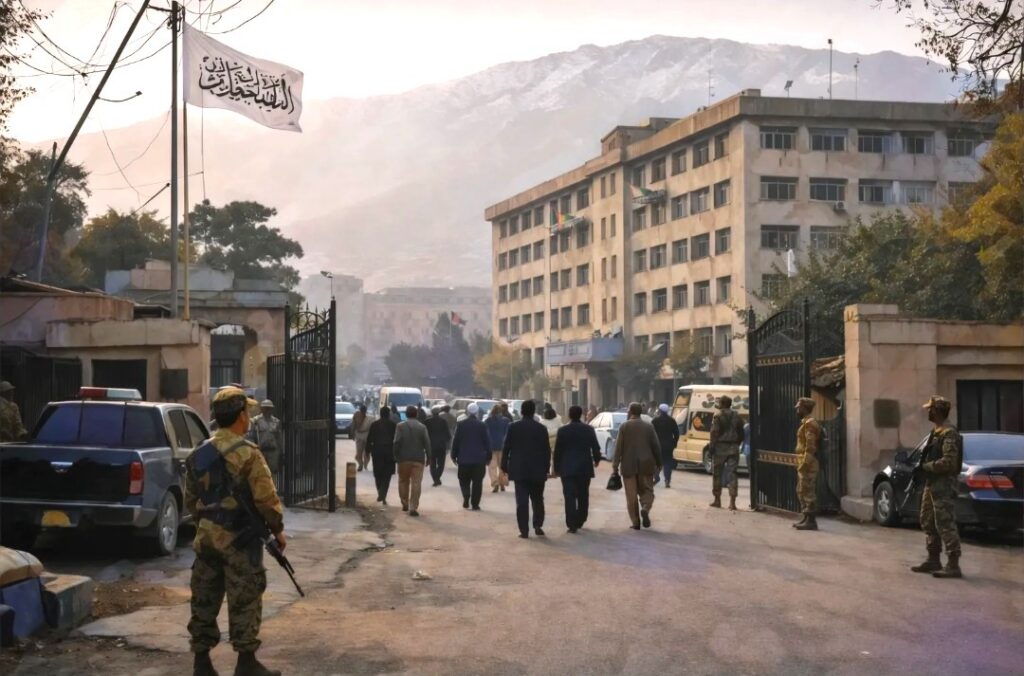
A new trend is becoming increasingly apparent in global politics: key decisions are being discussed not only within traditional international institutions but also through more flexible political and diplomatic formats. One such initiative is the announcement of the creation of the “Board of Peace” by U.S. President Donald Trump, a structure that, according to its authors, is intended to provide an alternative mechanism for conflict resolution. Reactions have been mixed. Some states view the new platform as an opportunity to enhance the effectiveness of peace efforts; others warn that it could weaken existing institutions, particularly the United Nations, and contribute to a gradual shift toward closed political groupings in which participants' strategic interests outweigh universal rules. At its core, this debate reflects the possibility of a deeper transformation of the international order. Whereas global security architecture was once built primarily around multilateral mechanisms, flexible coalitions and ad hoc alliances are becoming more prominent. In such a system, the role of states capable not only of adapting to change but also of offering independent diplomatic initiatives is growing. It is in this context that Afghanistan is increasingly asking what role it can occupy in a new international configuration. One of the key questions raised in Kabul’s expert community is straightforward: Will the current Afghan authorities be considered in emerging international mechanisms, including the Board of Peace? There is no clear answer. Despite ongoing global discussions on security and economic cooperation, concrete decisions regarding Afghanistan remain limited. Frozen financial assets, sanctions, and uncertainty over the country’s international status continue to impede economic recovery and complicate integration into regional processes. Against this backdrop, Afghan experts argue that the country should avoid remaining on the periphery of the evolving order and instead seek integration through sustained diplomatic engagement and regional cooperation. Central Asia could play a particularly significant role in this process. The states of the region are potentially capable of mediating to reduce tensions between Afghanistan and Pakistan and of facilitating the resolution of a conflict that directly affects broader regional security. Such a role appears logical for several reasons. Many Central Asian countries traditionally pursue pragmatic foreign policies, maintaining working relations with multiple centers of power while avoiding rigid geopolitical alignments. This approach has gradually shaped their reputation as relatively neutral and predictable partners. The element of self-interest is equally important. Stability to the south is directly linked to border security, the development of transport corridors, energy projects, and trade. In this context, mediation is not merely a diplomatic gesture but an element of a long-term regional strategy. Moreover, neutrality may prove to be Central Asia’s principal political asset. The region is not generally perceived as a direct party to the conflict and is therefore potentially well placed to offer a platform for dialogue. At the same time, assuming such a role would require readiness to accept greater responsibility. Effective mediation presupposes regional coordination, institutional maturity, and the political will to engage more actively in security matters. The emergence of initiatives such...

Amid Questions, Tajikistan’s Presidency Says Rahmon Has Upcoming Meetings  

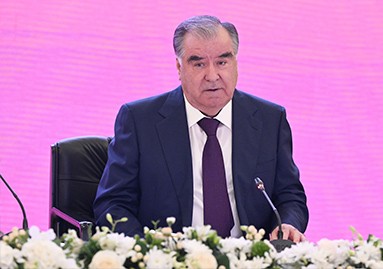
President Emomali Rahmon of Tajikistan has several meetings in the coming days, his office said this week, following reports that the leader had not been seen in public this month. Rahmon, 73, will meet Zou Jiayi, head of the Asian Infrastructure Investment Bank, as well as Kazakhstani Foreign Minister Yermek Kosherbayev, who will visit Tajikistan, the presidential office said on Wednesday. Zou took up her job as president of the Beijing-based bank last month. Kosherbayev, who assumed his position in September, was scheduled to visit Kyrgyzstan on Thursday and Friday, media in Kyrgyzstan reported. “Several other events are also planned with the participation of the Leader of the Nation, His Excellency Emomali Rahmon, which we will report on in more detail,” the Tajikistan’s presidential office said. Rahmon’s Telegram channel showed video of him presiding over a meeting with law enforcement officials on January 28. But reports that he had not been seen in public since then stirred online speculation about his whereabouts and health. Similar unverified reports about the president have occasionally circulated in the past, in a country where the government tightly controls the flow of information. Rahmon has been president of Tajikistan since 1994. His son Rustam Emomali is chairman of the National Assembly and would take over as interim president if his father is unable to serve.

Ukrainian Ambassador to Kazakhstan: “The War Will End This Year. I Truly Believe In That.”

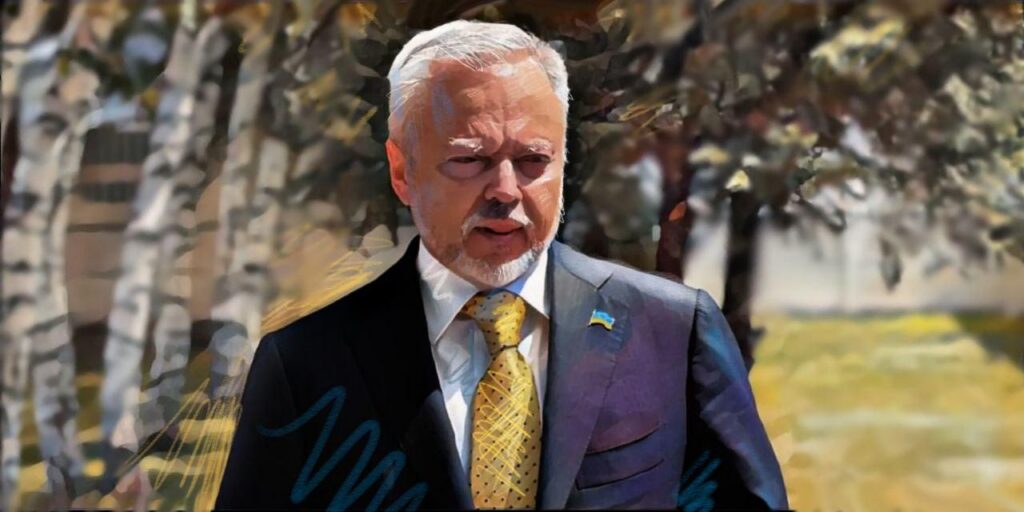
As the war between Russia and Ukraine approaches its fifth year, diplomatic efforts to reshape trade routes, energy flows, and regional partnerships are intensifying far beyond the battlefield. For Ukraine, Central Asia has emerged as an increasingly important economic and logistical partner, particularly as Kyiv seeks alternatives to disrupted transport corridors and supply chains. The Times of Central Asia spoke with Viсtor Mayko, Ukraine’s Ambassador to Kazakhstan, about the prospects for deeper economic cooperation with Central Asia, the role of the Middle Corridor, energy transit challenges in the Caspian region, Kyiv’s expectations for international support, and a possible path toward ending the war. Trade and Economic Prospects in Central Asia TCA: Mr. Ambassador, what are the prospects for deepening trade and economic partnerships between Ukraine, Kazakhstan, and wider Central Asia? Which sectors offer the greatest potential for cooperation? Ambassador Mayko: Deepening trade and economic ties between Ukraine, Kazakhstan, and other Central Asian countries is not merely a prospect; it is a necessity dictated by global economic trends. Kazakhstan leads the region economically, with a GDP exceeding $300 billion. It is on a trajectory to join the G20 within 5 to 10 years. The United States, recognizing this potential, has invited Kazakhstan to the upcoming G20 meeting in the U.S., demonstrating Kazakhstan’s rising global significance. Ukraine and Kazakhstan’s economies are complementary. Ukraine brings experience in agricultural technology, mechanical engineering, IT, and processing, while Kazakhstan contributes resource strength, industrial capacity, and logistics. Promising areas for cooperation include agro-industrial development, from crop production to digitalized processing; industrial cooperation through equipment supply and joint production; logistics and infrastructure aimed at strengthening transport corridors; and energy and IT projects focused on efficiency and network modernization. We are already transitioning from theory to action. A major business delegation from Ukraine will visit Kazakhstan this year. We also anticipate another meeting of the Joint Ukrainian-Kazakh Intergovernmental Commission on Economic Cooperation, which is crucial for removing barriers and initiating new projects. Ukraine’s presence in Kazakhstan’s economy has historically been significant. If not for the war and resulting transport disruptions, I believe our mutual trade could have reached $10 billion. Ukrainian machinery still accounts for a substantial portion of Kazakhstan’s industrial base, especially in regions such as Karaganda, Aktau, and Pavlodar, though much of this equipment now requires modernization. Another promising area is mineral resource development. Ukraine has the scientific and practical base to contribute meaningfully to this sector. Turkmenistan’s earlier collaboration with Ukrainian firms in revitalizing depleted wells illustrates our potential. Wells deemed exhausted by older technologies yielded hundreds of thousands of tons of oil under Ukrainian management. This successful model can be applied in Kazakhstan, one of the EU’s top three oil suppliers. Transport Infrastructure and the Middle Corridor TCA: How is cooperation in the transport sector developing, especially regarding the Middle Corridor? Are there any potential plans for joint infrastructure projects? Ambassador Mayko: Russia’s full-scale aggression disrupted Ukraine’s previous logistics routes. Today, we prioritize alternatives like the Trans-Caspian International Transport Route, the “Middle Corridor”, as a...

What the U.S. Really Wants in Central Asia: Behind the B5+1 Forums

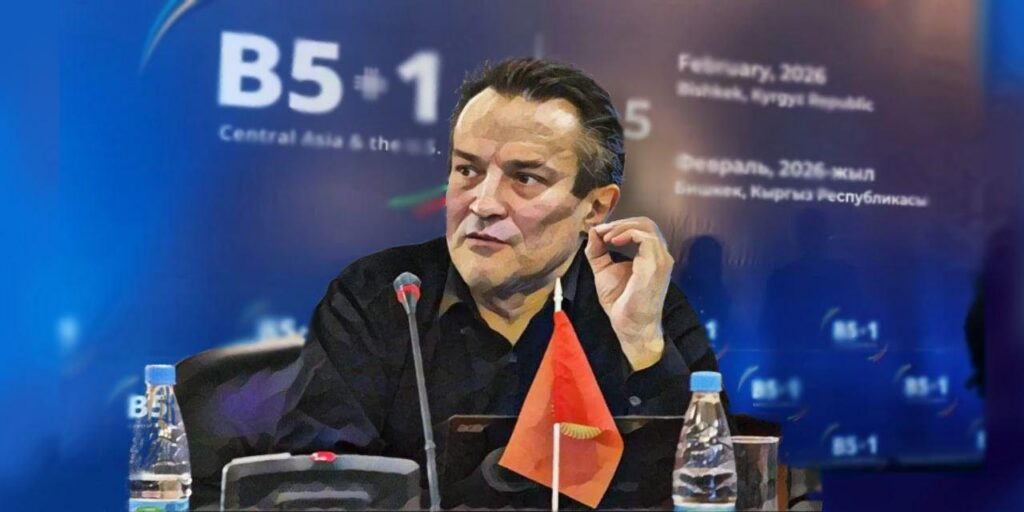
The B5+1 business forum continued in Kyrgyzstan’s capital on February 5, as government officials, regional business leaders, and a sizable U.S. delegation met to discuss trade, investment, and regulatory barriers shaping economic ties between Central Asia and the United States. As Washington signals a more pragmatic, commercially driven approach to the region, questions persist over why U.S. investment has lagged behind political engagement and which markets are truly seen as priorities. The Times of Central Asia spoke with Dmitry Orlov, director of the Strategy: East–West analytical center, about the structural obstacles deterring American capital, the shift in U.S. policy thinking, and how Central Asian states are positioned within Washington’s evolving economic calculus. TCA: What serious U.S. capital investments in Central Asia can we talk about today? ORLOV: It is important to understand the main point. Talk of large investments, the arrival of American business, and long-term economic cooperation only makes sense in one case: if the U.S. repeals the Jackson-Vanik amendment, which was adopted back in the 1970s and extended to all former Soviet republics after the collapse of the USSR. Today, it remains a formal and, in many ways, psychological obstacle to a fully-fledged business partnership. At the same time, it is necessary to establish contacts at a business level right now. This is because if the amendment is repealed - and such statements are regularly heard in Washington - it is difficult to predict which countries in the region will receive investment flows and in what volumes. Recent international forums, including Davos, have shown that Kazakhstan and Uzbekistan are of the greatest interest to the U.S. in Central Asia. Their economies are developing more dynamically, and they can offer large-scale projects and a clear export base. The other countries in the region, Kyrgyzstan, Tajikistan, and Turkmenistan, are still perceived by investors as lower priorities. TCA: Previously, the U.S. actively promoted a political agenda in the region, including human rights and freedom of speech. Now these are rarely mentioned. Why do you think this is the case? ORLOV: The approach has become more pragmatic. The history of U.S. foreign policy shows that strategic and economic interests have always taken precedence. If a territory is attractive in terms of resources or transit routes, a format for cooperation will be found. In Europe, relatively speaking, the rule of law prevails. In Asia, the situation is different, and the Americans understand this perfectly well. Issues of ideology and human rights can move to the background if economic expediency comes first. This is especially true in Central Asia, where many issues are resolved through personal agreements and informal connections. Washington understands this. TCA: What exactly can Central Asia offer the U.S.? ORLOV: In terms of individual countries, Kazakhstan and Uzbekistan are again in the lead. They offer oil, gas, and, no less importantly, control over transit routes. There is currently a lot of discussion about rare earths and critical minerals, but their development is always long and expensive. As a result, interest in...

Iran Protests and Regional Stability: An Afghan Perspective

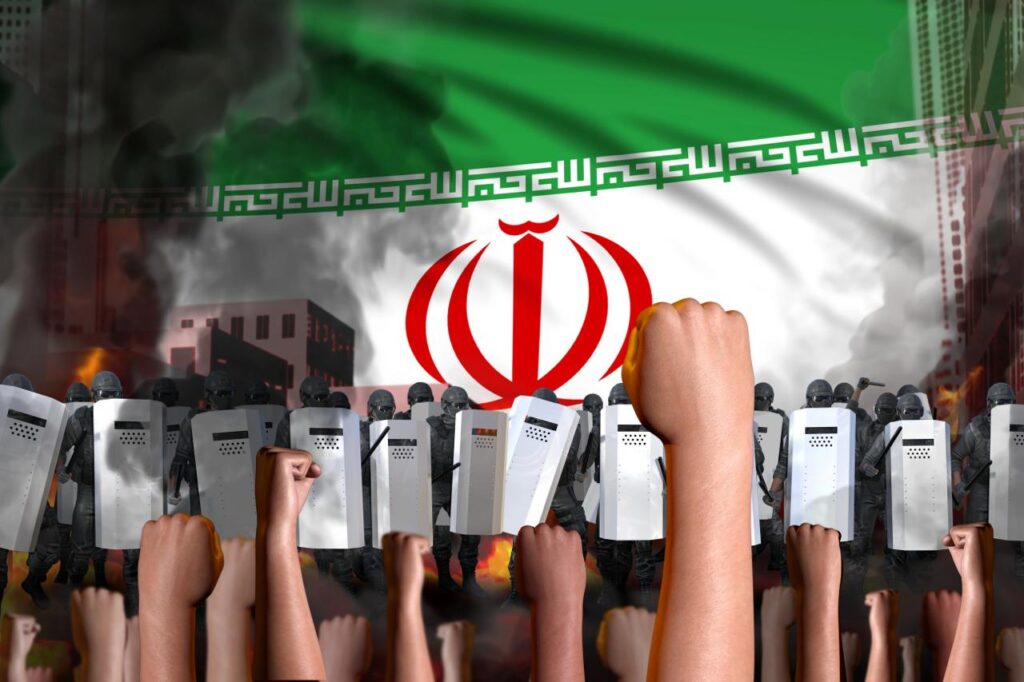
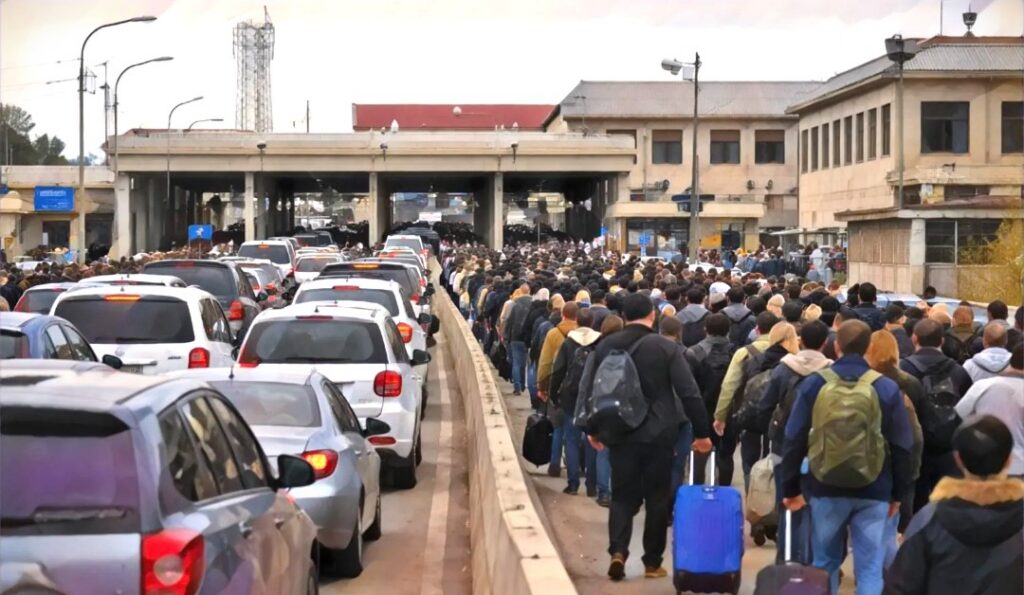
The protests that spread across Iran in late 2025 and early 2026 reflected more than short-term public discontent, instead exposing the cumulative effects of a prolonged socio-economic crisis. Persistently high inflation, declining real incomes, and falling living standards have placed sustained pressure on households and weakened the social contract between the state and society. Against this backdrop, the unrest increasingly acquired a foreign policy dimension. Strong statements from U.S. officials warning of consequences in response to Iran’s handling of the protests, combined with Tehran’s rejection of what it described as external interference, heightened the risk of the crisis becoming internationalized. Thus, the protests in Iran ceased to be an exclusively domestic issue and became a factor of regional instability. A key feature of the current situation is that the Iranian crisis is developing simultaneously on three fronts: socio-economic, where protests are fueled by deteriorating living conditions; political, linked to a crisis of confidence and governability; and geopolitical, where internal processes are used by external actors as a tool of pressure. Consequences for Afghanistan For Afghanistan, developments in Iran carry direct and practical significance. Since late 2024, Iran has become a source of large-scale returns of Afghan migrants, both voluntary and forced. By 2025, this process had become systematic, placing a heavy burden on Afghanistan’s western provinces, particularly Herat. In the event of prolonged instability and a deepening economic crisis in Iran, the likelihood of additional waves of migrant returns would increase. This would place further strain on Afghanistan’s labor market, healthcare system, social infrastructure, and already limited economic resources. In a fragile economy, the return of large numbers of migrants intensifies competition for jobs and raises the risk of local social tensions. The trade and logistics dimension is equally significant. Iran remains Afghanistan’s key economic partner and a vital transit corridor, including through the Islam Qala border crossing. Any deterioration in Iran’s socio-economic conditions has a direct impact on trade flows, supply chains, and broader regional economic stability. Significance for Central Asia The ongoing protest movements and the deterioration of the situation in Iran, driven by a systemic economic crisis and growing political and social discontent, could have a significant impact on political and economic dynamics, as well as security, across Central Asia. On the one hand, governments in the region are responding with cautious concern, mindful of the potential spillover effects of instability and rising internal discontent. A prolonged crisis in Iran increases the risks of migration pressure, border instability, and cross-border threats, all of which directly affect regional security. On the other hand, a further deterioration of Iran’s internal situation could disrupt trade, transit, and energy ties with Central Asia, weakening Tehran’s regional influence and reshaping the balance of power. Under such conditions, the role of other regional and external actors, including Russia, China, Turkey, and Western countries, is likely to grow as they gain opportunities to strengthen their positions in the region. As a result, the crisis in Iran is evolving beyond a domestic challenge and is...

Astana–Israel Talks Span Technology, Trade, and Holocaust Remembrance

Kazakh President Kassym-Jomart Tokayev met Israeli Foreign Minister Gideon Sa’ar in Astana on January 27, marking the first official visit by an Israeli foreign minister to Kazakhstan in almost 16 years, and underscoring Astana’s stated interest in deepening economic and technological cooperation with Israel as it continues to recalibrate its foreign policy. According to the Kazakh presidential administration, the talks focused on expanding bilateral relations across trade, investment, science, and technology, with both sides emphasizing practical areas of cooperation. The visit came as Kazakhstan seeks to diversify its economy beyond hydrocarbons and strengthen partnerships with countries at the forefront of applied innovation. Tokayev said the visit demonstrated Israel’s commitment to strengthening comprehensive cooperation with Kazakhstan, while discussions highlighted concrete sectors for collaboration, including artificial intelligence, agrotechnology, water resource management, and digital governance. These areas align closely with Kazakhstan’s national development priorities, particularly its focus on digital transformation, public-sector reform, and productivity-driven growth. Economic cooperation featured prominently throughout the visit. A Kazakh-Israeli business forum was held alongside the high-level talks, aimed at translating diplomatic engagement into commercial outcomes. Kazakhstan’s Foreign Ministry said the forum is expected to support new investment partnerships and initiate joint projects in high-value sectors, with a focus on technology transfer and localized projects. Kazakh officials said bilateral trade reached $162.4 million between January and November 2025, with exports totaling $92.1 million and imports $70.3 million. While modest in absolute terms, the figures were cited as evidence of untapped potential, particularly in non-resource sectors where Israeli companies have global expertise. As part of the discussions, Kazakhstan invited Israeli firms to participate in national digital transformation initiatives, including projects related to e-government, data-driven public services, and digital infrastructure. Officials cited Kazakhstan’s recent progress in digital governance and public-sector innovation as a foundation for expanded cooperation. Kazakhstan and Israel established diplomatic relations in 1992, shortly after Kazakhstan gained independence. Israel opened its embassy in Almaty in 1996, while Kazakhstan inaugurated its embassy in Tel Aviv in 2000, laying the groundwork for steady but largely low-profile bilateral ties. Political relations have traditionally been pragmatic, with cooperation focused on trade, agriculture, healthcare, and education rather than formal alliances. Bilateral trade has remained modest, reflecting limited commercial engagement beyond specific sectors such as agrotechnology, pharmaceuticals, and water management. In recent years, Astana has shown growing interest in Israel’s applied innovation ecosystem, particularly in areas aligned with Kazakhstan’s domestic reform agenda, including digital governance, artificial intelligence, and public-sector modernization. Israeli firms have previously participated in pilot projects and advisory initiatives in Kazakhstan, though large-scale joint ventures have been limited. Kazakhstan has also positioned itself as a neutral diplomatic actor in the Middle East, maintaining relations with Israel while emphasizing interfaith dialogue and mediation. Beyond economic ties, the talks also addressed regional and international issues, including developments in the Middle East and Kazakhstan’s diplomatic positioning in support of the objectives underpinning the Abraham Accords framework. Sa’ar welcomed Kazakhstan’s engagement, describing it as a constructive contribution to dialogue and cooperation between Israel and Muslim-majority countries. Sa’ar...