• KGS/USD = 0.01144 0%
  • KZT/USD = 0.00208 0%
  • TJS/USD = 0.10414 -0.29%
  • UZS/USD = 0.00008 0%
  • TMT/USD = 0.28571 0%
  • KGS/USD = 0.01144 0%
  • KZT/USD = 0.00208 0%
  • TJS/USD = 0.10414 -0.29%
  • UZS/USD = 0.00008 0%
  • TMT/USD = 0.28571 0%
  • KGS/USD = 0.01144 0%
  • KZT/USD = 0.00208 0%
  • TJS/USD = 0.10414 -0.29%
  • UZS/USD = 0.00008 0%
  • TMT/USD = 0.28571 0%
  • KGS/USD = 0.01144 0%
  • KZT/USD = 0.00208 0%
  • TJS/USD = 0.10414 -0.29%
  • UZS/USD = 0.00008 0%
  • TMT/USD = 0.28571 0%
  • KGS/USD = 0.01144 0%
  • KZT/USD = 0.00208 0%
  • TJS/USD = 0.10414 -0.29%
  • UZS/USD = 0.00008 0%
  • TMT/USD = 0.28571 0%
  • KGS/USD = 0.01144 0%
  • KZT/USD = 0.00208 0%
  • TJS/USD = 0.10414 -0.29%
  • UZS/USD = 0.00008 0%
  • TMT/USD = 0.28571 0%
  • KGS/USD = 0.01144 0%
  • KZT/USD = 0.00208 0%
  • TJS/USD = 0.10414 -0.29%
  • UZS/USD = 0.00008 0%
  • TMT/USD = 0.28571 0%
  • KGS/USD = 0.01144 0%
  • KZT/USD = 0.00208 0%
  • TJS/USD = 0.10414 -0.29%
  • UZS/USD = 0.00008 0%
  • TMT/USD = 0.28571 0%

Viewing results 1 - 6 of 68

Kazakhstan Proposes Creation of UN Water Agency to Tackle Global Resource Challenges

At a forum marking the International Year of Peace and Trust and the 30th anniversary of Turkmenistan’s permanent neutrality, Kazakhstan's President Kassym-Jomart Tokayev proposed establishing a specialized United Nations body dedicated to the rational use of water resources. In his address, Tokayev emphasized the urgent need for enhanced global coordination in managing water diplomacy, noting that the current UN framework lacks a dedicated agency focused solely on water-related issues. UN-Water currently functions as a coordination mechanism rather than a specialized agency, bringing together more than 30 UN entities and dozens of international organizations involved in water and sanitation. Unlike bodies such as the World Health Organization or the Food and Agriculture Organization, it has no independent mandate, budget, or enforcement capacity, a limitation long cited by water policy experts. “Kazakhstan proposes the establishment of an International Water Organization that could consolidate all existing mandates of various UN organizations,” he said during the forum in Ashgabat. Central Asia is among the regions most exposed to water stress, with climate change, aging infrastructure, and competing national demands placing increasing pressure on shared river basins. Disputes over transboundary water use have periodically strained relations among regional states, making water diplomacy a persistent strategic concern. Tokayev suggested transforming the current UN-Water mechanism, a coordinating platform comprising 36 UN entities and 47 international organizations, into a fully-fledged UN agency with a specialized mandate on water and sanitation. “The implementation of such an initiative is fully in line with the UN’s Sustainable Development Goals and, of course, is in the interests of the entire international community,” he stated. The President also announced that Astana will host a Regional Environmental Summit in April 2026, during which Kazakhstan plans to initiate international consultations on forming the proposed global water organization. “I am confident that, with shared political will, water-related challenges can begin to be addressed systematically rather than in a piecemeal manner, as is currently the case,” he said. Tokayev stressed that in light of intensifying water scarcity, water conservation and rational usage have become critical priorities, not only for Kazakhstan but for all Central Asian nations. The Caspian Sea has experienced sustained water-level decline over recent decades, a trend scientists attribute to climate change, reduced river inflows, and rising evaporation. The issue has emerged as a growing concern for coastal states due to its implications for fisheries, energy infrastructure, and regional economic stability. He also highlighted the pressing need to address transboundary water use and the deteriorating ecological conditions of the Aral and Caspian Seas. Tokayev advocated for enhancing the effectiveness of the International Fund for Saving the Aral Sea through joint, compromise-based regional efforts and proposed that Russia be invited to join the Fund as an observer. “The current rate of the Caspian Sea’s shallowing threatens to become irreversible,” he warned, “which would trigger a chain reaction of environmental, socio-economic, and even political consequences.” Kazakhstan has already taken a leading role in regional initiatives to preserve the Caspian ecosystem. The country previously proposed a special intergovernmental...
Tokayev Signals End of Presidential Appointments in Unicameral Parliament Plan

President Kassym-Jomart Tokayev has announced that Kazakhstan’s planned transition to a unicameral parliament will eliminate the presidential quota for appointing members of the legislature. The reform, Tokayev has said, is part of a broader effort to streamline the structure of parliament and enhance its professional capacity. The proposal to move to a single-chamber legislature was first introduced in Tokayev’s September address to the nation. At present, Kazakhstan’s parliament consists of two chambers: the Mazhilis, with 98 deputies elected through a mixed electoral system, and the Senate, which comprises 50 members, some elected by regional maslikhats (local representative bodies) and others appointed by the president. Under the current system, the head of state appoints 10 senators, half of whom are nominated by the Assembly of the People of Kazakhstan. Speaking at a forum of rural akims (governors), Tokayev confirmed his intention to relinquish this presidential privilege. “An excessive increase in the number of deputies is inappropriate. On the contrary, the work of parliament should be optimized and improved. In the new unicameral parliament, there will be no presidential quota, all deputies must be elected in a unified manner,” he said. Tokayev emphasized that the transition to a unicameral model necessitates the formation of a "truly professional parliament" composed of qualified legislators capable of addressing the country’s pressing issues. Among the structural reforms proposed are the creation of new committees, including those focused on digitalization and regional development. These institutional changes will be included in a comprehensive package of constitutional amendments. The president also stated that the forthcoming referendum will serve as a vote on an updated version of the Constitution. As previously reported by The Times of Central Asia, Tokayev’s call to abolish the Senate has already sparked debate among political analysts and lawmakers regarding the implications of a unicameral future for Kazakhstan.

Between Trump and Putin: Tokayev Emerges as a Regional Diplomatic Powerbroker

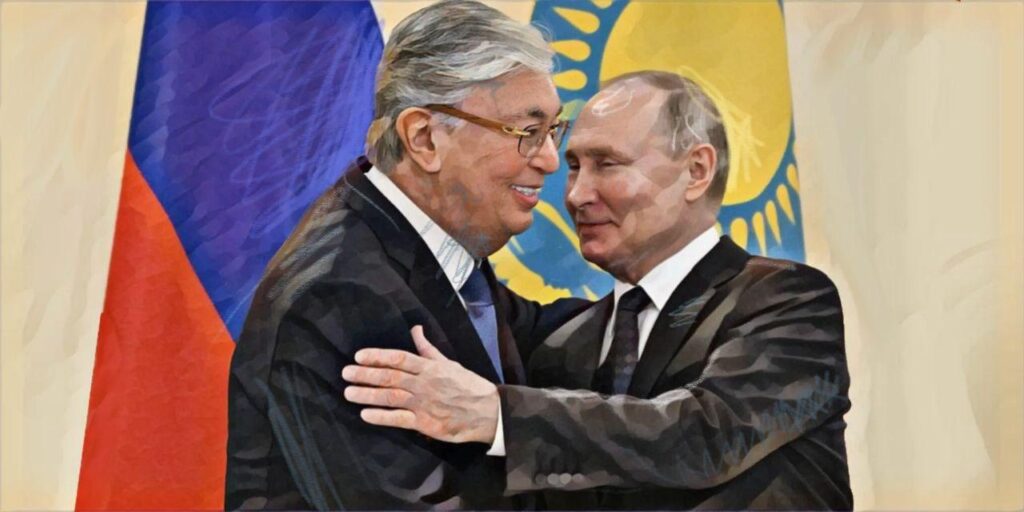
In a striking display of diplomatic balancing, Kazakhstan’s President Kassym-Jomart Tokayev ended 2025 with a high-profile state visit to Moscow, where he and Russian President Vladimir Putin signed a declaration elevating bilateral relations to a comprehensive strategic partnership and alliance. The visit came just days after Tokayev returned from Washington, where he participated in a summit with U.S. President Donald Trump, and the September meeting with Xi Jinping in Tianjin. Back-to-back high-level diplomatic engagements have underscored Tokayev’s rising stature as a regional statesman navigating the complex geopolitical landscape between Russia and the West, representing a somewhat diplomatic ‘hat trick’ for the Kazakh leader. Kazakhstan’s multi-vector foreign policy has long sought to maintain balanced relations with Russia, China, the United States, and Europe. This approach allows Astana to position itself as a neutral and pragmatic actor even during periods of geopolitical tension, and explains why Tokayev is one of the few leaders trusted by both Washington and Moscow. Amid speculation in global media about Kazakhstan’s accession to the Abraham Accords, Tokayev’s stop in Moscow has drawn attention not only for its symbolism but also for its possible behind-the-scenes diplomacy. Kazakhstan’s agreement to sign the Abraham Accords has generated considerable discussion within diplomatic circles. For Washington, Astana’s endorsement signals alignment with U.S. regional objectives in the Middle East, while for Russia, it raised questions about Kazakhstan’s strategic leanings, making Tokayev’s immediate trip to Moscow particularly important. No Central Asian state had previously moved to formally support a U.S.-brokered Middle Eastern diplomatic framework, making Kazakhstan’s position especially noteworthy. A Private Conversation at the Kremlin Russian political analyst Arkady Dubnov highlighted the significance of an informal, private meeting between Tokayev and Putin ahead of their official talks. “The presidents exchanged brief greetings, and then Putin invited his guest to his Kremlin apartment for a private conversation,” Dubnov noted. Tokayev later confirmed that the tête-à-tête lasted over two-and-a-half hours. Dubnov suggested that such discretion may point to confidential messages being relayed. He cited recent remarks by Finnish President Alexander Stubb, who visited Astana shortly before Tokayev’s Washington trip. Stubb reportedly said that Tokayev could serve as a conduit for communication between Trump and the Kremlin. Before this, only Chinese President Xi Jinping had been granted such extended privacy with Putin, Dubnov emphasized. Tokayev is one of the few leaders who has maintained uninterrupted working relationships with both Western capitals and Moscow throughout recent years. His neutral stance on the Ukraine conflict, refusal to recognize breakaway territories, and active participation in U.S.-backed initiatives - combined with Kazakhstan’s deep economic and security links with Russia - place Tokayev in a uniquely credible position. Neither side views him as fully aligned with the other, which increases his utility as a channel for sensitive political messaging. Kazakhstan as a Strategic Messenger? Kazakh political analyst Andrei Chebotarev also underscored the potential geopolitical significance of the Tokayev-Putin meeting. “Most likely, the Russian president was interested in the details of his Kazakh counterpart's recent visit to the U.S. and his talks with...

Tokayev Secures $17B in U.S. Deals, Trump Hints at Kazakhstan Visit

The summit between the leaders of the United States and the five countries of Central Asia was the primary focus of Kazakh President Kassym-Jomart Tokayev’s visit to Washington. But even before the summit began, the Kazakh delegation secured a series of high-level meetings with U.S. political leaders and business executives, culminating in the signing of 29 bilateral agreements, valued at approximately $17 billion. Tokayev’s program in Washington began with meetings with Secretary of State Marco Rubio, Secretary of Commerce Howard Lutnick, and U.S. Special Representative for South and Central Asia Sergio Gor. Kazakhstan, Tokayev noted, maintains active political ties with the United States at multiple levels, and remains committed to a constructive dialogue to deepen its multifaceted cooperation with Washington. During the meeting, Kazakhstan and the United States signed a memorandum of understanding on cooperation in the field of critical minerals. The document was signed by Kazakhstan’s Minister of Industry and Construction, Yersayin Nagaspayev, and U.S. Secretary of Commerce Howard Lutnick. The agreement took immediate shape: Tau-Ken Samruk, a subsidiary of the sovereign wealth fund Samruk-Kazyna, and U.S. based Cove Capital agreed to jointly develop tungsten deposits in Kazakhstan’s Karaganda region. The investment is expected to total around $1.1 billion. Preparatory work on a final feasibility study for one of the projects is already underway. Kazakhstan’s tungsten reserves, estimated at 410,000 tons, are among the largest in the world. Tokayev later met with U.S. Representatives Jimmy Panetta, Carol Miller, Bill Huizenga, and Sydney Kamlager-Dove. Tokayev highlighted the role of the U.S. - Kazakhstan Friendship Group, chaired by Panetta, in deepening political dialogue, boosting economic ties, and strengthening bilateral relations. During the meeting, it was noted that the U.S. is one of Kazakhstan’s largest economic partners, accounting for $100 billion in cumulative investment, roughly 80% of all investment in Central Asia. Tokayev invited U.S. lawmakers to visit Kazakhstan to foster further cooperation. A similar invitation was extended to Senator Steve Daines, whom Tokayev described as “a true friend of Kazakhstan.” The senator is set to receive the Order of Dostyk (Friendship), First Class, for his contributions to bilateral relations. The Kazakh president also met with Chevron Chair and CEO Michael Wirth and Chaboy Leiko, President for the CIS and Central Asia at John Deere. Tokayev praised Chevron’s long-standing role in Kazakhstan’s oil and gas sector, including its projects at the Tengiz and Karachaganak fields. He confirmed Kazakhstan’s commitment to ongoing cooperation. John Deere was also lauded for its decision to localize production of agricultural machinery through a partnership with AgromashHolding KZ. Since production began in May, over 290 units have been assembled, with another 100 expected by year’s end. John Deere has signed a $2.5 billion strategic partnership agreement with Kazakhstan to produce at least 3,000 agricultural machines over five years. The agreement includes plans to establish at least three service centers and develop a workforce training system. Separately, Kazakhstan’s national carrier, Air Astana, signed a contract with Boeing for the purchase of up to 15 Boeing 787-9 Dreamliner aircraft. According...

Tokayev Proposes Employing Top Foreign Graduates in Kazakhstan

President Kassym-Jomart Tokayev has proposed launching a program to employ the most talented foreign graduates of Kazakh universities, allowing them to begin their professional careers within the country. He announced the initiative during the Strategic Partners Forum, Kazakhstan - Territory of Academic Education. According to Tokayev, over 31,000 foreign students are currently studying at Kazakh universities, a national record. The government aims to increase this figure to 100,000 by 2029 through visa liberalization and improved learning conditions. The employment program will enable top-performing international graduates to stay in Kazakhstan, contributing to the national economy. Simultaneously, the country plans to expand the number of foreign university branches in Kazakhstan, with a particular focus on technical disciplines. “The opening of branches of foreign universities is fully in line with our goal of developing engineering and IT education,” Tokayev said. Kazakhstan currently hosts three Lu Ban workshops, which serve as centers for applied engineering training. Special emphasis is being placed on preparing skilled personnel for the nuclear energy sector. “Our task is to ensure a direct link between education and science and the real sector of the economy. There are already successful examples: the partnership between Kozybayev University and the University of Arizona has led to the development of a technology to convert sulfur into innovative polymers. This is a vital project for our country, which has significant sulfur reserves. It will spur growth in the chemical industry and contribute to solving environmental challenges,” Tokayev noted. Since 2019, Kazakhstan has tripled its investment in education and science. Five Kazakh universities have been included in the Times Higher Education global rankings, and higher education institutions now enjoy greater autonomy. Tokayev emphasized that investment in education is an investment in Kazakhstan’s future. He said the country sees the demographic potential of Central Asia and neighboring regions as an opportunity to grow its higher education sector and attract international students. “Kazakhstan has set itself the ambitious goal of becoming part of the global knowledge market. To this end, we have partnered with 40 leading universities worldwide and opened 33 foreign university branches. Many of these institutions offer courses in English, Russian, and Chinese. Multilingualism is the key to openness and competitiveness for both universities and nations,” he said. To help foreign students better understand local culture, all foreign university branches are required to offer mandatory courses in the Kazakh language and the history of Kazakhstan. Tokayev also named digital state development and the integration of artificial intelligence (AI) technologies among the country's top priorities. He noted that by 2030, AI is projected to contribute over $15 trillion to global GDP, and Kazakhstan intends to play an active role in this transformation. “Since the beginning of the year, we have launched the AI-Sana program, completed by more than 540,000 students. Courses on artificial intelligence have become mandatory in all schools and universities. An AI university is currently in development,” Tokayev said. He cited agreements reached with OpenAI during his September visit to the United States, under which...

Tokayev Proposes Regional Nuclear Council in Kazakhstan

At the second Central Asia-Russia summit in Dushanbe, Kazakh President Kassym-Jomart Tokayev proposed establishing a regional council in Kazakhstan focused on nuclear fuel cycle expertise and radioactive waste management. The proposal follows last year’s national referendum in which over 70% of voters supported building a nuclear power plant (NPP) in Kazakhstan. Since then, the government has selected a site for the first plant and announced plans to construct at least two additional facilities. This summer, Rosatom began construction of the first NPP in the Almaty region in southern Kazakhstan. Tokayev has previously emphasized the need for Kazakhstan to develop domestic expertise in the peaceful use of nuclear energy, citing international best practices. He expanded on this vision during the Dushanbe summit. “Cooperation in the nuclear industry will ensure the development of a number of related industries, which is critically important for us,” Tokayev stated. “We propose to establish a Regional Council of Competencies in the field of the nuclear fuel cycle and radioactive waste management in Kazakhstan. It is important to strengthen the modern research base and the system for training qualified personnel. The first step in this direction has already been taken: a branch of the National Research Nuclear University MEPhI has opened in Almaty,” Tokayev said, referring to the Moscow-based institute that has conducted nuclear research since 1953. He added that Kazakhstan intends to continue developing this sector in cooperation with research institutions from both countries. Tokayev also highlighted recent progress in regional energy integration, citing the trilateral gas union between Russia, Kazakhstan, and Uzbekistan as a key development in ensuring stable gas supplies for both citizens and industry. “An important document on cooperation in the gas sector between Kazakhstan and Russia was signed recently in St. Petersburg,” he said, referencing a memorandum with Gazprom on the construction of a new gas pipeline from Russia to Kazakhstan to support domestic gasification. The president also underscored the strategic role of the Caspian Pipeline Consortium, which transported approximately 63 million tons of Kazakh oil to Europe in 2024. He noted the increasing significance of the so-called eastern vector for hydrocarbon exports. “Kazakhstan serves as a transit corridor for Russian oil to China, with volumes reaching up to 10 million tons per year. In 2024, deliveries have already surpassed this level. Given this momentum, there is potential to further increase capacity,” Tokayev said. As previously reported by The Times of Central Asia, the China National Nuclear Corporation (CNNC) has been awarded contracts to build the second and third nuclear power plants in Kazakhstan.