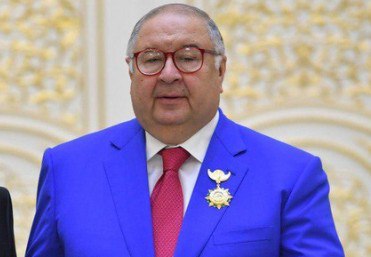
German Court Restricts Media Claims About Russian-Uzbek Billionaire Alisher Usmanov
A German court has ruled in favor of Russian-Uzbek billionaire Alisher Usmanov, barring the publication of several contested statements made about him by the Frankfurter Allgemeine Zeitung (FAZ), according to court documents cited by Reuters. In a decision dated January 23, the Hamburg Regional Court prohibited FAZ from further disseminating specific sections of its April 2023 article titled On the Kremlin’s Instructions. The statements in question allegedly linked Usmanov to senior Russian officials. The court determined that these claims may no longer be repeated in their current form. Usmanov, who was born in Uzbekistan, has an estimated net worth of $18.8 billion, according to the Bloomberg Billionaires Index. He is subject to European Union and United States sanctions, including a travel ban, imposed following the start of the war in Ukraine. Over the past two years, he has launched multiple legal challenges in European courts, contesting media reports that he argues were used as justification for the sanctions. Reacting to the ruling, Usmanov’s lawyer, Joachim Steinhöfel, said the statements banned by the court “repeated essential parts of the reasoning behind the sanctions against Mr. Usmanov.” He added that the decision supports the argument that the sanctions were based on what he described as “defamatory and groundless allegations,” Reuters reported. FAZ said it is considering an appeal. A spokesperson for the newspaper warned that the court’s legal criteria could make it more difficult to report on individuals in authoritarian systems, raising broader concerns about press freedom. Separately, in 2024, another Hamburg court ruled against the German broadcaster ARD over a report that linked Usmanov to a scheme involving alleged bribes to judges at the International Fencing Federation. The court banned further distribution of the report, describing it as “news based on suspicion.” Violations of the order could lead to fines of up to €250,000 per incident or imprisonment. Reuters also reported that German authorities agreed last month to close a foreign trade law investigation involving Usmanov after he paid €10 million. A separate money laundering probe was dropped in 2024.