• KZT/USD = 0.00218
  • TJS/USD = 0.10800
  • UZS/USD = 0.00008
  • TMT/USD = 0.29850
  • KZT/USD = 0.00218
  • TJS/USD = 0.10800
  • UZS/USD = 0.00008
  • TMT/USD = 0.29850
  • KZT/USD = 0.00218
  • TJS/USD = 0.10800
  • UZS/USD = 0.00008
  • TMT/USD = 0.29850
  • KZT/USD = 0.00218
  • TJS/USD = 0.10800
  • UZS/USD = 0.00008
  • TMT/USD = 0.29850
  • KZT/USD = 0.00218
  • TJS/USD = 0.10800
  • UZS/USD = 0.00008
  • TMT/USD = 0.29850
  • KZT/USD = 0.00218
  • TJS/USD = 0.10800
  • UZS/USD = 0.00008
  • TMT/USD = 0.29850
  • KZT/USD = 0.00218
  • TJS/USD = 0.10800
  • UZS/USD = 0.00008
  • TMT/USD = 0.29850
  • KZT/USD = 0.00218
  • TJS/USD = 0.10800
  • UZS/USD = 0.00008
  • TMT/USD = 0.29850
29 November 2026

Viewing results 1 - 6 of 4

U.S. Backs New Routes for Turkmen Gas Exports and Caspian Trade

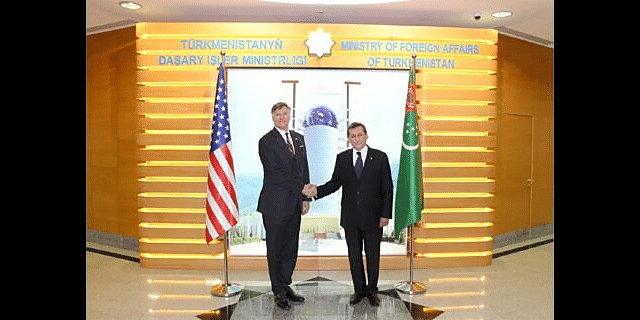
The United States is seeking to help Turkmenistan diversify its energy exports and expand trade across the Caspian Sea. U.S. Deputy Secretary of State Christopher Landau and Turkmen Foreign Minister Rashid Meredov discussed both priorities at talks in Ashgabat on November 23. Landau also met with President Serdar Berdimuhamedov that day. In addition to energy and transportation, they discussed trade and investment. Berdimuhamedov expressed interest in joint renewable energy projects. Turkmenistan depends heavily on China, its largest natural gas customer. In October, Maksat Babayev, chairman of the state-owned gas company Türkmengaz, said Turkmenistan had supplied China with more than 477 billion cubic meters of gas between the opening of the export pipeline in December 2009 and October 1, 2026. Ashgabat also hopes to reach South Asian markets. Babayev said Türkmengaz was building a section of the Turkmenistan-Afghanistan-Pakistan-India (TAPI) gas pipeline from the Turkmen border town of Serhetabat to the Afghan city of Herat. TAPI is designed to supply the three importing countries with up to 33 billion cubic meters of gas a year. The proposed Trans-Caspian Gas Pipeline would run beneath the Caspian Sea, connecting Turkmenistan’s gas network to Azerbaijan. From there, gas could reach European markets through existing pipelines in Georgia and Turkey. Construction of the subsea link has yet to begin. Ferries already carry trucks and trailers between the port of Turkmenbashi and the Azerbaijani port at Alat, near Baku. Cargo can then continue overland through the South Caucasus. Turkmenistan was one of nine countries covered by a September World Bank study of the Trans-Caspian Transport Corridor, also known as the Middle Corridor, which links Asia and Europe. To reduce delays, the bank recommended a single digital system for transport and trade documents. It called for rail operators to coordinate more closely with ports and shipping companies. Washington is also backing the Trump Route for International Peace and Prosperity (TRIPP), which would connect mainland Azerbaijan to its Nakhchivan exclave through southern Armenia. It would give Central Asian freight another route through the South Caucasus toward Turkey and Europe. In a November 7 joint statement, Armenia and Azerbaijan agreed with the United States to form two working groups for the project, one on transportation and the other on electricity transmission. Ahead of Landau’s visit, the State Department identified TRIPP and the Middle Corridor as areas for cooperation with Turkmenistan. On the day of the Ashgabat talks, Armenian Prime Minister Nikol Pashinyan announced that preparatory construction work had begun in southern Armenia.
Expanding U.S.–Turkmenistan Ties: Envoy and Business Group Visit Ashgabat

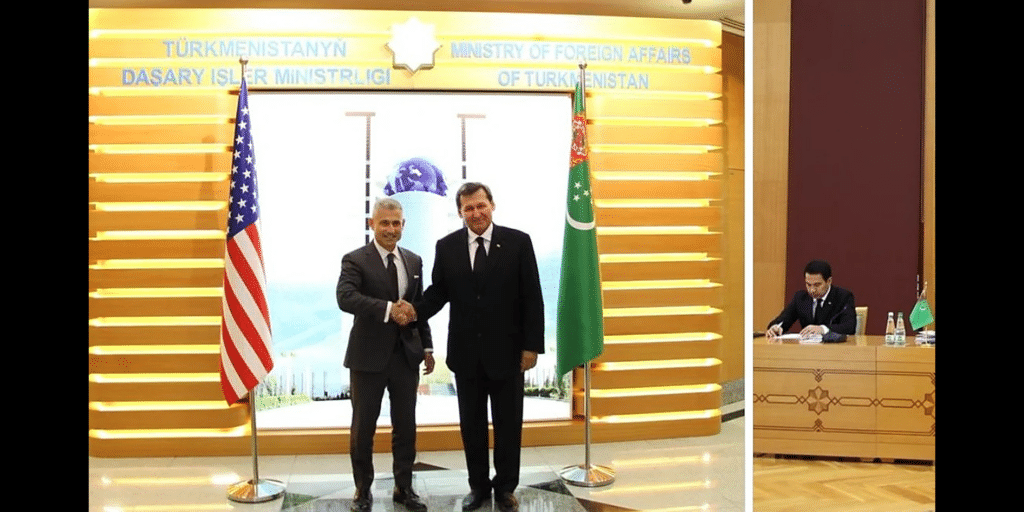
Turkmenistan and the United States are working to deepen their economic and diplomatic relationship, with a top American diplomat and a U.S. business delegation visiting Ashgabat this week. The U.S.-Turkmenistan Business Council had announced a semiannual business mission to Ashgabat on November 4–5, a trip that comes amid a wider effort by the United States and Central Asian countries to expand trade and investment ties with each other. The council is a Washington, D.C.-based nonprofit group led by Eric Stewart, a former U.S. deputy assistant secretary for Europe/Eurasia at the Department of Commerce who has founded more than a dozen similar groups focusing on other countries and regions. The trip, which was coordinated with the U.S. government, followed a visit to Ashgabat this week by S. Paul Kapur, U.S. assistant secretary of state for South and Central Asian affairs. On November 3, Kapur and Turkmenistan's Foreign Minister Rashid Meredov talked about “expanding business ties and identifying new opportunities” for partnership, according to Turkmenistan’s embassy in the U.S. U.S. support for the Turkmenistan–Afghanistan–Pakistan–India (TAPI) gas pipeline was also discussed, the embassy said. That support was also noted in a Turkmen state media report on Kapur’s meeting with Gurbanguly Berdimuhamedov, the former president who still has a powerful leadership role in Turkmenistan. Turkmenistan recently said there was progress in laying the pipeline in Afghanistan’s Herat province, though the overall TAPI project has faced years of delays and challenges in its implementation. While U.S.-Turkmen trade and investment are relatively small, Turkmenistan’s strategic location on Caspian Sea trade routes and the fact that it has some of the largest proven reserves of natural gas in the world make it a potentially important partner for the U.S. Turkmenistan mainly exports energy to China but is aiming to diversify export options, including through projects such as TAPI and the planned Trans-Caspian Gas Pipeline.

New U.S. Embassy Chief in Turkmenistan to Continue Building Ties

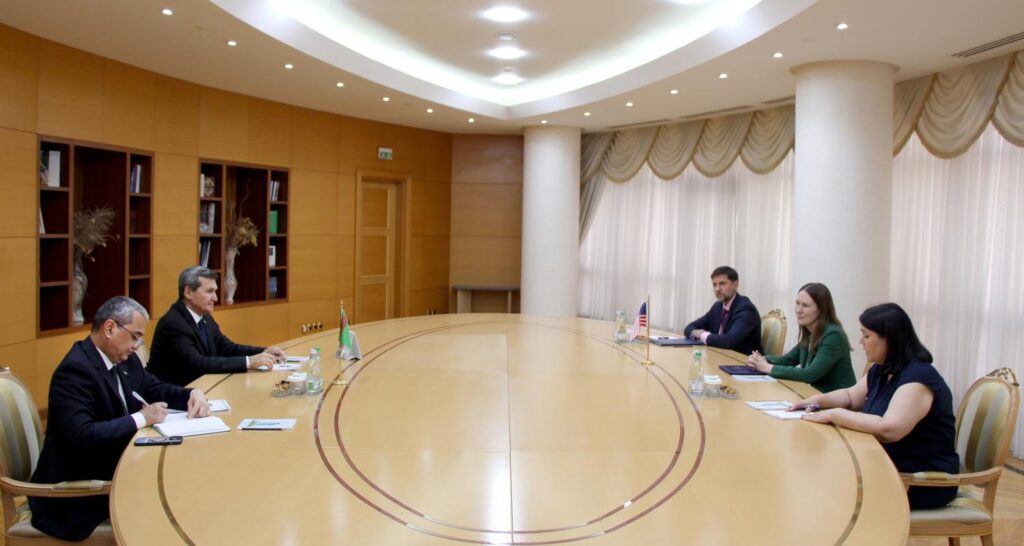
The United States has a new top diplomat in Ashgabat who is expected to continue what Turkmenistan calls the “positive momentum” in ties between the two countries. Kristin Hawkins assumed duties as chargé d’affaires ad interim at the U.S. Embassy in Ashgabat after Elizabeth Rood completed her tour as ambassador this month, the embassy said. Hawkins will lead the embassy until a permanent ambassador is appointed. Hawkins joined the Foreign Service in 2011 and served as U.S. consul general in Lahore, Pakistan, from 2023 to 2025, according to the embassy. Her other postings included senior Georgia desk officer at the U.S. Department of State in Washington, deputy spokesperson at the U.S. Embassy in Kyiv, and political officer at the U.S. Embassy in Moscow. Hawkins and Rashid Meredov, Turkmenistan’s foreign minister, met on Wednesday and “reaffirmed their mutual interest in further strengthening constructive Turkmen-U.S. cooperation,” Turkmenistan’s Foreign Ministry said. During her two-year tenure as ambassador, Rood helped develop the U.S. partnership with Turkmenistan as part of Washington’s trade and diplomatic outreach across Central Asia. At a farewell meeting, Rood and Meredov noted “the positive momentum” in U.S.-Turkmen cooperation in recent years, according to the Turkmen government. During her two-year tenure as ambassador, Rood was involved in building up the U.S. partnership with Turkmenistan as part of Washington’s wider trade and diplomatic outreach to countries in Central Asia. At a farewell meeting, Rood and Meredov commented on “the positive momentum” in U.S.-Turkmen cooperation in recent years, according to the Turkmen government.

Turkmenistan Seeks Bigger Counter-Terrorism Role in Central Asia

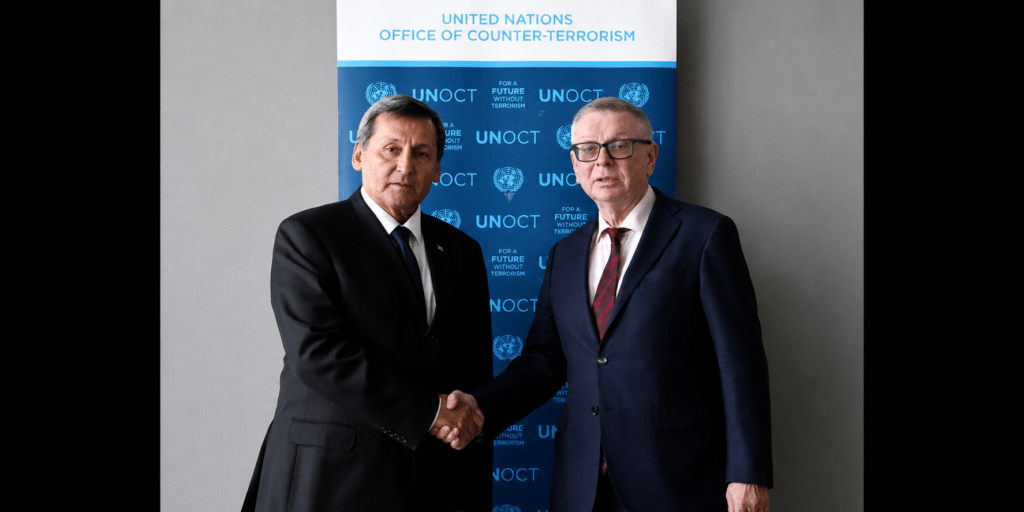
Turkmenistan wants to host a United Nations counter-terrorism facility that would contribute to cooperation among Central Asian countries, whose security concerns have included online radicalization, instability in Afghanistan, and the repatriation of citizens from Syria and Iraq. Foreign Minister Rashid Meredov discussed the initiative with Alexandre Zouev, a Russian diplomat who is acting under-secretary-general of the United Nations Office of Counter-Terrorism (UNOCT), during a visit by Turkmenistan’s top diplomat to the United States last week. In the May 28 meeting, the Turkmen delegation provided details about the plan to establish a program office of UNOCT in Ashgabat, according to the ministry. It said the office “will become a key analytical and expert platform in the region.” Such offices in host countries have a minimum of three staff members, for example, the office head, a project manager, and an administrator, and often rely on funding from the host nation, according to UNOCT, which is based at U.N. headquarters in New York.  The offices focus on “capacity-building projects and activities” with a focus on the country or region, the office said. In 2022, U.N. counter-terrorism officials helped to set up what they described as an early warning network with representatives from Kazakhstan, Kyrgyzstan, Tajikistan, Turkmenistan and Uzbekistan. The mechanism promotes regional information-sharing. Besides governments, it involves civil society organizations and academics. Turkmenistan, Tajikistan, and Uzbekistan share borders with Afghanistan, where continuing security problems have slowed Central Asian efforts to develop trade routes in deals with the ruling Taliban movement. Chinese interests in Tajikistan have been targeted by cross-border attacks in the past year. Tajikistan’s security forces have stepped up patrols on the border, which is challenging to monitor because of the remote, mountainous terrain. Several Central Asian countries have also organized the repatriation of their citizens from conflict zones in Iraq and Syria. Former male fighters who joined Islamic militant groups can face close monitoring and jail time, while women and children tend to be viewed as victims in need of humanitarian support. U.N. officials have also collaborated on counter-terrorism concerns in Central Asia with the Collective Security Treaty Organization, a regional group that includes Russia and has focused heavily on the threat of extremist infiltration from Afghanistan.