Turkmenistan wants to host a United Nations counter-terrorism facility that would contribute to cooperation among Central Asian countries, whose security concerns have included online radicalization, instability in Afghanistan, and the repatriation of citizens from Syria and Iraq.
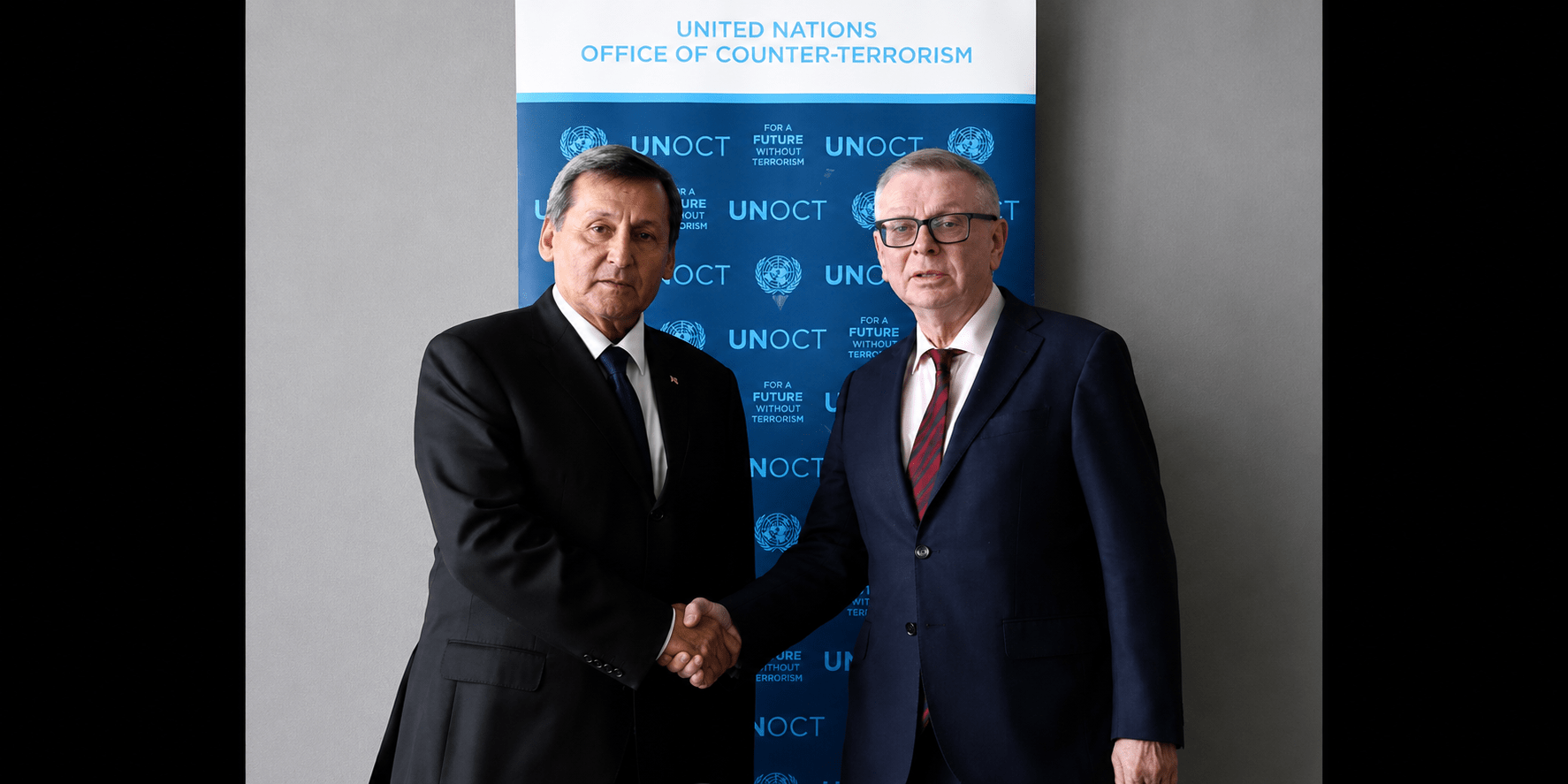
Foreign Minister Rashid Meredov discussed the initiative with Alexandre Zouev, a Russian diplomat who is acting under-secretary-general of the United Nations Office of Counter-Terrorism (UNOCT), during a visit by Turkmenistan’s top diplomat to the United States last week.
In the May 28 meeting, the Turkmen delegation provided details about the plan to establish a program office of UNOCT in Ashgabat, according to the ministry. It said the office “will become a key analytical and expert platform in the region.”
Such offices in host countries have a minimum of three staff members, for example, the office head, a project manager, and an administrator, and often rely on funding from the host nation, according to UNOCT, which is based at U.N. headquarters in New York. The offices focus on “capacity-building projects and activities” with a focus on the country or region, the office said.
In 2022, U.N. counter-terrorism officials helped to set up what they described as an early warning network with representatives from Kazakhstan, Kyrgyzstan, Tajikistan, Turkmenistan and Uzbekistan. The mechanism promotes regional information-sharing. Besides governments, it involves civil society organizations and academics.
Turkmenistan, Tajikistan, and Uzbekistan share borders with Afghanistan, where continuing security problems have slowed Central Asian efforts to develop trade routes in deals with the ruling Taliban movement. Chinese interests in Tajikistan have been targeted by cross-border attacks in the past year. Tajikistan’s security forces have stepped up patrols on the border, which is challenging to monitor because of the remote, mountainous terrain.
Several Central Asian countries have also organized the repatriation of their citizens from conflict zones in Iraq and Syria. Former male fighters who joined Islamic militant groups can face close monitoring and jail time, while women and children tend to be viewed as victims in need of humanitarian support.
U.N. officials have also collaborated on counter-terrorism concerns in Central Asia with the Collective Security Treaty Organization, a regional group that includes Russia and has focused heavily on the threat of extremist infiltration from Afghanistan.