
• KZT/USD = 0.00222
  • TJS/USD = 0.10830
  • UZS/USD = 0.00008
  • TMT/USD = 0.29760
  • KZT/USD = 0.00222
  • TJS/USD = 0.10830
  • UZS/USD = 0.00008
  • TMT/USD = 0.29760
  • KZT/USD = 0.00222
  • TJS/USD = 0.10830
  • UZS/USD = 0.00008
  • TMT/USD = 0.29760
  • KZT/USD = 0.00222
  • TJS/USD = 0.10830
  • UZS/USD = 0.00008
  • TMT/USD = 0.29760
  • KZT/USD = 0.00222
  • TJS/USD = 0.10830
  • UZS/USD = 0.00008
  • TMT/USD = 0.29760
  • KZT/USD = 0.00222
  • TJS/USD = 0.10830
  • UZS/USD = 0.00008
  • TMT/USD = 0.29760
  • KZT/USD = 0.00222
  • TJS/USD = 0.10830
  • UZS/USD = 0.00008
  • TMT/USD = 0.29760
  • KZT/USD = 0.00222
  • TJS/USD = 0.10830
  • UZS/USD = 0.00008
  • TMT/USD = 0.29760
08 October 2026

Viewing results 1 - 6 of 2

Middle Corridor Debate Shifts From Geopolitics to Commercial Viability

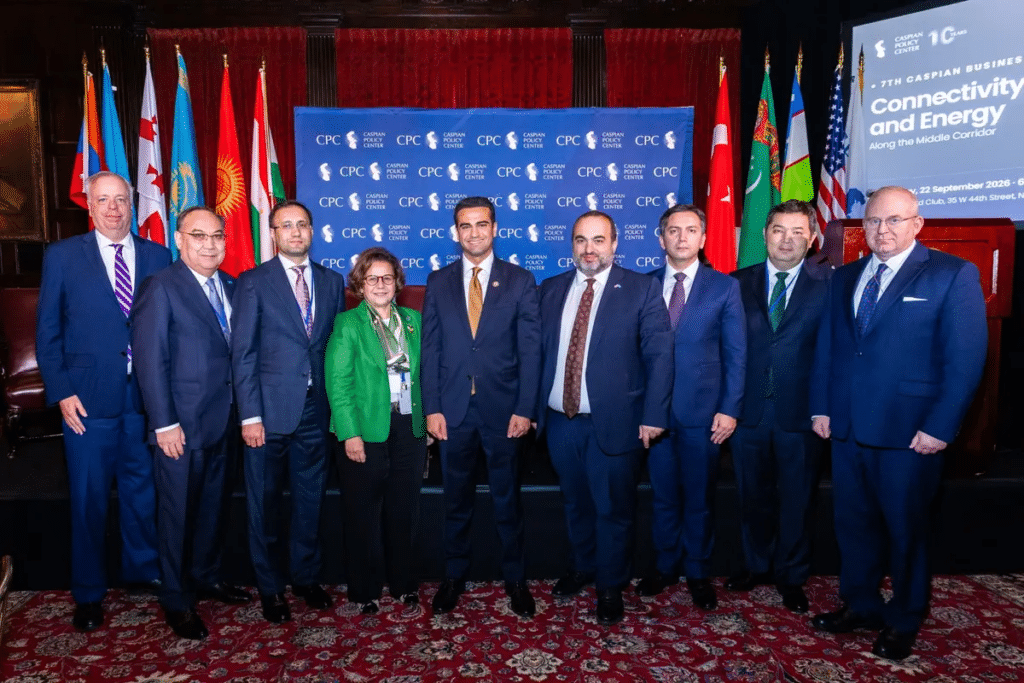
For several years, interest in the Middle Corridor has risen sharply amid the war in Ukraine, tensions around Iran, sanctions, instability on maritime routes, and governments’ efforts to diversify supply chains. The route runs through Central Asia, the Caspian Sea, and the South Caucasus. The way the issue is framed is now changing. The debate over whether this route is needed is moving into the background. A more important question is whether the Middle Corridor can develop from a politically attractive alternative into a sustainable transport and economic system that businesses will use not because of geopolitical circumstances, but because it is competitive. In this context, the 7th Caspian Business Forum, held in New York on September 22 and organized by the Caspian Policy Center (CPC), provided a useful snapshot of this shift. Representatives of the United States, Kazakhstan, Kyrgyzstan, Azerbaijan, Georgia, Turkey, and major businesses took part. The discussions focused on the Middle Corridor, the Trump Route for International Peace and Prosperity (TRIPP), energy, critical minerals, and attracting private capital. Freight volumes on the Trans-Caspian International Transport Route rose from 0.8 million tons to 4.5 million tons in the seven years to 2025, according to Kazakhstan’s Ministry of Transport. The route carried about 77,000 twenty-foot equivalent units of containerized cargo in 2025, and Kazakhstan aims to raise that total to 300,000 by 2029. These volumes are substantial, but they show the limits of the Middle Corridor’s current capacity. It has not yet become a replacement for all traditional overland routes between China and Europe. The World Bank has noted that the Middle Corridor is more than a transit bridge between China and the European Union (EU). Growth in trade among the countries along the route, as well as their trade with Europe, could be equally important. With the necessary investment and organizational reforms, it estimates, trade flows could triple and transport times could roughly halve by 2030. The route passes through several countries, crosses the Caspian Sea, requires transfers between different modes of transport, and depends on coordination among railway operators, ports, customs services, and tariff policies. A study of transport connectivity between Europe and Central Asia by the European Bank for Reconstruction and Development, at the request of the European Commission, identified 33 priority investment needs in physical infrastructure and seven soft-connectivity measures, ranging from the digitalization of transport documents to the harmonization of tariffs, customs, and border procedures. The CPC forum addressed these issues as well. CPC President Efgan Nifti put it this way: “For the Corridor to reach its full potential, it must increasingly function as one integrated system – with harmonized border procedures, coordinated ports and railways, and digitalized documentation.” Kazakhstan’s position reflects this approach. The country’s presidential representative for negotiations with the United States, Erzhan Kazykhan, called the Middle Corridor a “strategic investment in the future” connecting Kazakhstan with the South Caucasus, Turkey, and Europe. He said Astana views TRIPP as a logical extension of the system that could shorten the route to European markets...

Central Asia’s First Korea Summit Produces Different Deals for Each Country

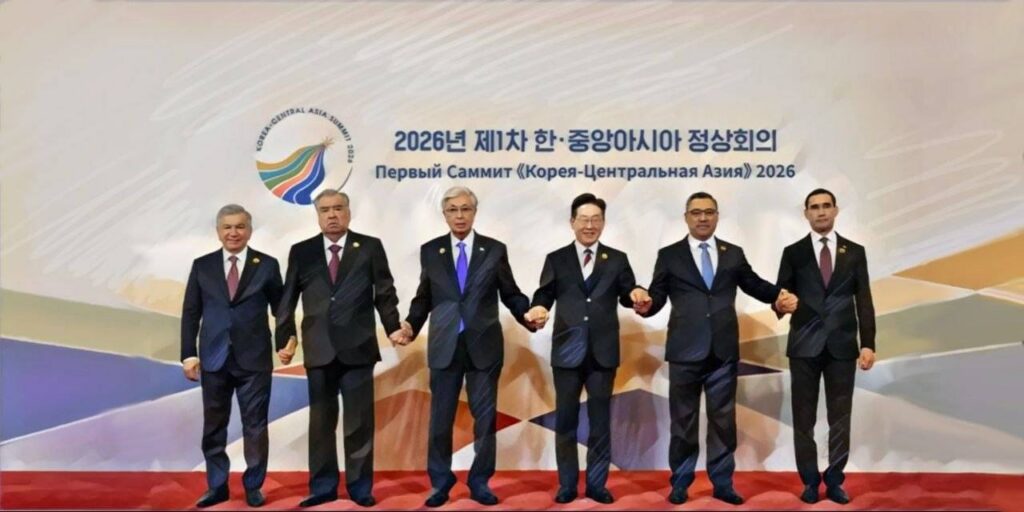
The first Central Asia-Republic of Korea Summit brought five countries to Seoul with very different records of working with Korean capital. Kazakhstan arrived with commercial agreements worth about $19 billion, while Uzbekistan is discussing multibillion-dollar financing through the state-owned Export-Import Bank of Korea. In Turkmenistan, Korean companies are expanding beyond their traditional role in the gas-chemical industry; Tajikistan is offering mineral resources; and Kyrgyzstan is establishing a dedicated government contact point to help attract Korean businesses. On September 16, the presidents of all five Central Asian states met South Korean President Lee Jae Myung together for the first time. Until now, the Korea-Central Asia Cooperation Forum, established in 2007, had operated mainly at a ministerial level. A permanent secretariat was established in 2017, and in 2020 the meetings were elevated to the level of foreign ministers. The leaders adopted the Seoul Declaration, agreeing to hold summits every two years, with Kazakhstan set to host the next in 2028. Ministerial meetings in the intervening years will review implementation and prepare the next summit’s agenda. The declaration also envisages Korea Desks across the five Central Asian countries to help businesses address administrative obstacles. The leaders expressed interest in combining Central Asian minerals with Korean technology to build joint production networks, and agreed to pursue measures to reduce non-tariff barriers. Seoul also sees Central Asia as part of its own industrial strategy. South Korea, one of the world’s leading producers of automobiles, electronics, batteries, and ships, needs stable supplies of energy and raw materials. Opening the summit, Lee spoke of combining the region’s resources with Korean exploration and processing technologies. Critical minerals, energy, and supply-chain resilience were among the main issues at the meeting. In 2025, South Korea’s trade with the five countries reached $10 billion for the first time: Korean exports totaled $8.67 billion, while imports from Central Asia amounted to $1.39 billion. Cumulative Korean investment in the region reached $6.48 billion. Kazakhstan and Uzbekistan continue to account for most of this trade and investment. The talks in Seoul showed how different the next step could look in each of the five countries. [caption id="attachment_56323" align="aligncenter" width="1774"] Image: Akorda[/caption] Kazakhstan: $19 Billion in Agreements and Large-Scale Industry Kazakhstan arrived at the summit with the largest announced commercial package. On September 15, a day before the regional summit, Kazakhstan and South Korea signed around 80 agreements worth approximately $19 billion through the Kazakhstan-Korea Business Council in Seoul. About $11 billion is associated with projects involving Samruk-Kazyna, Kazakhstan’s sovereign wealth fund, which controls major state assets in oil and gas, energy, transport, telecommunications, and uranium mining. The $19 billion figure represents the value of signed agreements and announced projects at different stages of development. Behind the headline figure are several major industrial projects. QazaqGaz and Hyundai Engineering agreed to implement a gas processing plant at Karachaganak with an annual capacity of 5 billion cubic meters. KazMunayGas and Samsung E&A signed an agreement on expanding the Pavlodar refinery’s capacity to 9 million metric tons a...