• KGS/USD = 0.01144 0%
  • KZT/USD = 0.00205 0%
  • TJS/USD = 0.10736 -0.19%
  • UZS/USD = 0.00008 0%
  • TMT/USD = 0.28490 -0.28%
  • KGS/USD = 0.01144 0%
  • KZT/USD = 0.00205 0%
  • TJS/USD = 0.10736 -0.19%
  • UZS/USD = 0.00008 0%
  • TMT/USD = 0.28490 -0.28%
  • KGS/USD = 0.01144 0%
  • KZT/USD = 0.00205 0%
  • TJS/USD = 0.10736 -0.19%
  • UZS/USD = 0.00008 0%
  • TMT/USD = 0.28490 -0.28%
  • KGS/USD = 0.01144 0%
  • KZT/USD = 0.00205 0%
  • TJS/USD = 0.10736 -0.19%
  • UZS/USD = 0.00008 0%
  • TMT/USD = 0.28490 -0.28%
  • KGS/USD = 0.01144 0%
  • KZT/USD = 0.00205 0%
  • TJS/USD = 0.10736 -0.19%
  • UZS/USD = 0.00008 0%
  • TMT/USD = 0.28490 -0.28%
  • KGS/USD = 0.01144 0%
  • KZT/USD = 0.00205 0%
  • TJS/USD = 0.10736 -0.19%
  • UZS/USD = 0.00008 0%
  • TMT/USD = 0.28490 -0.28%
  • KGS/USD = 0.01144 0%
  • KZT/USD = 0.00205 0%
  • TJS/USD = 0.10736 -0.19%
  • UZS/USD = 0.00008 0%
  • TMT/USD = 0.28490 -0.28%
  • KGS/USD = 0.01144 0%
  • KZT/USD = 0.00205 0%
  • TJS/USD = 0.10736 -0.19%
  • UZS/USD = 0.00008 0%
  • TMT/USD = 0.28490 -0.28%

Viewing results 1 - 6 of 15

Opinion: Silk Seven or the OTS? Central Asia May Not Have to Choose

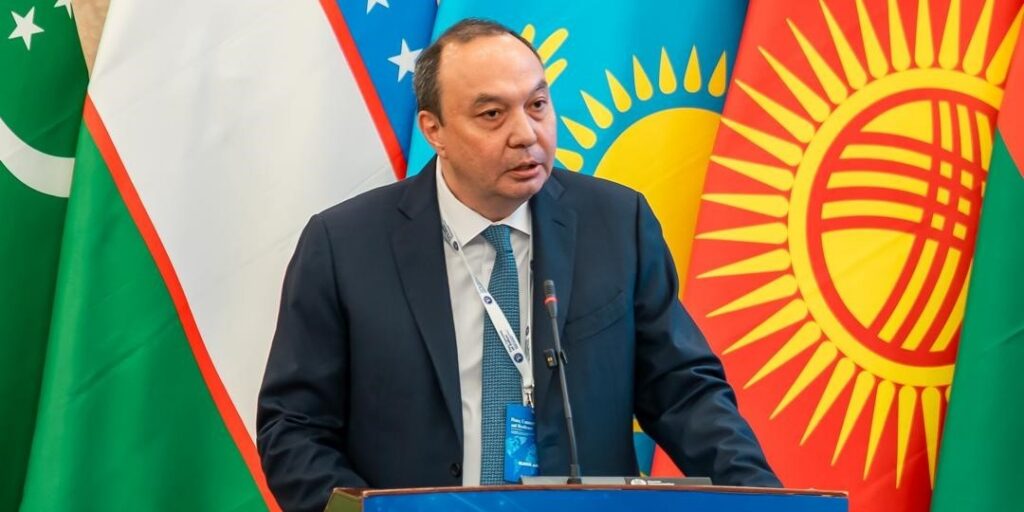
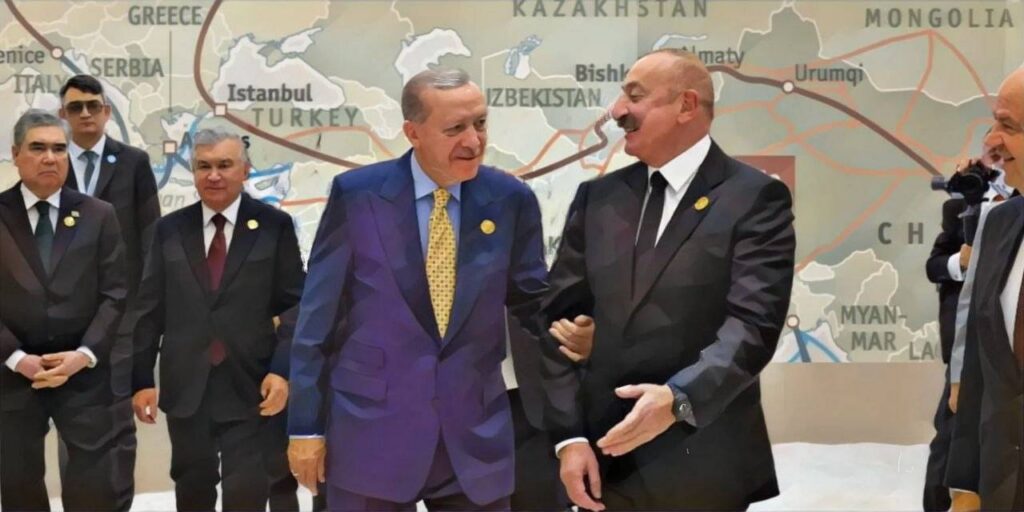
A new proposal circulating in Washington – the Silk Seven Plus (S7+) initiative – aims to reshape Central Asia by linking its five post-Soviet states with Afghanistan and Pakistan into an integrated economic region. Azerbaijan is also seen as a potential addition. The idea, advanced by the New Lines Institute for Strategy and Policy, is straightforward: connect landlocked Central Asia to the Black Sea and Arabian Sea through new trade corridors. On paper, the bloc looks compelling. The seven countries form a contiguous zone in the heart of Eurasia, potentially turning geography from a constraint to an advantage. “Central Asia needs an organization built by Central Asian states and for Central Asian states,” said Justin Burke, a resident senior fellow at the New Lines Institute, at a recent event in Washington. “If Central Asia can speak with one voice rather than five different voices, that will make it a more reliable investment destination.” There are signs of momentum. Kazakhstan’s President Kassym-Jomart Tokayev and Uzbekistan’s President Shavkat Mirziyoyev made back-to-back visits to Pakistan earlier this year, highlighting regional connectivity. Proponents argue that if Afghanistan stabilizes, the Silk Seven could become a formidable cluster. But that is a big “if.” It also raises a deeper question: why construct a new, geographically convenient bloc when an existing organization – the Organization of Turkic States (OTS)—already offers something deeper: shared language, history, and identity? While the Silk Seven spans broadly Muslim-majority countries, it is linguistically and culturally diverse. The grouping spans Turkic-speaking Central Asia, Persian-speaking Tajikistan, and Indo-Aryan Pakistan. ASEAN offers a cautionary example. Despite decades of cooperation, its religious, linguistic, and geopolitical diversity – combined with consensus-based decision-making – has often prevented it from speaking with one voice, particularly on China. In The Clash of Civilizations, Samuel Huntington wrote that when ASEAN was created in 1967 by Indonesia, Malaysia, the Philippines, Singapore, and Thailand, it was an organization of “one Sinic, one Buddhist, one Christian, and two Muslim member states.” Such multicivilizational regional organizations have limits, he said. The Silk Seven risks similar limitations. The OTS, by contrast, rests on a narrower but deeper foundation: its core members—Azerbaijan, Kazakhstan, Kyrgyzstan, Turkey, and Uzbekistan—share closely related languages and overlapping historical experiences. Tucked away in the eight-page document issued after the informal OTS summit earlier this month was a revealing signal of intent: clauses dedicated to cataloguing Turkic cultural heritage, promoting youth engagement through Khiva’s designation as the 2026 Youth Capital, and launching a “Turkic Heritage” digital platform. Together, they show that the OTS is actively building a shared cultural space. Yet even as members emphasize common heritage, differences remain over how far the organization should evolve politically. Kazakhstan’s President Kassym-Jomart Tokayev, the summit host, stressed in his remarks that “the Organization of Turkic States is neither a geopolitical project nor a military organization,” but rather “a unique platform” for cooperation across trade, technology, culture, and humanitarian ties. Azerbaijan’s President Ilham Aliyev struck a more ambitious note, saying that “the Turkic world must grow into one of the influential geopolitical centers of the 21st century,” and pledging...

Investments, Resources, and Digital Transformation: How Central Asia Can Preserve Its Strategic Balance

Rising global demand for critical resources, the accelerating green transition, and the digitalization of the economy are turning Central Asia from a peripheral region into one of the key arenas of geoeconomic competition. Kazakhstan and its neighbors are increasingly in the focus of the United States, China, the European Union, and the Gulf states—as sources of raw materials, sites for infrastructure projects, and markets for the implementation of digital solutions. Under these conditions, the key question is no longer the volume of investment, but control over its quality, structure, and long-term consequences. The resource factor: from raw materials to a geoeconomic asset Central Asia is now becoming a strategic storehouse for the global green transition and high-tech industries. The region possesses enormous reserves of critical raw materials: Kazakhstan leads the world in uranium production, at about 40% of the global market, while deposits of copper, lithium, cobalt, uranium, and rare metals across Kazakhstan and the wider region are making Central Asia an increasingly important link in clean-energy and high-tech supply chains. Investment activity in the extractive sector is stimulating the development of related high-tech industries within the region. Global players are increasingly coming not simply for raw materials, but with proposals to localize processing. Thus, in November 2024, Kazakhstan’s first tungsten processing plant began operating at the Boguty deposit in the Almaty region. The project, valued at $300 million, is being implemented by Aral Kegen, a subsidiary of Jiaxin International Resources Investment. In addition, in the East Kazakhstan region, with the participation of the German mining company HMS Bergbau AG, two new industrial enterprises specializing in lithium extraction and processing are planned by 2029. Work is underway on the construction of a mining and processing plant, as well as a pegmatite ore processing facility. This allows the countries of the region to move away from the “quarry” model toward the model of a technological hub, where natural wealth becomes leverage for gaining access to Western and Eastern innovation. Investment transformation: from capital to ecosystems The traditional model, focused on extraction, is gradually giving way to the formation of value-added ecosystems. This presupposes the development of processing, the creation of high-tech production, and the formation of a scientific base. Kazakhstan’s national companies, such as Tau-Ken Samruk, Kazatomprom, and KazMunayGas, act as a strategic “anchor” for foreign capital, taking on the primary risks and bureaucratic burden. They absorb part of the early project risk, from licensing and exploration to infrastructure and coordination with the state, making entry into Kazakhstan easier for major foreign investors. This allows the state to retain control over strategic assets while using private capital for accelerated modernization of the sector. The main emphasis today is shifting from raw material extraction to the localization of higher value-added stages. Through the creation of joint ventures, national companies are introducing Western technologies and building plants with high added value, from the production of nuclear fuel assemblies to the manufacture of polyethylene and metal refining. In this way, they integrate Kazakh business...

Central Asia Faces an Arc of Instability to the South

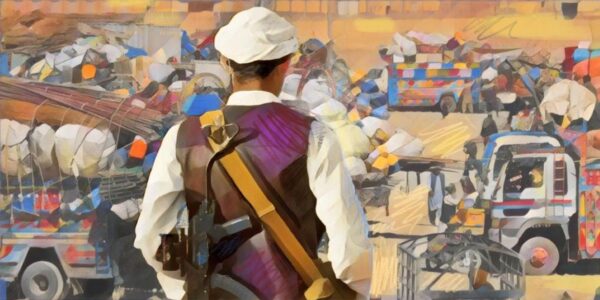
Until a few weeks ago, looking south from Central Asia, observers of the region saw nothing but opportunities for connectivity. Admittedly, Iran on one side and the area between Afghanistan and Pakistan on the other have never been known for their stability. However, the current situation sees two serious conflicts on the southern border of Central Asia, which risk representing an arc of instability that will be difficult to overcome. While the global energy implications of the ongoing war in the Middle East, which began following the joint attack by the United States and Israel on Iran, are likely to be felt for months to come, the greatest risk for the Central Asian region is related to connectivity. This could also compromise significant efforts made in this regard by regional governments. Consider, for example, the recent trip to Pakistan by Kazakh President Kassym-Jomart Tokayev, which focused on the possibility of building a railway from Pakistani ports to Kazakh territory via Afghanistan and Turkmenistan. For much of the past decade, Central Asian governments have invested heavily in opening southern trade routes to global markets. Railways through Afghanistan, port access through Iran, and new logistics corridors to Pakistan were meant to reduce dependence on northern routes and expand the region’s economic options. The sudden emergence of conflicts along the southern frontier now raises questions about how secure those connections will be. The Times of Central Asia spoke with Peter Frankopan, author and Professor of Global History at Oxford University, about the potential implications of the two wars on Central Asia’s southern border. According to him, the main risk is not related to connectivity, but to contagion: “The key issue is about the safety of civilians and the protection of infrastructure in Central Asia,” he told TCA. “In times like these, nothing can be ruled out. With Iran lashing out at neighbors and realizing that attacks on oil, gas and more give it leverage, it is not hard to see what might come next. Second, of course, are threats to national economies. Wars create winners and losers. One can see a boom for some people in Central Asian states, but plenty of pressures, especially on inflation.” Indeed, the economic repercussions of the Middle East conflict are already being felt in the region, particularly in Turkmenistan, which maintains some of the closest trade ties with Iran and shares a long border with the country. Frankopan does not see any particular differences in terms of the danger to Central Asia posed by what is happening in Iran and between Pakistan and Afghanistan: “Clearly, instability in Afghanistan is an immediate concern, but it is not related to Iran and will have its own velocity and rhythms. But the risks of expanding violence and terrorism, of refugees, of narcotics and other illicit trafficking are real - and may well get worse.” Regarding connectivity, one of the topics that Central Asian governments pay the most attention to, according to Frankopan, the current situation should not be considered an...

From Security Threat to Economic Partner: Central Asia’s New ‘View’ of Afghanistan

Afghanistan is quickly becoming more important to Central Asia, and the third week of February was filled with meetings that underscored the changing relationship. There was an “extraordinary” meeting of the Regional Contact Group of Special Representatives of Central Asian countries on Afghanistan in the Kazakh capital Astana. Also, a delegation from Uzbekistan’s Syrdarya Province visited Kabul, and separately, Uzbekistan’s Chamber of Commerce organized a business forum in the northern Afghan city of Mazar-i-Sharif. A Peaceful and Stable Future for Afghanistan The meeting in Astana brought together the special representatives of Kazakhstan, Kyrgyzstan, Tajikistan, and Uzbekistan for Afghanistan. The group was formed in August 2025. There was no explanation for why the fifth Central Asian country, Turkmenistan, chose not to participate. The purpose of the Astana meeting was to coordinate a regional approach to Afghanistan. Comments made by the representatives showed Central Asia’s changing assessment of its southern neighbor. Kazakhstan’s special representative, Yerkin Tokumov, said, “In the past [Kazakhstan] viewed Afghanistan solely through the lens of security threats… Today,” Tokumov added, “we also see economic opportunities.” Business is the basis of Central Asia’s relationship with the Taliban authorities. Representatives noted several times that none of the Central Asian states officially recognizes the Taliban government (only Russia officially recognizes that government). But that has not stopped Kazakhstan and Uzbekistan, in particular, from finding a new market for their exports in Afghanistan. Uzbekistan’s special representative, Ismatulla Ergashev, pointed out that his country’s trade with Afghanistan in 2025 amounted to nearly $1.7 billion. Figures for Kazakh-Afghan trade for all of 2025 have not been released, but during the first eight months of that year, trade totaled some $335.9 million, and in 2024, amounted to $545.2 million. In 2022, Kazakh-Afghan trade reached nearly $1 billion ($987.9 million). About 90% of trade with Afghanistan is exports from Kazakhstan and Uzbekistan. For example, Kazakhstan is the major supplier of wheat and other grains to Afghanistan, and Uzbekistan is the biggest exporter of electricity to Afghanistan. Kyrgyzstan’s trade with Afghanistan is significantly less, but from March 2024 to March 2025, it came to some $66 million. To put that into perspective, as a bloc, the Central Asian states are now Afghanistan’s leading trade partner, with more volume than Pakistan, India, or China. Kazakhstan’s representative, Tokumov, highlighted Afghanistan’s strategic value as a transit corridor that could open trade routes between Central Asia and the Indian Ocean. Kyrgyzstan’s representative, Turdakun Sydykov, said the trade, economic, and transport projects the Central Asian countries are implementing or planning are a “key condition for a peaceful and stable future for Afghanistan and the region as a whole.” The group also discussed humanitarian aid for Afghanistan. All four of these Central Asian states have provided humanitarian aid to their neighbor since the Taliban returned to power in August 2021. Regional security was also included on the agenda in Astana, but reports offered little information about these discussions. A few days before the opening of the meeting in Astana, Russian Ambassador to Kyrgyzstan Sergei...

TRIPP and the Middle Corridor After Vance

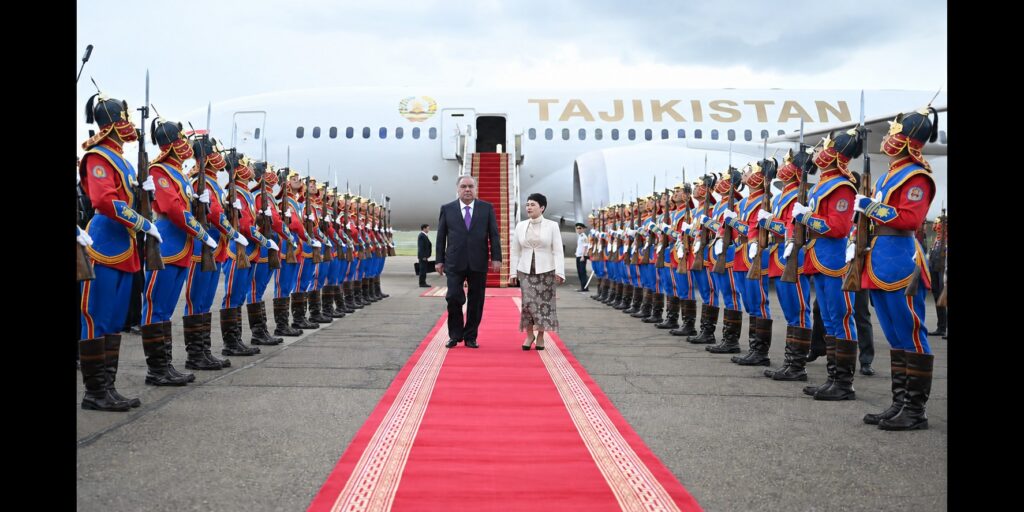
U.S. Vice President J.D. Vance’s Armenia and Azerbaijan tour is being sold as a “peace dividend” for the South Caucasus, but for Central Asia, the significance is the infrastructure potential of the Trump Route for International Peace and Prosperity (TRIPP). Vance’s trip is another move in positioning the new Caucasus transit route for the Middle Corridor. His visit necessarily focuses on the Armenia–Azerbaijan fix, but recent diplomatic context makes clear that it is at least equally a Central Asia to Europe proposition. Current constraints on Trans-Caspian connectivity have been the shortage of dependable shipping capacity across the Caspian, port access, and border processing times. As the European Commission pointed out last week, traffic has surged since 2022, but the next jump depends on targeted investment and practical fixes along the route. The Middle Corridor’s Central Asian Axis through Kazakhstan and Uzbekistan Kazakhstan’s recent moves treat the bottlenecks as practical engineering and scheduling problems. The dredging project at Kuryk aims to deepen the port approach channel to five meters to support year-round navigation. Work is scheduled for early 2026 and backed by ERSAI Caspian Contractor LLC, a joint venture between Saipem and the Kazakhstan-based business group ERC Holdings. ERSAI is a major industrial port and fabrication yard operator specializing in offshore construction, logistics, and port services in the Caspian Sea. The dredging project is tied to broader terminal and shipyard expansion designed to create a key industrial hub. Shipping capacity is the other half of that story. A plan reported late last year envisages six ferries on the Kuryk–Alat line, with the first two entering service in the first half of 2026 and additional vessels added through 2028. Even if timelines slip, the point is to create a predictable schedule. Uzbekistan’s connectivity push has been running on two tracks at once: east to west via the Caspian, and southward toward ports beyond Central Asia. In Washington, a delegation from Tashkent, led by Foreign Minister Bakhtiyor Saidov, a week ago signed a memorandum with the United States on critical minerals and rare earths. This move treats extraction and processing as a supply-chain partnership rather than a one-off investment pitch. At the same time, Uzbekistan has been pushing rule-making with corridor partners, not waiting for outsiders to do it. On February 10, Azerbaijan, Turkmenistan, Uzbekistan, and Georgia signed a protocol covering digitalization and freight development along the Middle Corridor, including shared methods for tracking delays and pinch points. This is in line with the necessary streamlining of paperwork. TRIPP as the South Caucasus Link for Central Asia TRIPP is meant to make the Caucasus segment less fragile by adding a second path, other than the recently renovated and expanded Baku–Tbilisi–Kars railway route. The U.S-backing and institutional presence are meant to create confidence and reliability. Armenia’s own published implementation framework describes a TRIPP Development Company with an initial 49-year development term and a proposed 74% U.S. share, while stating that Armenian sovereignty, law enforcement, customs, and taxation authority remain intact. This satisfies domestic Armenian...