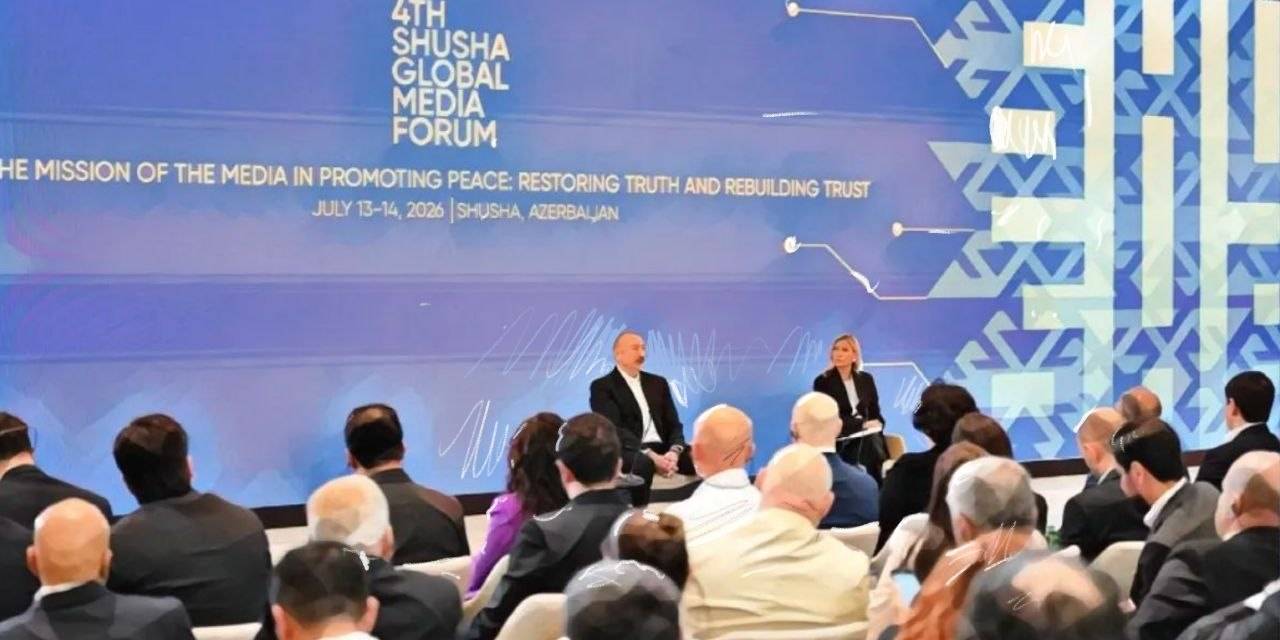
The Shusha Global Media Forum, an annual gathering held in Azerbaijan’s Karabakh region and conceived as a platform for journalists and media representatives from dozens of countries across Europe and beyond, including the United States, acquired broader regional significance last year because of its consequences for several Russian participants.
Last year’s forum attracted widespread attention in Russia after two prominent Russian participants faced repercussions at home. Mikhail Gusman, then first deputy director general of the state news agency TASS, was dismissed shortly after attending the event and praising Azerbaijan, although no official reason was given. The following month, pro-Kremlin political analyst Sergei Markov was designated a “foreign agent” after facing criticism for his favorable comments about Azerbaijan. It was therefore unsurprising that this year’s forum attracted close attention from media outlets around the world.
Beyond the forum’s Russia-related significance, Azerbaijan’s President Ilham Aliyev’s remarks pointed to a broader regional shift. Azerbaijan increasingly sees its political and economic interests converging with those of Central Asia, particularly through the Middle Corridor, cross-Caspian energy links, and infrastructure cooperation.
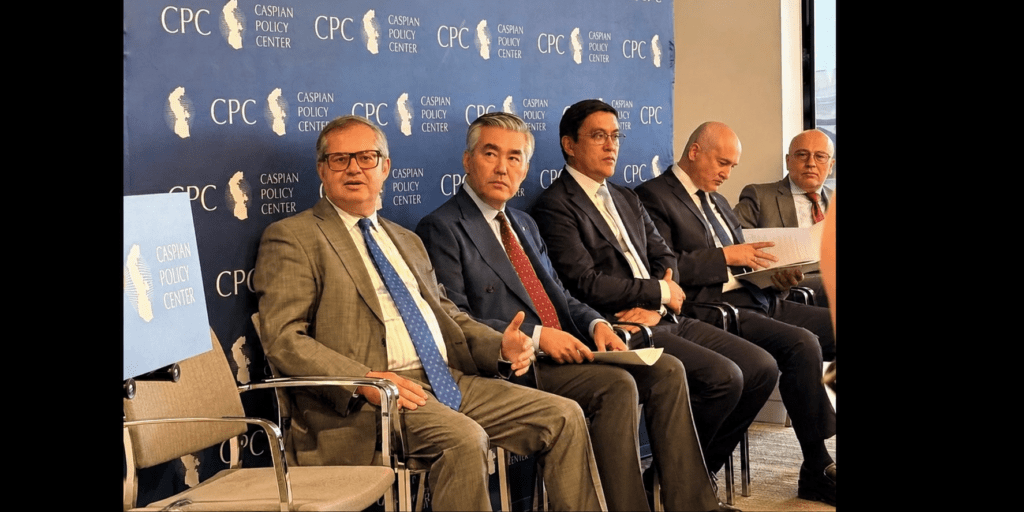
According to official figures, approximately 160 journalists, experts, and public officials from 53 countries attended the event. The forum brought together representatives of around 30 international news agencies, more than 60 leading media organizations, and roughly 10 international organizations and companies.
Former TASS executive Mikhail Gusman attended the fourth Shusha Global Media Forum and highlighted its growing international profile.
“There are very few, if any, media platforms in the world that bring together representatives of media organizations from every region to exchange views and engage in dialogue. That is precisely why the importance of this forum cannot be overstated,” he said.
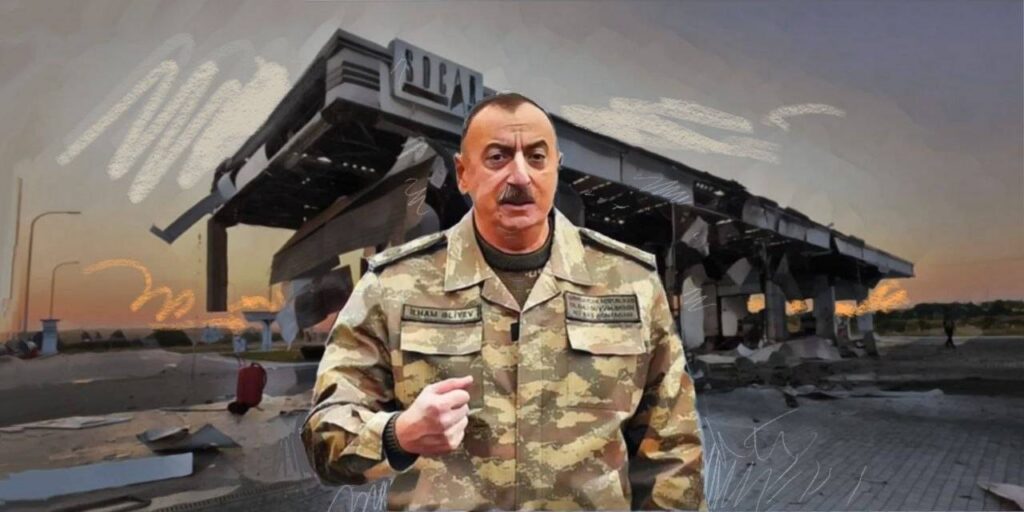
As in previous years, President Aliyev opened the forum and spent nearly three hours answering questions from journalists representing a wide range of countries. Given the latest deterioration in relations between Baku and Moscow, many observers were watching to see whether questions would prompt unusually sharp comments about Russia.
The organizers did not shy away from potentially sensitive questions. Ukrainian journalist Dmytro Gordon, who has been designated an extremist in Russia, was once again invited to the forum and made full use of the opportunity. Gordon noted Ukrainian drone and missile strikes deep inside Russia before asking Aliyev what counsel he would offer Ukraine and President Vladimir Putin.
“What advice would you give Putin today, when, in my view, he no longer has any good options left?” Gordon asked.
Aliyev avoided an overtly confrontational response, stating that Ukraine should “never agree to occupation” and that the war “must be stopped—and stopped immediately.”
Aliyev’s exchange with journalists and analysts from Europe and the United States painted a clear picture of Azerbaijan’s worldview and the role it sees for itself internationally. That perspective remains heavily shaped by the three-decade conflict between Baku and Yerevan over Karabakh.
According to Aliyev, the United States, France, and Russia all sought to preserve the status quo during that period. He described those decades as a “time of war,” arguing that Azerbaijani society itself became deeply influenced by that prolonged conflict.
When the Second Karabakh War began in 2020, Aliyev recalled, the United States, France, and Russia were “calling from all sides” and pressing Azerbaijan to stop. He said the victory strengthened Azerbaijan’s international standing and argued that the end of active conflict improved conditions for development and investment.
Nevertheless, Aliyev suggested that longstanding grievances remain. Relations with the Parliamentary Assembly of the Council of Europe (PACE) and the European Parliament remain strained, while Baku continues to seek the repeal of Section 907 of the U.S. Freedom Support Act, adopted by Congress in 1992 under what Aliyev described as the influence of the Armenian lobby.
In this context, Aliyev praised U.S. President Donald Trump and his administration, saying they had fundamentally changed Washington’s approach both to the region and to Azerbaijan. According to Aliyev, Trump waived Section 907 restrictions, supported the proposed Zangezur Corridor, which Baku says would connect mainland Azerbaijan with Nakhchivan through southern Armenia, and helped create the framework for an Armenia-Azerbaijan peace agreement.
Aliyev struck a markedly different tone when discussing Türkiye and the Central Asian republics, particularly Uzbekistan and Kazakhstan.
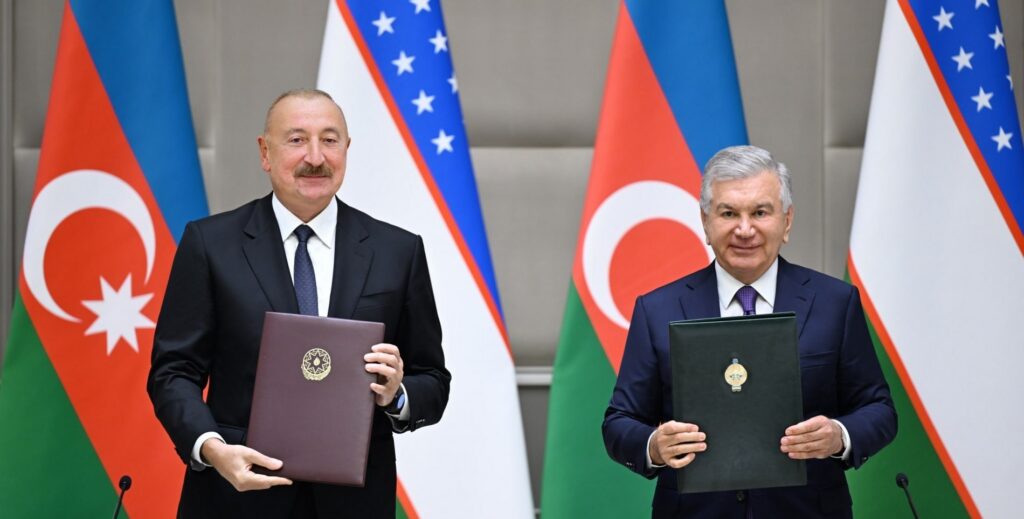
Speaking about Uzbek President Shavkat Mirziyoyev, Aliyev said their “personal friendship” had elevated bilateral relations and highlighted Uzbekistan’s role in rebuilding Karabakh.
“The President of Uzbekistan was the first to assist us in rebuilding Karabakh. A beautiful and large school named after Mirzo Ulugbek was built in the city of Fuzuli, and President Shavkat Mirziyoyev and I officially inaugurated it together. After that, other brotherly countries—Kazakhstan, Kyrgyzstan, and Turkmenistan—also offered their gifts. But the very first assistance came from Uzbekistan,” Aliyev said.
The Azerbaijani president also highlighted the importance of his close working relationship with Kazakh President Kassym-Jomart Tokayev in strengthening bilateral cooperation. He thanked Kazakhstan for its contribution to Karabakh’s reconstruction and said that the close partnership between the two leaders has helped advance joint transport, energy, and digital infrastructure projects.
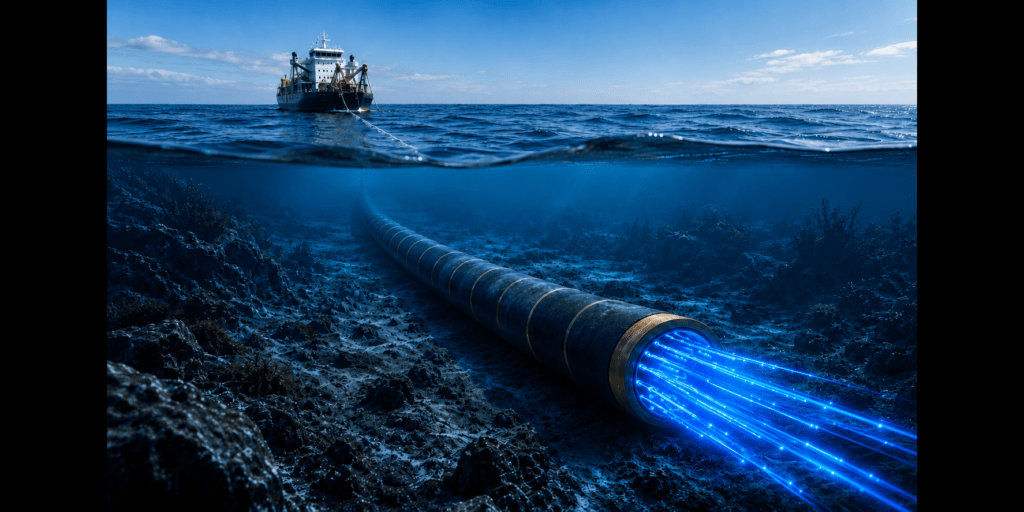
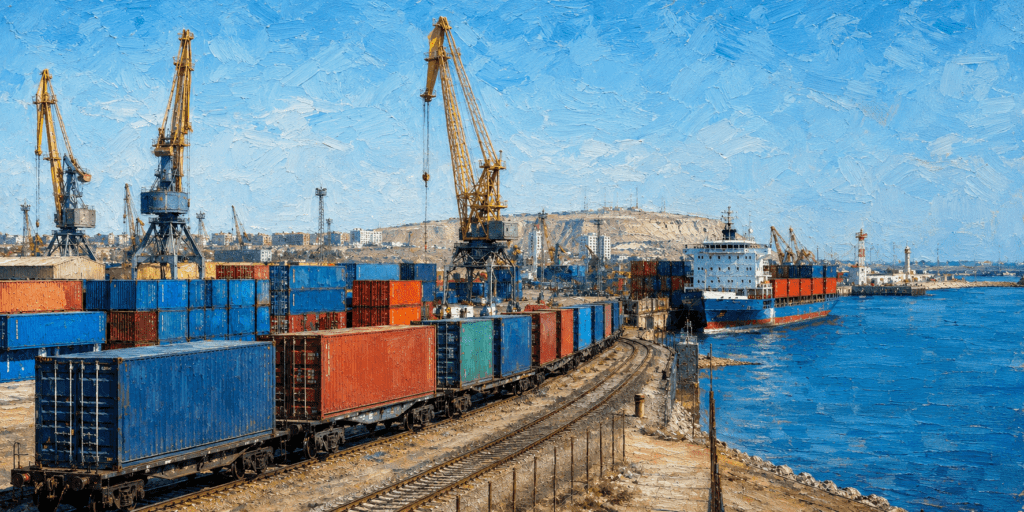
These include the development of the Middle Corridor, the construction of electricity and fiber-optic cables across the Caspian Sea, and the transportation of Kazakh oil through Azerbaijan.
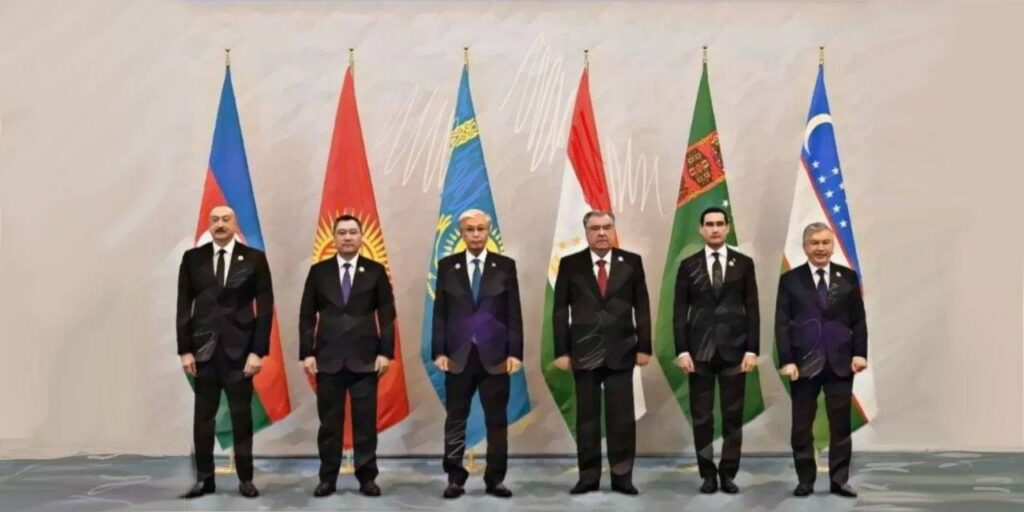
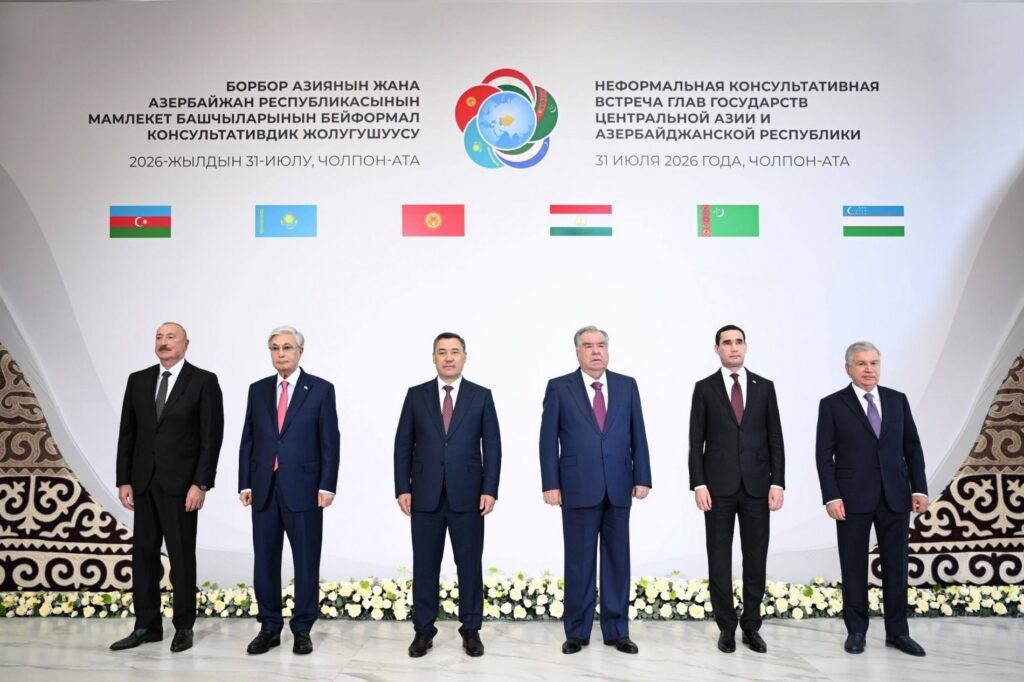
The reasons behind Aliyev’s warm approach toward Central Asia became clear during his remarks. Although Azerbaijan geographically belongs to the South Caucasus, he noted that it has joined the Consultative Council of Central Asian leaders as a full member after previously attending its summits as an honorary guest. The expanded “C6” format brings Azerbaijan into the region’s principal leaders’ forum.
Aliyev framed the relationship in still broader terms, saying Central Asia and Azerbaijan were “uniting into a single economic and political space.”
Azerbaijan is therefore consolidating its position as the western Caspian hub of the Middle Corridor rather than joining the route from outside. Baku is positioning itself as a bridge between East and West, a role that Kazakhstan and Uzbekistan have also actively pursued.
Closer coordination with Kazakhstan and Uzbekistan could give the corridor greater economic and political coherence, while Azerbaijan’s alliance with Türkiye extends Ankara’s influence across transport, energy, and digital projects spanning the Caspian.