• KGS/USD = 0.01144 0%
  • KZT/USD = 0.00214 0%
  • TJS/USD = 0.10720 0.19%
  • UZS/USD = 0.00008 0%
  • TMT/USD = 0.28490 0%
  • KGS/USD = 0.01144 0%
  • KZT/USD = 0.00214 0%
  • TJS/USD = 0.10720 0.19%
  • UZS/USD = 0.00008 0%
  • TMT/USD = 0.28490 0%
  • KGS/USD = 0.01144 0%
  • KZT/USD = 0.00214 0%
  • TJS/USD = 0.10720 0.19%
  • UZS/USD = 0.00008 0%
  • TMT/USD = 0.28490 0%
  • KGS/USD = 0.01144 0%
  • KZT/USD = 0.00214 0%
  • TJS/USD = 0.10720 0.19%
  • UZS/USD = 0.00008 0%
  • TMT/USD = 0.28490 0%
  • KGS/USD = 0.01144 0%
  • KZT/USD = 0.00214 0%
  • TJS/USD = 0.10720 0.19%
  • UZS/USD = 0.00008 0%
  • TMT/USD = 0.28490 0%
  • KGS/USD = 0.01144 0%
  • KZT/USD = 0.00214 0%
  • TJS/USD = 0.10720 0.19%
  • UZS/USD = 0.00008 0%
  • TMT/USD = 0.28490 0%
  • KGS/USD = 0.01144 0%
  • KZT/USD = 0.00214 0%
  • TJS/USD = 0.10720 0.19%
  • UZS/USD = 0.00008 0%
  • TMT/USD = 0.28490 0%
  • KGS/USD = 0.01144 0%
  • KZT/USD = 0.00214 0%
  • TJS/USD = 0.10720 0.19%
  • UZS/USD = 0.00008 0%
  • TMT/USD = 0.28490 0%

Viewing results 1 - 6 of 42

Armenian President Delivers Speech at Astana Summit, Emphasizing Climate Action and Biodiversity

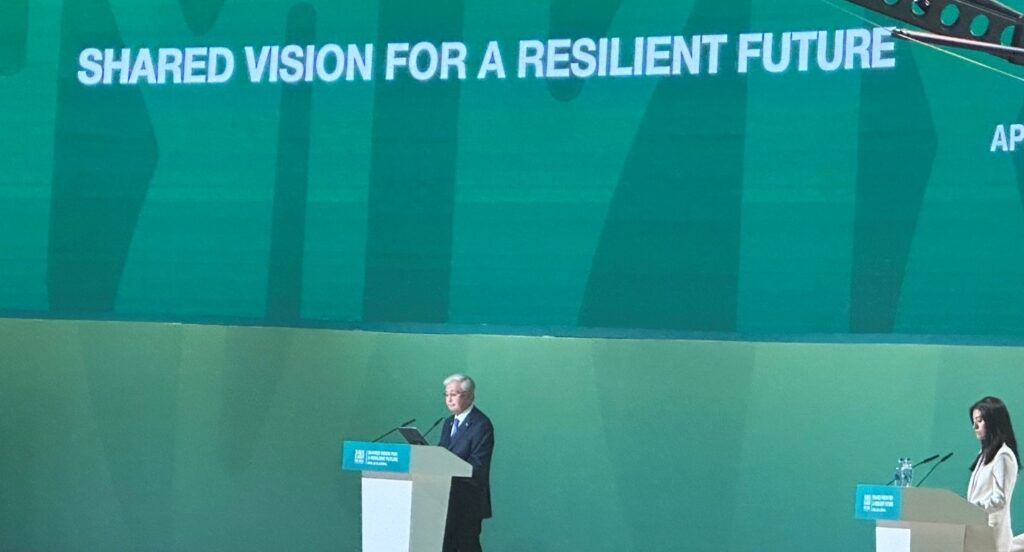
Astana, Kazakhstan – Armenian President Vahagn Khachaturyan addressed the Regional Ecological Summit (RES 2026) today, speaking about the urgent challenges of climate change, biodiversity loss, and the need for strengthened international cooperation. The summit, themed “Shared Vision for a Resilient Future,” opened its sessions on Earth Day under the patronage of Kazakh President Kassym-Jomart Tokayev. In his remarks, President Khachaturyan expressed deep gratitude to his Kazakh counterpart, the government, and the people of Kazakhstan for their warm hospitality and the excellent organization of this important event. “It is an honor to address the Regional Ecological Summit in Astana,” he stated. He praised Kazakhstan’s leadership in advancing global and regional cooperation on climate change and environmental protection, describing the event as an important platform for dialogue bringing together governments, the scientific community, civil society, and international partners. [caption id="attachment_47661" align="alignnone" width="300"] President Vahagn Khachaturyan gives address at the Regional Ecological Summit in Astana; Image: TCA[/caption] Highlighting Armenia’s unique vulnerabilities, the President noted that, as a landlocked, developing, and mountainous nation, Armenia is already experiencing severe effects of climate change despite contributing just 0.02% of global greenhouse gas emissions. “Over the past decades, the average temperature in the country has increased by more than one degree Celsius and is projected to continue rising by mid-century,” he said. These changes have triggered more frequent extreme weather events, including floods and droughts, leading to significant ecological losses, declining precipitation, glacier retreat, and growing water scarcity — particularly affecting rural communities and mountain ecosystems. President Khachaturyan welcomed Kazakhstan’s initiative to convene international consultations on strengthening cooperation for effective water resource management and said Armenia will actively participate. On the climate front, he reaffirmed Armenia’s ambitious nationally determined contributions (NDCs): a 44% reduction in greenhouse gas emissions by 2035 compared to 1990 levels through domestic measures, rising to 52% with international support. “Armenia undertakes these commitments with full awareness of its national capacity and the importance of international cooperation,” he emphasized, citing the principles of equity and common but differentiated responsibilities. Turning to biodiversity, the President stressed that rising temperatures are a major driver of biodiversity loss, with profound consequences for ecosystems, human health, food security, and economies worldwide. He announced that Armenia will host the 17th Conference of the Parties (COP17) to the Convention on Biological Diversity in Yerevan in October later this year. “These efforts reflect our small country’s strong commitment to promote global nature conservation,” Khachaturyan declared, inviting all participants to join the landmark gathering “to review our progress and identify ways to accelerate efforts to restore and protect the environment for present and future generations.” The Armenian President concluded by underscoring the critical role of international cooperation, including the mobilization of financial resources, sharing of expertise, and the transfer of technology. “Armenia stands ready to cooperate with regional and international partners, to share our experience and to learn from others,” he said. “Together, we can protect our planet Earth, ensure long-term resilience and well-being for our societies.” President Khachaturyan’s address highlights Armenia’s...
Kazakhstan President Highlights New Constitution and Calls for Fair Global Ecological Cooperation at Astana Summit

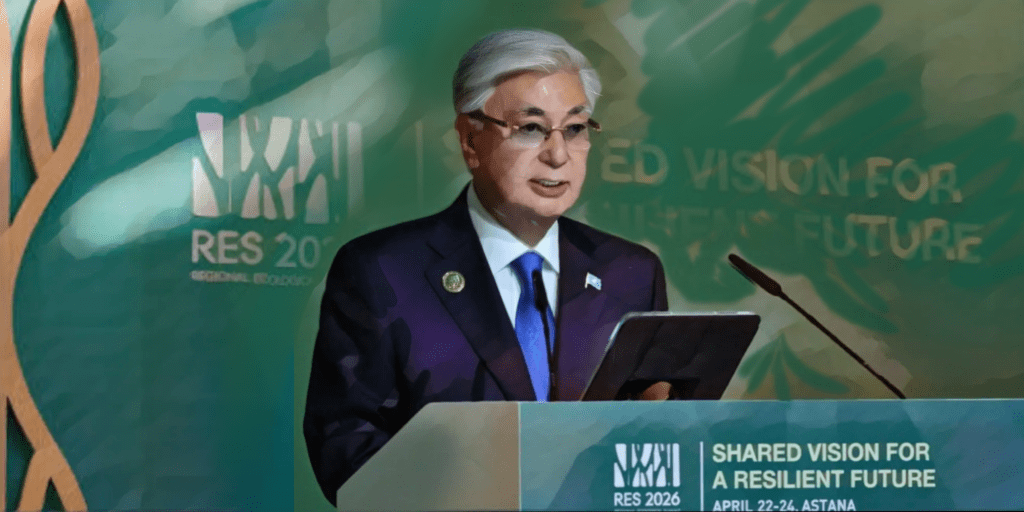
Astana, Kazakhstan – President Kassym-Jomart Tokayev used his opening address at the Regional Ecological Summit in Astana to underline Kazakhstan’s strengthened constitutional commitment to environmental protection and to call for fair, pragmatic, and unified global cooperation on ecological challenges. Speaking on Earth Day before regional leaders and senior United Nations representatives, Tokayev described ecology as far more than climate policy alone. “It is the very foundation of human livelihood,” he said. “It is about clean air and safe water, healthy soils and secure food systems. It is about the stability of communities and the dignity of future generations. It is also about clarity of thought, harmony of our societies, and their happiness.” The President said Kazakhstan’s new Constitution clearly reflects environmental protection as a fundamental priority of state policy and public responsibility. He described this constitutional commitment as embedding ecological safety and prosperity into the country’s long-term vision and “national DNA.” Tokayev warned against double standards in international environmental policy, saying developing and emerging economies must not be placed at a disadvantage as the world moves toward cleaner growth models. “The global transition to cleaner models must be fair, balanced, and stimulating,” he stated. Environmental cooperation, he added, should unite rather than divide nations and must be based on partnership, trust, and shared responsibility, “with no naming, no shaming, and no blaming.” Stressing the need for consistency in international norms, Tokayev also said: “The UN Charter is not Haute Cuisine, and cannot serve as a cherry-picking platform.” The President identified the region’s most urgent shared ecological challenges as water scarcity and poor water management, desertification, glacier retreat, air pollution, and biodiversity vulnerability. “The time for indicating successes is over; the time for making solutions has come,” he said. Tokayev then outlined concrete steps Kazakhstan is taking across several priority areas. On energy transition, he said Kazakhstan intends to increase the share of renewable energy to 15% by 2030 while reducing emissions by almost 35%. Renewable sources already generate more than 7% of Kazakhstan’s electricity, and the country is moving to expand clean generation capacity while modernizing major energy facilities. As the world’s leading uranium exporter, Kazakhstan is also advancing plans for its first nuclear power plant while introducing cleaner technologies at coal-fired generation sites. On water security, Tokayev highlighted the restoration of the Northern Aral Sea, where about 36% of the water surface has been recovered, improving water quality and fish stocks. He described the Aral tragedy as a warning for the wider region and the international community. “The Aral Sea remains a stark reminder of the consequences of unsustainable policies,” he said. He also pointed to a new interstate program aimed at preventing further degradation of the Caspian Sea, supported by a dedicated scientific research institute. Tokayev renewed his proposal, first advanced in Ashgabat last December, to establish an International Water Organization as a United Nations agency, and said the summit would host the first round of international consultations on the initiative. Addressing the Caspian region more broadly, Tokayev...

Astana Ecological Summit Turns Regional Climate Pressure Into a Call for Joint Action

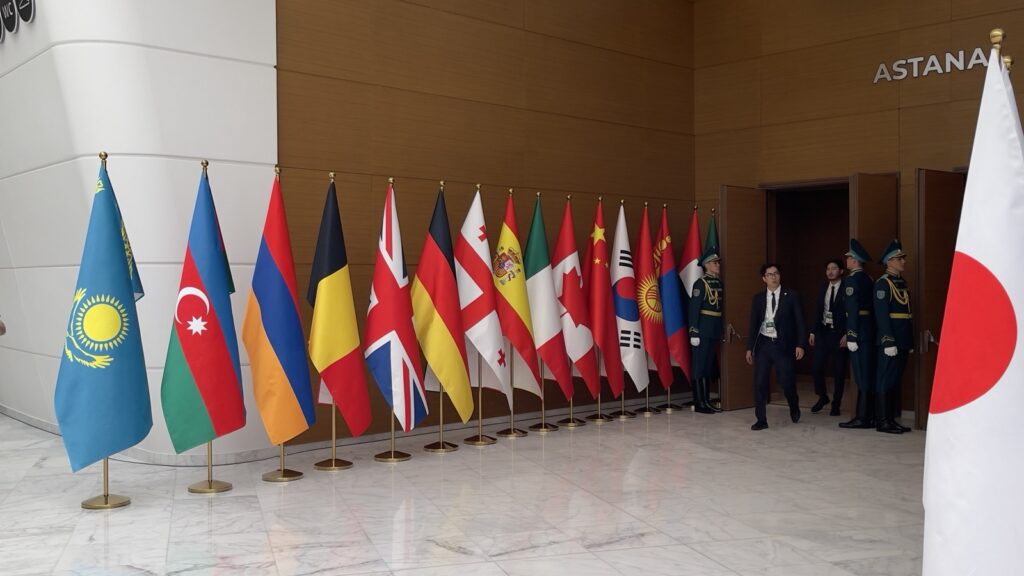
On April 22, 2026, leaders from Central Asia and neighboring states opened the Regional Ecological Summit 2026 in Astana on Earth Day with an urgent and practical message: the region’s environmental crisis is no longer a future risk, but a present constraint on water, food, energy, and economic security. The summit, held under the theme “A Shared Vision for a Sustainable Future,” was organized by Kazakhstan with the United Nations and international partners. Its stated purpose is to develop policy tools for protecting, restoring, and jointly using ecosystems, water and land resources, and conserving biodiversity in Central Asia. The program includes 58 events, consultations on a possible International Water Organization within the UN system, and expected documents, including a Central Asian declaration on environmental solidarity and a 2026–2030 regional action program. [caption id="attachment_47607" align="aligncenter" width="775"] President Tokayev gives his keynote address at the Regional Ecological Summit in Astana; Image: TCA[/caption] Opening the plenary, Kazakhstan’s President Kassym-Jomart Tokayev argued that environmental policy must not become another dividing line in global politics. He called for a fair and balanced green transition, especially for developing economies, and warned that Central Asia’s shared rivers, landscapes, and climate risks demand shared responsibility. Tokayev singled out water scarcity, desertification, glacier melt, air pollution and biodiversity loss as the region’s core challenges. He also highlighted Kazakhstan’s plans to expand renewable energy, protect the Caspian Sea, restore the Northern Aral, and start consultations on a proposed International Water Organization. [video width="720" height="1280" mp4="https://timesca.com/wp-content/uploads/2026/04/no-comments-Reels.mp4"][/video] The water question dominated the speeches. President Sadyr Japarov said that Kyrgyzstan bears a disproportionate burden despite its small contribution to global emissions. He pointed to a sharp increase in mudflows and floods, shrinking glaciers, and the fact that most water formed in Kyrgyzstan flows to neighboring states. His proposal was blunt: downstream users should help co-finance the water infrastructure and ecosystem services that upstream countries maintain. Uzbekistan's President Shavkat Mirziyoyev turned the summit into a platform for concrete regional initiatives. In his official speech, he said that Central Asia is warming twice as fast as the global average, has already lost nearly a third of its glaciers, and faces land degradation across 80 million hectares. He proposed a Clean Air consortium, a regional desertification and drought center, a green trade corridor, a unified climate-investment portfolio, an environmental atlas and a Central Asian Red Book. Tajikistan’s President Emomali Rahmon brought the glacier crisis into sharp relief. Tajikistan supplies much of Central Asia’s water, but its glaciers are retreating, threatening water balance and increasing disaster risks. Rahmon linked the environmental agenda to hydropower, green finance, biodiversity protection, and water diplomacy, and invited partners to continue the discussion at a high-level water conference in Dushanbe. Turkmenistan's President Serdar Berdimuhamedov backed a stronger institutional approach, proposing a UN-supported regional council on water use to align national policies and manage transboundary resources more transparently. He also announced a high-level Caspian Sea ecology meeting in Turkmenistan for October 2026. Heads of state from beyond Central Asia widened the frame. Armenia’s...

Video: Leaders, Delegates and International Representatives Arrive for the Regional Ecological Summit

Astana opened the Regional Ecological Summit on April 22 with the declared aim of turning regional environmental pressure into coordinated policy, investment, and cross-border action. Hosted by Kazakhstan with UN backing, the three-day gathering brings Central Asian governments and international partners together around climate adaptation, water management, biodiversity, and the financing needed to make regional plans work. [video width="720" height="1280" mp4="https://timesca.com/wp-content/uploads/2026/04/no-comments-Reels.mp4"][/video]

Astana Is Turning Ecology into Regional Statecraft

On April 22–24, Astana will host the Regional Ecological Summit with the participation of numerous United Nations agencies and international partners. It is expected to produce a joint declaration and a Regional Program of Action for 2026–2030, giving it a formal ambition beyond that of a standard diplomatic conference. Kazakhstan is presenting the event as a region-wide platform through which shared ecological pressures may become a more regular channel for Central Asian coordination. Officially, the summit is framed as a platform for regional solutions to climate and environmental challenges. It is also a more ambitious test of whether Kazakhstan can use ecology to sustain a more regular pattern of regional cooperation under multilateral auspices. Here, Astana is using ecology to include water, health, food systems, natural-resource management, pollution, resilience, and financing. The broader the issue area becomes, the more usable it is as a basis for cooperation among states whose interests diverge elsewhere. The summit grew out of the Regional Climate Summit that President Kassym-Jomart Tokayev proposed at the Astana International Forum in June 2023. Since then, the agenda has widened from climate policy in the narrow sense to ecology more generally. This broadening fits the constraints the five Central Asian states share, which extend beyond emissions or adaptation metrics. They include water stress, land degradation, cross-border environmental risks, public-health effects, and the need for outside financing and technical coordination. A climate-only frame would have been too narrow for those overlapping pressures. The broader ecological frame is therefore more politically useful. The meeting also has a prehistory in earlier regional backing and multilateral development. A key point came on July 21, 2022, at the Fourth Consultative Meeting of Central Asian heads of state in Cholpon Ata, where the Green Agenda Regional Program for Central Asia was adopted. At the same meeting, a joint statement, a roadmap for regional cooperation for 2022–2024, and a concept for Central Asian interaction in multilateral formats were also adopted. The Green Agenda itself was linked to decarbonization, alternative energy, mutual electricity supply, water-saving and environmentally friendly technologies, and the rational use of water resources. Later UNDP material tied that program more explicitly to regional cooperation on climate action, water and energy management, and the use of United Nations platforms for advancing shared initiatives. The Astana summit builds on that earlier momentum. The scale of the UN presence indicates that the summit is meant as more than a ceremonial gathering. UN Kazakhstan says that 18 UN agencies are co-organizing 27 sessions and five workshops. For a regional meeting of this kind, that is a dense working structure. The same UN summary says that one expected outcome is a Joint Declaration by the Heads of State of Central Asia on regional environmental cooperation, followed by a Program of Action for 2026–2030 developed in partnership with the United Nations. Kazakhstan’s own framing presents the summit as a permanent platform for dialogue among governments, international organizations, scientific institutions, business, and civil society. The event is thus situated at the...

Regional Ecological Summit to Open in Astana Amid Pressure on Water, Trade, and Regional Cooperation

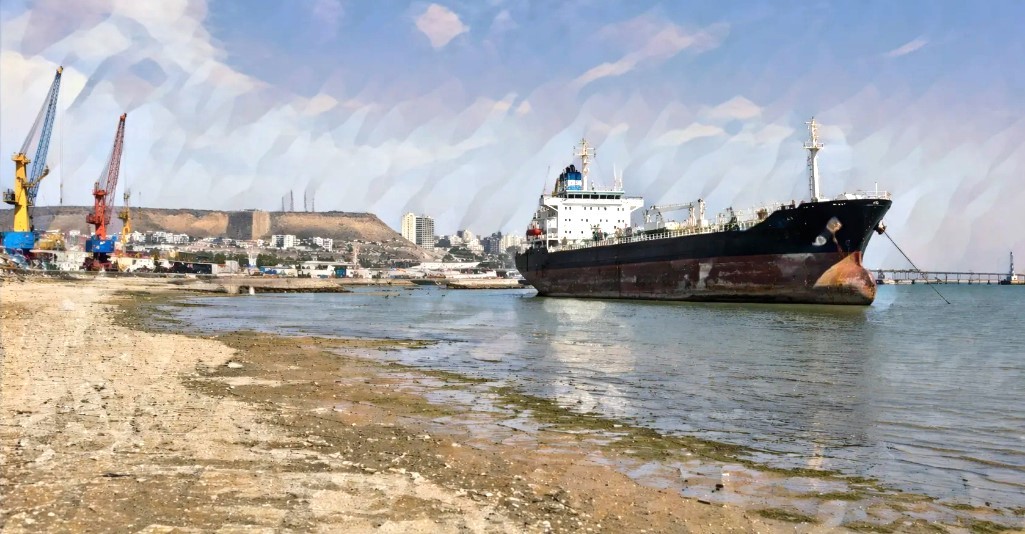
When the Regional Ecological Summit (RES 2026) opens in Astana this Wednesday, the official framing will center on Shared Vision for a Resilient Future, combining practical regional solutions with diplomatic ambitions that include a Joint Declaration and a 2026-2030 Program of Action. Behind that language sits a harder reality. Water and energy officials in Tashkent, Bishkek, and Astana are dealing with a region which is drying out faster than its infrastructure and politics are adapting. That gives the summit a sharper edge than earlier environmental gatherings. Two issues stand out: the management of winter water-sharing arrangements ahead of the irrigation season, and the way the shrinking Caspian could constrain the Middle Corridor. The Toktogul Equation: A Fragile "Winter-for-Summer" Swap The most immediate point of pressure is the Toktogul Reservoir in Kyrgyzstan. In late 2025, an agreement was reached under which Kyrgyzstan would limit winter hydropower generation, preserving water for downstream Kazakh and Uzbek farmers, in exchange for electricity supplies from its neighbors. The arrangement remains in place, but its durability will be tested as summer demand rises. One question hanging over the summit is whether Kazakhstan and Uzbekistan will provide enough power support to help Kyrgyzstan conserve water without reopening old upstream-downstream tensions. For downstream states, that is not only a water issue but an agricultural and political one. The Caspian Emergency: Depth as a Trade Barrier For years, the shallowing of the Caspian was treated as a long-term problem. In 2026, it is becoming an operational one. According to recent reporting, Aktau port is operating at an average depth of 4.5 meters, far below the 6.5 to 7 meters needed for full operations. The summit will also highlight the Integrated Management of Seascapes project. The UNDP-linked initiative is intended to balance the need for dredging and port access with protection of the northern Caspian’s fragile ecosystem. That tension is no longer theoretical. It now touches trade, shipping capacity, and the future of the corridor itself. The Digital Transition One of the summit’s more concrete strands is the National Water Resources Information System. According to the Kazakh government, the system is to enter industrial operation by the end of 2026. The plan is to automate 103 irrigation canals in southern Kazakhstan using $1.15 billion in financing from the Islamic Development Bank. The broader regional test is whether neighboring states will share enough data to support a cross-border water monitoring system, giving officials a clearer view of how shared resources are being managed. The Green Energy Corridor Alongside the water agenda, the Green Energy Corridor remains one of the projects that clearly aligns Kazakhstan, Azerbaijan, and Uzbekistan. The plan is to transmit green electricity to Europe via a subsea cable across the Caspian. CESI is finalizing the feasibility study, pointing to an export model that leans less on hydrocarbons and more on regional infrastructure. It also shows how environmental pressure and economic strategy are starting to overlap. For Central Asian governments, climate policy is no longer only about adaptation. It is...