• KZT/USD = 0.00226
  • TJS/USD = 0.10810
  • UZS/USD = 0.00009
  • TMT/USD = 0.29760
  • KZT/USD = 0.00226
  • TJS/USD = 0.10810
  • UZS/USD = 0.00009
  • TMT/USD = 0.29760
  • KZT/USD = 0.00226
  • TJS/USD = 0.10810
  • UZS/USD = 0.00009
  • TMT/USD = 0.29760
  • KZT/USD = 0.00226
  • TJS/USD = 0.10810
  • UZS/USD = 0.00009
  • TMT/USD = 0.29760
  • KZT/USD = 0.00226
  • TJS/USD = 0.10810
  • UZS/USD = 0.00009
  • TMT/USD = 0.29760
  • KZT/USD = 0.00226
  • TJS/USD = 0.10810
  • UZS/USD = 0.00009
  • TMT/USD = 0.29760
  • KZT/USD = 0.00226
  • TJS/USD = 0.10810
  • UZS/USD = 0.00009
  • TMT/USD = 0.29760
  • KZT/USD = 0.00226
  • TJS/USD = 0.10810
  • UZS/USD = 0.00009
  • TMT/USD = 0.29760
24 September 2026

Viewing results 1 - 6 of 44

Trump 2.0: Security Implications for Central Asia – Diplomats and Analysts Weigh the Risks for Regional Stability

Narxoz University’s Eurasian Institute for Economic and Legal Research and the School of Economics and Management convened distinguished diplomats, military analysts, and academics from the Conference on Interaction and Confidence Building Measures in Asia (CICA), The National Institute for Defense Studies (Japan),  George Mason University (US), and Maqsut Narikbayev University (Kazakhstan) to analyze the geopolitical and security implications of a second Donald Trump presidency in Central Asia. Professor Ikboljon Qoraboyev, Director of the Center for Global and Regional Governance at Maqsut Narikbayev University, argued that Trump’s pragmatism will drive him to exploit every available opportunity to advance the financial and political interests of himself, his loyal corporate allies, and the United States. This approach, characterized by a “nothing-personal-just-business” mindset, makes his actions inherently unpredictable, keeping both allies and rivals on edge. Trump thrives on calculated ambiguity, using surprise as a strategic tool to gain the upper hand in negotiations and exert maximum pressure on his counterparts. [caption id="attachment_28674" align="aligncenter" width="936"] Image: Daniyar Kosnazarov[/caption] Professor Erzhan Issabayev, Deputy Director of the Eurasian Institute for Economic and Legal Research at Narxoz University, agreed that this unpredictability could shape a second Trump presidency, particularly in terms of global power dynamics. In Central Asia, where political stability and a carefully maintained multi-vector foreign policy are crucial, Trump’s erratic decision-making presents a significant challenge for regional leaders. Professor Issabayev suggested that if Trump escalates efforts to counter China globally or if negotiations to end the war in Ukraine falter, Central Asia could become an unintended yet significant geopolitical battleground. Building on this perspective, Olzhas Zhorayev, a World Bank Group Consultant and Doctoral Researcher at the Schar School of Policy and Government at George Mason University, examined the potential consequences of deepening U.S.-Russia and U.S.-China confrontations. According to Zhorayev, heightened tensions could push Central Asia further into Moscow’s and Beijing’s political and economic orbit, restricting the region’s strategic flexibility. However, Zhorayev also presented another possibility; if Russia and Ukraine reach a peace agreement, the Kremlin may redirect its focus and resources toward Central Asia, increasing its influence and reshaping the regional balance of power. Expanding on this idea, Marek Jochec, Associate Professor of Finance at Narxoz University, explored the varying perceptions of major global powers in Central Asia. Jochec noted that attitudes toward China and Russia are shaped by a combination of historical experiences, economic ties, and political considerations. While Chinese investment is often viewed as a driver of infrastructure and economic growth, concerns over dependency and influence persist. Russian engagement, deeply rooted in historical and cultural connections, continues to play a significant role, though perceptions vary across different countries. These contrasting views add layers of complexity to the region’s geopolitical positioning, making strategic decision-making increasingly delicate. Ultimately, the expert discussion at Narxoz University highlighted that Trump’s leadership — whether defined by unpredictability, pragmatism, or strategic maneuvering — will have a significant impact on Central Asia. As the region faces shifting geopolitical pressures, governments will need to adapt quickly, reassessing their alliances and economic strategies to...

Central Asia Expands Trade and IT Cooperation with Afghanistan Amid Regional Growth Plans

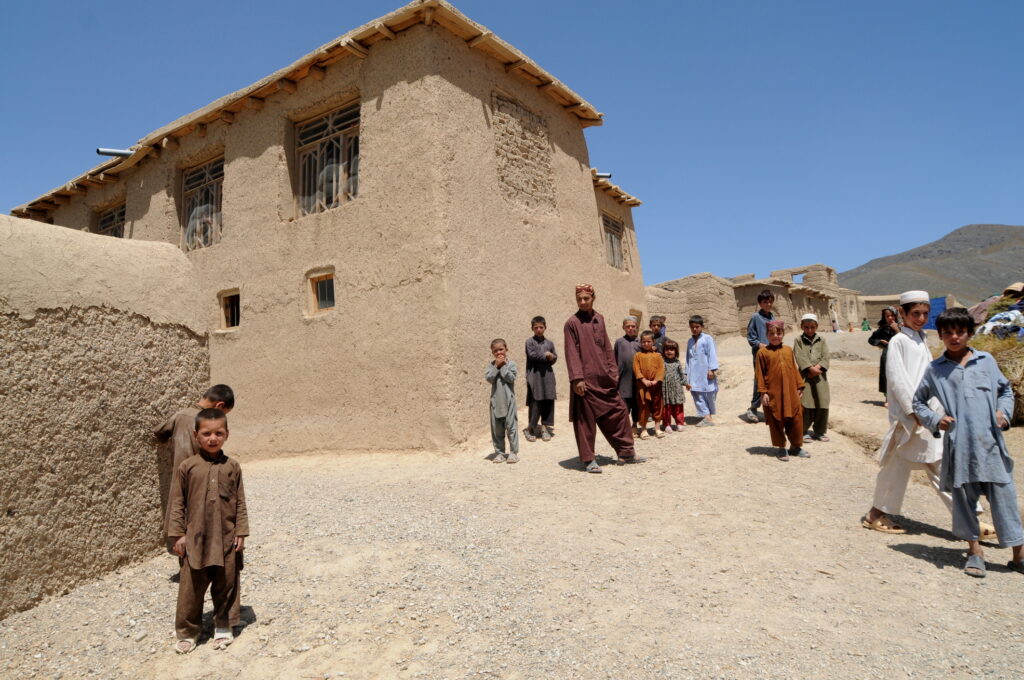
The Central Asian countries continue to develop their trade relations with Afghanistan, a crucial factor in the region's economic growth and resilience against economic and political challenges. Afghanistan's key trade partners in Central Asia are Uzbekistan, Turkmenistan, and Kazakhstan. While Tajikistan and Kyrgyzstan play a smaller role, they still contribute by exporting electricity and agricultural products to Afghanistan. Afghanistan is Uzbekistan's fifth largest export market. Over the past five years, trade turnover between the two countries has grown by nearly 1.5 times, reaching $866 million in 2023. Currently, 550 enterprises with Afghan investments operate in Uzbekistan, with 443 being fully Afghan-owned. Joint projects span industries such as food production, construction materials, agriculture, tourism, and textiles. Recently, Uzbekistan and Afghanistan signed business agreements worth $4.5 million between their private sectors. For Turkmenistan, the most significant project involving Afghanistan is the TAPI gas pipeline. President Berdimuhamedov recently directed the government to accelerate the development of the Galkynysh Gas Field and expedite the TAPI pipeline's construction. The state company Turkmengas has already completed a 214-kilometer section on Turkmenistan's territory, fully preparing it for operation. This project is a key component of the country's socioeconomic development and investment program for 2025. Additionally, Turkmenistan is poised to become a transport hub for international corridors passing through Kazakhstan, particularly the North-South and Middle corridors, as well as the Lapis Lazuli corridor, which connects Turkey, Georgia, Azerbaijan, Turkmenistan, and Afghanistan. Although Kazakhstan does not share a border with Afghanistan like Uzbekistan and Turkmenistan, it remains an active trade partner. The Times of Central Asia has previously detailed trade relations between Astana and Kabul, highlighting Kazakhstan’s potential not only for expanding trade but also for entering Afghanistan’s IT market. The Afghan news portal AVA Press notes Kazakhstan’s role in regional stability and economic development. It also mentions Kazakhstan’s humanitarian aid to Afghanistan, including earthquake relief in 2023 and food assistance in 2024. The article touches on Afghanistan’s IT sector challenges and Kazakhstan’s potential role in addressing them. Afghanistan lags in IT development and relies on imported technologies, but Kazakhstan, recognized for digital transformation, could be a valuable partner. Kazakhstan’s e-government model, including the eGov platform, serves as an example of how digital services can improve governance and infrastructure. Choosing Kazakhstan as an IT partner is seen as a strategic decision based on the country’s internationally recognized digital achievements, strong economic ties, and mutual trust.

CSTO to Strengthen Tajik-Afghan Border in 2025

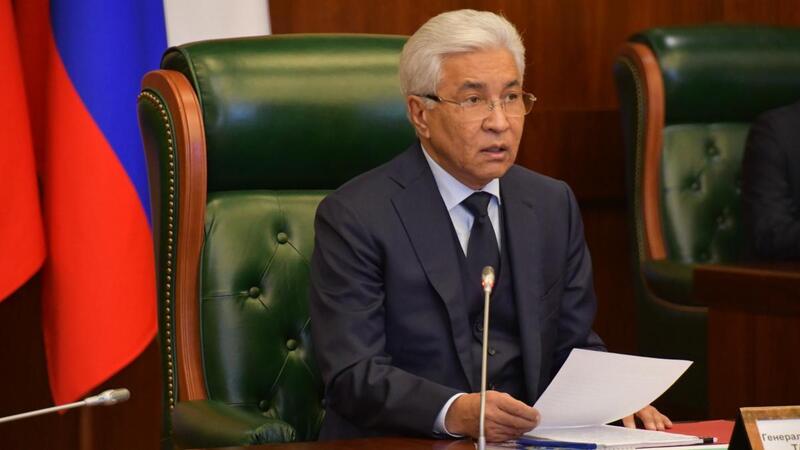
The Collective Security Treaty Organization (CSTO) will begin implementing a program to reinforce the Tajik-Afghan border in 2025, CSTO Secretary General Imangali Tasmagambetov announced during a meeting in Moscow on Thursday, according to Interfax. Tasmagambetov explained that the program outlines concrete measures to enhance security along the southern boundary of the CSTO’s area of responsibility. This announcement was made during a meeting reviewing the CSTO secretariat’s and joint staff’s activities in 2024, as well as outlining objectives for 2025. The meeting was attended by Andrei Serdyukov, head of the CSTO joint staff. In 2024, the CSTO finalized and signed agreements related to equipping its collective forces with modern weapons and military equipment. The organization also conducted joint operational and combat training exercises and actively collaborated with international organizations. As it looks ahead to 2025, the CSTO is drafting an action plan to focus on key priorities, including securing the Tajik-Afghan border, which has long been a source of concern for member states. The organization includes six member countries: Russia, Armenia, Belarus, Kazakhstan, Kyrgyzstan, and Tajikistan, though in December 2024, Armenian Prime Minister Nikol Pashinyan stated that his country’s relations with the CSTO have passed the “point of no return.” The Shamsiddin Shokhin section of the Tajik-Afghan border, spanning more than 100 kilometers, has been particularly problematic for years. This area has witnessed numerous security incidents, including hostage-taking and attacks on Tajik citizens and military personnel. The CSTO’s planned measures aim to address these challenges and bolster the security of this vulnerable region. By strengthening border security, the organization is seeking to reduce the risks posed by cross-border threats, including illegal trafficking and extremist activity.

Afghanistan as Part of Central Asia: Expectations, Reality, Challenges, and Threats

Afghanistan has increasingly been regarded in expert and journalistic circles as part of Central Asia, which is justifiable from a physical-geographical perspective. However, given current regional realities, it is still premature to classify the country as part of Central Asia in terms of being internationally recognized as such. The outcome of the 19th-century rivalry between the British and Russian Empires for influence in Central Asia, known as the "Great Game," not only established the modern southern borders of the region but also set Afghanistan and its northern neighbors on entirely different social and historical paths. The countries differ in value systems, ideologies, public consciousness, and, of course, economic development. At the same time, experts from the Russian Institute for Central Asian Studies note that "In the early 21st century, approaches to analyzing regional realities shifted towards geo-economics. The spatial dimension of Central Asia began to be seen as a zone for pipeline transit." This perspective is hard to argue against — Afghanistan’s current geopolitical interests and challenges are largely tied to the economic interests of countries at the regional level. This includes India, Iran, China, the UAE, Pakistan, Russia, Turkey, and the Central Asian states, for whom Afghanistan's prospects are evident. Chiefly, these prospects concern its transit potential as a territory connecting various parts of Asia. Four out of the six logistics corridors under the Asian Development Bank’s Central Asia Regional Economic Cooperation Program (CAREC) pass through Afghanistan into Uzbekistan, Tajikistan, and Turkmenistan. Other relevant projects include the "China–Pakistan Economic Corridor" under the "One Belt One Road" initiative, the "Trans-Afghan Corridor," and the TAPI Gas Pipeline. However, Afghanistan's current situation, particularly given the stagnant Afghan-Pakistani conflict, casts doubt on the feasibility of these and other major projects involving Afghanistan. As previously stated by TCA, the future of these large-scale projects involving Central Asian countries, as well as regional stability, a fundamental condition for steady economic development, depends directly on whether an understanding is reached between these two nations. Thus, a geo-economic approach to redefining Central Asia’s new boundaries still requires a different reality. Meanwhile, within Central Asia itself, there is little enthusiasm for political rapprochement with Taliban-ruled Afghanistan. The primary focus is on trade/economic and humanitarian cooperation, with no broader agenda, particularly at a regional level. Tajikistan’s position is significant here, as its authorities continue to view the Taliban as a threat and tread cautiously in building relations with them.  What Prevents Central Asian Countries from Accelerating Relations with Afghanistan? The answers lie not only in different developmental trajectories and scenarios. First and foremost, Afghanistan is still associated with "uncertainty" and numerous risks, particularly in terms of security. According to many assessments, the Afghan-Pakistani zone will, in the long term, remain a source of terrorist and religious-extremist threats to Central Asia. These conclusions are based on a retrospective analysis of escalating tensions, current processes in Afghanistan, and the geopolitical confrontation of global powers in the area. For example, the Soviet invasion in 1979 fostered the consolidation of the Afghan mujahideen,...

Central Asia Leads in Repatriating Citizens from Syrian Camps

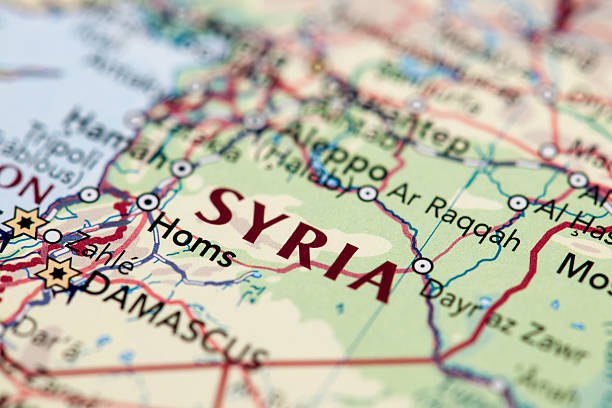
Central Asian governments are at the forefront of efforts to repatriate their citizens from camps in northeastern Syria, according to Khalid Koser, head of the Global Community Engagement and Resilience Fund (GCERF). In an interview with RIA Novosti, Koser highlighted that, unlike European nations, Central Asian states have taken responsibility for their nationals. GCERF is an international organization supporting local initiatives to prevent extremism and violence by fostering partnerships between governments, civil society, and the private sector. Koser noted that approximately 2,200 Central Asian citizens have been repatriated from these camps. Kazakhstan has brought back 754 individuals, Kyrgyzstan 533, Tajikistan 381, and Uzbekistan 531. By contrast, Koser criticized European nations for neglecting their citizens in the camps. “Tajikistan says, ‘These are our citizens, and we are responsible for them,’” Koser stated. “Meanwhile, Western Europe hopes the problem will disappear, leaving people to die in camps.” The head of GCERF also pointed out the challenges of repatriating men, many of whom were combatants. “The question now is how to handle those who fought, were involved in terrorism, and face difficulties reintegrating. Most will end up in prison, which could lead to further radicalization within the prison system,” Koser warned. The camps in northeastern Syria, managed by the Syrian Democratic Forces (SDF) and the United States, house 65,000 to 70,000 people. Most of the residents are women and children from families of ISIS militants. While the camps are not officially prisons, movement is restricted, and Kurdish forces prevent residents from leaving. The Times of Central Asia has previously reviewed the repatriation operations undertaken by Central Asian countries, which continue to set a global example in addressing this humanitarian and security challenge.

Kyrgyzstan Cracks Down on Major Religious Extremist Organization

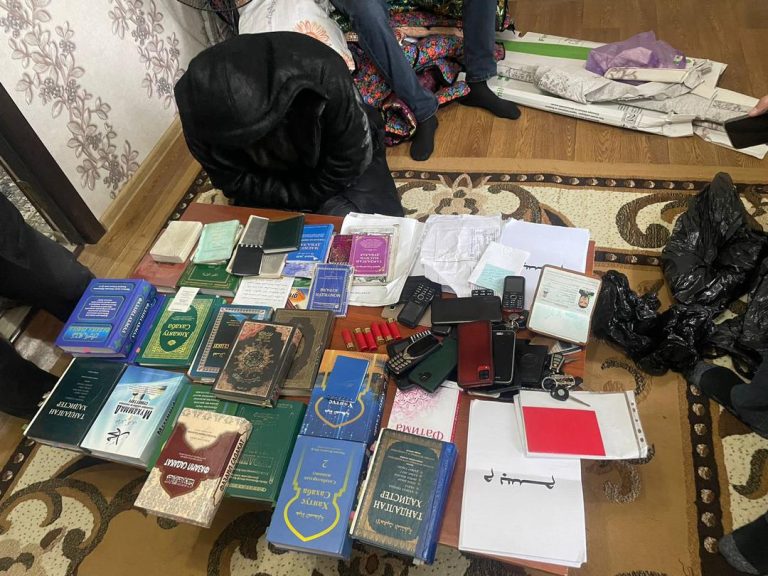
In Jalal-Abad, officers of Kyrgyzstan's State Committee for National Security (SCNS) neutralized one of the largest structural networks of the banned religious extremist organization Hizb ut-Tahrir. According to the SCNS press service, 22 active members of the organization were detained, including the leader (“masul”), five spiritual leaders (“nakibs”), and eight teachers (“mushrifs”) who taught extremist ideology to small groups of 3-5 students in clandestine settings. The SCNS reported that the detainees had been actively spreading destructive ideas, recruiting supporters, and distributing extremist materials for several years. During the operation, authorities discovered an underground printing house where extremist materials were being produced. A large cache of literature, as well as computers and copying equipment, was seized. The SCNS also noted that members of the network used drones to ensure the security of their meetings by detecting possible surveillance by law enforcement agencies. The detainees are currently being held in the SCNS detention center, and investigations are ongoing to identify additional members of the network and their activities. Hizb ut-Tahrir is an international religious extremist organization banned in Kyrgyzstan since 2003. Its goal is to establish a global Islamic caliphate by overthrowing secular governments. The organization is particularly active in Kyrgyzstan's southern regions, where it promotes extremist ideology and recruits new members. Kyrgyz authorities have been proactive in combating Hizb ut-Tahrir, regularly detaining its members and working to suppress its activities.