• KGS/USD = 0.01144 0%
  • KZT/USD = 0.00211 0%
  • TJS/USD = 0.10678 0%
  • UZS/USD = 0.00008 0%
  • TMT/USD = 0.28490 0%
  • KGS/USD = 0.01144 0%
  • KZT/USD = 0.00211 0%
  • TJS/USD = 0.10678 0%
  • UZS/USD = 0.00008 0%
  • TMT/USD = 0.28490 0%
  • KGS/USD = 0.01144 0%
  • KZT/USD = 0.00211 0%
  • TJS/USD = 0.10678 0%
  • UZS/USD = 0.00008 0%
  • TMT/USD = 0.28490 0%
  • KGS/USD = 0.01144 0%
  • KZT/USD = 0.00211 0%
  • TJS/USD = 0.10678 0%
  • UZS/USD = 0.00008 0%
  • TMT/USD = 0.28490 0%
  • KGS/USD = 0.01144 0%
  • KZT/USD = 0.00211 0%
  • TJS/USD = 0.10678 0%
  • UZS/USD = 0.00008 0%
  • TMT/USD = 0.28490 0%
  • KGS/USD = 0.01144 0%
  • KZT/USD = 0.00211 0%
  • TJS/USD = 0.10678 0%
  • UZS/USD = 0.00008 0%
  • TMT/USD = 0.28490 0%
  • KGS/USD = 0.01144 0%
  • KZT/USD = 0.00211 0%
  • TJS/USD = 0.10678 0%
  • UZS/USD = 0.00008 0%
  • TMT/USD = 0.28490 0%
  • KGS/USD = 0.01144 0%
  • KZT/USD = 0.00211 0%
  • TJS/USD = 0.10678 0%
  • UZS/USD = 0.00008 0%
  • TMT/USD = 0.28490 0%

Viewing results 1 - 6 of 162

Over 100 Cases of Terrorism and Extremism Addressed by Kazakh Courts

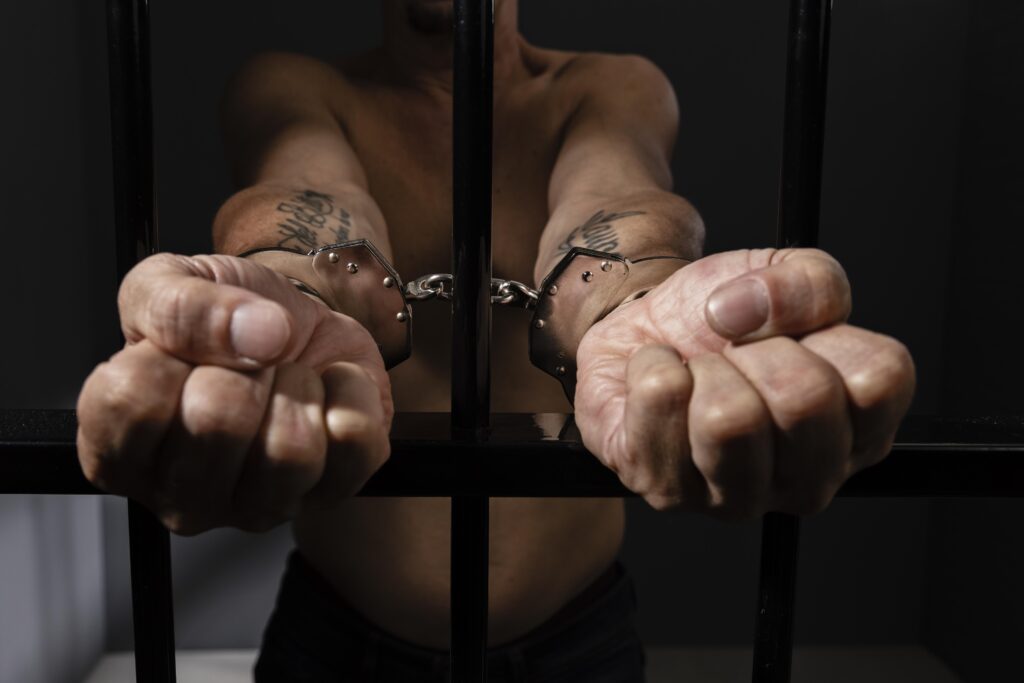
According to statistics for 2023, 122 individuals were sent to Kazakhstan courts for crimes related to extremism and terrorism, slightly less than 2022's figure of 124. The most common offenses - 24 in total - included participating in and organising activities related to religion, followed closely by 23 cases of inciting social, national, tribal, racial, class or religious discord. Ninety nine detainees had secondary or specialized secondary education, and only 19, higher education. Forty one had either disseminated propaganda supporting terrorism or publicly called for an act of terrorism. The offenders' ages were widespread with 44 offenders aged 30-39, 38 aged 40- 49, 15 over 50, and 6 over 60. Younger Kazakhs accused of extremism and terrorism included three minors under 18, 4 aged 18-20, and 12 aged 21-29. The highest number of cases took place in Astana where the total of 50 showed an increase of 28.2% compared to 2022. Almaty saw 21 cases; North Kazakhstan, 16; Atyrau 14, and Zhambyl 13. During the year, police seized 153 pieces of extremist material comprising 96 books and 42 leaflets. Elected representatives of Kazakhstan's Mazhilis (Parliament) are currently implementing a bill to prohibit entry to the country by foreigners involved in terrorist organizations and with prior convictions of sex crimes against minors.

Tajik Citizens Committed Terrorist Attacks in 10 Countries in the Past Three Years

In a speech to dignitaries and religious leaders on the eve of Ramadan, Tajikistan’s President Imamali Rahmon reported that over the past three years, 24 Tajikistani nationals had carried out terrorist attacks in 10 different countries. Referencing the fact that despite the country’s ban on 28 extremist and terrorist groups, individuals continued to pledge their alliance, the president stated, “Over the past 10 years, 6,680 crimes of extremist and terrorist nature, including 86 terrorist acts and assassination attempts, have been detected and registered in our country. Eleven terrorist acts and assassination attempts have been prevented." Voicing concern over the growing number of terrorist attacks committed by Tajik nationals abroad and the negative impact on the country’s reputation, the president stated, “Based on the information at hand, 24 of our nationals in ten different countries have carried out acts of terrorism in the last three years, including detonating explosives in large crowds. Suicide is not jihad, but a great sin that contradicts the teachings and requirements of Islam. Interest groups and special services in certain countries are responsible for creating these initiatives and are preying on the ignorance, inexperience, and lack of knowledge of some of our young people." According to Rahmon, 4,075 nationals are currently wanted for radical and terrorist crime. The Tajik prosecutor’s office and other law enforcement agencies were directed to step up efforts to integrate and repatriate the said individuals, including providing them with jobs and assisting with their adaptation.

Kazakhstan to Introduce Luxury Tax on Items from Yachts to Cigars

Kazakhstan's Ministry of National Economy has announced proposals to introduce a new law on taxes and other mandatory payments to the national budget in 2024. The proposed amendments to the tax code will raise rates in cases where the value of possessions held by any individual exceeds $1 million and is directed specifically at those who own yachts and private planes. According to the ministry, 490 yachts in Kazakhstan are registered to individuals. The maximum tax currently paid on watercraft is currently around $421 but is set to increase in line with rates paid in Europe where tax is calculated according to the length of a yacht. In Greece for example, the annual tax on 'luxury' yachts over 5 metres in length, varies from $852 to $2558, and rises sharply if the length exceeds 12 metres. The ministry also proposes to introduce excise taxes on high end alcoholic beverages and cigars. The excise duty set on imported Macallan 50YO whisky priced at $13,300 for 0.70 litres, is $1.50; on Remy Martin Louis XIII cognac priced at $9,300 for 3 litres, $0.67; and Chateau Petrus wine worth $1,900 for 0.75 litres, $0.058. The new tax will also on impact other imported luxury goods, including Cohiba cigars worth $317 for 15 pieces and Don Antonio Churchills cigars priced at $266 for 40 pieces. The fundamental aims of the new taxes are to equalize the socioeconomic situation of different segments of the population, to increase the nation's revenue, and to regulate consumption of certain goods. The ministry did however report that since the new measures would potentially reduce domestic consumption of 'luxury' goods, the cost of administering tax on such could exceed the income generated. New amendments are also forecast to harmonize excise on general tobacco. Current legislation already provides for a gradual increase in excise taxes on cigarettes. Due to reach $30.6 per thousand cigarettes this year, it is 20% below the indicative rate. In addition, the new tax code will consider the transition to graduated tax rates in different sectors of the economy, accelerating the introduction of progressive taxation, reforming special tax regimes, and streamlining and reducing tax benefits by at least 20 percent. The package of amendments will include a revision of tax administration. Digitized control will enable both a 30 percent reduction in the need for paper tax return forms, and simplify VAT refunds. Other changes include an exemption from taxes and other fees for foreign and domestic investors during the first three years of their implementing new manufacturing projects. The ministry's document is publicly available for discussion until March 27, with the new tax code expected to be adopted in October of this year.

Kazakhstan to Report to UN on Events of January 2022 Unrest

Kazakhstan will report to the United Nations (UN) Committee against Torture on measures taken after the events of bloody January (Qantar) 2022. This is according to the Deputy Chairwoman of the International Bureau for Human Rights, Roza Akylbekova, who added that information on urgent recommendations, which primarily concern Qantar, should be provided no later than May 12th, 2024 "This is information about what happened, how many people were affected, and, of course, about deaths in closed institutions and how Kazakhstan is investigating them," Akylbekova said at a news conference at the office of the Kazakhstan International Bureau for Human Rights and the Rule of Law. In addition, according to the human rights activist, the Ministry of Defense of Kazakhstan will have to prepare information on the deaths of conscripts. It has been 25 years since Kazakhstan joined the UN Convention against Torture, since which time the Coalition of NGOs of Kazakhstan against Torture and the National Preventive Mechanism for the Prevention of Torture have been established created. Furthermore, Kazakhstan added an article on torture to the criminal code and opened up a path for individual appeals regarding torture directly to the UN Committee. At the same time, however, torture remains a pressing problem in the country. According to the Kazakhstan International Bureau for Human Rights and the Rule of Law, 200-250 people apply to the Coalition of NGOs against Torture every year. In 2022, 190 appeals were received in connection with the January events, and another 88 episodes that had no connection to the mass riots of that year. Since Qantar, the number of complaints has not fallen, with 283 appeals in 2023, during which year over 20 systemic recommendations were issued to Kazakhstan. Earlier this year, the European Union (EU) funded a three-year project by Kazakhstani human rights defenders that aims to eradicate torture. As part of this project, the Kazakhstan NGO Coalition against Torture and the Prison Reform International (PRI) office will analyze individual cases of criminal prosecution for torture which do not reach trial. However, these cases are difficult to identify and prosecute. "In Kazakhstan such crime as torture is adjacent to other articles of the Criminal Code: in addition to 'torture,' the concepts of 'ill-treatment' and 'abuse of power' are used. Therefore, the official statistics on those prosecuted for 'torture' (Article 146) do not give an understanding of how many cases are actually hidden behind the lighter articles. At the same time, Article 146 itself has been divided into two parts: 'torture,' which will be investigated by the prosecutor's office, and 'cruel and inhuman treatment,' which is left to the Interior Ministry, whose employees are most often the beneficiaries of torture," the press service of the Kazakhstan International Bureau for Human Rights and Rule of Law reported. The UN Committee against Torture was established in January 1987. It consists of 10 independent experts, who currently represent the United States, Turkey, China, Japan, Russia, France, Morocco, Moldova, Latvia, and Mexico. They monitor the implementation of the Convention...

Kazakhstan Claws Back Another $98.5 Million From Nazarbayev’s Nephew

A well-known Kazakhstani businessman and a relative of former President Nazarbayev has returned another $98.5 million to the state's coffers. This money was returned as part of the criminal case against Kairat Satybaldy, according to the Anti-Corruption Agency of the Republic of Kazakhstan. "At present, the funds have been sent to the republican budget on account of compensation for damage caused to the state," said the head of the agency, Askhat Zhumagali. Satybaldy - a nephew of the first president of Kazakhstan - is a well-known businessman and former politician. He held positions in the Akimat of the capital, the National Security Committee, and developed business in the oil and gas industry, banking, the services sector, and trade. Satybaldy was detained in March 2022, accused of abuse of power and embezzlement on a large scale at both JSC Kazakhtelecom and JSC Center of Transport Services. In September of that year, an Astana court found Satybaldy guilty and sentenced him to six years imprisonment, replete with the confiscation of property and deprivation of the right to hold office for ten years. In addition, he was relieved of the title of Major General of the National Security Committee (KNB) and other state awards. In total, since the beginning of 2022, the Anti-Corruption Agency has returned $2 billion of illegally withdrawn assets, of which almost $1.5 billion belonged to Satybaldy. These include a stake in state company, Kazakhtelecom, companies in the railroad and telecommunications sectors, as well as jewelry worth more than $200 million. Additionally, as part of the criminal case, the state repossessed a stake in the Baisat Market, which had belonged to Satybaldy's son. The Agency noted that other investigations into Nazarbayev's nephew on cases related to non-payment of taxes and the laundering of proceeds from criminal activities are ongoing. At the same time, in order to preclude the withdrawal of embezzled budget funds abroad, the anti-corruption service intends to introduce digital technologies, including mechanisms for "coloring" money, and the use of digital tender to fully track how state funds are spent. "Long-term construction projects [and] untimely and low-quality construction are often associated with either embezzlement or withdrawal of money for further kickbacks to officials and other offenses,"Zhumagali stated. "Digital tenge as a tool will help us realize the [plan for] 'coloring' money. And if this money is allocated for salaries, it will not go in other directions. This whole procedure of money movement allocated from the budget becomes transparent, and all transactions must reach their goal; each tenge must be spent for a specifically envisaged purpose." In Kazakhstan, corruption continues to be one of the main factors hindering the country's economic development. In 2023, the country ranked 93rd out of 180 states on Transparency International's Corruption Perceptions Index with a raw score of 39 out of 100. However, this saw an improvement on the ranking of 101st registered on the 2022 index, and following the resignation of the government, on February 7th President Tokayev targeted stamping out corruption as a...

Kyrgyzstan: Social Democratic Party members charged with attempt to seize power

BISHKEK (TCA) — Kyrgyzstan’s Interior Ministry on December 27 formally informed Deputy Chairperson of the Social Democratic Party of Kyrgyzstan (SDPK) Kunduz Joldubayeva, Parliament members Asel Koduranova and Irina Karamushkina, and SDPK member Meerbek Miskenbayev that they are suspected of attempt of forceful seizure of power, 24.kg news agency reported. Continue reading