• KGS/USD = 0.01144 0%
  • KZT/USD = 0.00213 0%
  • TJS/USD = 0.10678 0%
  • UZS/USD = 0.00008 0%
  • TMT/USD = 0.28490 0%
  • KGS/USD = 0.01144 0%
  • KZT/USD = 0.00213 0%
  • TJS/USD = 0.10678 0%
  • UZS/USD = 0.00008 0%
  • TMT/USD = 0.28490 0%
  • KGS/USD = 0.01144 0%
  • KZT/USD = 0.00213 0%
  • TJS/USD = 0.10678 0%
  • UZS/USD = 0.00008 0%
  • TMT/USD = 0.28490 0%
  • KGS/USD = 0.01144 0%
  • KZT/USD = 0.00213 0%
  • TJS/USD = 0.10678 0%
  • UZS/USD = 0.00008 0%
  • TMT/USD = 0.28490 0%
  • KGS/USD = 0.01144 0%
  • KZT/USD = 0.00213 0%
  • TJS/USD = 0.10678 0%
  • UZS/USD = 0.00008 0%
  • TMT/USD = 0.28490 0%
  • KGS/USD = 0.01144 0%
  • KZT/USD = 0.00213 0%
  • TJS/USD = 0.10678 0%
  • UZS/USD = 0.00008 0%
  • TMT/USD = 0.28490 0%
  • KGS/USD = 0.01144 0%
  • KZT/USD = 0.00213 0%
  • TJS/USD = 0.10678 0%
  • UZS/USD = 0.00008 0%
  • TMT/USD = 0.28490 0%
  • KGS/USD = 0.01144 0%
  • KZT/USD = 0.00213 0%
  • TJS/USD = 0.10678 0%
  • UZS/USD = 0.00008 0%
  • TMT/USD = 0.28490 0%

Viewing results 1 - 6 of 162

Kazakhstan Increases Amount of Claim Against Western Oil Companies to $150 Billion

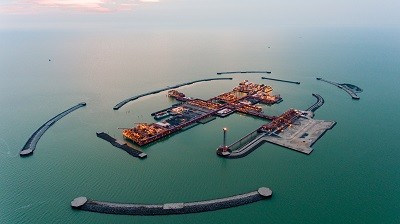
Kazakhstan is demanding compensation for lost profits from the operating consortium of the Kashagan oil field, North Caspian Operating Co (NCOC). Arbitration claims made by Kazakhstan have grown to $150 billion, Bloomberg reports, citing people familiar with the story. An additional claim concerns $138 billion of lost profits stemming from volumes of oil promised to the Kazakh government but not provided by the developers of the field due to delays in Kashagan's startup and production growth. According to the Bloomberg's source, Kazakhstan's claims are also related to problems with the infrastructural arrangement at the Kashagan field, disruptions of production deadlines and cost overruns. "There is another compensation claim related to contracts for the development of Kashagan. They allegedly saw signs of corruption in [the contracts]," the source told Bloomberg. The international scandal underscores the complexity of operating in Central Asia's largest oil-producing country, according to Bloomberg. "Here, large international companies face difficult environmental and geological conditions, as well as a government that is committed to maximizing profits from signed production-sharing agreements," reads the article. Despite the published information, the Ministry of Energy of Kazakhstan isn't disclosing the details of the conflict, calling it a purely commercial dispute. The parties in the consortium NCOC, which includes Eni, Total, ExxonMobil, Shell, China National Petroleum Corp. (CNPC), Japan's Inpex and Kazakh state oil & gas producer, KazMunayGas, believe that they have acted in accordance with the contractual agreements. Earlier, Kazakhstan filed a number of claims in international arbitration against the operators of the Kashagan and Karachaganak oil fields. The claims cover the period from 2010 to 2019.

Tajik Islamic State Member Ilhomi Sayrahmanzoda Captured in Italy

Italian police have arrested a Tajik member of the Islamic State (IS) terrorist group, according to a report by the ANSA news agency. According to police in Rome, 32-year-old Ilhomi Sayrahmanzoda was arrested at the city's Leonardo da Vinci–Fiumicino Airport after arriving on a flight from the Dutch city of Eindhoven. He had been wanted internationally since 2014 for fighting for IS in the war in Syria. Italian police established that Sayrahmanzoda was still an active member of IS, and had been using various aliases, connected with passports of Uzbekistan, Kyrgyzstan and Ukraine, to hide from law enforcement agencies. €2,000 in cash was confiscated from him, as well as a mobile phone, with which investigators are planning to identify whether Sayrahmanzoda had any connections in Italy. “His arrival in Rome raises troubling questions: did he have anything planned here? Has he hired anyone before? Were they waiting for him? His citizenship was a key factor in his arrest on March 22 amid heightened tensions surrounding the Crocus City Hall bombing. However, so far, there are no elements that indicate his involvement in this movement,” the ANSA report said. Italy is currently considering Tajikistan's request to extradite Sayrahmanzoda. Italian interior minister Matteo Piantedosi said the arrest was “a very important result, the result of an effective preventive action against the threat of terrorism.”

President of Turkmenistan Pardons 356 Prisoners

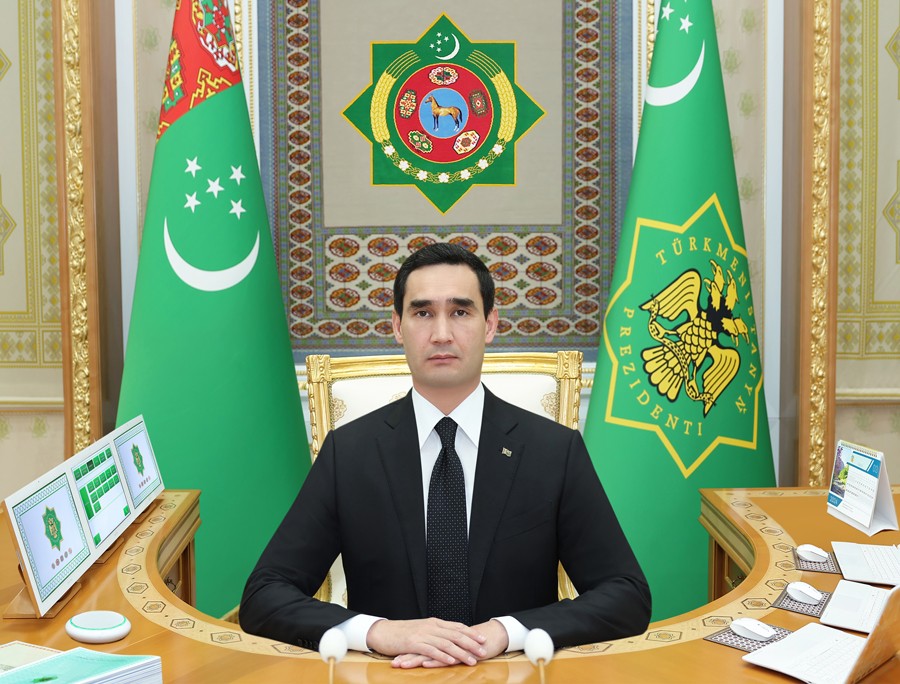
President of Turkmenistan, Serdar Berdymukhamedov has pardoned 356 people who repented for their crimes in honor of Laylat al-Qadr (The Night of Power). The head of state signed the relevant decision at the meeting of the Cabinet of Ministers, according to a report by the Turkmen state news agency. Representatives of the relevant law-enforcement agencies were instructed to release the prisoners and return them to their families in the near future. Furthermore, provincial, etrap (sub-provincial) and city mayors and other leaders were instructed to take appropriate measures to employ pardoned persons. On April 5-6, Muslims in Turkmenistan celebrate the night of power (gadyr gijesi in Turkmen), a symbol of virtue and spiritual purity. Laylat al-Qadr is, in Islamic belief, the night when Muslims believe the Quran was first sent down from heaven to the world, and also the night when the first verses of the Quran were revealed to the Islamic prophet, Muhammad.

Uzbek Cultural Agency Seeks to Prevent Damage to Archaeological Relics

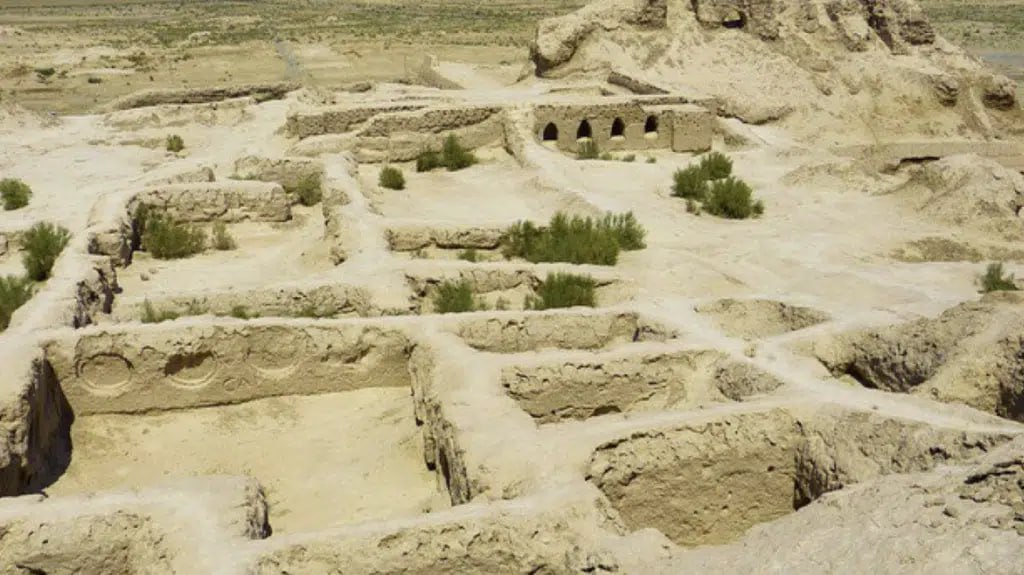
Uzbekistan’s Prosecutor’s Office in collaboration with the Cultural Heritage Agency, is currently implementing regulations aimed at protecting and preserving the country's vast wealth of historical monuments. During a recent investigation related to the new regulations, the Prosecutor's office discovered the destruction of the Kattatepa monument in the Denov district of Surkhondarya by locals wishing to build a barn. The monument, constructed between the 5th-7th centuries, was of significant historical importance and the cost of damage to the archaeological zone has been estimated at 23.3 billion (~$1.85 million). Sadly, this is not an isolated case. Three Uzbeks were previously found guilty of causing damage worth 2.6 billion ($ 206,289) to the Oktepa-1 monument in the Navoi region by arbitrarily excavating 193 cubic meters of soil. The conversion of 164 cubic meters of the archaeological site of Badakhshontepa to arable land, is estimated to have resulted in damage valued at 2.3 billion sum ($182,486), and damage sustained by unlawful excavation of 12 cubic meters at site of the Yamonkiyottepa monument, estimated at 163 million ($12,933). Reports of an Uzbek citizen's commandeer of 0.48 hectares of land around the medieval Tolmozortepa archaeological monument in the Namangan region, resulted in damages of 871 million ($69,107). Damage to the nation's archaeological relics is considered a serious crime and under Uzbek law, carries punishment of up to 7 years imprisonment.

Tajik Migrants Facing Xenophobia in Russia After Moscow Terrorist Attack

After the detention of four Tajik nationals suspected of committing the terrorist attack at the Crocus City Hall near Moscow, migrants have faced a wave of hatred and aggression. In Blagoveshchensk, along the Amur River that borders China, unknown persons set fire to a market pavilion belonging to migrants. According to the city's mayor, Oleg Imameyev, the arson was committed "obviously on ethnic grounds." In Kaluga, a group of unidentified men beat up three Tajik citizens on the street, with one of them requiring hospitalization. In some regions of Russia, taxi passengers are refusing to use transportation services if they learn the driver is Tajik. Telegram channel, Baza, reports that after the terrorist attack special units were created among domestic law enforcement to conduct additional checks on foreign citizens. Together with traffic police officers, they will check hostels, hostels, businesses and road routes, as well as other places where migrants congregate. Even those Tajiks who have been living in Russia for many years with their families, some whom have Russian citizenship, have felt an increase in xenophobic sentiment. After it became known that one of the detainees, 19-year-old Muhammadsoobir Faizov, had worked for several months in the Ploschadka barbershop in the town of Teykovo, Ivanovo region, local residents started to threaten the salon's manager and hairdressers. The director of the barbershop, Yamina Safieva, told the Moskovsky Komsomolets newspaper that the salon employees' phones "do not stop ringing" with menacing phone calls and messages. Leaders among the Tajik diaspora have recommended that their fellow citizens do not go out on the streets unless necessary and do not to attend mass events. Kyrgyz citizens in Russia have also received similar from their diaspora leaders and government representatives. The Ministry of Internal Affairs of Tajikistan released a statement saying that three citizens of Tajikistan who were named by Russian media were not involved in the terrorist attack: one of them was in Samara at the time of the attack, where he works as a cab driver, and two of them have been living in their home country since November last year. According to various sources, there are about 1.5 million migrant workers from Tajikistan in Russia. As one of the remittance-based countries in the world, in 2021 Tajikistan was also the poorest country in post-Soviet space in terms of GDP per capita, which according to the World Bank was at $878 annually. In Kyrgyzstan, by way of comparison, at that time this indicator was $1,328. At the same time, Tajikistan has a high rate of population growth at 2.7%. Given rampant unemployment in the country - 7.8% in 2023, labor migration is an most important means of livelihood for Tajik citizens.

Assassination Plan by Criminal Group on Kyrgyz Leaders

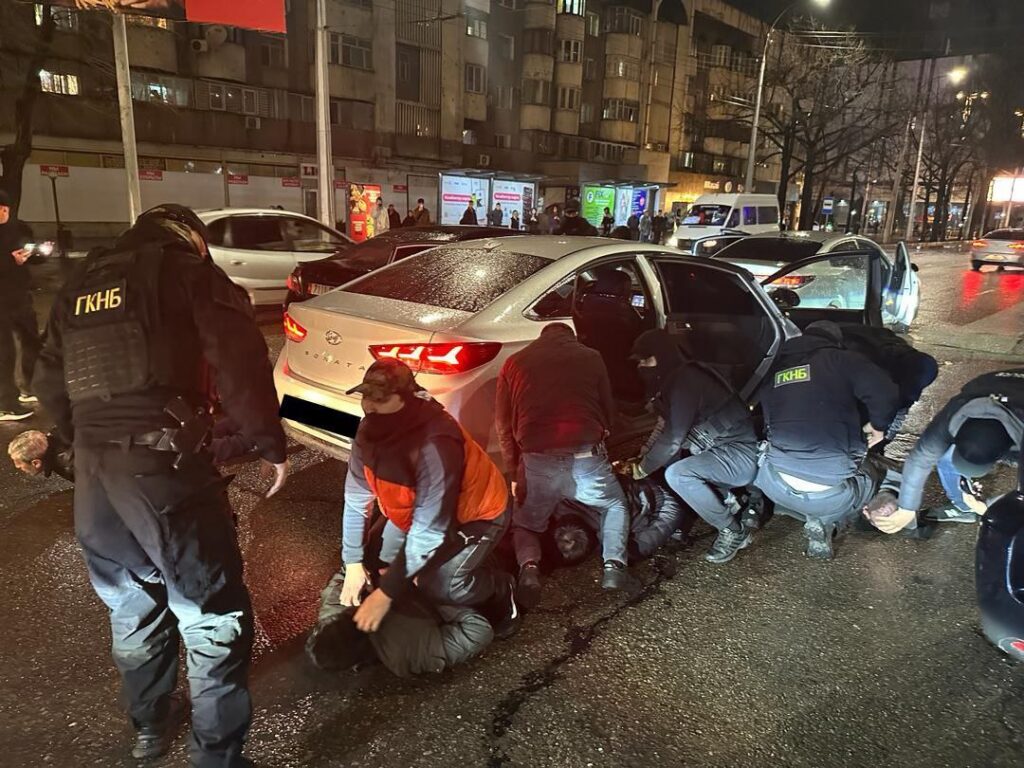
The State Committee for National Security of Kyrgyzstan (CNSK) has reported that members of a transnational organized criminal group, on the instruction of former Kyrgyz oligarch Rayimbek Matraimov, were preparing an assassination attempt on the country's top officials. The committee stated that the standard operating activities of Kyrgyz national-security organs led to the discovery of five citizens of Azerbaijan who under the leadership of a transnational organized criminal group, had arrived in Kyrgyzstan in order to strengthen their criminal enterprise and spread the group's ideology. However, according to the CNSK, the leader's main task was to organize an assassination attempt on the country's leadership in connection with the government's policy of fighting organised crime. Kyrgyz law enforcement claims that the leaders of the international criminal community are dissatisfied with the actions of the Kyrgyz authorities -- which force people involved in crime in the Commonwealth of Independent States (CIS) to abandon criminal plans. "In this regard, on March 22, employees of the CNSK carried out operational and investigative measures, as a result of which all the above-mentioned persons were detained. Currently, investigative measures are being carried out to bring them to justice, according to the laws of Kyrgyzstan," the CNSK said. Law enforcement claims that the assassination attempt on the Kyrgyz leaders was organized by Raimbek Matraimov, former deputy head of Kyrgyz customs, and a known corrupt oligarch. After being placed on the wanted list, Matraimov fled to Azerbaijan, where he remains at present. The CNSK sent a letter to Baku requesting the extradition of Matraimov to Bishkek in the belief that the former official is related to the currently detained Azerbaijanis. After the change of power in October 2020, Matraimov was accused of corruption in the customs service. The court ordered the former official to pay 2 billion som ($22.3 million) in damages and restitution back to the state. Matraimov pleaded guilty and paid the fines and penalties, in both cash and in the form of property. But, as Kyrgyz President Sadyr Japarov later noted, Matraimov continued to engage in "dark deeds" and was also accused of holding hostages. "Now Matraimov has been put on a wanted list. All his property in Osh and throughout Kyrgyzstan will be confiscated. We will not leave him even one hundredth [of a hectare] of land. Even if he returns, he will no longer be the former 'Rayim-million' (the oligarch's nickname). From now on, if he wants to live normally and feed himself, he should take a trading [stall] at the market..." said Kamchibek Tashiev, head of the CNSK at a meeting with workers at one of the markets previously owned by Matraimov. Last year, when the authorities engaged in a high-profile struggle with the leaders of organized crime groups, many so-called 'thieves in law' began, one after another, to publicly renounce criminal activity and promised to live by the law. Conversely, some leaders of Kyrgyzstan's criminal underworld were arrested and had their assets seized. One criminal mastermind when searched, was found to...