• KZT/USD = 0.00226
  • TJS/USD = 0.10810
  • UZS/USD = 0.00009
  • TMT/USD = 0.29760
  • KZT/USD = 0.00226
  • TJS/USD = 0.10810
  • UZS/USD = 0.00009
  • TMT/USD = 0.29760
  • KZT/USD = 0.00226
  • TJS/USD = 0.10810
  • UZS/USD = 0.00009
  • TMT/USD = 0.29760
  • KZT/USD = 0.00226
  • TJS/USD = 0.10810
  • UZS/USD = 0.00009
  • TMT/USD = 0.29760
  • KZT/USD = 0.00226
  • TJS/USD = 0.10810
  • UZS/USD = 0.00009
  • TMT/USD = 0.29760
  • KZT/USD = 0.00226
  • TJS/USD = 0.10810
  • UZS/USD = 0.00009
  • TMT/USD = 0.29760
  • KZT/USD = 0.00226
  • TJS/USD = 0.10810
  • UZS/USD = 0.00009
  • TMT/USD = 0.29760
  • KZT/USD = 0.00226
  • TJS/USD = 0.10810
  • UZS/USD = 0.00009
  • TMT/USD = 0.29760
24 September 2026

Viewing results 1 - 6 of 756

Lavrov in Astana as Kazakhstan Prepares for Putin State Visit

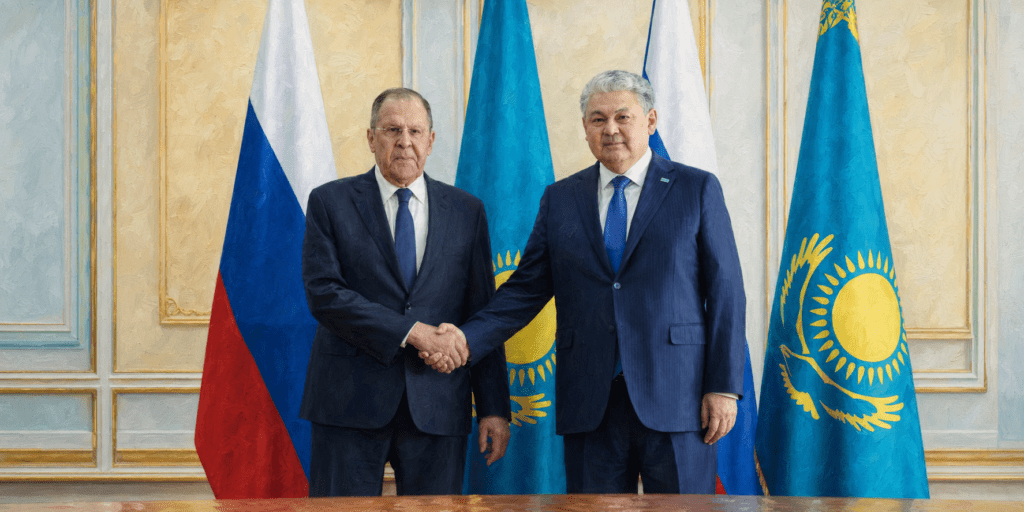
Russian Foreign Minister Sergey Lavrov has visited Astana for talks with Kazakhstan’s leadership, as the two countries prepare for a planned state visit by Russian President Vladimir Putin in late May. Lavrov arrived in Kazakhstan on April 29. The main working part of the visit took place on April 30, with meetings with President Kassym-Jomart Tokayev and Foreign Minister Yermek Kosherbayev. Russia’s Foreign Ministry said the agenda covered political, trade, economic, cultural, and humanitarian ties, as well as cooperation in the Eurasian Economic Union, the Collective Security Treaty Organization, the Commonwealth of Independent States, and the Shanghai Cooperation Organization. At expanded talks in Astana, Kosherbayev said Russia remains one of Kazakhstan’s key trade partners. Bilateral trade exceeded $27 billion last year, and the two governments are working toward a target of $30 billion. Kosherbayev said the talks covered energy, transport, logistics, industry, digitalization, cultural ties, and international issues. The foreign ministers signed a cooperation plan between the two ministries for 2027-2028 during the visit. Kosherbayev said the plan reflected close coordination between Astana and Moscow on bilateral and international issues. The visit also comes ahead of Putin’s expected trip to Kazakhstan. The Kremlin said in February that Putin had confirmed his participation in the Supreme Eurasian Economic Council meeting in Astana in late May and accepted Tokayev’s invitation to make a state visit linked to the event. For Kazakhstan, relations with Russia remain a central part of its multi-vector diplomacy, alongside growing ties with China, the European Union, Turkey, the Gulf states, and the United States. The two countries share a long border, have deep trade links, and work together through several regional organizations. Russia also remains central to Kazakhstan’s energy export network. The Caspian Pipeline Consortium terminal near Novorossiysk handles roughly 80% of Kazakhstan’s crude exports. That gives Astana a strong reason to keep stable ties with Moscow, but it also explains why Kazakhstan is pushing to diversify transport routes. The government has promoted the Trans-Caspian International Transport Route, also known as the Middle Corridor, as a way to move freight between China, Central Asia, the Caspian Sea, the South Caucasus, and Europe with less reliance on Russian territory. The war in Ukraine has made that approach harder to sustain. Kazakhstan has kept ties with Moscow, but Tokayev has also stressed the importance of the UN Charter, sovereignty, and territorial integrity. In a phone call with Ukrainian President Volodymyr Zelenskyy on August 10, 2025, Tokayev said Kazakhstan supported the UN Charter, the inviolability of sovereign borders, and the territorial integrity of sovereign states. Economic pressure has also grown. Western governments have increased scrutiny of trade routes that could be used to bypass sanctions on Russia. Kazakhstan has tried to protect its own trade from that pressure while avoiding a direct break with Moscow. Energy adds another dimension. Any disruption to the CPC route can quickly become a national economic issue for Kazakhstan. In April, Kazakhstan’s energy ministry said CPC exports through the Black Sea remained stable after Russia reported...

Belousov’s Bishkek Warning: Russia Uses SCO Meeting to Target Outside Influence in Central Asia

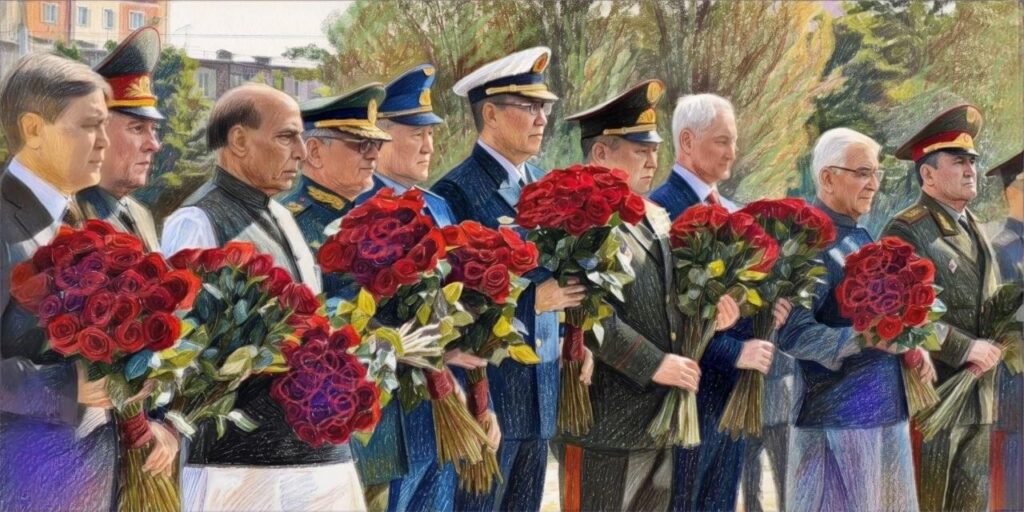
The April 28 meeting of defense ministers from the member states of the Shanghai Cooperation Organization (SCO), held in Kyrgyzstan’s capital, Bishkek, received relatively modest coverage in Central Asia and China. Russia’s Ministry of Defense, however, used the routine gathering to send a sharper message: Moscow remains opposed to any non-regional military presence in Central Asia. According to the SCO Secretariat, the meeting was attended by defense ministers from member states, the organization’s Secretary-General, and the director of the Executive Committee of the SCO’s Regional Anti-Terrorist Structure. “During the meeting, the parties held a substantive exchange of views on pressing regional and international security issues, noting persistent challenges and threats, including international terrorism, extremism, transnational crime, as well as emerging risks in information and cybersecurity,” the SCO said in a general statement. The statement also emphasized the need to strengthen trust between the armed forces of member states, expand practical cooperation, conduct joint exercises, exchange experience, and develop mechanisms for military cooperation within the SCO. China’s Defense Minister Dong Jun used similar institutional language. According to Xinhua, Dong said the SCO should uphold the international order, improve security governance, and “eliminate the sources of turmoil and conflict through shared development.” He also called for deeper defense and security cooperation among member states. Kazakhstan’s Defense Minister Dauren Kosanov presented a report on the country’s approach to strengthening regional security, developing cooperation within the SCO, and improving joint responses to contemporary challenges, according to Kazakhstan’s Ministry of Defense. The ministry said participants also discussed the expansion of practical cooperation between defense agencies and approved a cooperation plan for SCO defense ministries for 2027. Defense ministers from Uzbekistan and Kyrgyzstan also held bilateral talks on the sidelines of the meeting, discussing military-technical cooperation, joint training, experience-sharing among officers, and initiatives aimed at strengthening regional security. Uzbek media described the talks as being held in a constructive and friendly atmosphere. Russian Defense Minister Andrei Belousov adopted a markedly different tone. His remarks were not limited to general SCO language about counterterrorism or cyber threats. They directly targeted the possible presence of outside powers in Central Asia. “We are closely monitoring attempts by non-regional states to establish a military presence and address logistical tasks in Central Asia. We consider this unacceptable,” Belousov said, according to RIA Novosti. Belousov also expressed concern about Syria, Lebanon, Afghanistan, and the humanitarian crisis in Gaza, warning that militants from crisis zones could infiltrate neighboring countries, including the SCO space. Belousov further argued that U.S. activity in the Asia-Pacific region was having a destabilizing effect. “Their efforts to reshape the regional security system into a U.S.-centric model by strengthening military-political structures under Washington’s control provoke tensions, undermine regional stability, and increase the risks of armed conflict,” he said. The contrast was striking. The SCO Secretariat spoke in broad terms about common threats and institutional cooperation. China emphasized development, governance, and multilateral stability. Russia used the same setting to issue a direct warning over Central Asia. Iran added another layer to...

Over 100 Uzbek Workers in Russia Receive Aid After Months Without Pay

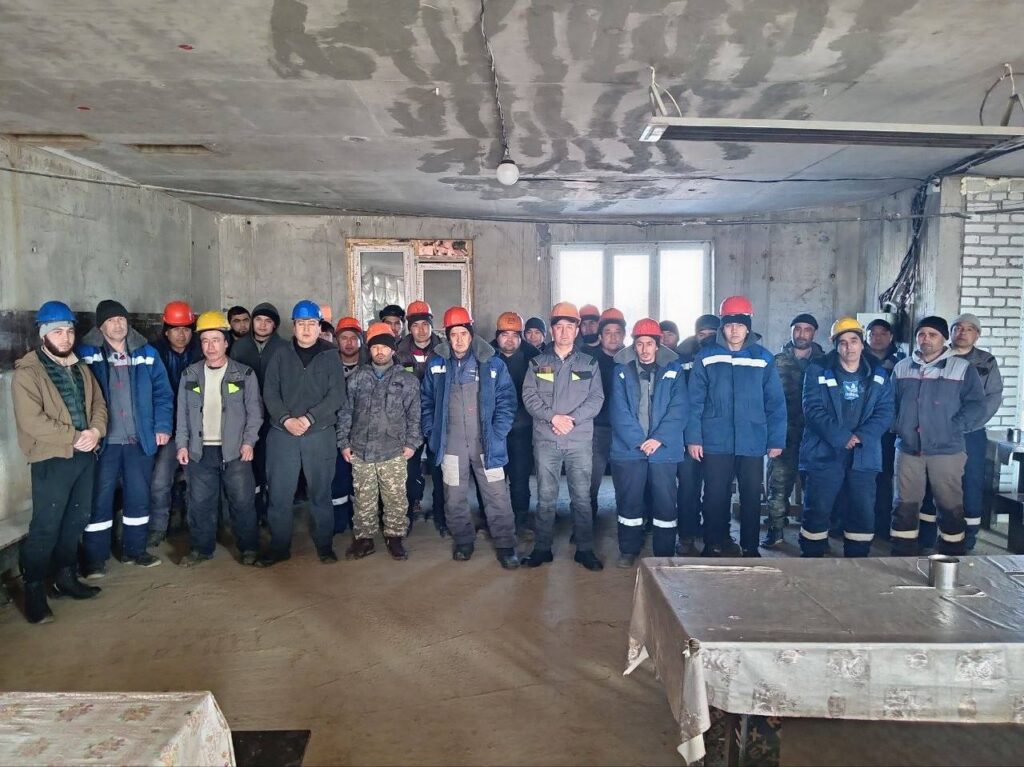
More than 100 Uzbek migrant workers in Russia have received assistance after going without wages and adequate food for four months, according to Uzbekistan’s Migration Agency. The agency said the workers were jointly owed nearly 24 million rubles (about $324,000) and, in some cases, had fallen into irregular legal status. The situation began to improve after the workers contacted the agency for assistance. Following the appeals, the agency’s representative office in Russia worked with legal counsel, while Uzbekistan’s Consulate General sent an official diplomatic note to the relevant authorities. As a result, Russian law enforcement agencies opened a criminal case against the employers under Article 145.1 of the Russian Criminal Code, which covers non-payment of wages. According to the agency, some progress has already been made. A total of 105 workers have received 9.4 million rubles (around $127,000) in unpaid wages. The remaining debt, estimated at 23.9 million rubles, is expected to be paid by May 15. The agency also said that food supplies for the workers have been restored. Those who had lost legal status were assisted in returning to Uzbekistan, and financial support measures have begun. The case was handled in cooperation with Uzbekistan’s diplomatic missions in Russia and Russian law enforcement authorities. Officials said the joint efforts helped address both the financial claims and the humanitarian situation faced by the workers.

Fuel Prices Surge in Tajikistan Amid Middle East Conflict

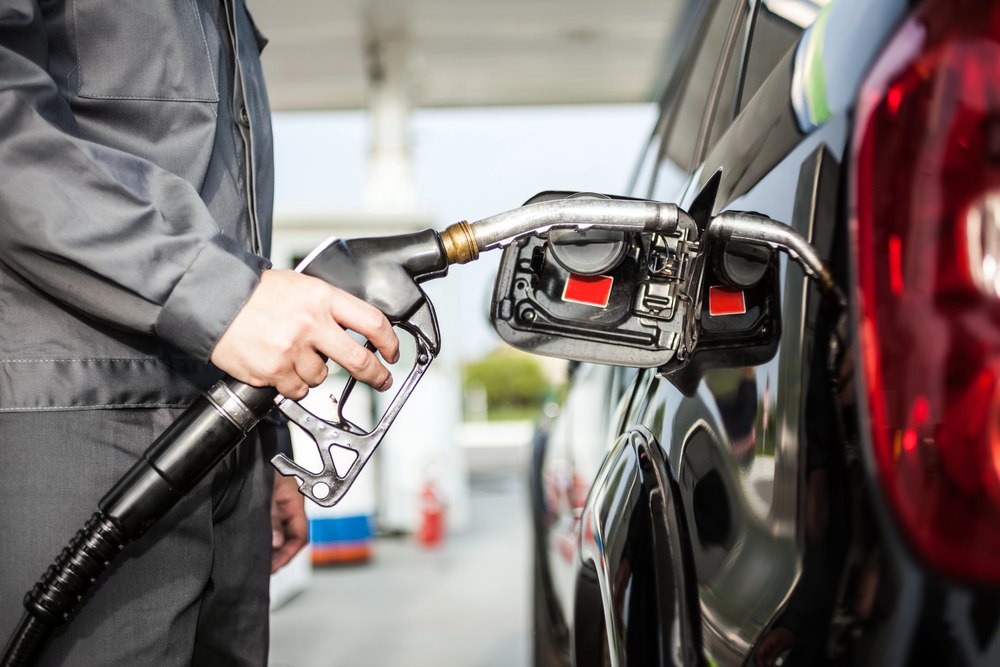
Fuel prices at gas stations in Dushanbe have risen sharply since early March, increasing on average by 8-9%. The increase has been driven by domestic factors as well as adverse developments in the global energy market. The most widely used AI-92 gasoline has risen in price from $1.05 to $1.13 per liter. Diesel has followed a similar trend, increasing from $1.14 to $1.24 per liter. Prices for liquefied petroleum gas (LPG) have risen more modestly, by about 6%, to $0.62 per liter. Prices also vary by location, with drivers noting that fuel in central Dushanbe is traditionally more expensive than in outlying areas. Suppliers attribute the increases to higher prices from producers, but the situation largely depends on external supply chains. Russia remains the primary source of petroleum products for Tajikistan. In 2025, the country imported more than 1.2 million tonnes of fuel and LPG from Russia, accounting for over 70% of total imports. Supplies also come from Kazakhstan, Uzbekistan, and Turkmenistan, though their share is significantly smaller. According to official statistics, Tajikistan imported more than 325,000 metric tons of petroleum products in the first quarter of this year, valued at over $251 million, or approximately $772 per metric ton. Compared with the same period last year, import volumes increased by 11.4%, while their total value rose by 8.6%. Experts say external factors are the main driver of rising prices. They point to international media reports that the conflict involving the United States, Israel, and Iran has triggered a chain reaction in the fuel market, affecting the supply chain from crude oil to refining and retail prices. A key factor has been disruption in the Strait of Hormuz, through which roughly 20% of global oil supplies pass. At the same time, price trends have varied significantly across countries. Al Jazeera reported that fuel prices rose by nearly 70% in Cambodia, 50% in Vietnam, 35% in Nigeria, 33% in Laos, and 28% in Canada. In Central Asia, however, price increases have been more moderate, ranging from 2% to 5% in March and April. In Uzbekistan and Turkmenistan, prices have remained largely stable, which analysts attribute to pricing policies by Russian producers and the availability of domestic fuel supplies.

Russia Offers Support for Uzbekistan’s First Cosmonaut and Satellite Launch

Russia is ready to help Uzbekistan prepare and send its first national cosmonaut into orbit and launch its first artificial satellite, Russian First Deputy Prime Minister Denis Manturov was quoted as saying by TASS. Manturov noted that Uzbekistan has set an ambitious goal of entering space exploration. “At the end of last year, President Shavkat Mirziyoyev outlined the task of preparing and sending the country’s first national cosmonaut into near-Earth orbit and launching its first artificial satellite,” he said. “As a strategic partner of Uzbekistan, we welcome these plans and are ready to use all our extensive experience and expertise to help implement them,” Manturov added. He also said Russia is currently engaged in preliminary discussions with several countries across the Commonwealth of Independent States, as well as in Asia, Africa, and the Middle East, on training astronauts and developing communication and Earth observation satellites. Russia has made similar offers to other Central Asian states. A few days earlier, Russia’s ambassador to Turkmenistan, Ivan Volynkin, said Moscow would support the training of a cosmonaut from Turkmenistan if Ashgabat expressed interest. His comments were published on the embassy’s official Telegram channel during an event marking the 65th anniversary of the first human spaceflight. Volynkin also highlighted the achievements of Oleg Kononenko, a native of Turkmenabat, who holds the record for the longest cumulative time spent in space, exceeding 1,100 days. He currently heads the Gagarin Cosmonaut Training Center. According to the ambassador, cooperation between Russia and Turkmenistan in the space sector could also include satellite production, launch services, navigation technologies, and joint scientific research.

EU Sanctions Put Kyrgyzstan’s Transit Trade Under Scrutiny

The European Union has stepped up sanctions pressure on Kyrgyzstan by restricting supplies of sensitive technologies and imposing measures on the country’s financial institutions. The decision, adopted as part of the EU’s 20th sanctions package against Russia, reflects growing concerns in Brussels that the Central Asian republic may be used as a transit hub to circumvent restrictions. The move marks a shift in the EU’s approach, from diplomatic warnings to tighter controls on trade and financial channels in third countries. A key argument for Brussels has been trade data. According to European Commission materials, imports of sensitive goods from the EU to Kyrgyzstan surged by nearly 800% in 2025 compared to pre-war levels. Meanwhile, exports of similar goods from Kyrgyzstan to Russia rose by approximately 1,200%. European officials say this dynamic indicates a systemic pattern of re-exports. As a result, the EU has added Kyrgyzstan to its list of countries posing a “systematic and persistent” risk of sanctions circumvention, a designation previously applied only selectively. The restrictions primarily target dual-use goods. These include metalworking machinery and numerically controlled equipment, as well as a wide range of telecommunications devices, from routers and modems to data, voice, and image transmission equipment. According to the EU, these categories present the highest risk of being used by Russia’s defense-industrial complex. European exporters will face tougher checks to show that sensitive goods are not likely to be re-exported to Russia. This creates an additional administrative barrier and raises risks for businesses. For many companies, the effect is a ‘presumption of guilt’ regime around trade with Kyrgyzstan. The sanctions package also affects the country’s financial system. Keremet Bank and Capital Bank have been included in the restrictions, which are set to take effect in May 2026. Particular attention has been paid to the cryptocurrency sector. The EU has sanctioned TengriCoin, a Bishkek-registered entity linked to the Meer platform, which European regulators say facilitated trading in a stablecoin affiliated with Russia’s Promsvyazbank. This move signals the EU’s expanding sanctions policy into digital financial instruments increasingly used to bypass traditional restrictions. Additional measures affect the transport sector. Several Kyrgyz logistics companies have been restricted from accessing European infrastructure, including ports and transport networks. This is likely to increase shipping costs and complicate foreign trade operations, putting additional pressure on export-oriented businesses. Analysts also warn of a potential shortage of European industrial equipment on the Kyrgyz market. The risk of secondary sanctions may lead EU suppliers to withdraw even from legitimate transactions. The tightening of sanctions comes amid intensified foreign policy engagement by Kyrgyzstan. On the day the package was approved, President Sadyr Japarov reaffirmed a strategic partnership with Vladimir Putin during a visit to Moscow. At the same time, Bishkek is strengthening cooperation within the Shanghai Cooperation Organization (SCO), preparing to host a summit and receive high-level delegations, including Chinese Defense Minister Dong Jun. Kyrgyz authorities have previously criticized EU sanctions policy. Japarov has described it as unjustified and as pressure that hampers economic development. Despite a series...