• KZT/USD = 0.00218
  • TJS/USD = 0.10810
  • UZS/USD = 0.00009
  • TMT/USD = 0.29760
  • KZT/USD = 0.00218
  • TJS/USD = 0.10810
  • UZS/USD = 0.00009
  • TMT/USD = 0.29760
  • KZT/USD = 0.00218
  • TJS/USD = 0.10810
  • UZS/USD = 0.00009
  • TMT/USD = 0.29760
  • KZT/USD = 0.00218
  • TJS/USD = 0.10810
  • UZS/USD = 0.00009
  • TMT/USD = 0.29760
  • KZT/USD = 0.00218
  • TJS/USD = 0.10810
  • UZS/USD = 0.00009
  • TMT/USD = 0.29760
  • KZT/USD = 0.00218
  • TJS/USD = 0.10810
  • UZS/USD = 0.00009
  • TMT/USD = 0.29760
  • KZT/USD = 0.00218
  • TJS/USD = 0.10810
  • UZS/USD = 0.00009
  • TMT/USD = 0.29760
  • KZT/USD = 0.00218
  • TJS/USD = 0.10810
  • UZS/USD = 0.00009
  • TMT/USD = 0.29760
04 September 2026

Viewing results 1 - 6 of 755

Second Attack in Moscow Was Planned Alongside Crocus City Hall Assault

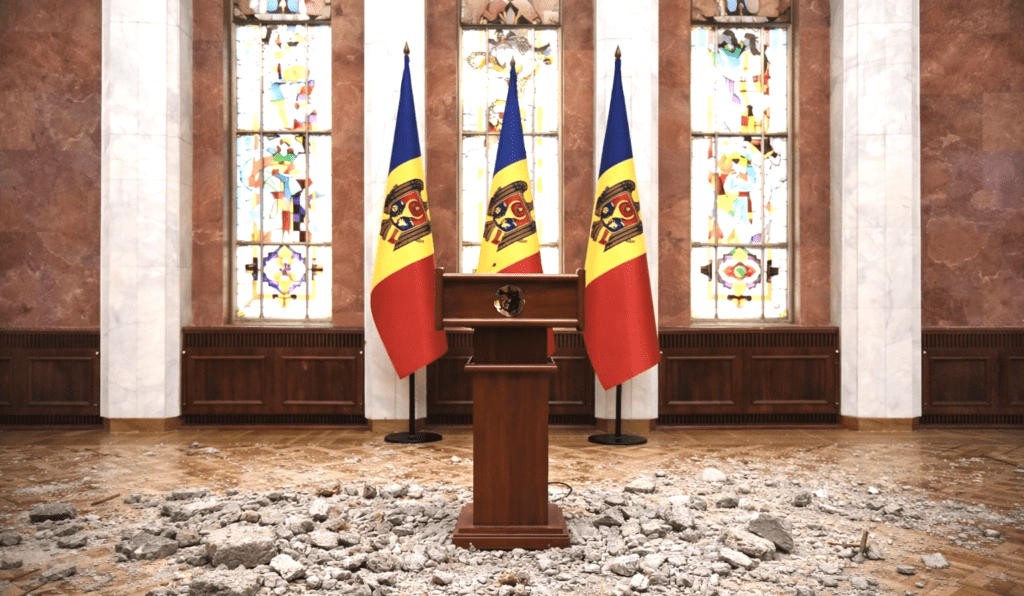
Organizers of the deadly attack at the Crocus City Hall concert venue near Moscow had initially planned a second, simultaneous attack in the Russian capital but later abandoned the idea, according to materials from the ongoing investigation cited by TASS. A participant in the court proceedings told the agency that investigators had identified a coordinator operating from abroad, known by the alias Saifullo, who had prepared a group of recruited and trained attackers for two separate operations in Moscow. The second attack was intended to take place at the same time as the assault on Crocus City Hall, with two individuals assigned to carry it out and three others designated for the concert venue. However, shortly before the attack, the plan was revised. Instead of dividing their forces, the organizers decided to concentrate on a single target, reinforcing the group assigned to Crocus City Hall. The exact location and method of the planned second attack were not disclosed in the case materials, although investigators noted it was also intended to result in mass casualties. According to TASS, one week before the attack the coordinator informed the perpetrators that an additional individual, previously assigned to the second operation, would join the group targeting Crocus City Hall. Several suspects linked to the case have been placed on Russia’s list of designated terrorists, while the alleged coordinator remains at large abroad. As previously reported by The Times of Central Asia, a man sentenced to life imprisonment in connection with the attack died in pretrial detention, in what Russian authorities described as suicide. Investigations into the organization and execution of the Crocus City Hall attack are ongoing.

Uzbekistan Officials Intervene Over Wage Delays for Migrant Workers in Russia

Uzbek diplomats and migration officials have intervened to resolve wage disputes affecting dozens of Uzbek citizens working in Russia’s Tyumen region, according to a report by Dunyo Information Agency. Representatives of Uzbekistan’s Consulate General in Yekaterinburg, together with officials from the Migration Agency, traveled to the city of Tobolsk, where they met with more than 100 Uzbek citizens working temporarily for local companies. The delegation organized an on-site reception, providing legal and consular assistance and clarifying issues related to passport processing and compliance with migration laws. During the meetings, officials also warned workers about the risks of engaging with illegal or extremist groups and reminded them that joining private military companies could lead to criminal liability. A key issue raised during the visit was delayed wage payments. Authorities found that a subcontractor had failed to pay salaries for February and March to 26 Uzbek workers. Following negotiations involving the main contractor and the employer, the companies acknowledged the debt and agreed to settle it. As a result, approximately 2 million rubles (about $24,945) in wages have been accrued and are expected to be transferred to the workers’ bank accounts in the coming days. In addition, the employers committed to repaying outstanding wages to around 80 other Uzbek citizens who had previously left the company without receiving full payment. Officials also inspected living and working conditions and held discussions with employers aimed at preventing similar cases in the future. According to Dunyo, Uzbekistan’s government considers the protection of its citizens abroad and ensuring fair pay for their work a priority. Such outreach visits and rapid interventions are seen as an important tool for strengthening legal protections for Uzbek migrant workers in Russia and addressing their concerns directly on the ground. As previously reported by The Times of Central Asia, Russia expressed its readiness to facilitate the transfer of more than 3,000 Uzbek prisoners to serve their sentences in Uzbekistan, although the process remains constrained by legal limitations.

Convicted Crocus City Hall attack Defendant Found Dead in Moscow Detention Center

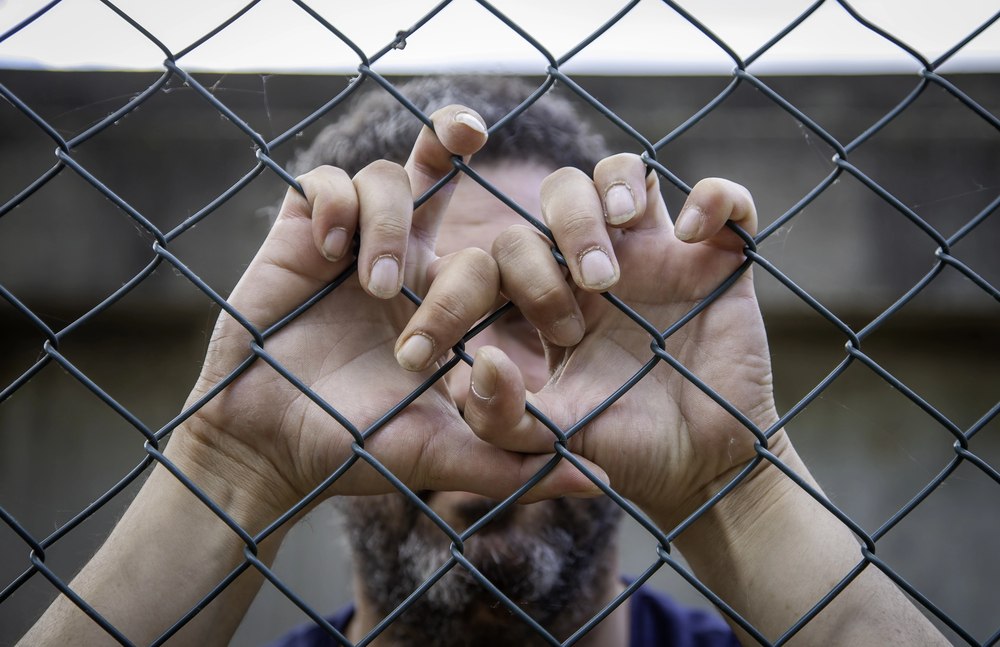
A man sentenced to life imprisonment in connection with the deadly attack at the Crocus City Hall concert venue near Moscow has died in pretrial detention. Russian authorities said the death is being treated as a suicide. The development was reported by RBC, citing the Federal Penitentiary Service. In a statement reported by RBC, officials said the incident occurred at the Matrosskaya Tishina detention center in Moscow. Medical staff attempted resuscitation, but the efforts were unsuccessful. Authorities added that an internal review has been launched, with results expected in due course. Due to personal data protection laws, officials initially withheld the identity of the deceased. However, RBC later reported, citing a lawyer representing victims, that the individual was Yakubjoni Davlatkhon Yusufzoda, a citizen of Tajikistan who had been convicted and sentenced to life imprisonment earlier in March. The case is linked to the high-profile Crocus City Hall attack in March 2024, which resulted in multiple casualties and drew widespread international attention. According to Russia’s Investigative Committee, Yusufzoda was accused of assisting those involved in the attack, including facilitating financial transfers before and after the incident. He was detained in late March 2024 during a law enforcement operation and later charged under terrorism-related provisions of the Russian Criminal Code. RBC also reported that another defendant in the same case, Jabrail Aushev, had previously attempted self-harm but was prevented by detention center staff. Authorities said reports of a new incident involving Aushev on the same day were inaccurate. Earlier in March, the Western District Military Court sentenced several individuals identified as direct perpetrators of the attack to life imprisonment, along with others described by investigators as accomplices. Both the defense and victims’ representatives have since appealed the verdict, arguing that the sentences were, respectively, too severe and too lenient.

Russia Ready to Transfer Over 3,000 Uzbek Prisoners

Russia is prepared to facilitate the transfer of more than 3,000 Uzbek citizens convicted on its territory to serve their sentences in Uzbekistan, but the process remains stalled due to legal obstacles, Kommersant reported, citing Russia’s Human Rights Commissioner Tatyana Moskalkova. Speaking at a meeting of the Commonwealth of Independent States (CIS) Human Rights Commission, Moskalkova said Russia is willing to support the transfer mechanism. However, she noted that Uzbekistan cannot currently accept the prisoners because it has not ratified the 1998 Convention on the Transfer of Sentenced Persons. “Russia is ready to assist, but the country of citizenship cannot accept them due to the lack of ratification of the convention,” she said, according to RIA Novosti. The agreement allows individuals convicted in one participating country to serve their sentences in their home country. It is intended to support rehabilitation and improve humanitarian conditions by allowing individuals to remain closer to their families and social environment. Russia ratified the convention in 1998, and it is also in force in several countries in the region, including Belarus, Kazakhstan, Kyrgyzstan, Tajikistan, and Armenia. For Uzbek nationals, however, Uzbekistan’s absence from the treaty has prevented similar transfers. As previously reported by The Times of Central Asia, in 2025, 191 Uzbek citizens applied for asylum in Russia, highlighting shifting migration patterns and increasing pressure on legal and humanitarian systems in the region.

EAEU Trade Frictions Deepen Despite Shymkent Integration Push

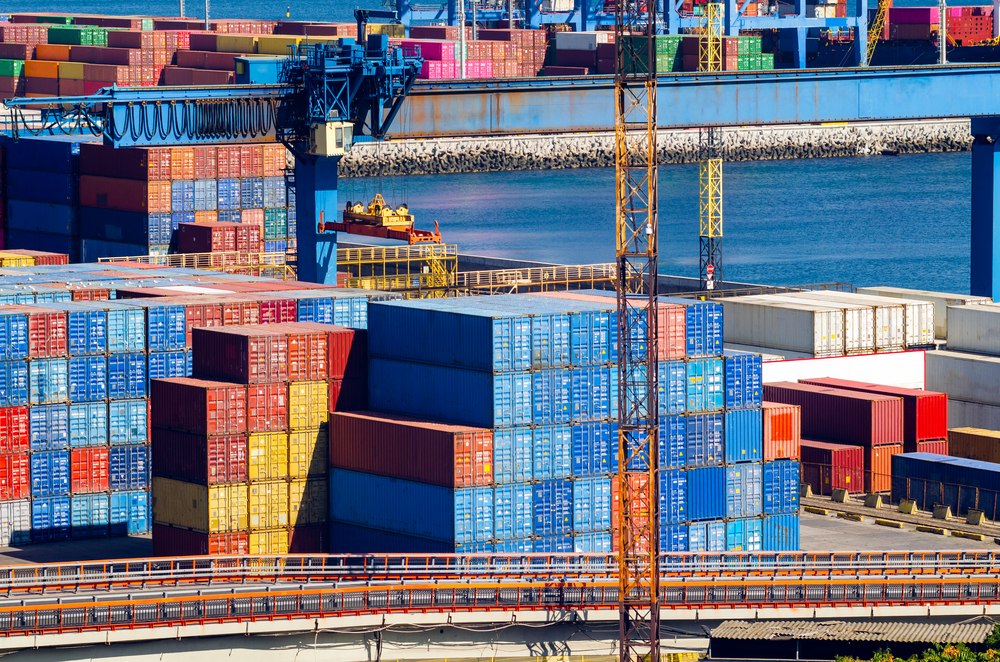
The Eurasian Economic Union (EAEU) met in Shymkent on March 26-27 with a long agenda and a familiar promise: deeper integration, smoother trade, and a more modern common market. Kazakhstan, which holds the bloc’s 2026 chairmanship, used the meeting to push artificial intelligence, digital logistics, industrial cooperation, and the removal of internal barriers. Twelve documents were signed, covering areas including industrial cooperation, transport, and digital integration. “Kazakhstan aims to become a fully-fledged digital country. We have built a modern ecosystem, including Astana Hub and the Alem.ai AI center, and are ready to share experience with EAEU partners on digital regulation and economic transformation,” Kazakh Prime Minister Olzhas Bektenov stated. That sounds ambitious, but it also highlights the bloc’s central weakness. The EAEU has no shortage of plans; it has a shortage of trust between its members, and that matters more. The dynamics extend across the bloc, but are most visible in Kazakhstan and Kyrgyzstan. The EAEU was built to ensure the free movement of goods, services, capital, and labor across Armenia, Belarus, Kazakhstan, Kyrgyzstan, and Russia. But the reality keeps drifting away from the treaty. Kazakhstan’s chairmanship agenda calls for a barrier-free internal market, yet the bloc is entering a new phase of tighter controls, retaliatory measures, and disputes over who really benefits. Shymkent made that contradiction impossible to miss. Prime Minister Olzhas Bektenov promoted an AI-based system to coordinate cargo flows across the union and speed up transit. He also backed the full electronic handling of veterinary and phytosanitary checks, all of which are practical ideas. Central Asia needs faster, cheaper, and more predictable logistics, but digital tools do not solve a political problem. A system becomes more efficient only if its members want it to be open. When they want leverage instead, technology can only make the controls smarter. [caption id="attachment_46024" align="aligncenter" width="1920"] Image: primeminister.kz[/caption] Kazakhstan’s priorities already show where the friction lies. President Kassym-Jomart Tokayev opened his chairmanship by calling for digital transformation, better transport links, and the elimination of internal trade barriers. He also pushed a stronger external profile for the EAEU, with wider links across Asia, the Arab world, and the Global South. That is a serious agenda for a bloc trying to present itself as a Eurasian logistics hub. That push for external expansion comes at a time when internal frictions are becoming harder to manage. It sits uneasily beside everyday trade practice inside the union, where growing trade disputes have become part of the EAEU’s normal life, not an exception to it. The clearest recent example is Russia’s SPOT import-control system, which takes effect for road shipments from EAEU countries on April 1. Importers must submit shipment information two days before trucks reach the border and receive a QR code. Moscow has presented the change as a tax-compliance and anti-fraud measure, with additional financial guarantees expected in later phases of its implementation. In practice, it adds cost, time, and uncertainty before goods even reach the border, the opposite of what a customs union...

Despite Growth Plans, Trade Between Kazakhstan and Russia Declined in 2025

Trade and economic ties between Kazakhstan and Russia showed signs of slowing in 2025. By the end of the year, bilateral trade totaled $27.4 billion, a slight decrease compared with the previous year. The figures were announced by Kazakhstan’s Minister of Trade and Integration, Arman Shakkaliev, following talks in Astana between Prime Minister Olzhas Bektenov and Russian Prime Minister Mikhail Mishustin. A year earlier, bilateral trade had demonstrated growth. In 2024, trade turnover increased by 3% to reach $27.8 billion, largely driven by rising imports of Russian goods into Kazakhstan. At the same time, exports of Kazakhstani products to Russia declined, pointing to a persistent imbalance in the structure of trade. The contraction recorded in 2025 reflects a broader trend, a slowdown in growth while overall trade volumes remain relatively high. Despite the decline, both sides continue to set ambitious targets for expanding economic cooperation. “At the same time, the goal has been set to bring bilateral trade to $30 billion. During the meeting of the heads of government, measures and priority sectors that could generate additional trade growth were discussed. These include energy, commerce, transport and logistics. We also reviewed issues related to the negotiation process and our integration agenda,” Shakkaliev said. Kazakh authorities expect digitalisation measures to help accelerate trade flows. Kazakhstan’s Deputy Minister of Finance, Yerzhan Birzhanov, outlined plans to introduce electronic waybills and modernize 30 checkpoints along the Kazakhstan–Russia border. These steps are expected to reduce transit times and improve operational transparency. Russia remains one of the largest investors in Kazakhstan’s economy. “There is a very significant presence of Russian business in Kazakhstan, and we welcome it. We are ready to explore new areas of cooperation. I am confident that there are ample opportunities for this. The Government of Kazakhstan will make every effort to intensify and enhance our cooperation,” Bektenov said. In turn, Mishustin highlighted prospects for further joint initiatives. “There is considerable potential in bilateral cooperation to launch joint projects in energy, industry, transport infrastructure, agriculture and the digital economy,” he stated. In addition to economic issues, the two sides discussed joint efforts to preserve the ecosystem of the Caspian Sea and implement environmental initiatives. External factors are also influencing trade dynamics. In particular, tighter foreign trade procedures introduced by Russia could reshape logistics routes and alter commodity flows across Central Asia.