• KZT/USD = 0.00219
  • TJS/USD = 0.10810
  • UZS/USD = 0.00009
  • TMT/USD = 0.29850
  • KZT/USD = 0.00219
  • TJS/USD = 0.10810
  • UZS/USD = 0.00009
  • TMT/USD = 0.29850
  • KZT/USD = 0.00219
  • TJS/USD = 0.10810
  • UZS/USD = 0.00009
  • TMT/USD = 0.29850
  • KZT/USD = 0.00219
  • TJS/USD = 0.10810
  • UZS/USD = 0.00009
  • TMT/USD = 0.29850
  • KZT/USD = 0.00219
  • TJS/USD = 0.10810
  • UZS/USD = 0.00009
  • TMT/USD = 0.29850
  • KZT/USD = 0.00219
  • TJS/USD = 0.10810
  • UZS/USD = 0.00009
  • TMT/USD = 0.29850
  • KZT/USD = 0.00219
  • TJS/USD = 0.10810
  • UZS/USD = 0.00009
  • TMT/USD = 0.29850
  • KZT/USD = 0.00219
  • TJS/USD = 0.10810
  • UZS/USD = 0.00009
  • TMT/USD = 0.29850
05 September 2026

Viewing results 1 - 6 of 755

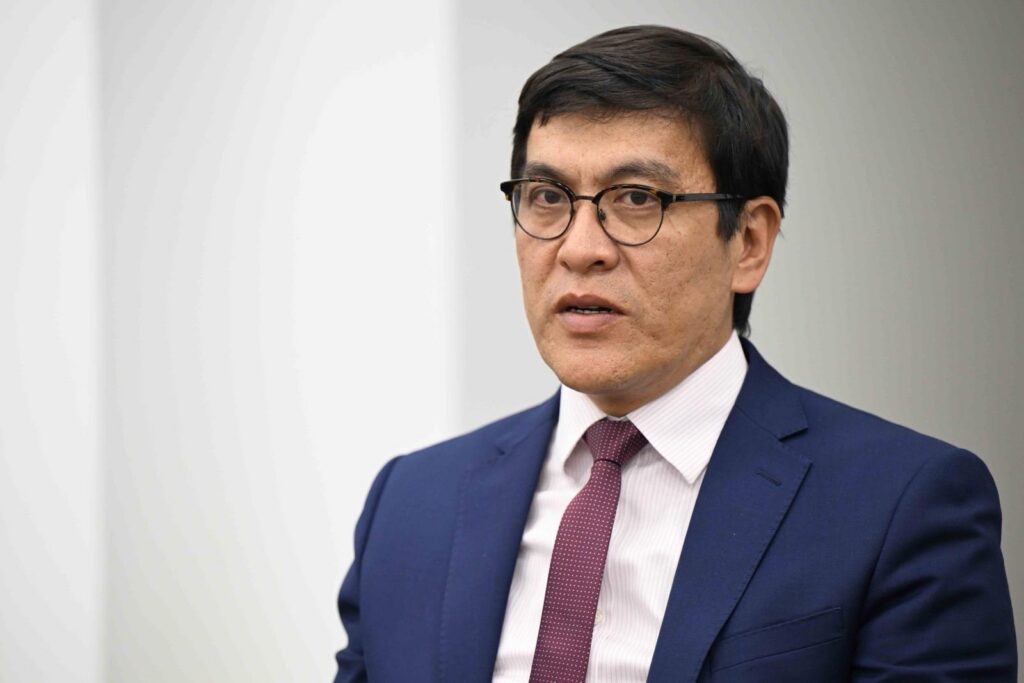
Kyrgyzstan Between the Russian World and Global Chaos: An Interview With Deputy Prime Minister Edil Baisalov

Edil Baisalov is a politician who began his career as a civil-rights activist, became a prominent member of Kyrgyzstan’s non-governmental organization (NGO) sector, and is now serving as the country’s Deputy Prime Minister. In an exclusive interview with The Times of Central Asia, he explained not only how his views have changed over the years, but also how Kyrgyzstan is seeking to find its place in what he described as a rapidly changing global landscape. In Baisalov’s assessment, the global system is facing a crisis of democracy. “The world order, as we know it, is collapsing – or at least is under attack from both within and without,” Baisalov told TCA. “The era of global hypocrisy is over, and the people of Kyrgyzstan have woken up. “What various international institutions have taught us over the years – their lectures on how to develop an economy, how to pursue nation-building, and so forth – has been proven wrong. Throughout the 1990s, Kyrgyzstan was one of the most diligent students of the liberal policies promoted by the “Chicago Boys.” We followed their instructions to the letter. Kyrgyzstan was the first post-Soviet country to join the World Trade Organization in 1998, and we were the first to receive normalized trade relations with the U.S. with the permanent repeal of the Jackson-Vanik amendment. All of our previous governments followed IMF conditionality dictates to the letter, especially in deregulation, mass privatization, and all the austerity programs and budget sequestrations. We were promised prosperity; that the free markets and the invisible hand would take care of everything. But it did not work. “I remember it well: at the time, U.S. President Bill Clinton laughed at China, saying that Beijing needed to adopt certain policies, to liberalize, or that science could not prosper in a closed society. He claimed the Chinese model was doomed to fail, arguing that scientific and technological breakthroughs could only occur in a Western-style society with minimal state intervention. Yet today, we witness the triumphant rise of the People’s Republic of China. This is not only an emergence but also a return to the rightful place of a great civilization that has, for millennia, contributed enormously to humankind.” TCA: Does this mean you now see China, rather than the West, as a model for Kyrgyzstan to follow? Baisalov: It’s not about the Chinese model or any particular foreign template. What we understood is that as a nation, we are in competition with other nations. Just like corporations compete with each other, nations must look out for themselves. If our state does not actively develop industries and sciences, there is no formula for success. All those ideologies promoting the “invisible hand” – the idea that everything will naturally flourish on its own – are simply false. TCA: When did Kyrgyzstan stop taking orders from outside forces and begin making independent national decisions? Baisalov: We used to be naive about wanting to be liked by others. But not anymore. In the last five years of...

Murder of Aigul Sailybayeva: Husband Among Key Suspects in Ongoing Investigation

The death of 40-year-old Aigul Sailybayeva became publicly known approximately a year and a half ago. The former judge from Kazakhstan was 24 weeks pregnant at the time of her death. She had been living in Germany with her husband and young daughter and, according to relatives, had reduced contact with family members roughly a year before the incident. According to media reports, on June 4, 2024, Sailybayeva took her daughter to kindergarten and then disappeared. Two weeks later, volunteers discovered a suitcase containing human remains near a lake outside the town of Bensheim in the German state of Hesse. Forensic experts reported multiple stab wounds and chemical burns on the body. Case Timeline Open-source reporting indicates that on June 4, 2024, Sailybayeva dropped her child off at a kindergarten in Bensheim and subsequently stopped responding to messages and calls. Relatives in Kazakhstan reported her missing after failing to reach her. Her husband, Alexander Dontsov, reportedly was unable to clearly account for her whereabouts. On June 16, volunteers found a suitcase containing remains near a lake outside Bensheim. German authorities opened a murder investigation. Forensic findings cited stab wounds and chemical burns. Several media outlets, citing investigative sources, reported that the fatal incident may have occurred on the day of her disappearance. According to these reports, a domestic conflict allegedly took place, after which Dontsov contacted his mother, Natalya Dontsova. It has also been claimed that the couple’s daughter may have been present. These details are based on media leaks and have not been confirmed by a final court ruling. Investigators reportedly documented cleaned blood traces in the residence and seized an object believed to be a possible weapon. Media reports state that fingerprints attributed to the mother-in-law were found on it. Authorities also noted that shortly after the disappearance, Alexander Dontsov left Germany with the child for Russia, and his mother flew to Moscow the following day. By July 2024, German authorities had placed Natalya Dontsova on an international wanted list via Interpol. A criminal case was also opened in Kazakhstan under articles related to torture and violent death. The victim’s parents publicly accused their son-in-law and his mother of involvement in the killing. Through late 2024 and 2025, additional investigative details appeared in the press. Kazakhstan’s Ministry of Internal Affairs sent inquiries to Russia regarding the suspects’ citizenship status. Russian authorities initiated checks following media reports that the Dontsovs might be in Moscow. In February 2026, journalists reported that both individuals were in Moscow. According to these reports, Alexander Dontsov works as a research fellow at the Faculty of World Economy and International Affairs at HSE University. Natalya Dontsova also resides in Moscow and reportedly declined to testify, invoking her constitutional rights. The investigation remains ongoing. Who Was Aigul Sailybayeva Sailybayeva was a Kazakh lawyer and former judge who previously worked in Kazakhstan’s judicial system. She later lived in the United Kingdom, where she met Alexander Dontsov, and in 2020 moved to Germany with her husband and daughter....

Uzbekistan and Russia to Develop Nuclear Medicine Strategy Ahead of 2026 Center Opening

Uzbekistan will develop a roadmap and long-term strategy for the advancement of nuclear medicine, according to the press service of the Atomic Energy Agency under the Cabinet of Ministers, Uzatom. The announcement followed a working meeting held on February 10 at Uzatom to discuss prospects for expanding nuclear medicine in the country. The meeting brought together representatives of the Ministry of Health, the Healthcare Projects Center, the Committee for Industrial, Radiation and Nuclear Safety, the Institute of Nuclear Physics of the Academy of Sciences, the state enterprise Radiopreparat, leading medical centers, and experts from Rosatom’s engineering division, underscoring growing cooperation between Uzbekistan and Russia in the sector. During the discussions, the Russian side presented its experience in building modern nuclear medicine infrastructure, including cyclotron complexes, radiopharmaceutical production facilities, and PET/CT diagnostic centers, as well as implementing turnkey international projects. Following the talks, the parties agreed to jointly draft a roadmap and strategy that will provide a framework for technology transfer, specialist training, and improvements in healthcare services. The initiative is intended to strengthen early cancer diagnosis and expand access to advanced treatment methods based on nuclear technologies. The construction of a Nuclear Medicine Center in Tashkent has begun. The center is scheduled to be equipped in 2026 with PET/CT scanners, a cyclotron, a radiopharmaceutical laboratory, as well as Gamma Knife and CyberKnife systems. The broader program also involves upgrading oncology services, promoting early cancer detection, training medical personnel to international standards, and deepening cooperation with Russia and Rosatom. Uzatom stated that it will continue to support the introduction of advanced technologies aimed at improving access to modern cancer diagnostics and treatment. As previously reported by The Times of Central Asia, citing IQVIA data, Uzbekistan’s pharmaceutical market reached $2.14 billion in the twelve months to September 2025, reflecting continued expansion and rising demand for medical services.

A Stranger Among His Own: Rejected by Russia, Kazakh Comedian Nurlan Saburov Faces Cold Reception at Home

Kazakh comedian Nurlan Saburov has become the third stand-up performer to be officially barred from entering Russia, this time with a 50-year entry ban. The decision, reportedly issued on national security grounds, follows years of mounting controversy surrounding the artist, who has struggled to reconcile his dual identity as a Kazakhstani citizen and a celebrity shaped by Russian showbusiness. From Stepnogorsk to Moscow Spotlight Born in 1991 in Stepnogorsk (Akmola region, Kazakhstan), Saburov’s career took off through KVN, the long-running Soviet-era improv competition, after enrolling at Ural Federal University in Yekaterinburg. In 2014, he relocated to Moscow with his family to pursue a career in the booming Russian stand-up scene, eventually gaining national fame through television appearances. However, that rise has since been marred by a series of political and legal controversies. Neutrality in the Spotlight and Its Consequences Saburov's troubles began in April 2022, when he was confronted during a U.S. tour by a protester covered in red paint, a symbolic act referencing the war in Ukraine. His offhand joke referencing menstruation drew global backlash, leading to an American tour cancellation and public outrage. Attempts to declare a neutral stance on the war in Ukraine only deepened public criticism. By May 2025, he faced his first major setback at Moscow's Sheremetyevo airport, where he was fined for immigration violations but allowed to leave without a ban. Then, on February 6, 2026, upon arrival at Vnukovo airport from Dubai, Saburov was detained and issued an official notice of a 50-year ban from entering Russia. The document cited violations of tax and migration law, with authorities alleging he attempted to legalize his earnings through intermediaries while refusing to apply for Russian citizenship. “In 2024 alone, Nurlan Saburov declared more than 50 million rubles [$645,000] in income while ignoring tax and migration rules,” Russian law enforcement sources told RIA Novosti. He was initially scheduled for deportation to Dubai but instead chose to fly to Almaty, Kazakhstan. Uneasy Return to Kazakhstan Speculation quickly emerged about whether Saburov would settle permanently in Almaty, where he co-hosts a successful YouTube talk show alongside three Russian hosts. The program, previously hosted on YouTube, now runs on VK, Russia’s state-backed video platform, and frequently features Russian celebrities. Relocating the production to Kazakhstan could, some argued, benefit the country’s cultural profile and tourism appeal. However, Saburov was met with public hostility. A video from 2025 resurfaced online showing him donating 10 enduro motorcycles to fighters from the Wagner Group’s Istra unit, a controversial paramilitary force implicated in operations in Ukraine. In response, Almaty-based activist Marat Turymbetov submitted a formal complaint to the Prosecutor General’s Office of Kazakhstan, calling for an investigation into possible violations of Article 170 of the Criminal Code, which prohibits financing illegal armed groups. “I believe the authorities will investigate and bring this individual to justice,” Turymbetov stated in a social media post, citing possible mercenary activity. Other Kazakhstani citizens, particularly those who support Ukraine, joined Turymbetov’s call for legal action. Saburov Responds Despite the...

Nearly 200 Uzbek Citizens Sought Asylum in Russia in 2025

In 2025, a total of 191 Uzbek citizens applied for asylum in Russia, underscoring evolving migration dynamics in the region and increased pressure on labor and humanitarian migration systems across Central Asia. The figures were reported by Gazeta.ru, citing data from Russia’s Ministry of Internal Affairs. According to the data, 8,820 foreign nationals sought temporary asylum in Russia last year. Ukrainians accounted for the largest group, with 3,332 applicants, followed by 3,196 Syrians. Other significant groups included 313 Palestinians, 281 Afghans, and 191 Uzbeks. Additional applicants came from countries such as Germany, Kazakhstan, Turkmenistan, Israel, and Armenia, placing Central Asian states firmly within Russia’s broader migration framework. The total number of asylum applications marked an increase compared to 2024, when Russian authorities registered 6,879 requests. Despite ongoing political and economic turbulence, officials said the overall structure of migration remained largely stable. Regional developments also influenced migration trends. In early January, Ukraine’s State Border Guard Service reported that around 1,400 Ukrainian citizens attempted to cross borders illegally in 2025, including via Belarus. Most attempts occurred along European Union borders. Meanwhile, the EU recorded a 20% drop in asylum applications, especially among Syrians, indicating that some migratory pressure may be shifting eastward. For Uzbekistan, the asylum figures come amid broader labor migration trends. According to official Uzbek statistics, 1.86 million citizens left the country for employment abroad between January and September 2025, a 1.38-fold increase year-on-year. Of these, an estimated 1.3 million were working in Russia, reaffirming its role as the main destination for Uzbek labor migrants. Migration policy has also featured in recent diplomatic discussions. According to RIA Novosti, Russian Ambassador to Uzbekistan Aleksey Yerkhov informed the Uzbek Foreign Ministry of Russia’s updated migration policy concept, approved in October 2025. During a meeting with Deputy Foreign Minister Olimjon Abdullaev, both sides addressed the need to improve labor migration mechanisms and ensure the protection of Uzbek citizens’ rights during inspections and employment procedures. Russia’s 2026-2030 migration policy concept states that external political and economic pressures have not significantly altered migration patterns. The policy projects continued growth in labor migration, driven by sustained demand for foreign workers. At the same time, Moscow is introducing new mechanisms to attract skilled foreign nationals. Russian Foreign Minister Sergey Lavrov announced that, beginning in April 2026, Russian embassies and consulates will issue one-year, multiple-entry business visas to qualified individuals deemed beneficial to the Russian Federation. Eligible applicants will include professionals with achievements in science, technology, manufacturing, sports, the creative industries, education, or other high-demand sectors, as outlined in a presidential decree promoting high-quality migration.

Tajikistan Admits Over 600 Students Following Expulsion or Entry Denial in Russia

More than 6,000 applicants from Tajikistan were admitted to Russian universities in 2025, signaling that Russia is still the primary destination for Tajik students pursuing higher education abroad. The figures were announced by Tajikistan’s Minister of Education and Science, Rahim Saidzoda, during a press conference, according to Russia’s state news agency TASS. Saidzoda reported that during the 2025-2026 academic year, a total of 6,665 Tajik applicants enrolled in foreign universities. Of these, 551 chose destinations other than Russia, while more than 6,000 began their studies at Russian institutions. Admissions took place both through government-allocated quotas and standard entry procedures. At the same briefing, Deputy Minister of Education Lutfia Abdulholikzoda stated that over 600 Tajik students that had previously been expelled or denied entry to Russia in 2025 were subsequently admitted to universities in Tajikistan. She did not elaborate on the reasons for their removal but confirmed that they had been able to resume their education at home. Russian education remains highly popular among Tajik students. Each year, Russia allocates approximately 1,000 government-funded study placements for Tajik nationals. In October 2025, Russia’s Ambassador to Tajikistan, Semyon Grigoryev, said that out of 43,000 Tajik students studying abroad, more than 30,000 were enrolled in Russian institutions. Russian higher education is also present within Tajikistan. The Russian-Tajik Slavonic University enrolls over 6,000 students, while local branches of Moscow State University, the National University of Science and Technology MISIS, and the Moscow Power Engineering Institute collectively educate more than 8,000. In addition, several schools in Tajikistan operate entirely in Russian, and five Russian-funded schools built in 2022 follow Russian educational standards.