• KGS/USD = 0.01144 0%
  • KZT/USD = 0.00209 0%
  • TJS/USD = 0.10429 0.1%
  • UZS/USD = 0.00008 0%
  • TMT/USD = 0.28530 0%
  • KGS/USD = 0.01144 0%
  • KZT/USD = 0.00209 0%
  • TJS/USD = 0.10429 0.1%
  • UZS/USD = 0.00008 0%
  • TMT/USD = 0.28530 0%
  • KGS/USD = 0.01144 0%
  • KZT/USD = 0.00209 0%
  • TJS/USD = 0.10429 0.1%
  • UZS/USD = 0.00008 0%
  • TMT/USD = 0.28530 0%
  • KGS/USD = 0.01144 0%
  • KZT/USD = 0.00209 0%
  • TJS/USD = 0.10429 0.1%
  • UZS/USD = 0.00008 0%
  • TMT/USD = 0.28530 0%
  • KGS/USD = 0.01144 0%
  • KZT/USD = 0.00209 0%
  • TJS/USD = 0.10429 0.1%
  • UZS/USD = 0.00008 0%
  • TMT/USD = 0.28530 0%
  • KGS/USD = 0.01144 0%
  • KZT/USD = 0.00209 0%
  • TJS/USD = 0.10429 0.1%
  • UZS/USD = 0.00008 0%
  • TMT/USD = 0.28530 0%
  • KGS/USD = 0.01144 0%
  • KZT/USD = 0.00209 0%
  • TJS/USD = 0.10429 0.1%
  • UZS/USD = 0.00008 0%
  • TMT/USD = 0.28530 0%
  • KGS/USD = 0.01144 0%
  • KZT/USD = 0.00209 0%
  • TJS/USD = 0.10429 0.1%
  • UZS/USD = 0.00008 0%
  • TMT/USD = 0.28530 0%

Viewing results 1 - 6 of

Russian Exodus and Return: Kazakhstan Feels the Impact as War Migrants Come and Go

The mass migration of Russians following the war in Ukraine has significantly impacted Kazakhstan’s economy and social fabric. However, many Russian citizens who initially sought refuge in the country are now returning home. Adapting to Post-Soviet Countries Proves Challenging According to independent Russian demographer Alexei Raksha, Russian migrants who left their homeland after February 2022 are more likely to return from Kazakhstan than from other countries. An estimated 800,000-900,000 people left Russia following the outbreak of war in Ukraine, the first wave coming after the military campaign was launched, and the second following the announcement of a partial mobilization in September 2022, when queues on the Russian side of the Verkhny Lars border with Georgia stretched for twenty miles. Reports of graft were rife, with the police blocking the roads and demanding bribes from those attempting to flee. Free seats in cars were being sold for $1,000, with border guards charging $200 for an exit stamp. [caption id="attachment_28574" align="aligncenter" width="780"] The Georgian side of the Verkhny Lars border with Russia; image: TCA, Stephen M. Bland[/caption] This wave of migration left Russia with a labor shortage of some 4.8 million people. The choice of destination was often influenced by visa-free entry, ease of legalization, and the presence of acquaintances. Prices in Tbilisi skyrocketed in 2022-23, leading to a surge in evictions, resentment, and understandable fears given previous invasions that Russia would use the new diaspora as a pretext for another incursion. A similar situation occurred in Yerevan. "With the influx of Russians, rents in Yerevan doubled and, in some cases, even tripled," Ani Khachataryan, an environmental activist told TCA. Migration continued in 2023, but the number of returnees also increased. Around 45% of those fleeing Russia initially went to Georgia, Kazakhstan, and Armenia, though by 2023, that share had dropped to 32%. As of July 2024, at least 650,000 people who left Russia after it invaded Ukraine were estimated to still be abroad. Migration routes were fluid: 64% of Russians stayed in their first destination, while 26% moved further, often to the European Union, the United Kingdom, or Switzerland. About 10% returned to Russia. Among those who relocated, nearly half changed countries more than once, with Serbia emerging as a new hub. Many continued working remotely for Russian companies or found employment with Western firms. Most returnees came from the former Soviet republics, with Kazakhstan leading the trend - one in five Russian emigrants in Kazakhstan eventually went back. By contrast, those who settled in the European Union, the United States, Canada, and Israel were far less likely to return. Raksha attributes this pattern to economic factors: Russians who moved to post-Soviet states, including Kazakhstan, tended to be middle-income earners. Meanwhile, wealthier Russians, who had jobs with Western firms or owned businesses were more likely to relocate to the U.S. or Europe. A Temporary Relocation In September 2022, following Russian President Vladimir Putin’s decree on partial mobilization, Russian migrants surged into Kazakhstan. Long queues formed at border crossings, and some fleeing men abandoned their...

Killing of Russian General Kirillov: Arrest of Uzbek Suspect Raises Fears Among Central Asians

In the early hours of Tuesday, December 17, an explosion occurred at the entrance of an apartment building in a modest Moscow district, killing two people: Lieutenant General Igor Kirillov and his assistant. Kirillov was the head of the Radiation, Chemical, and Biological Defense (RCBD) troops of the Russian Armed Forces. A briefing by him had reportedly been scheduled for later that day. The Russian Federal Security Service (FSB) announced the arrest of a suspect: a 1995-born citizen of Uzbekistan. According to the FSB, the suspect was identified and detained through joint operations with Russia’s Ministry of Internal Affairs and the Investigative Committee. According to investigators, the explosive device had been attached to an electric scooter parked near the building's entrance. Surveillance was allegedly conducted via a video camera placed inside a carshare vehicle parked nearby for several days. While the Ukrainian side has not officially claimed responsibility for the attack, some sources linked to Ukraine’s Security Service have reportedly done so. Russian officials quickly blamed Ukraine. Kremlin spokesperson Dmitry Peskov stated, “The Kiev regime does not shy away from such methods,” without providing evidence. Soon after, Investigative Committee spokesperson Svetlana Petrenko claimed that the suspect had confessed to being recruited by Ukrainian special services, who allegedly promised him an EU passport and $100,000. However, a video of the confession released by the FSB raises doubts. The suspect, who appears to struggle with Russian, delivers statements that suggest he may not fully understand what he is saying. While the confession's credibility is unclear, the nationality of the suspect - another migrant from Central Asia - is what resonates most in the short term. The incident follows a previous terrorist attack at Moscow’s Crocus City Hall, after which migrants from Central Asia faced intensified scrutiny. Over the past six months, many Central Asian workers living in Russia have felt treated not as second-class but as third-class citizens. Document checks, lengthy detentions, and increasingly restrictive rules for entry and residency in Russia have become commonplace. In August, Russia’s Interior Ministry reported that almost 92,800 foreign citizens were expelled in the first half of 2024 - a 53.2% increase compared to the same period in 2023. In response to the attack, nationalist groups and patriotic public figures are once again urging the Russian government to introduce a visa regime for Central Asian countries, particularly Tajikistan and Uzbekistan. Similar measures have been observed in Turkey after the Crocus incident involving Tajik citizens, and in the UAE following a high-profile crime involving Uzbek nationals. It is highly likely that anti-migrant sentiment in Russia will intensify in the coming months. Coupled with increased security operations, this trend could escalate into new forms of repression targeting migrants. Such measures are likely to strain Russia's relations with Central Asian republics, where the treatment of migrant workers remains a sensitive issue.

Trump’s Bid for Ukraine-Russia Peace: Could Kazakhstan Be the Key Mediator?

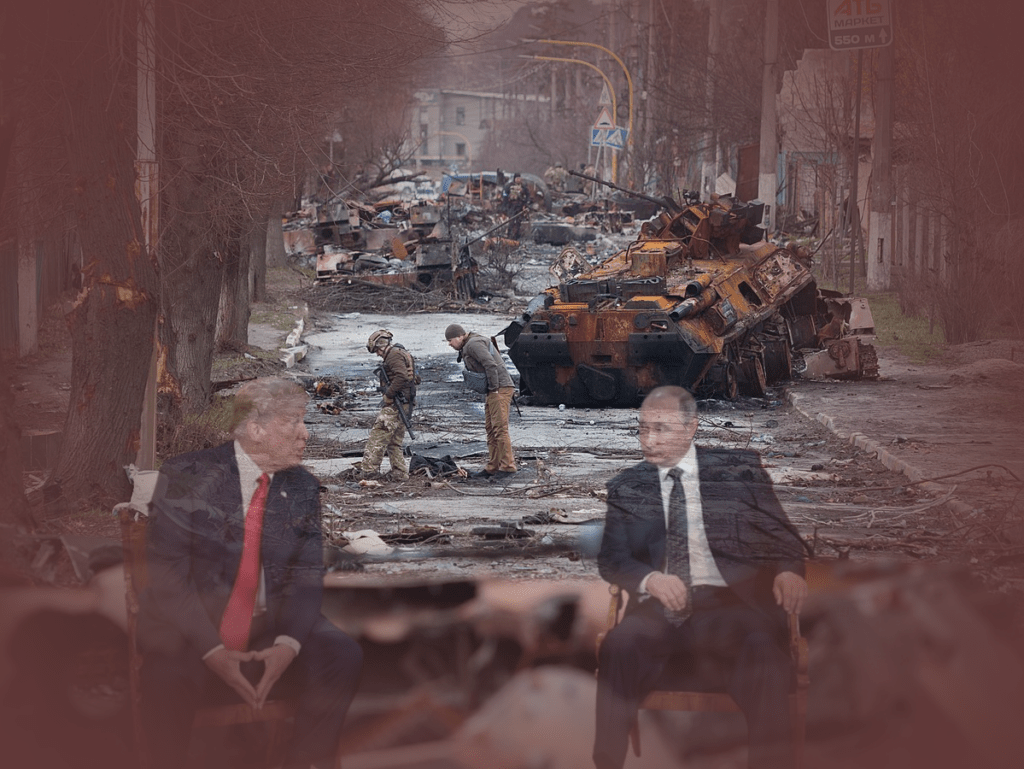
One of the anticipated top priorities of Donald Trump’s presidency is ending Russia's war in Ukraine while normalizing relations with Moscow. Writing on his Truth Social channel, Trump stated that, “Together, we will secure PEACE THROUGH STRENGTH, and Make America, and the World, SAFE AGAIN!” Trump’s nominee to serve as Special Envoy for Ukraine and Russia, 80-year-old former national security advisor, General Keith Kellogg, laid out his plan in writing for the America First policy institute, whilst focusing on characterizing the war “an avoidable crisis that, due to the Biden Administration’s incompetent policies [which] has entangled America in an endless war.” There are fears, however, that Kellogg’s proposal to reach a ceasefire by freezing the frontlines and forcing both sides the negotiating table will lead to a tumultuously violent period as Moscow seeks to swallow up territory. Meanwhile, NATO’s new secretary-general, Mark Rutte, has warned that compelling Ukraine into a “bad peace” would pose a “dire threat” to the U.S. itself. Whilst the framework for bringing a pause to hostilities is becoming clearer, it appears that Trump (or his representative) will need to meet with Vladimir Putin, and Kazakhstan has emerged as a potential venue for this high-stakes meeting. Kazakhstan's Role as Mediator Russian political analyst, Arkady Dubnov, has argued that Putin’s recent state visit to Astana may be an indication that Kazakhstan could play a pivotal role, and that given Putin’s limited travel options due to the International Criminal Court’s arrest warrant against him, Kazakhstan, with its reputation for diplomacy, would be a logical choice. “Putin is essentially restricted from visiting most of the Western Hemisphere,” Dubnov explained. “This leaves the Eurasian East, and among its cities, Astana stands out. Kazakhstan has hosted OSCE and CICA summits, mediated in the Syrian conflict, and facilitated peace talks over the future of the South Caucasus.” Dubnov sees Putin’s visit to Astana as indirectly tied to a possible meeting with Trump. “The Kremlin trusts Kazakhstan as an ally while respecting its constructive relations with the U.S. and the broader West,” he stated. Kazakhstan has long been recognized as a neutral ground where East and West can find commonality. The Astana process on Syria, initiated in 2017, helped prevent the escalation of hostilities for years, whilst Kazakhstan has mediated in other long-standing disputes, such as the conflict between Armenian and Azerbaijan. Given this history, it is conceivable that a reconciliation process between Russia and Ukraine could start in Astana. Neither the Minsk agreements of 2014, nor discussions in Istanbul in 2022 achieved lasting peace, but Kazakhstan’s diplomatic efforts could provide fresh impetus. Early Peace Efforts In March 2022, Kazakh President Kassym-Jomart Tokayev spoke with Ukrainian President Volodymyr Zelensky, emphasized the urgency of negotiations to bring a halt to hostilities, a stance that has since gained momentum as the war drags on. By 2024, the validity of Tokayev’s view — that negotiations are the only viable path to end the bloodshed — has become increasingly apparent. Kazakhstan’s diplomatic corps has actively pushed for peace....

Russia’s Strategic Posturing and Putin’s November Visit to Kazakhstan

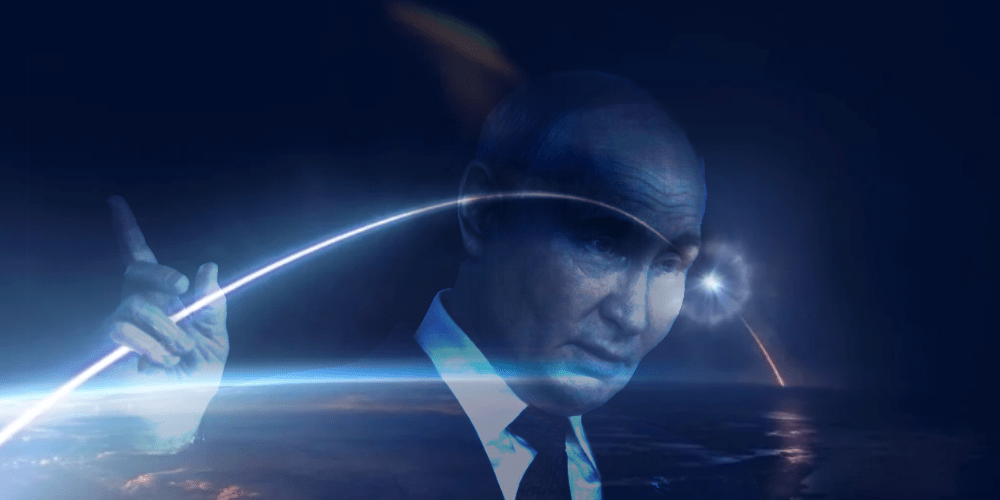
On November 27, 2024, Russian President Vladimir Putin’s state visit to Kazakhstan underscored the complex geopolitical and security challenges facing the region. Hosted by Kazakh President Kassym-Jomart Tokayev in Astana, the visit took place amidst heightened tensions following Russia’s deployment of its Oreshnik hypersonic missile in Ukraine on November 21. This escalation has reshaped the regional security environment, compelling Kazakhstan to confront potential spillover effects of the Ukraine conflict. Energy remained a central focus during the visit. Kazakhstan remains heavily reliant on oil exports through the pipeline of the Caspian Pipeline Consortium (CPC), which passes through southern Russia. This cooperation benefits Kazakhstan economically but, by tying Kazakhstan further into Russian energy networks, it further complicates Astana's efforts to balance relations with Moscow and Western powers. Following periodic closures of the CPC route on various pretexts, Kazakhstan has resolved to diversify its energy export strategy. It has increased shipments by barge across the Caspian Sea to enter the Baku-Tbilisi-Ceyhan (BTC) pipeline, which terminates on Turkey's coast in the eastern Mediterranean. One should not be surprised if ideas about the old Trans-Caspian Oil Pipeline (TCOP) project are taken out of deep storage for reanimation. The TCOP is an undersea link first discussed in the late 2000s between then-Presidents Nursultan Nazarbayev of Kazakhstan and Nicolas Sarkozy of France. It was shelved at the time because it did not seem geoeconomically necessary. Since then, relations between Russia and Kazakhstan have been complicated by the periodic CPC closures that, although they are given technical justification, appear politically motivated by Moscow to squeeze Astana. Kazakhstan's short-term solution, to increase oil shipments by barge across the Caspian Sea to Baku for insertion into the BTC pipeline, simply cannot attain the volumes necessary to provide a strategic alternative to the CPC. The BTC, at present, would be able to accommodate whatever volumes Kazakhstan would be able to transit to Azerbaijan including via a prospective TCOP, for export to world markets from Ceyhan. One would suppose that bilateral discussions also covered the possible participation of Rosatom in the construction and operation of Kazakhstan’s first nuclear power plant (NPP). However, no mention of this topic was made in public statements. Kazakhstan would prefer to escape the vise-like pressure between Russia and China on this matter. That is why Tokayev has discussed participation by the French firms Orano and EDF with France's President Emmanuel Macron. It has recently been suggested that it would be technically feasible for Kazakhstan to find a group of Western companies capable of executing the project. A Western consortium would have no reason to hesitate to include Kazatomprom in an appropriate role, not excluding capacity-building. The Russia-only and China-only options for the NPP's construction would be less welcoming to such a possibility. Kazakhstan's leadership has become properly sensitive to how energy partnerships are not just economic decisions, but strategic calculations in Central Asia's volatile geopolitical landscape. Indeed, Russia’s use of the Oreshnik missile against Ukraine has created an entirely new security situation. It has raised concerns that...

Russian MP Blames Central Asians for Ruble Depreciation

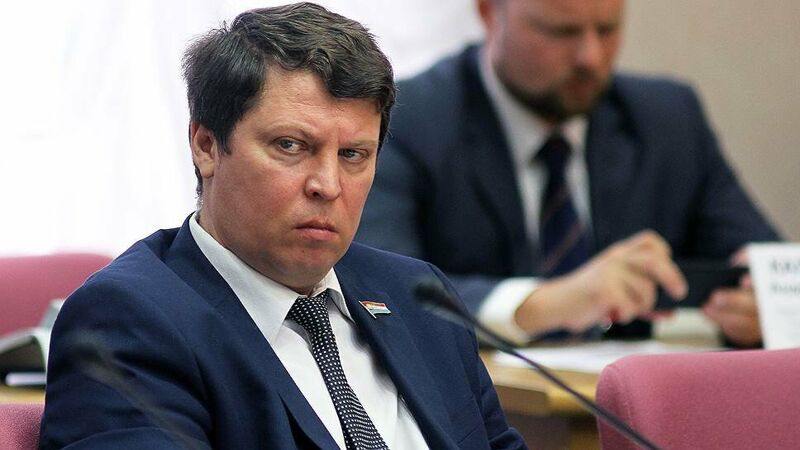
Mikhail Matveyev, a member of Russia’s State Duma, has attributed the depreciation of the Russian ruble in part to remittances by labor migrants from Central Asia and the Caucasus. In a statement on his Telegram channel, Matveyev argued that millions of migrants working in Russia transfer their earnings abroad, removing significant sums from the Russian economy. According to him, these remittances fuel demand for foreign currencies, such as the dollar, thereby weakening the ruble. Citing statistics, Matveyev claimed that in 2023, labor migrants sent $5.7 billion from Russia to Tajikistan - nearly half of Tajikistan’s GDP. Kyrgyzstan received remittances equal to about one-third of its GDP, while Uzbekistan received over $14.5 billion, accounting for 12-15% of its GDP. Other significant recipients included Georgia (over $2 billion), Armenia (over $3 billion), and Kazakhstan. Matveyev also criticized some of these countries for their stance on Western sanctions against Russia. He noted that several countries in the Eurasia region have joined sanctions targeting Russian banks and refuse to process transactions using the Russian Mir payment system. This, he said, forces migrants to withdraw cash dollars from Russia to transfer home, exacerbating the pressure on the ruble exchange rate. The MP’s remarks came amid a sharp drop in the ruble’s value against the dollar last week. For more than 30 years, millions of Central Asian citizens have migrated to Russia for work. However, recent trends indicate an increase in return migration, driven by Russia’s deteriorating economic conditions, stricter immigration rules, worsening attitudes toward Central Asian workers, and attempts by Russian authorities to recruit immigrants - both with and without Russian citizenship - for military service in Ukraine.

Kazakh Deputy PM Zhumangarin: Our Industries Come Before Sanctions

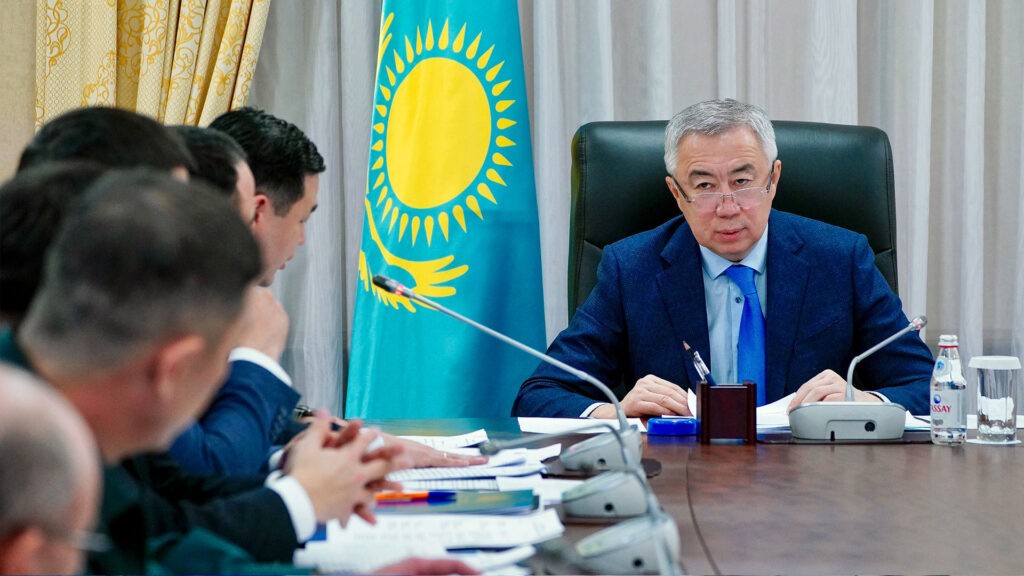
Kazakhstan has clarified its position on sanctions against Russia imposed as a result of Russia's invasion of Ukraine. Primarily, Kazakhstan will not support measures that could negatively impact its economy. Speaking to Russian state media outlet Tass, Deputy Prime Minister Serik Zhumangarin underscored that Kazakhstan will not act as a conduit for circumventing sanctions, as doing so could severely affect its domestic industries. However, he emphasized the nation's commitment to safeguarding its economic interests, particularly in sectors where products might fall under sanction restrictions. “We have explicitly stated that we will not impose restrictions on these goods, as behind them are large labor collectives and enterprises, often located in single-industry towns,” Zhumangarin explained. During Russian President Vladimir Putin's visit to Kazakhstan on November 27-28, he met with Kazakh President Kassym-Jomart Tokayev. The leaders issued a joint statement condemning unilateral sanctions, citing their detrimental effects on global trade, economic cooperation, and sustainable development. They reaffirmed their commitment to principles of open and non-discriminatory international trade. By maintaining a neutral stance on sanctions, Kazakhstan seeks to minimize economic risks while prioritizing the interests of its workforce and industries. As The Times of Central Asia previously reported, Kazakhstan’s Ambassador to Russia, Dauren Abayev, noted that Kazakh companies aim to avoid secondary sanctions but will continue fostering close cooperation with Russia. In an August interview with Bloomberg, Zhumangarin reiterated that Kazakhstan would not blindly adhere to sanctions against Russia but would consider international restrictions. He highlighted that while Kazakhstan aims to protect its companies from trade bans, it cannot completely disregard sanctions due to the risk of economic isolation. Furthermore, Kazakhstan's Minister of National Economy, Nurlan Baibazarov, addressed concerns in early November regarding including Kazakh companies on UK sanctions lists. He emphasized that these cases mostly involved transient firms, asserting that Kazakhstan continues to comply with international regulations.