• KGS/USD = 0.01144 0%
  • KZT/USD = 0.00213 0%
  • TJS/USD = 0.10714 0.09%
  • UZS/USD = 0.00008 0%
  • TMT/USD = 0.28571 0%
  • KGS/USD = 0.01144 0%
  • KZT/USD = 0.00213 0%
  • TJS/USD = 0.10714 0.09%
  • UZS/USD = 0.00008 0%
  • TMT/USD = 0.28571 0%
  • KGS/USD = 0.01144 0%
  • KZT/USD = 0.00213 0%
  • TJS/USD = 0.10714 0.09%
  • UZS/USD = 0.00008 0%
  • TMT/USD = 0.28571 0%
  • KGS/USD = 0.01144 0%
  • KZT/USD = 0.00213 0%
  • TJS/USD = 0.10714 0.09%
  • UZS/USD = 0.00008 0%
  • TMT/USD = 0.28571 0%
  • KGS/USD = 0.01144 0%
  • KZT/USD = 0.00213 0%
  • TJS/USD = 0.10714 0.09%
  • UZS/USD = 0.00008 0%
  • TMT/USD = 0.28571 0%
  • KGS/USD = 0.01144 0%
  • KZT/USD = 0.00213 0%
  • TJS/USD = 0.10714 0.09%
  • UZS/USD = 0.00008 0%
  • TMT/USD = 0.28571 0%
  • KGS/USD = 0.01144 0%
  • KZT/USD = 0.00213 0%
  • TJS/USD = 0.10714 0.09%
  • UZS/USD = 0.00008 0%
  • TMT/USD = 0.28571 0%
  • KGS/USD = 0.01144 0%
  • KZT/USD = 0.00213 0%
  • TJS/USD = 0.10714 0.09%
  • UZS/USD = 0.00008 0%
  • TMT/USD = 0.28571 0%

Viewing results 1 - 6 of 461

Central Asian Countries and Azerbaijan Begin Military Exercises in Kazakhstan

On July 8, Kazakhstan’s Ministry of Defense announced the start of joint military exercises - 'Birlestik-2024' (Association-2024) - by Azerbaijan, Kazakhstan, Kyrgyzstan, Tajikistan, and Uzbekistan in the country’s Mangystau region. Until July 17, the states’ military contingents will be modelling and practicing a joint operation to localize an armed conflict in manoeuvres at both the Oimasha training ground and a Caspian Sea site two kilometers from Cape Tokmak. Some four thousand military personnel and up to 700 pieces of military equipment will be involved in the exercise. Tactical episodes will be played out with the participation of ground and air reconnaissance groups, naval special forces, army and front-line aviation crews, warships and boats, artillery crews, assault and tank units. In recent years, there has been talk about increasing military cooperation between Turkic-speaking countries. In November 2023, Azerbaijani President Ilham Aliyev called on leaders of Turkic states to strengthen defense cooperation and at a summit of the Organization of Turkic States (OTS) in Astana, Kazakhstan, stated: "Wars and bloody conflicts break out. In this case, the main guarantor of security, first of all, becomes the defense potential. I believe that cooperation between the member states in areas such as security, defense, and the defense industry should be further increased.” Member countries of the OTS, established in 2009, include Turkey, Azerbaijan, Kazakhstan, Kyrgyzstan, and Uzbekistan, while Hungary, Turkmenistan, and the Turkish Republic of Northern Cyprus have observer status.
Paving the Path Westward: Insights from the Astana and Shusha Summits

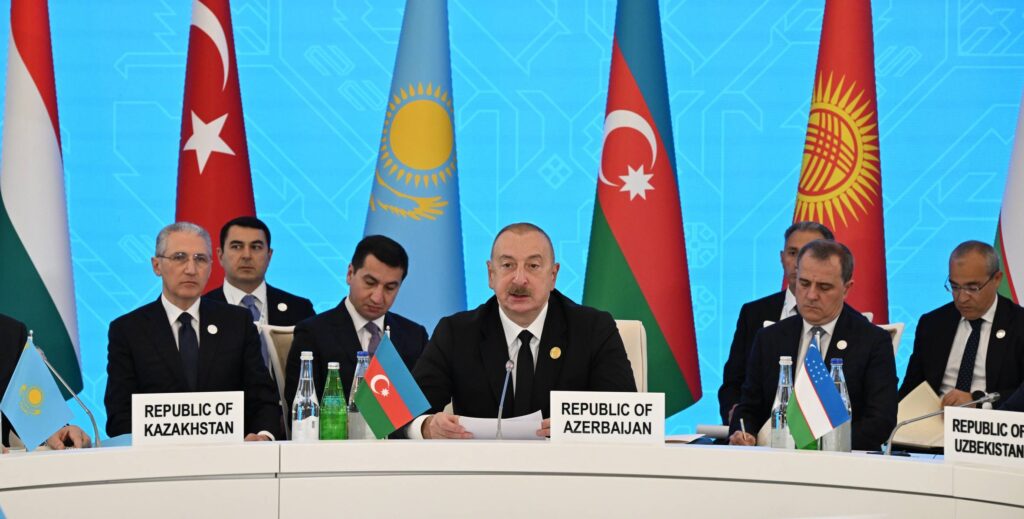
The informal OTS summit in Shusha, hosted at the invitation of Ilham Aliyev, centered on the theme of "Building a Sustainable Future through Transportation, Connectivity and Climate Action." Attendees included Presidents Kassym-Jomart Tokayev of Kazakhstan, Sadyr Japarov of Kyrgyzstan, Shavkat Mirziyoyev of Uzbekistan, Ersin Tatar of the Turkish Republic of Northern Cyprus, Prime Minister Viktor Orban of Hungary, and OTS Secretary General Kubanychbek Omuraliev. In place of Erdoğan, who was in Germany supporting the Turkish national soccer team ahead of a crucial Euro 2024 quarter-final against the Netherlands, Vice President Cevdet Yılmaz attended. Turkmen President Serdar Berdimuhamedov was also absent due to hosting UN Secretary-General António Guterres in Ashgabat. Notably, the Shusha summit occurred just two days after the meeting of SCO leaders in Astana, which drew an exceptional amount of attention from international observers due to the participation of the Russian and Chinese leaders. The intrigue surrounding the SCO summit was linked to its closed session, attended only by the Shanghai Ten. At the summit, only the speech delivered by Tokayev was made available to the press. Speeches made in the subsequent SCO+ format sessions were made public, wherein Russian President Vladimir Putin and Chinese President Xi Jinping underscored the need for a multi-polar world, suggesting that the SCO members had discussed shifting away from Western cooperation towards the Global South. At the Shusha summit Aliyev highlighted Azerbaijan's commitment to strengthening ties within the Turkic world, emphasizing the importance of the political, economic, and military consolidation of Turkic States as a global power center. Aliyev stated that Azerbaijan has consistently sought to unite the Turkic world and enhance its influence on the global stage, stressing that the OTS should seek to emerge as a significant global power. "We cover a large geographical space and positive demographic dynamics are observed in the member countries. Our greatest assets are our rich natural resources, modern infrastructure for their delivery, transportation corridors connecting Central Asia and the Caucasus with Mediterranean and Black Sea ports, and our rich and ancient history and culture. The commitment of our people to traditional values and ethnic commonality closely unites our countries. The 21st century should become the century of prosperity of the Turkic world," the Azerbaijani leader emphasized. Aliyev also addressed the primary tasks which lie ahead for the OTS, referencing the Astana Declaration of the SCO, which designates Central Asian republics as the organization's foundation. Leaders of these republics who attended the summit in Shusha, Tokayev, Shavkat Mirziyoyev, and Sadyr Japarov, endorsed Aliyev's call for the expansion of the East-West transport corridor connecting Central Asia and Eurasia to Europe. Aliyev further highlighted the Digital Silk Road project, which aims to establish a fiber-optic telecommunication route between Europe and Asia via the Caspian Sea through Azerbaijan. Furthermore, when the President of Kazakhstan delivered his speech, he stressed the significance of the Trans-Caspian International Transportation Route. "The potential of the Trans-Caspian International Transport Route should be fully utilized. Today, the volume of container transportation along this corridor has...

Kyrgyz Council Deputy Arrested for Calling for Riots

An unnamed member of the city council in Kyrgyzstan's Jalal-Abad region has been detained for calling for the organization of mass riots and a violent seizure of power, 24.kg reports. Kyrgyzstan's State Committee for National Security (SCNS) announced in a statement: "[An] investigation has established that [a] deputy of Kerben city council from the 'Ata-Jurt Kyrgyzstan' political party systematically published provocative materials and calls for the organization of mass disorder and violent seizure of power on Facebook." The suspect was taken to the security committee's detention center. The investigation is ongoing. According to the security committee, the attempt was scheduled for August 31, which is Kyrgyzstan's Independence Day. "The suspects, under the influence of certain destructive political forces, hatched plans for a violent seizure of power by destabilizing the socio-political situation in the country and organizing mass riots in Bishkek, including the death of citizens. They planned to organize a sporting event near Bishkek on Independence Day to gather young people from all around the country," the SCNS said. On the eve of Independence Day, special services detained five Kyrgyz men who were planning an armed seizure of power. A search of their homes revealed a large cache of weapons, explosives, and police uniforms. A total of 50 weapons (20 pistols and 255,238 rounds of ammunition), 200 sets of law enforcement uniforms, 150 pieces of police and 100 pieces of military headgear, 38 sets of body armor, two drones, radios, homemade explosives, and extremist literature were seized from them. It has also been established that the detainees are involved in organizing rallies against foreign citizens.

Nuclear Race: Will Central Asia Build a Nuclear Power Plant?

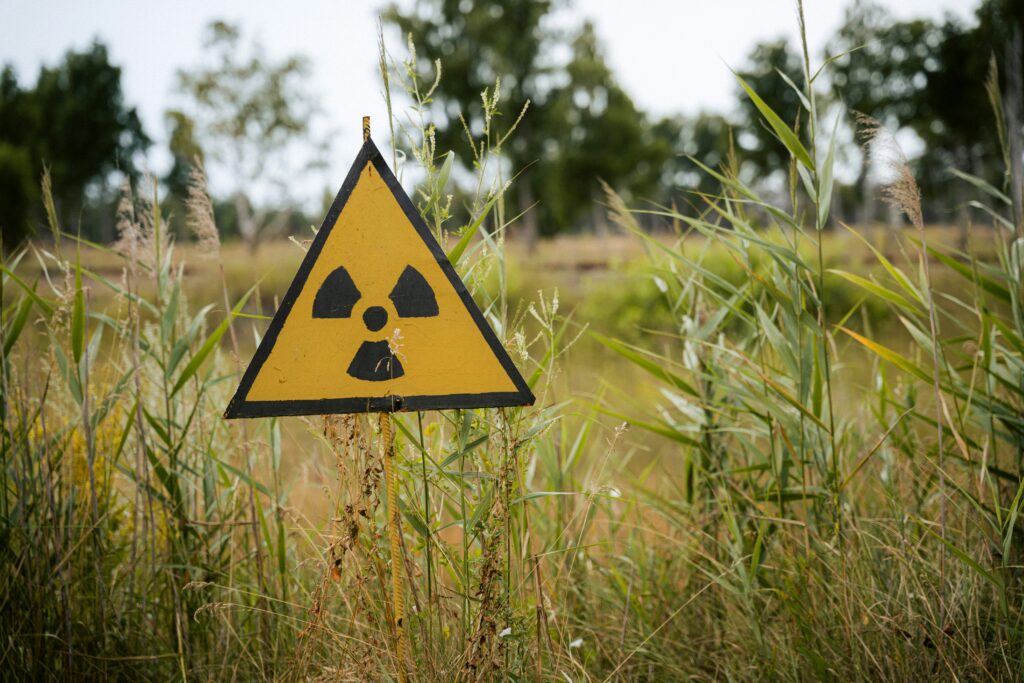
The answer to the question posed in the title remains uncertain. While Uzbekistan has plans to construct a nuclear power plant and Kazakhstan is set to hold a referendum this fall to gauge public opinion on building one, progress is sluggish. Tashkent has postponed the start of construction, and the issue sparks heated debate in Kazakhstan. The First Nuclear Power Plant in Central Asia Historically, Central Asia did host a nuclear facility. Located on the shore of the Caspian Sea in Kazakhstan, this was not a conventional nuclear power plant but a fast neutron reactor known as BN-350. The reactor was the core of the Mangistau Nuclear Power Plant, designed to transform the Mangyshlak Peninsula by providing energy to the city of Aktau (formerly Shevchenko) and powering large-scale desalination plants that supplied drinking water to the arid region. [caption id="attachment_20031" align="aligncenter" width="366"] BN-350[/caption] Operational from 1973 until its shutdown in 1999, the BN-350 reactor was decommissioned due to the allocation of U.S. funds for new desalination and heating equipment and the disposal of its remaining fuel. The extensive maintenance and decommissioning work on the BN-350 have given Kazakhstani nuclear physicists significant experience with such complex and hazardous technology. However, younger generations in Kazakhstan are largely unaware of the BN-350 reactor’s existence. Their knowledge of nuclear physics is often limited to the harrowing stories passed down about nuclear warhead tests at the Semipalatinsk test site and their devastating effects. Fear and Nuclear Power: Kazakhstan's Dilemma The societal fear surrounding nuclear energy in Kazakhstan is deeply intertwined with political concerns. For a long time, the leadership in Kazakhstan has hesitated to move beyond merely discussing the need for a nuclear power plant (NPP) to actually initiating the project. President Kassym-Jomart Tokayev recently announced that a referendum would take place in the fall of 2024. However, Ministry of Energy's officials avoided mentioning the word "referendum" until the last moment, previously asserting it was unnecessary. Public hearings were held last year in the village of Ulken, Zhambyl district, Almaty region, a proposed site for the nuclear plant. The Ministry of Energy’s press release stated that the local populace supported developing nuclear power, highlighting its significance for regional socio-economic growth. However, media reports revealed that the hearings were contentious, with opposing viewpoints almost disrupting the speech of Nurlan Ertas, the head (akim) of the Zhambyl district. Activists even displayed banners and posters against the plant's construction. Certain groups have exploited the population's fear of another disaster like Chernobyl. Additionally, the government has struggled to convince the public that nuclear technologies are becoming safer. In contrast, Europe now includes nuclear power plants in its list of green energy sources, similar to other renewable energy sources (RES). In Kazakhstan, renewable energy accounts for only 5% of the total energy produced. The introduction of NPPs could significantly enhance the country’s position in reducing carbon emissions. The government faces a growing electricity shortage that can be addressed either harmfully or fearfully. The harmful options are coal-fired thermal power plants...

Taking the Necessary Steps to Curb Child Abuse in Kazakhstan

In Almaty, a young woman threw herself off a Ferris wheel, falling to her death. Before committing suicide, she had strangled her five-year-old daughter. The number of children in Kazakhstan has soared over the past decade, but so have the number of crimes committed against minors. When Mom and Dad are the murderers In 2023, twenty-five children were murdered in Kazakhstan, seven of them by their relatives according to the country’s children's ombudsman, Dinara Zakiyeva. This year, Kazakhstanis were shocked by numerous horrifying cases of child abuse. According to relatives and neighbors, the family of the woman who strangled her daughter lived in the Ile District of Almaty Region and were financially secure and successful. The regional commissioner for children's rights, Aigul Yesimbekova, explained that the woman had confesses her crime to her sister before committing suicide. “The child had Down's syndrome. The mother was most likely in an internal crisis and despair when she decided to do this,"Yesimbekova explained. "She went to her sister and told her that she was going to kill herself. When her sister tried to calm her down, she went to the park (the Central Park of Culture and Leisure in Almaty). Her husband is an IT specialist, and the financial component [of her life] was fine. She was not registered with psychiatrists, her husband makes money, and everything seemed fine, but the child was sick. Probably, her soul was in such a state of crisis; it is hard when a child is sick. Maybe she murdered the child in a rush of emotion, and then, unable to cope with the guilt, she took the step she did.” According to Zakiyeva, such families are in critical need of psychological support, and child protective services should supervise them. However, the situation with psychologists and child social workers in Kazakhstan is poor. At the end of June, a court in the Turkestan Region convicted a mother of killing her two children. Their bodies were found in a rented apartment in February 2024 in the city of Turkistan. The mother was sentenced to 15 years in prison. After killing her children, the woman called her friend and told her what she'd done. Even against the backdrop of Kazakhstan’s high birth rates, the Turkestan Region - as is the entire south of the country - is an outlier. The percentage of people under the age of 18 in Kazakhstan stands at 34.1%, whereas in the Turkestan Region, this figure is 43.3%, followed by the Mangystau Region at 41.9%, and the federal city of Shymkent at 40.6%. Experts say that it is in the regions with the highest birth rates that the highest rates of violence against children are recorded. In September of last year, a pedophile raped and brutally murdered a five-year-old girl who lived next to him in the village of Zhibek Zholy in the Turkestan Region. He was sentenced to life imprisonment and chemical castration. News of the murder almost sparked a riot and deadly reprisals against the rapist;...

Illegal Underground Tunnel Unearthed on Uzbekistan-Kazakhstan Border

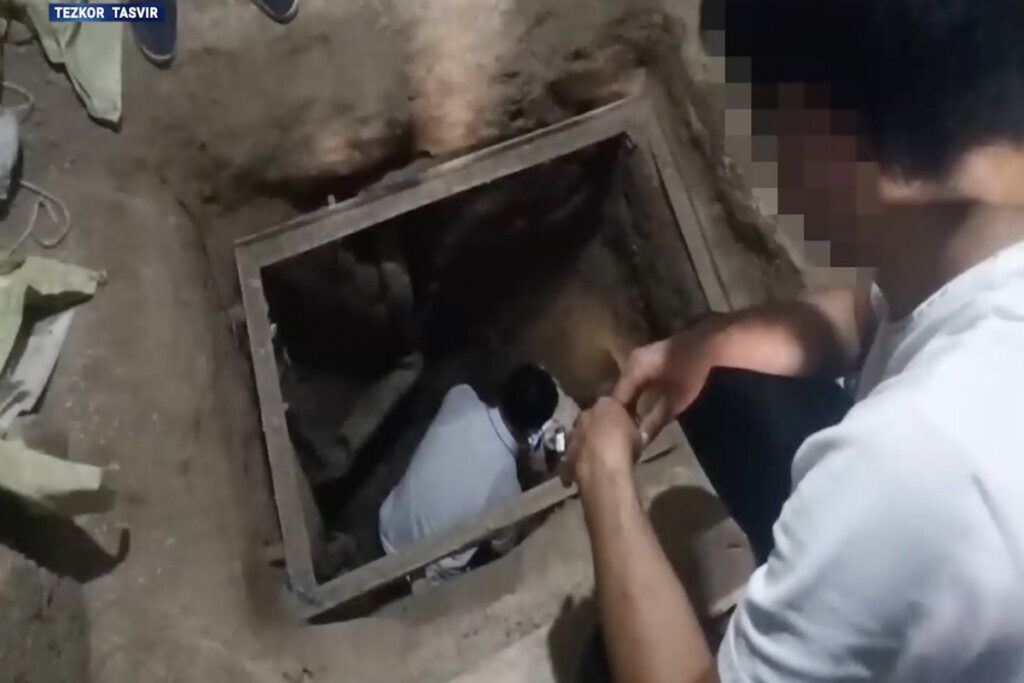
An illegal underground tunnel has been discovered in the border area of  Tashkent and Kazakhstan, according to the State Security Service of Uzbekistan (SSS). It is noted that SSS employees were quick to call a meeting to cooperate with the “Tashkent-Aero” specialized customs complex's  border troops and military personnel. The gathering exposed a cross-border criminal group's illegal importation of large quantities of substandard drugs from India through Kazakhstan to Uzbekistan. The drugs were brought into Almaty's international airport via the Delhi-Tashkent-Almaty air route. The stash was then delivered to the Dostlik settlement in the  Saryogoch district of the  Turkestan region, Kazakhstan, and transferred onwards to Tashkent's  Orikzor neighbourhood, through a secret underground route. The horde comprised 17,048 drugs, produced in India under 107 brands including Albumin, Remdesivir, and Meropenem. Valued at 1 billion 94 million UZS (approximately $87,096.82), the drugs were retained as evidence against the smugglers who are currently being held in detention. Running a distance of 310 meters, the underground tunnel is a sophisticated construction furnished with  air ventilation,  lighting , carts, and ropes for cargo transportation. In a previous post, The Times of Central Asia reported on the discovery of another secret tunnel connecting Kyrgyzstan and Uzbekistan.