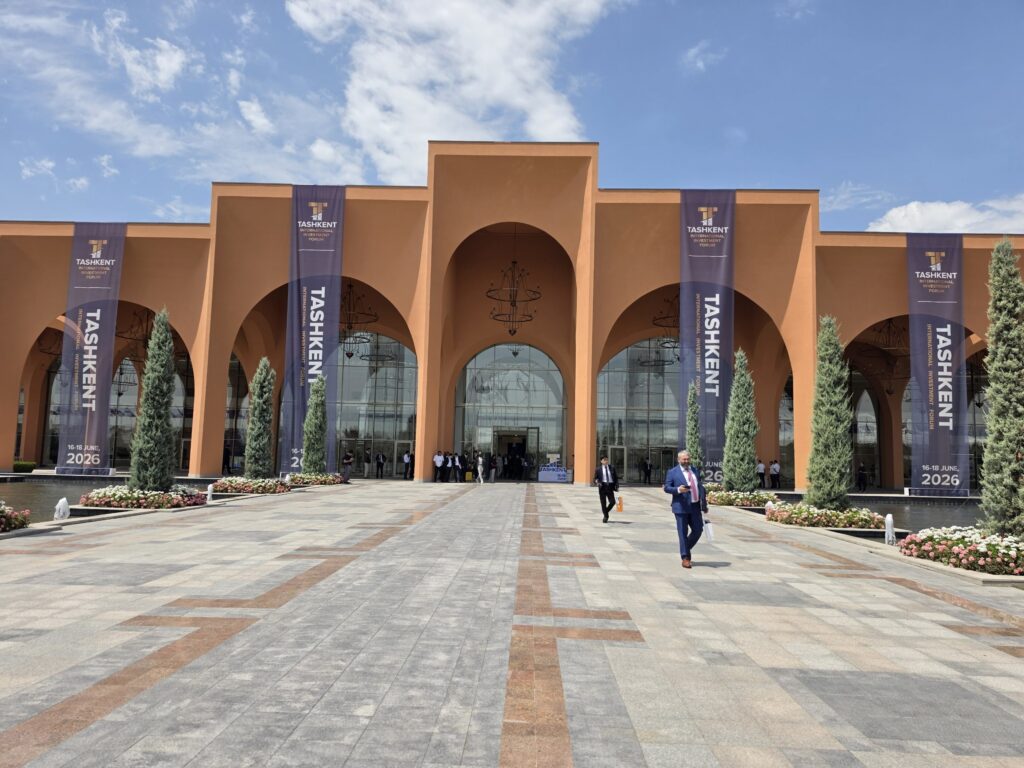
At the Tashkent International Investment Forum, officials and transport executives discussed railway reform and new corridor projects, with private investment as a main point.
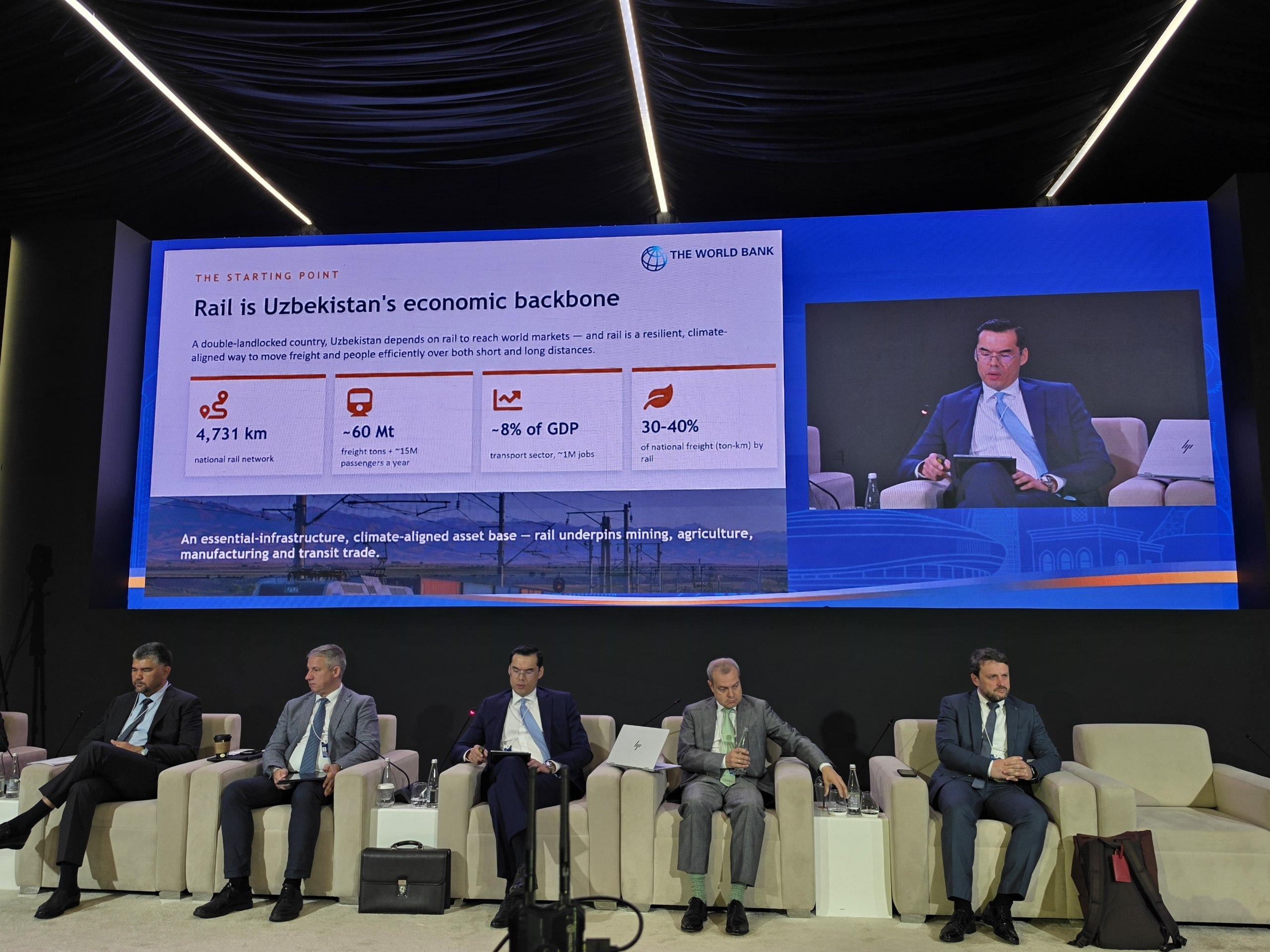
World Bank Senior Transport Specialist Mansur Bustoni described rail as “essential” for Uzbekistan, which depends on land routes for access to seaports and export markets. The World Bank wants to help turn Uzbekistan Railways from a state monopoly into “a commercial bankable enterprise,” he told the forum.
Uzbekistan Railways has about 4,700 route kilometers, according to Bustoni. The system carries around 60 million tons of freight and 15 million passengers a year and contributes about 8% of GDP. Much of that freight is linked to exports.
The World Bank is supporting 44 activities across seven reform programs. Bustoni listed legal separation inside Uzbekistan Railways, financial reform, operational efficiency, and investment planning among the main areas. Each activity has been ranked by priority, he added.
Tariff reform was one of Bustoni’s main topics. He called the proposed change “not a price hike.” The aim is to replace ad hoc increases with rules-based pricing. Cost-reflective tariffs would give the railway company more predictable revenue and reduce state cross-subsidies.
Bustoni also cited capital-market plans. Uzbekistan’s infrastructure company is part of the National Investment Fund of the Republic of Uzbekistan (UzNIF), which he described as a $2.4 billion fund managed by Franklin Templeton, with a planned dual listing in London and Tashkent. The railway sector recorded a roughly $188 million net loss in 2023, reached break-even in 2024, and is expected to post a positive $138 million result in 2025, he added.
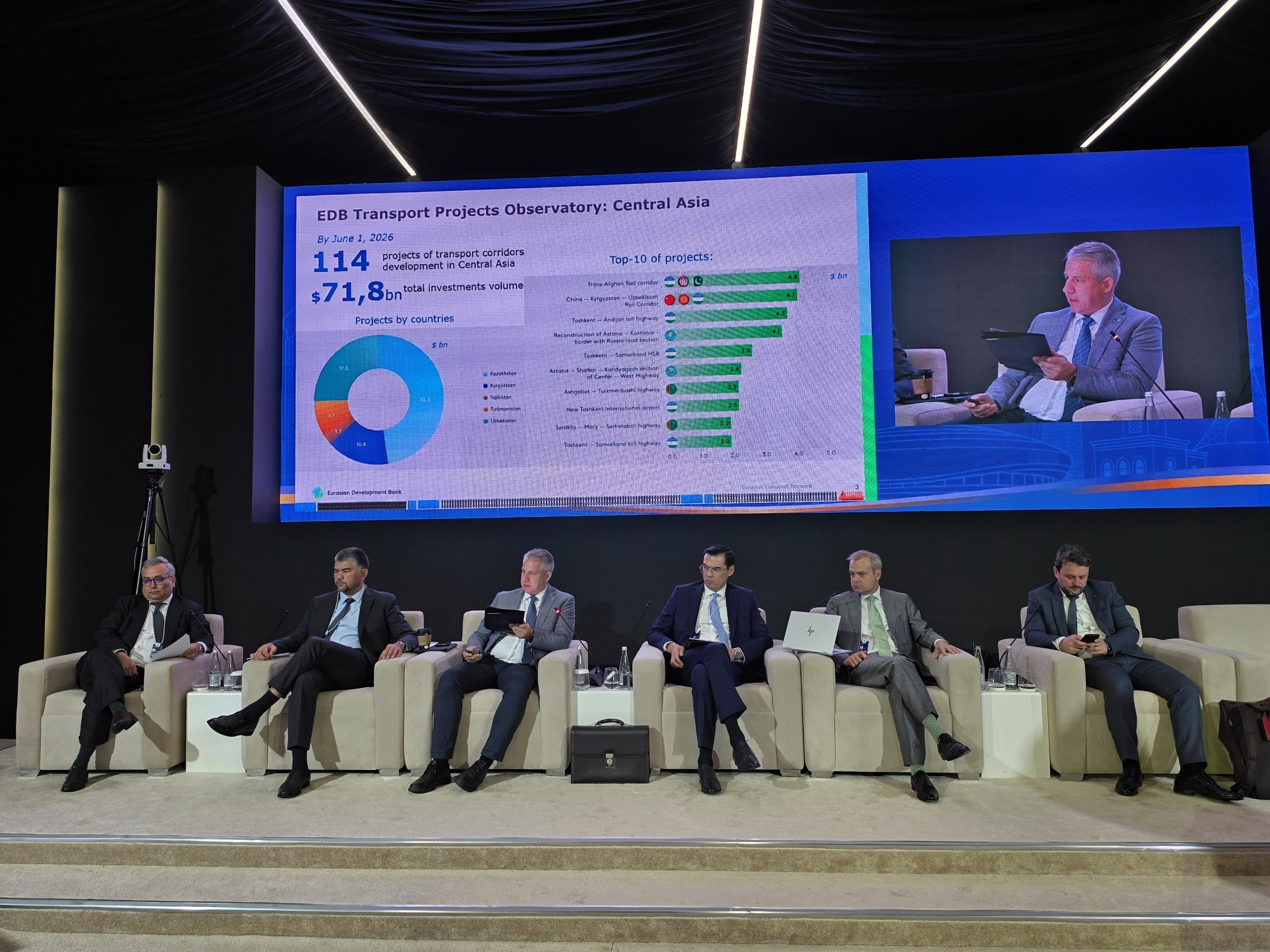
Image: TCA
Transport Corridor Europe-Caucasus-Asia (TRACECA) Secretary General Jasurbek Choriyev linked corridor development to Uzbekistan’s national priorities. He cited double-digit growth in passenger air traffic over five years and 15 million tourists last year, attributing the figures to national data and analysts at Airports Council International and the World Bank.
Uzbekistan’s aircraft fleet has expanded to more than 100 planes from about 40 to 50 in recent years. A target of 188 aircraft by 2030 could be reached earlier, Choriyev noted. Uzbek airlines are also carrying more freight on the China-Europe route, driven in part by e-commerce.
Choriyev described rail as the backbone of national connectivity, carrying about 90% of internal and external traffic. He pointed to the China-Kyrgyzstan-Uzbekistan-Iran railway and gave 2030 as the expected completion date, with 2028 or 2029 possible. He also cited the Trans-Afghan corridor as a route to Pakistan. About 52% of Uzbekistan’s rail network is electrified, with a target of 70% by 2030.
Innokenty Ivanov, a principal consultant at Freshfields, said Uzbekistan’s railway reform is creating legal routes for private investment through market mechanisms and public-private partnerships. The reform covers the reorganization of Uzbekistan Railways as a holding company and a legal framework for private investment and independent operation.
Ivanov compared the process with Germany, where railway reform led to long-term contracts between the government and the infrastructure company. Financing tied to measurable targets gives investors more certainty than annual budget decisions, he said.
Škoda Group’s Roman Sorkin called Uzbekistan a “next home base” for the company and discussed plans to localize assembly and supply-chain activity. The company plans to work with Tashkent Transport University to open a “Škoda Academy.”
Sorkin urged fast-growing cities to plan for barrier-free transport before demand rises further. Low-floor vehicles and universal accessibility can make public transport easier to use, he said. He also called for clear technical standards to avoid higher costs and delays, citing TSI 1520 and interoperability standards.
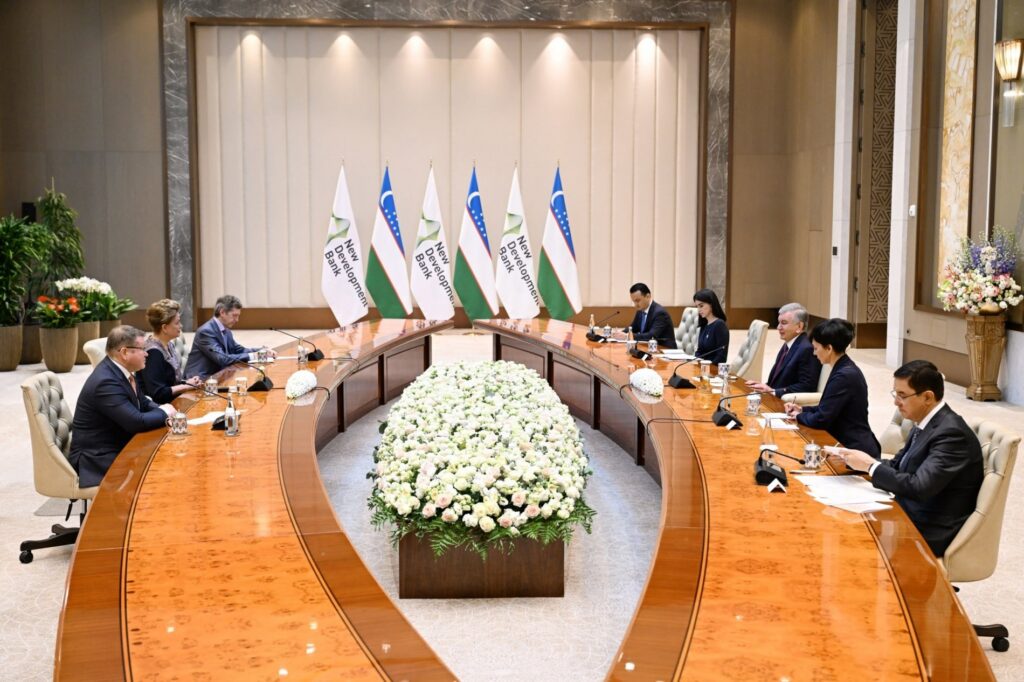
Aleksey Skatin of the Eurasian Development Bank (EDB) told the forum that the bank had opened an office in Tashkent a month earlier and was already active as a non-sovereign lender in the region. Uzbekistan sits on the East-West and North-South transport axes, he said, while logistics projects need linked transport networks and storage capacity.
The EDB has collected 400 logistics projects in Central Asia, Skatin noted. Six of the top ten transport and logistics projects in its database are connected to Uzbekistan. The Uzbekistan-Kyrgyzstan-China railway could shorten access from China to Europe by about 1,000 kilometers and raise container traffic to five times its current level by 2030, he said. The Trans-Afghan railway could also cut the distance to Pakistan by about 1,000 kilometers and open access to maritime ports.
Warehouse capacity remains limited, Skatin added. Uzbekistan has slightly less than 1 million square meters of warehouse space, while demand could grow seven to nine times. Rail corridors need storage and distribution capacity to work effectively.
Petr Novotný of Škoda Group also described Uzbekistan as an attractive transport market. The company wants to sell vehicles and build a local role in training and production. New systems need careful integration to avoid extra costs, he added.
In a special interview during the forum, Bustoni cited “vivid interest” from foreign banks and private capital in Uzbekistan’s regional connectivity projects. The Uzbekistan-Kyrgyzstan-China railway would give the country its shortest route to China. The Trans-Afghan railway would connect Uzbekistan to Pakistani ports, while the Middle Corridor would improve access to European markets and diversify routes.
The World Bank is helping Uzbekistan prepare several road projects, according to Bustoni. He named the Tashkent-Andijon toll road, which would shorten travel time to the Fergana Valley, and the M41 road project in Surkhandarya, which would help move goods from Tajikistan and southern Uzbekistan toward Afghanistan.
Bustoni identified the absence of the “last mile” in the railway network as Central Asia’s main connectivity gap. Rail lines need road links to complete final delivery, he said. Rail carries about 30% to 40% of goods in Uzbekistan and remains one of the cheapest ways to move them.
Image: TCA