Allied Biofuels has disclosed planned export routes that would carry sustainable aviation fuel from its proposed facility in Uzbekistan to customers in Europe and the United Arab Emirates via rail and sea corridors crossing Kazakhstan, the Caspian Sea, the Black Sea, and the Suez Canal.
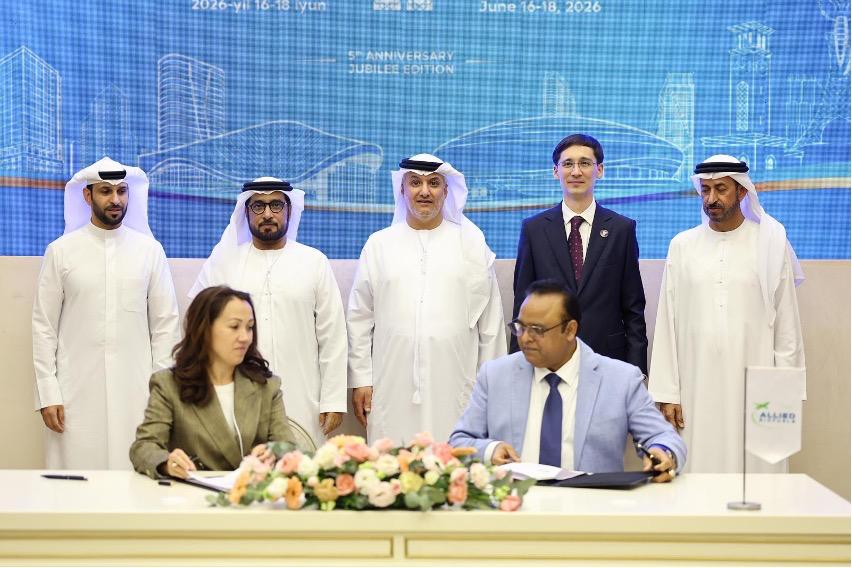
The routes are set out in a logistics agreement with Latvia-based Pro Logistic Services that was signed during the 5th Tashkent International Investment Forum in June and announced on July 20. It covers the future transport of sustainable aviation fuel (SAF) and electro-synthetic sustainable aviation fuel (e-SAF), rather than immediate exports. The production facility has not yet been built, and Allied Biofuels has said commercial fuel supplies are expected to begin in 2030.
Under the agreement, Pro Logistic Services will design and implement a multimodal transport network covering dedicated rail tank cars, port handling, freight forwarding, and marine shipping. The company would coordinate delivery from the project site in Uzbekistan to customers in Europe, the UAE, and other markets.
The logistics partnership forms part of Allied Biofuels’ planned $6.08 billion renewable energy and sustainable fuel project in Uzbekistan’s Khorezm region. The development is backed by a project implementation agreement with the regional authorities and has received special economic zone status under a presidential decree.
The planned complex would combine biomass processing, refining, green hydrogen, and power-to-liquid technologies. Allied Biofuels says it would produce about 160,400 tonnes of SAF, 257,000 tonnes of e-SAF, and 5,040 tonnes of green diesel annually. A proposed 4.45-gigawatt renewable energy system, supported by battery storage and hydrogen infrastructure, would supply the project.
In June, Allied Biofuels signed an engineering agreement with Sinopec Engineering Group covering front-end and detailed design, systems integration, and cost development. The logistics program is expected to proceed alongside engineering, production planning, financing, and negotiations with potential fuel buyers.
Uzbekistan Airports and Allied Biofuels also signed a memorandum of understanding in May on future SAF and e-SAF supplies. The May announcement said cooperation would begin in 2030. Allied Biofuels’ latest statement describes the memorandum as binding and says it covers annual purchases of 117,000 tonnes.
For shipments to the UAE, fuel would travel by rail from Miskin Station through the Trans-Caspian International Transport Route. The proposed journey would cross Kazakhstan and the Caspian Sea before reaching the Georgian Black Sea ports of Poti or Batumi. The cargo would then be transferred to tankers and shipped through the Black Sea, the Mediterranean, and the Suez Canal to Fujairah and other UAE ports.
European exports would use a separate corridor. Fuel would travel by rail from Miskin Station to the Port of Riga in Latvia, before continuing by sea to Hamburg and other European ports. The plan reflects Uzbekistan’s wider effort to improve rail links and secure more reliable access to distant seaports.
Pro Logistic Services says it has direct forwarding agreements with the national railway operators of Uzbekistan, Kazakhstan, Latvia, Turkmenistan, and Lithuania. Headquartered in Riga, the company operates more than 4,000 freight wagons and maintains a presence in countries along the proposed export corridors.
“Securing a logistics partner of Pro Logistic Services’ caliber reflects the scale, maturity, and international ambition of this project,” Allied Biofuels managing director Alfred Benedict said. He added that the company’s railway relationships, wagon fleet, and operational experience would provide a foundation for the export strategy.
Natalya Tsoy, a board member at Pro Logistic Services, said the company would draw on more than two decades of cross-border transport experience. She said its rail agreements, tank wagons suitable for SAF, and presence across the route would help connect future production with overseas aviation markets.
The agreement gives the project a proposed route to customers, but the network remains dependent on financing, construction, certification, and commercial production. Until those stages are completed, the Europe and UAE corridors remain planned supply chains rather than operating export routes.