• KZT/USD = 0.00213
  • TJS/USD = 0.10810
  • UZS/USD = 0.00008
  • TMT/USD = 0.29850
  • KZT/USD = 0.00213
  • TJS/USD = 0.10810
  • UZS/USD = 0.00008
  • TMT/USD = 0.29850
  • KZT/USD = 0.00213
  • TJS/USD = 0.10810
  • UZS/USD = 0.00008
  • TMT/USD = 0.29850
  • KZT/USD = 0.00213
  • TJS/USD = 0.10810
  • UZS/USD = 0.00008
  • TMT/USD = 0.29850
  • KZT/USD = 0.00213
  • TJS/USD = 0.10810
  • UZS/USD = 0.00008
  • TMT/USD = 0.29850
  • KZT/USD = 0.00213
  • TJS/USD = 0.10810
  • UZS/USD = 0.00008
  • TMT/USD = 0.29850
  • KZT/USD = 0.00213
  • TJS/USD = 0.10810
  • UZS/USD = 0.00008
  • TMT/USD = 0.29850
  • KZT/USD = 0.00213
  • TJS/USD = 0.10810
  • UZS/USD = 0.00008
  • TMT/USD = 0.29850

Viewing results 1 - 6 of 59

Multimodal Transport: What Makes Modern Logistics Flexible and Efficient?

Kazakhstan has set itself the task of developing the country's transport and transit potential. The national railway network operator, as well as the country’s main freight and passenger rail carrier, is now engaged in organizing multimodal transportation that combines rail, maritime, air, and road transport, along with providing logistics services at international cargo hubs. In August, it was announced that KTZ Express JSC, a subsidiary of KTZ JSC, had been established as Kazakhstan's first national air freight carrier, and that modern sea vessels were being built to develop the domestic fleet. We spoke with Damir Kozhakhmetov, CEO of JSC “KTZ Express,” about the prospects for developing aviation and maritime competencies within the framework of a multimodal operator. - Mr. Kozhakhmetov, could you tell us about your company’s plans for creating a national cargo airline under JSC “KTZ Express”? - First, I would note that establishing a national cargo airline means building a modern, competitive freight carrier. The project is coordinated by the Samruk-Kazyna Sovereign Wealth Fund, while our company is designated as the lead implementer. This effort will allow Kazakhstan to strengthen its position as a key transit hub of Eurasia and deepen integration into global transport chains. In terms of goals, the priority is to ensure Kazakhstan has stable access to international markets. The new carrier will not only handle transit cargo but also open new opportunities for businesses, especially where delivery speed is critical. Aviation, in particular, offers capabilities that no other mode of transport can match. As you know, the global air cargo market is growing rapidly. On the one hand, this is driven by the expansion of e-commerce; on the other, by rising transit flows between China and Europe. Kazakhstan’s unique geographic location gives us an advantage, and our task is to turn that into concrete, competitive services. The process of building the airline is structured in stages, and we have already started practical implementation. Research results confirm strong potential on routes between China and Europe, the Middle East and Central Asia, and in transit shipments via Kazakhstan. These routes will form the backbone of a sustainable network and the company’s long-term growth, aligned with current market trends, competition, and projected demand. In parallel, we have begun organizational structuring, regulatory compliance, and the development of manuals and documentation required to obtain an Air Operator Certificate (AOC). These documents are essential for launching any airline, as they confirm that the carrier has the necessary structure, staff, aircraft, and procedures that meet aviation law and safety standards. To ensure the project is built on solid ground and delivers real impact, we are engaging international consultants and leading industry experts. At the first stage, we plan to launch regular flights and establish a reliable route network. Priority will, of course, be given to the China-Europe corridor, which is one of the fastest-growing segments with strong and stable demand. At the next stage, the fleet will expand, and operations will extend to Southeast Asia, North America, the Middle East, and Africa. We...

Analysis: How Kazakhstan’s New Road and Rail Projects Are Boosting the Economy

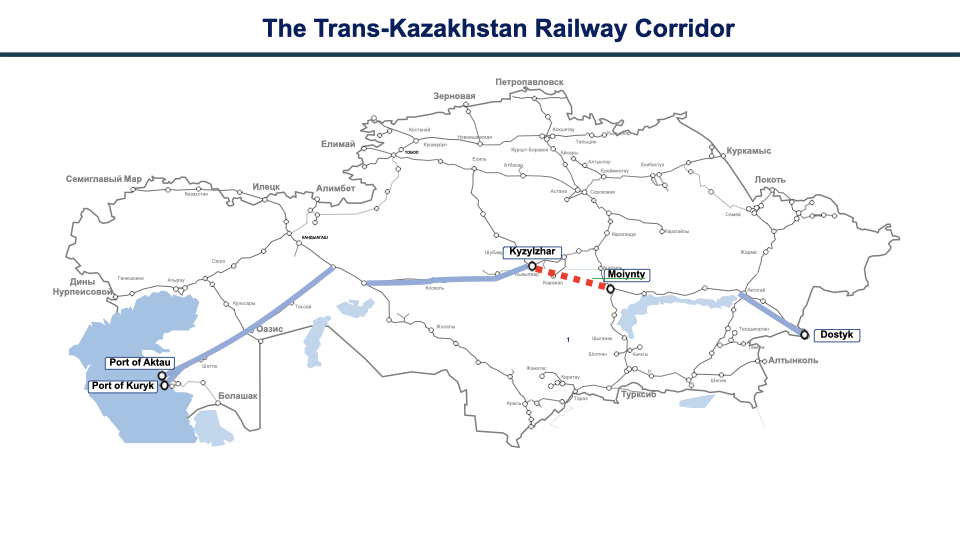
Kazakhstan is the largest landlocked country in the world, located at the strategic crossroads of Eurasian trade routes. This year, the country launched two major infrastructure projects: the Trans-Kazakhstan Railway Corridor and the construction of a new Center-West Highway, which will connect the capital, Astana, with Kazakhstan’s western regions. How the Center-West Highway will reshape Kazakhstan’s economy and logistics The Center-West Highway will link Astana to the country’s western territories, providing direct access to the Middle Corridor, also known as the Trans-Caspian International Transport Route (TITR). Passing through the towns of Arkalyk, Turgay, and Irgiz, the route will cut the distance to western Kazakhstan by more than 560 kilometers (about 350 miles). It is expected to improve interregional connectivity, stimulate socio-economic growth, increase the capacity of the transport network, and strengthen Kazakhstan’s role as a transit hub. Deputy Minister of Transport Maksat Kaliakparov told The Times of Central Asia that construction is still in its early stages. Repairs on the Astana-Korgalzhyn-Karazhar section are currently funded by the Development Bank of Kazakhstan, with completion planned for 2026. “The remaining sections are still in the design phase, and financing is being secured,” Kaliakparov said. “This year we plan to complete feasibility studies for unpaved sections, approve project documentation for the Arkalyk-Egindikol and Irgiz-Torgay stretches, and explore public-private partnerships to attract investment.” Beyond improving domestic transport links, the Center-West Highway is set to become a crucial part of the TITR, providing a shorter and more reliable route to Kazakhstan’s Caspian ports of Aktau and Kuryk. This will speed up transit, increase freight volumes, and reduce logistics costs for both domestic and international shippers. According to Kaliakparov, the project also includes modern roadside infrastructure: logistics hubs in Arkalyk and Irgiz, service stations, cafés, hotels, and an intelligent traffic monitoring and control system. “It is also important to introduce a number of innovative and environmentally friendly solutions, such as stormwater treatment facilities, energy-saving LED lighting, and the use of recycled materials. Environmental requirements will also be taken into account, including the preservation of animal migration routes using environmentally friendly solutions such as underground passages and eco-bridges,” emphasized Kaliakparov. However, despite its significant advantages, the project faces a number of challenges. The key ones among them are financing, complex terrain and geological conditions, seasonal limitations, and low population density along parts of the route, which affect its commercial viability. Kaliakparov added: “The road requires significant investment, especially for the construction of new sections, some of which pass through hard-to-reach areas. It is also necessary to take into account the short construction season in the northern and central regions of the country”. According to him, the highway is being designed with the local climate in mind. Kazakhstan’s continental weather patterns, sharp temperature fluctuations, steppe and semi-desert landscapes, hydrological studies, erosion prevention measures, and strict environmental compliance are taken into account. Once completed, the Center-West Highway is expected to increase freight traffic to 5–6 million tons per year, cut delivery times between central and western Kazakhstan by 30–40%,...

KTZ Secures $540 Million Loan to Upgrade Trans-Kazakhstan Railway Corridor

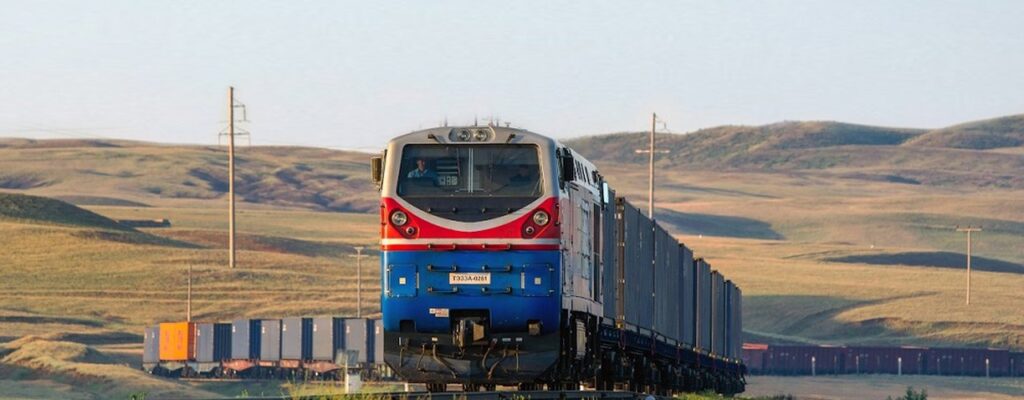
Kazakhstan Temir Zholy (KTZ), the national railway operator, has secured a syndicated loan of up to 480 million Swiss francs (approximately $540 million) for a three-year term. Arranged through Abu Dhabi Commercial Bank and Deutsche Bank, the financing will support key infrastructure projects along the Trans-Kazakhstan Railway Corridor. According to KTZ, the loan will fund construction of the Moiynty-Kyzylzhar section, upgrades to congested segments of the national rail network, and the refinancing of existing debt. The Trans-Kazakhstan Railway Corridor is central to Kazakhstan’s strategy to solidify its role as a major overland transit hub connecting China and Europe. Infrastructure improvements are expected to reduce delivery times, lower logistics costs, create jobs, and diversify international trade routes, enhancing both the resilience of Kazakhstan’s economy and the competitiveness of its transport sector. Currently, more than 80% of overland freight from China to Europe passes through Kazakhstan via the Trans-Caspian International Transport Route (TITR), also known as the Middle Corridor. This route circumvents Russia and connects China to Europe through Central Asia and the Caspian Sea. In 2024, freight volumes along the TITR surged by 60%, reaching 4.5 million tons. Kazakhstan aims to more than double that volume to 10 million tons by 2030, as part of its broader ambition to expand its footprint in global supply chains.

Kazakhstan and China Boost Rail Trade via Middle Corridor Agreement

Kazakhstan and China have signed a renewed strategic agreement to strengthen rail connectivity and increase freight volumes along the Trans-Caspian International Transport Route (TITR), also known as the Middle Corridor. At a ceremony in Beijing, Kazakhstan Temir Zholy (KTZ) and China State Railway Group concluded a new Agreement on Comprehensive Strategic Cooperation, replacing the framework established in 2014. The updated agreement reflects evolving priorities in railway transport and logistics between the two countries. According to KTZ, the agreement aims to reinforce Kazakhstan’s role as a key logistics hub between East and West and expand the Middle Corridor’s capacity as an alternative trade route linking China and Europe. Surging Freight Volumes and Strategic Exports Rail freight between China and Kazakhstan continues to grow rapidly. From January to May 2025, cargo volumes reached 14.2 million tons, an 11% increase compared to the same period last year. Grain exports, in particular, surged by 46% to 1.6 million tons, underscoring Kazakhstan’s expanding role not only as a transit state but also as a supplier of strategic commodities such as agricultural products and raw materials. This growth aligns with Kazakhstan’s broader economic goals of trade diversification and regional integration. Zhetysu Terminal: A Key Infrastructure Milestone A critical component of the strengthened transport network is the Zhetysu container terminal in Almaty, inaugurated on June 10. Jointly developed by Kazakhstan and China, the terminal is expected to serve as a central logistics hub for the consolidation and distribution of Chinese cargo transported via rail and road. As previously reported by The Times of Central Asia, the terminal is positioned to become a key platform for transshipment along the TITR, further enhancing its competitiveness as a vital link in East-West trade flows. Strategic Implications for the Region As Kazakhstan accelerates transport infrastructure modernization and strengthens rail cooperation with China, the newly signed agreement is anticipated to deliver long-term benefits for regional connectivity, supply chain resilience, and Eurasian trade corridors. The enhanced focus on the Middle Corridor comes amid global efforts to diversify trade routes and reduce dependence on traditional corridors through Russia, reinforcing the geopolitical and economic significance of Kazakhstan’s transport strategy.

Kazakhstan Launches Construction of Strategic Center-West Highway Corridor

Kazakhstan has officially commenced construction of the long-anticipated Center-West highway corridor, a strategic infrastructure project designed to enhance national connectivity and boost the country’s transit capacity. The groundbreaking ceremony took place in the Kostanay region on June 14, marking a major milestone in the implementation of Kazakhstan’s national transport development strategy. According to the Ministry of Transport, the new highway will stretch 865 kilometers along the route Astana-Zhanteke-Egindikol-Arkalyk-Torgai-Irgiz. Once completed, the corridor will directly link the central and western regions of Kazakhstan and integrate into the Trans-Caspian International Transport Route (TITR), a critical freight corridor connecting China and Europe via Kazakh territory. One of the most significant logistical benefits of the project is a 573-kilometer reduction in travel distance between Astana and Irgiz, which is expected to substantially cut transit times and enhance freight movement efficiency. Construction began simultaneously in two directions: one from the town of Arkalyk toward Astana, and the other from the village of Torgai toward Irgiz. This dual-front approach is intended to accelerate the project timeline and streamline construction efforts across Kazakhstan’s expansive steppe terrain. Speaking at the launch event, Deputy Minister of Transport Satzhan Ablaliyev emphasized the strategic importance of the initiative. He noted that the corridor would not only improve national transport infrastructure and transit capabilities but also enhance regional interconnectivity and accessibility. Beyond its national scope, the project is expected to deliver substantial local benefits by boosting economic activity in adjacent areas. Increased mobility, expanded trade routes, and job creation, both during construction and in the long term, are among the anticipated outcomes. The Center-West highway corridor forms a key component of Kazakhstan’s broader strategy to modernize its transport network and solidify its role as a pivotal transit hub between East and West.

Kazakhstan: The Key Link Connecting China and Europe

China is one of Kazakhstan’s key partners, particularly in the development of its transit potential, with Kazakhstan serving as a strategic gateway for goods moving from China to the Eurasian Economic Union, Central Asia, and the European Union. Today, more than 80% of freight transported by rail between China and Europe transits through Kazakhstan. Railway Connections This year marks the 35th anniversary of the connection between the railways of Kazakhstan and China when the Dostyk-Alashankou crossing became the first international transportation route established in the era of Kazakh independence. For many years, it remained the sole railway connection, until in 2012, a second international border crossing, Altynkol-Khorgos, was opened. Today, freight traffic through these two crossings continues to show consistent and significant growth. Last year, rail freight between the two countries exceeded 32 million tons, which is a historic high. In the first four months of 2025 alone, rail freight volume reached 11.4 million tons, a 13.3% increase compared to the same period in the previous year. According to Kazakhstan’s national railway company, Kazakhstan Temir Zholy (KTZ), the projected volume between the two countries for 2025 has been preliminarily agreed on at more than 33 million tons. To further increase capacity, Kazakhstan is building a second track on the Dostyk-Moyynty railway segment and constructing a bypass line around Almaty station. Both projects are scheduled for completion this year, which will boost throughput and significantly reduce delivery times for goods moving between Asia and Europe. Additionally, Kazakhstan is currently building the Bakhty-Ayagoz line, which will include the opening of a third border crossing, Bakhty-Chuguchak, which is expected to expand rail capacity with China by an additional 25 million tons. Maritime Development Kazakhstan’s maritime infrastructure on the Caspian Sea is a major focus of development and foreign investment. A key initiative currently underway is the creation of a container hub at the port of Aktau, being developed as a joint venture with the Chinese port of Lianyungang. Construction and installation work is actively in progress. According to the project plan, by the end of this year, the hub will feature a specialized cargo loading complex, a container terminal, and new cargo handling equipment. Once completed, the project is expected to increase container processing capacity from 140,000 TEU to 240,000 TEU, significantly enhancing Kazakhstan’s maritime logistics capabilities. Road Transport In addition to rail and sea, road transport is also a key pillar of Kazakhstan-China transportation cooperation. According to Kazakhstan’s Ministry of Transport, 2.8 million tons of cargo were moved by road for export/import purposes in 2024, a 41% increase from the previous year, whilst transit cargo volumes reached 3.6 million tons, marking a 68% year-on-year rise. In the first quarter of 2025 alone, road cargo volumes jumped by 83%, reaching 822,000 tons. A major driver of this growth is the continued development and operation of the Western Europe–Western China highway corridor. Kazakhstan is also considering the opening of two new border checkpoints to strengthen connectivity between the regions of East Kazakhstan and Almaty...