• KGS/USD = 0.01144 0%
  • KZT/USD = 0.00207 0%
  • TJS/USD = 0.10465 0.1%
  • UZS/USD = 0.00008 0%
  • TMT/USD = 0.28490 0%
  • KGS/USD = 0.01144 0%
  • KZT/USD = 0.00207 0%
  • TJS/USD = 0.10465 0.1%
  • UZS/USD = 0.00008 0%
  • TMT/USD = 0.28490 0%
  • KGS/USD = 0.01144 0%
  • KZT/USD = 0.00207 0%
  • TJS/USD = 0.10465 0.1%
  • UZS/USD = 0.00008 0%
  • TMT/USD = 0.28490 0%
  • KGS/USD = 0.01144 0%
  • KZT/USD = 0.00207 0%
  • TJS/USD = 0.10465 0.1%
  • UZS/USD = 0.00008 0%
  • TMT/USD = 0.28490 0%
  • KGS/USD = 0.01144 0%
  • KZT/USD = 0.00207 0%
  • TJS/USD = 0.10465 0.1%
  • UZS/USD = 0.00008 0%
  • TMT/USD = 0.28490 0%
  • KGS/USD = 0.01144 0%
  • KZT/USD = 0.00207 0%
  • TJS/USD = 0.10465 0.1%
  • UZS/USD = 0.00008 0%
  • TMT/USD = 0.28490 0%
  • KGS/USD = 0.01144 0%
  • KZT/USD = 0.00207 0%
  • TJS/USD = 0.10465 0.1%
  • UZS/USD = 0.00008 0%
  • TMT/USD = 0.28490 0%
  • KGS/USD = 0.01144 0%
  • KZT/USD = 0.00207 0%
  • TJS/USD = 0.10465 0.1%
  • UZS/USD = 0.00008 0%
  • TMT/USD = 0.28490 0%

Viewing results 1 - 6 of 28

Kyrgyzstan Earned Almost $1.1 Billion from Tourism in 2025

Kyrgyzstan’s tourism industry continued to expand in 2025, remaining an important contributor to the country’s economic growth. According to the National Statistical Committee, revenue from foreign visitors reached $1.098 billion in 2025, up from $1.016 billion in 2024. Tourism accounted for 3.8% of GDP, compared to 3.6% the previous year. At the same time, Kyrgyz citizens spent $564 million on travel abroad. As of January 1, 2026, the country had 148,100 registered tourism-related businesses. Revenue from passenger transportation serving tourists across all modes of transport totaled nearly 17.3 billion soms (approximately $197 million), compared to 16.9 billion soms in 2024. Kyrgyzstan’s main tourist attractions include Lake Issyk-Kul and its mountain ski resorts, with the largest and most popular located in Karakol. In recent years, more than 95% of foreign tourists have come from neighboring Central Asian countries and Russia. According to the Tourism Development Fund, most visitors arrive from Uzbekistan, followed by Kazakhstan and Russia. At the same time, the number of tourists from Arab and European countries, as well as from China, India, and the United States, has been steadily increasing.

The Potential and Problems of Tourism in Kazakhstan

Kazakhstan boasts unique natural landscapes that could attract international visitors, and significantly enrich the country's economy. Each year, the government allocates increasing funds to support tourism. However, services and infrastructure in many tourist destinations still remain well below international standards. Undeniable Improvements According to Talgat Gazizov, Chairman of the Board of the national company Kazakh Tourism, more than 1,100 tours to Kazakhstan are currently available on 18 major online platforms across Europe and Asia – a threefold increase compared to 2023. This reflects growing interest among international tour operators. As previously reported by The Times of Central Asia, authorities are also weighing up the possibility of opening casinos in designated tourist zones, accessible exclusively to foreign citizens. In 2025, Kazakhstan invested nearly $2.5 billion in the development of its tourism sector, a 32% year-on-year increase. The number of tourists staying in accommodation facilities rose by 12%, surpassing 10 million. Kazakhstan also improved its position in the World Economic Forum’s global tourism index, climbing from 66th to 52nd place. The stated goal is to break into the top 50. Currently, 328 tourism investment projects are underway. Notable among them are the Oi-Karagai mountain resort, Hilton and Mandarin Oriental hotel complexes, the Zhibek Zholy entertainment complex, and the Keruen Inn roadside service chain. These projects are expected to create around 10,000 permanent jobs. A Comprehensive Development Plan for the Almaty Mountain Cluster includes expanding ski resorts and integrating them into a unified system. The celebrated Shymbulak ski base and Medeu high-altitude skating rink, both located near Almaty, are among the country’s most distinctive attractions. The plan envisions 30 new cable cars and 161 kilometers of ski slopes, aiming to boost annual tourist numbers from 1.8 million to 5 million. Authorities note that, globally, ski tourists spend seven times more than beach tourists. The Shchuchinsk-Borovskaya (Burabai) resort area is also a development priority. Infrastructure expansion around Lakes Katarkol, Maloye and Bolshoye Chebachye, and Zhukei is intended to ease pressure on Lakes Shchuchye and Borovoye. The number of inbound tourists to Burabai is projected to reach 94,000 by the end of 2029, with 32,500 people employed in the local tourism industry. In western Kazakhstan, development is planned along the Mangistau Peninsula, including Teply beach and Kendirli resorts on the Caspian Sea. Efforts are also underway to improve access to the striking rock formations of Bozhyr and Tamsha, which rival world-famous geological landmarks. Services and Infrastructure Lag Behind Despite progress, serious shortcomings persist, chief among them underdeveloped services. The lack of public toilets in tourist zones and along highways has been repeatedly highlighted. Government data shows that many resort areas in the Akmola, Karaganda, and Pavlodar regions, as well as in the Abai and Zhetysu regions, lack reliable water supply and central sewage systems. The use of well water remains a pressing concern. In the Abai region, some recreation centers are situated dangerously close to water sources. Lake Alakol, a popular summer destination, requires urgent shoreline reinforcement. Similar dredging work is also necessary in Caspian...

The Illusion of Chinese Investment in Kazakhstan

Concerns about how Chinese businesses operate abroad — and the challenges already confronting Kazakhstani entrepreneurs — have resurfaced following a recent letter to the prime minister from an association of oil service companies reporting price dumping. Despite these developments, Kazakhstani experts remain hesitant to discuss the negative effects of China’s growing influence in the country’s real economy. Technological Dependence The reluctance is unsurprising. Astana’s official policy seeks broad rapprochement with Beijing, spanning economic, political, and cultural spheres. Given the power imbalance, Kazakhstan avoids public statements that might offend its wealthier partner, particularly in the media, which China monitors closely. As a result, the recent complaint by the PetroCouncil — an oil and gas association representing more than 150 domestic service companies — about dumping by foreign, mainly Chinese, firms has been met with silence from local experts. In a letter addressed to Prime Minister Olzhas Bektenov, the PetroCouncil warned that foreign firms, particularly from China, have been offering services to major Kazakhstani enterprises at prices 60–70% below market value. This, they argue, is forcing out local businesses, reducing Kazakhstani content, eroding tax revenue and employment, diminishing engineering expertise, and threatening industrial safety. We asked PetroCouncil Managing Director Daniel Zholdybaev why foreign companies have come to dominate Kazakhstan’s oil and gas sector and whether the competence of local personnel or service providers is a factor. According to Zholdybaev, the dominance is rooted in how foreign operators first entered Kazakhstan’s market: by bringing their own technologies. This created long-term dependency not only on their expertise but also on foreign suppliers. “Chevron, for instance, maintains a vetted list of approved suppliers, and wherever the company operates, it only works with those on that list,” Zholdybaev explained. While Kazakhstan continues to develop domestic manufacturing capabilities, local firms are still barred from participating in high-risk operations such as work on wells with extreme pressure or temperature conditions. Zholdybaev noted that Kazakhstan’s three major fields — Tengiz, Karachaganak, and Kashagan — account for 90 percent of oil and gas imports. The operators of these projects are mainly Western companies. Russia, due to international sanctions, plays only a marginal role in procurement despite maintaining a presence in Kazakhstan. However, it is Chinese companies, actively welcomed by the state, that have introduced the issue of price dumping. Chinese firms operating in Kazakhstan’s oil and gas industry maintain closed procurement systems, sourcing goods and services almost exclusively from Chinese suppliers. As a result, Chinese investment brings minimal benefit to Kazakhstan’s economy. Even construction contracts often return to China. Russian observers, typically sensitive to Central Asia’s dealings with China and the United States, have also remained largely silent on this issue. A rare exception was political analyst Yuri Baranchik, who posted a sharply critical comment on his Telegram channel: “This is a clear example of what happens when Chinese companies are allowed full access to the domestic market,” he wrote. “They dump prices to bankrupt local businesses, monopolize the sector, and then dictate terms. Now the Kazakh government must figure...

Switzerland to Help Tajikistan Promote Tourism Globally

A meeting in Geneva has set the stage for closer cooperation between Tajikistan and leading Swiss tourism organizations to promote its tourism potential internationally. Expanding Tajikistan’s global presence Deputy Chairman of the Tajik Tourism Development Committee Ziyodullo Salimzoda and Tajik Ambassador to Switzerland Sharaf Sheralizoda held talks with Geneva Tourism Office Director General Adrien Genier, as well as executives from Swiss companies Trade Wings Voyages and Executive Travel. Discussions focused on increasing Tajikistan’s visibility in the global tourism market. Proposals included organizing presentations of Tajik tourist routes in Switzerland, launching advertising campaigns, and participating in specialized international tourism events. Tourism as an economic driver Both sides emphasized the importance of attracting foreign investment to modernize tourism infrastructure, develop the hotel sector, and create jobs. “Tajikistan is known for its unique nature and hospitality, as well as the legendary Pamir Highway, one of the highest and most picturesque roads in the world,” noted Primus Publishing, a Swiss media outlet specializing in travel content. Officials expressed confidence that cooperation with Swiss partners will help increase foreign traveler interest in Tajikistan and strengthen bilateral economic ties. Partners with global expertise Trade Wings Voyages is a well established Swiss travel company offering premium business and leisure services worldwide. Executive Travel, based in Geneva, specializes in customized itineraries and full-service travel arrangements. Both companies have signaled their readiness to include Tajikistan in their travel programs and promote it across the European market. Following the meeting, participants agreed to pursue long-term initiatives, including cultural exchanges and joint promotional campaigns. This partnership could mark a shift from isolated marketing efforts to a coordinated, sustained promotion of Tajikistan as a distinctive destination for international travelers.

Visits of Chinese Tourists to Kazakhstan Surged in 2024

In 2024, 655,000 Chinese tourists visited Kazakhstan, representing a 78% increase compared to the previous year, Nurtas Karipbayev, chairman of the Tourism Industry Committee at the Ministry of Tourism and Sports of Kazakhstan, announced at a press conference on February 6. The surge in visitors comes as Kazakhstan declared 2024 the "Year of Kazakhstan Tourism in China", an initiative aimed at strengthening cultural and economic ties between the two countries. The program promoted Kazakhstan as a travel destination and facilitated collaborations between tourism industry stakeholders from both nations. As part of the initiative, leading Chinese media and social networks - with a combined audience exceeding 1.3 billion people - broadcast and published content about Kazakhstan, significantly boosting its appeal among Chinese travelers, Karipbayev stated. He noted that Almaty was the most popular destination for Chinese tourists in Kazakhstan. Kazakhstan also participated in four major tourism exhibitions in China: ITB China, ITE Hong Kong, COTTM, and the China International Medical Tourism Fair. These events helped establish new partnerships with leading Chinese tour operators. "Throughout the year, various Kazakh cities and regions hosted 10 major presentation tours. These events further heightened interest in Kazakhstan. Participation in tourism exhibitions and the organization of informational tours remain key priorities in our collaboration," Karipbayev said. The increase in tourist flow was further supported by the mutual visa-free travel regime, which took effect in November 2023. Under this arrangement, Kazakh and Chinese citizens can travel visa-free for up to 30 days per visit, with a maximum stay of 90 calendar days within a 180-day period. The agreement covers tourism, medical treatment, business trips, and transit travel. Following the success of 2024, the governments of Kazakhstan and China have designated 2025 as the "Year of China Tourism in Kazakhstan", aiming to further expand travel and cultural exchanges between the two countries.

Kyrgyzstan Simplifies Entry Rules for Foreign Citizens

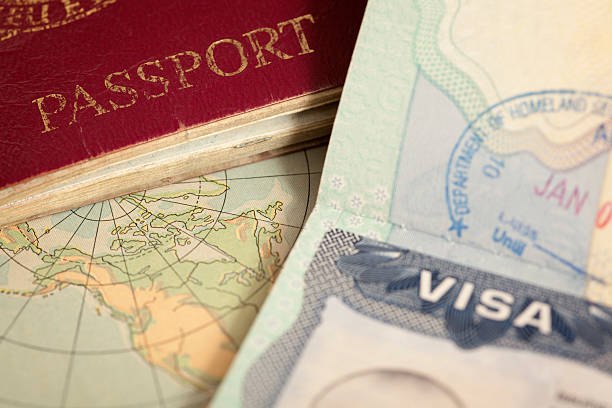
Kyrgyzstan has introduced significant changes to its visa policy, eliminating several visa categories, including business, tourist, and mountain tourism visas, as part of efforts to improve its investment climate and boost tourism. These visas will now be replaced with a streamlined system centered around a new “Sapar visa”, which can be issued within 24 hours of application. According to the Ministry of Foreign Affairs, the Sapar visa will be available to foreign citizens traveling to Kyrgyzstan for business, tourism, or private purposes, such as visiting friends or undergoing medical examinations. The visa allows stays of up to 90 days and offers both single-entry and multiple-entry options. The changes will take effect on January 22, 2025, with applications submitted through the government’s Electronic Visa portal. The e-visa portal, launched five years ago, was developed to simplify the visa application process, particularly for tourists and investors. The system is user-friendly, requiring only an internet connection, a credit or debit card for payment, and scanned copies of necessary documents. By modernizing its visa policies and making the process faster and more accessible, Kyrgyzstan hopes to attract more foreign investors and tourists, bolstering economic growth. The government’s approach reflects a commitment to removing bureaucratic hurdles and positioning the country as an attractive destination for both business and leisure travel.