• KGS/USD = 0.01144 0%
  • KZT/USD = 0.00205 0%
  • TJS/USD = 0.10722 0%
  • UZS/USD = 0.00008 0%
  • TMT/USD = 0.28490 0%
  • KGS/USD = 0.01144 0%
  • KZT/USD = 0.00205 0%
  • TJS/USD = 0.10722 0%
  • UZS/USD = 0.00008 0%
  • TMT/USD = 0.28490 0%
  • KGS/USD = 0.01144 0%
  • KZT/USD = 0.00205 0%
  • TJS/USD = 0.10722 0%
  • UZS/USD = 0.00008 0%
  • TMT/USD = 0.28490 0%
  • KGS/USD = 0.01144 0%
  • KZT/USD = 0.00205 0%
  • TJS/USD = 0.10722 0%
  • UZS/USD = 0.00008 0%
  • TMT/USD = 0.28490 0%
  • KGS/USD = 0.01144 0%
  • KZT/USD = 0.00205 0%
  • TJS/USD = 0.10722 0%
  • UZS/USD = 0.00008 0%
  • TMT/USD = 0.28490 0%
  • KGS/USD = 0.01144 0%
  • KZT/USD = 0.00205 0%
  • TJS/USD = 0.10722 0%
  • UZS/USD = 0.00008 0%
  • TMT/USD = 0.28490 0%
  • KGS/USD = 0.01144 0%
  • KZT/USD = 0.00205 0%
  • TJS/USD = 0.10722 0%
  • UZS/USD = 0.00008 0%
  • TMT/USD = 0.28490 0%
  • KGS/USD = 0.01144 0%
  • KZT/USD = 0.00205 0%
  • TJS/USD = 0.10722 0%
  • UZS/USD = 0.00008 0%
  • TMT/USD = 0.28490 0%

Viewing results 1 - 6 of 10

Opinion: The Southern Dimension of the Middle Corridor – Afghanistan’s Role in Eurasia’s New Logistics Landscape

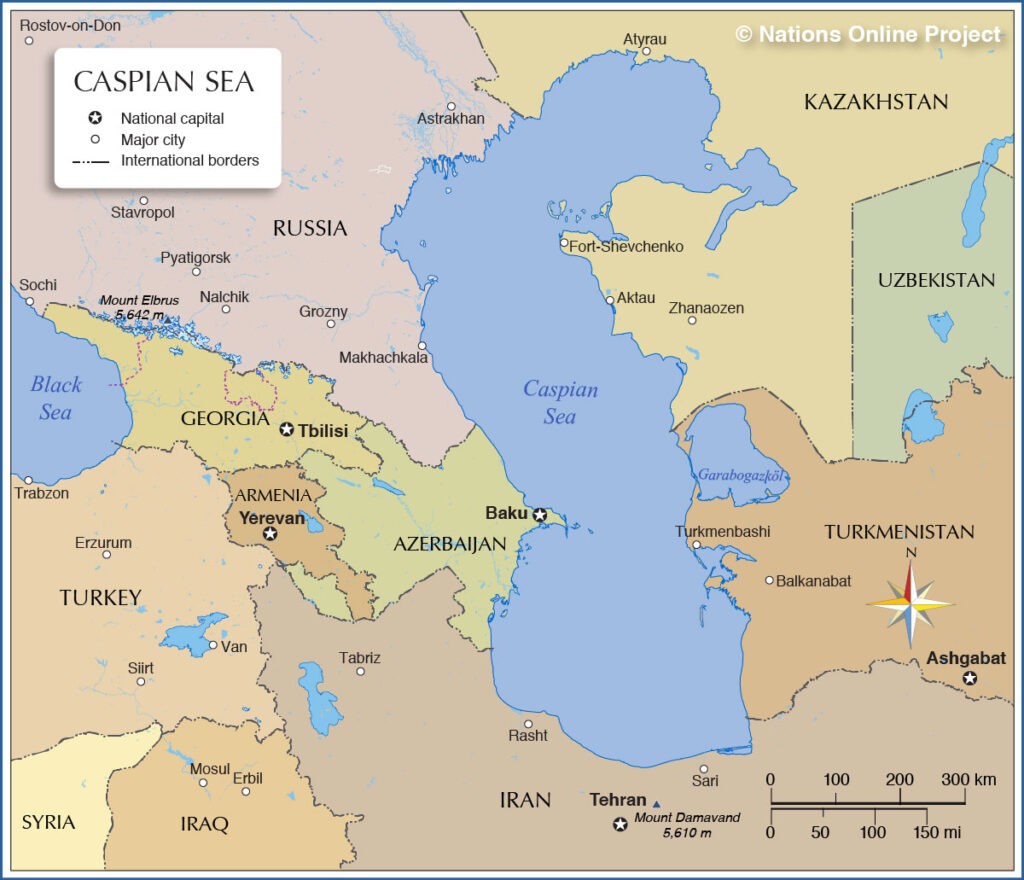
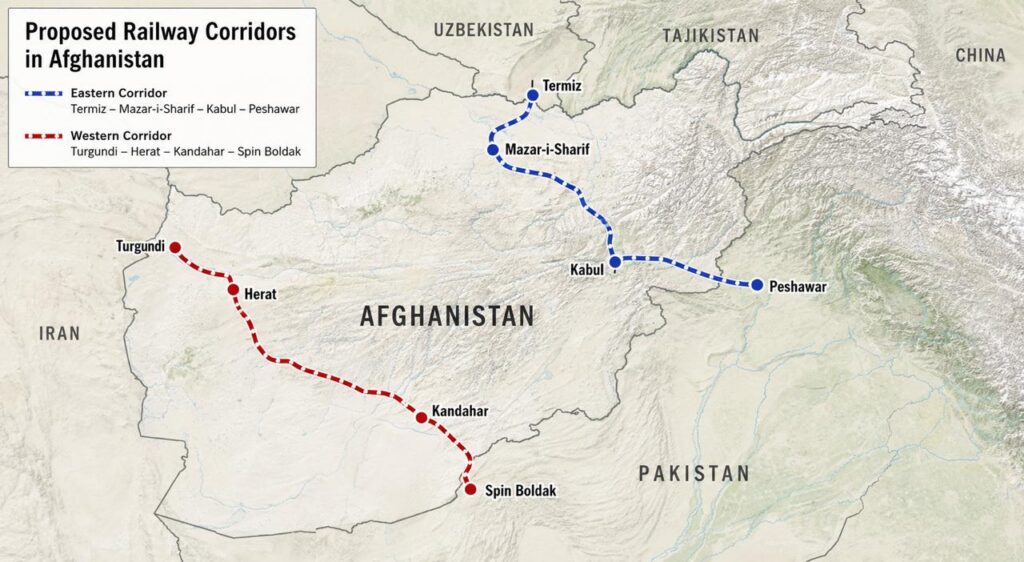
Afghanistan’s integration into the Trans-Caspian International Transport Route (TITR) is extending beyond local logistics and evolving into one of Eurasia’s key geo-economic projects. Amid the global transformation of supply chains, Central Asia has an opportunity to move beyond its role as a transit periphery and become an active participant in shaping new economic corridors, creating a full-fledged “southern dimension” of Eurasian connectivity. Two Routes: Strategic and Operational Two main directions for Afghanistan’s integration into the Eurasian transport system are currently under discussion, each reflecting a distinct development logic: strategic and pragmatic. The “Eastern Branch” (Termez-Mazar-i-Sharif-Kabul-Peshawar) is traditionally viewed as the primary trans-Afghan route. Its key advantage is direct access to the ports of Karachi and Gwadar, providing the shortest connection between Central Asia and the Indian Ocean. At the same time, geography makes the project highly complex. The route passes through the central and eastern regions of Afghanistan, including the Hindu Kush mountain range, where long tunnels and bridges would be required. This would sharply increase construction and maintenance costs, extend implementation timelines, and heighten security and infrastructure risks. According to available estimates, the project could cost around $5 billion and handle 15-20 million tons of cargo annually. However, the lengthy investment cycle and dependence on political stability mean implementation remains a long-term prospect. The “Western Branch” (Turgundi-Herat-Kandahar-Spin Boldak) represents an alternative logistics corridor based on more favorable geography. Western Afghanistan is characterized by predominantly flat, semi-arid terrain, reducing the need for complex engineering structures and allowing the project to be implemented in phases. This significantly lowers capital costs, shortens construction timelines, and reduces infrastructure risks. The western route’s initial capacity is estimated at 7-10 million tons of cargo annually, making it the more realistic option for medium-term planning. An additional advantage is its geo-economic flexibility. Via Herat, the route could be integrated not only southward through Pakistan, but also westward through Iran, providing access to Persian Gulf ports. This would transform it into a multi-directional corridor capable of serving several logistics flows simultaneously. The Eastern Branch, therefore, remains the strategic option offering the shortest route to the ocean but requiring substantial investment and time. The Western Branch, meanwhile, presents a more pragmatic solution: faster to implement and more flexible from a geo-economic standpoint. The Role of Turkmenistan and Kazakhstan in the “Western Maneuver” The implementation of the western trans-Afghan corridor depends on close coordination between two key regional players, Kazakhstan and Turkmenistan, which form the northern foundation of the future route by providing access to the Caspian Sea and, beyond it, global markets. Astana and Ashgabat are effectively creating a new geo-economic framework that could transform Central Asia from an isolated region into a strategic crossroads linking the Caspian Sea with the Indian Ocean. In 2026, Kazakhstan moved toward deeper institutionalization of the initiative, making the route through Herat and Kandahar a government priority. Astana’s strategy is multifaceted. In addition to establishing a permanent interdepartmental commission, Kazakhstan is actively seeking to attract international operators such as the Emirati AD...

Is TAPI Just ‘TA’ for Now?

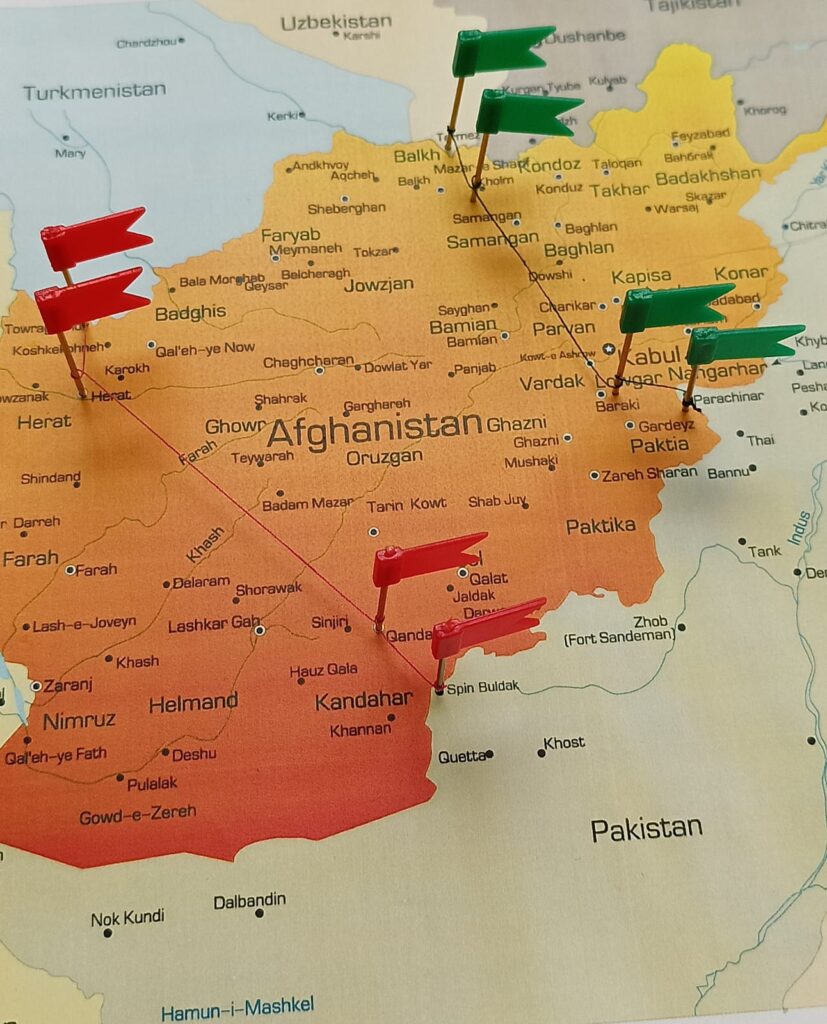
The idea for the 1,800-kilometer Turkmenistan-Afghanistan-Pakistan-India (TAPI) natural gas pipeline project has been around for 30 years. There has not been much progress in building the pipeline during those decades. The chances of seeing TAPI realized seem far away at the moment, considering Pakistan and India were involved in fighting in May of this year, and in October, there were battles along the Pakistan-Afghanistan border. However, Turkmenistan and Afghanistan are still interested in TAPI, and top officials from those two countries just met along the border to inaugurate a new section of the pipeline, and it looks like, for now, these two countries are enough. Another Ceremony Gurbanguly Berdimuhamedov, the chairman of Turkmenistan’s Halk Maslahaty (People’s Council), went to the Turkmen-Afghan border on October 20 to meet with Afghanistan’s Deputy Prime Minister for Economic Affairs, Mullah Abdul Ghani Baradar, for an event inaugurating a new section of TAPI. The ceremony for the Serhetabat-Herat section of TAPI took place just inside Afghanistan, not far from where top officials from the four countries involved, including Berdimuhamedov, gathered in February 2018 to launch construction of the Afghan section of TAPI. Berdimuhamedov made his only previous visit to Afghanistan during that ceremony, when he, the Afghan president, Pakistani prime minister, and Indian minister for state and external affairs, briefly flew to Herat to continue celebrations marking the launch. The location of the October 20 inauguration was also not far from the Islim Chesme border crossing, where Berdimuhamedov met with Afghan officials in September 2024 to again launch construction of the Afghan section of TAPI. Baradar and Berdimuhamedov spoke about the project’s importance in fostering greater regional cooperation, the economic benefits of which include creating jobs and providing energy to areas that greatly need it. Similar remarks were made by Berdimuhamedov and others at previous TAPI launches. Work did finally start after the 2024 launch. Afghanistan’s Tolo News reported that according to the country’s Ministry of Mines and Petroleum, 14 kilometers of the pipe have been laid, and 70 more kilometers of the route are set for pipeline installation. Turkmen state media always refers to Berdimuhamedov as “Arkadag,” which means “protector” in the Turkmen language. According to Turkmen state media, the Serhetabat-Herat section of the pipeline is called “Arkadagyn Ak Yoly,” or “Arkadag’s White Road.” Tolo News also reported that, “Recently, a large quantity of gas transmission pipes was imported from Turkmenistan into Afghanistan.“ It appears the Serhetabat-Herat section of TAPI is making progress, but it could be years before the pipeline goes any farther. A More Modest Goal For nearly the entire history of the TAPI project, the major obstacle to actually building the pipeline was the security problem inside Afghanistan. That problem is not over, but it is significantly reduced now that the Taliban are again imposing brutal control over the country. Military conflicts in recent months between Pakistan and both the other partners in the TAPI project shine a spotlight on another problem that has always raised questions about the viability of...

Trans-Afghan Corridor Becomes Central Asia’s New Trade Gateway Amid Competition

Kazakhstan plans to join in the Trans-Afghan Corridor project by constructing a 120-kilometer railway from Turgundi to Herat and establishing a transport and logistics center on Afghan territory. The new route is expected to expand the volume and improve the efficiency of Kazakhstan’s export and import shipments, while also providing access to the Indian Ocean, the Middle East, and the Persian Gulf. In August, Kazakhstan’s Deputy Prime Minister and Minister of National Economy, Serik Zhumangarin, announced that the country plans to invest $500 million in the construction of the Turgundi-Herat railway in Afghanistan. The 120-kilometer line will provide the shortest route to the Indian Ocean, linking Kazakhstan and Central Asia with Pakistan’s seaports of Karachi and Gwadar. Kazakhstan’s Deputy Minister of Transport, Zhanibek Taizhanov, told The Times of Central Asia that the project is expected to take about three years from the approval of the design and cost documentation. “More precise timelines will be determined after the completion of all design stages, approvals, and the signing of contracts with contractors and investors,” said the ministry representative. The railway will give Kazakhstan access to new transport routes and markets. Amid intensifying global competition for transit flows, it offers a cheaper alternative shipping option and represents an important new logistics solution for the republic. This promising route, however, also carries risks, as Afghanistan remains one of the world’s most unstable countries. Even so, trade potential between Kazakhstan and Afghanistan is considerable. In 2024, bilateral trade turnover reached $545.2 million, with $527.7 million accounted for by Kazakh exports. Kazakhstan remains one of Afghanistan’s largest trading partners and a leading supplier of grain and flour. Looking ahead to exports and imports moving toward Pakistan, India, and beyond, the potential is considerable. Yet market participants have repeatedly noted that logistics remains the main barrier to trade in this direction. “Projected freight volumes along the route are estimated at 35–40 million tons per year. A comprehensive study of the region’s economic potential, logistics flows, and expansion prospects is underway,” Taizhanov told TCA, adding that once operational, the line is expected to become a crucial link in the international transport system, boosting trade between Central Asia and South Asia. In Afghanistan, the Taliban resumed nearly all regional and interregional transport projects initiated under the previous government. Active negotiations are underway on the construction of the Termez–Naibabad–Maidan Shahr–Logar–Kharlachi line, commonly referred to as the “Kabul Corridor,” the Mazar-i-Sharif–Herat railway, and the completion of the Khaf–Herat line, among others. Regional countries have also joined this large-scale effort. The Trans-Afghan project involves the interests of Russia, China, Uzbekistan, Turkmenistan, and Iran, all of which are seeking to benefit from its implementation. Geopolitics and transport interests In pursuit of greater export, import, and transit opportunities, Kazakhstan, Russia, Uzbekistan, and Turkmenistan are actively participating in these initiatives, offering their own rail routes through Afghanistan to Pakistan’s borders. For Iran and Tajikistan, the transnational corridor through Afghanistan is also attractive, providing a potential route to China via Kyrgyzstan. Turkmenistan and Kazakhstan plan to...

First Cargo Transported from Pakistan to Azerbaijan via Kazakhstan

A Pakistani transport and logistics company, TCS, has now completed a pilot delivery of goods from Karachi (Pakistan) to Baku (Azerbaijan) through the Caspian seaport of Aktau in Kazakhstan. The shipment was organized with the assistance of the Embassy of Kazakhstan in Islamabad, in an effort to expand Kazakhstan’s transit transport potential. Kazakhstan’s Foreign Ministry announced that the transportation of Pakistani pharmaceutical products under TIR, along the 4,820 km long route through Afghanistan and Uzbekistan to Aktau and then by sea to Baku, took 21 days. According to Pakistani logistics experts, the Trans-Afghan corridor in tandem with the Karakoram Highway, can provide significant impetus to expanding the transit and transport potential of Kazakhstan and Pakistan, with reference to the Trans-Caspian International Transport Route.