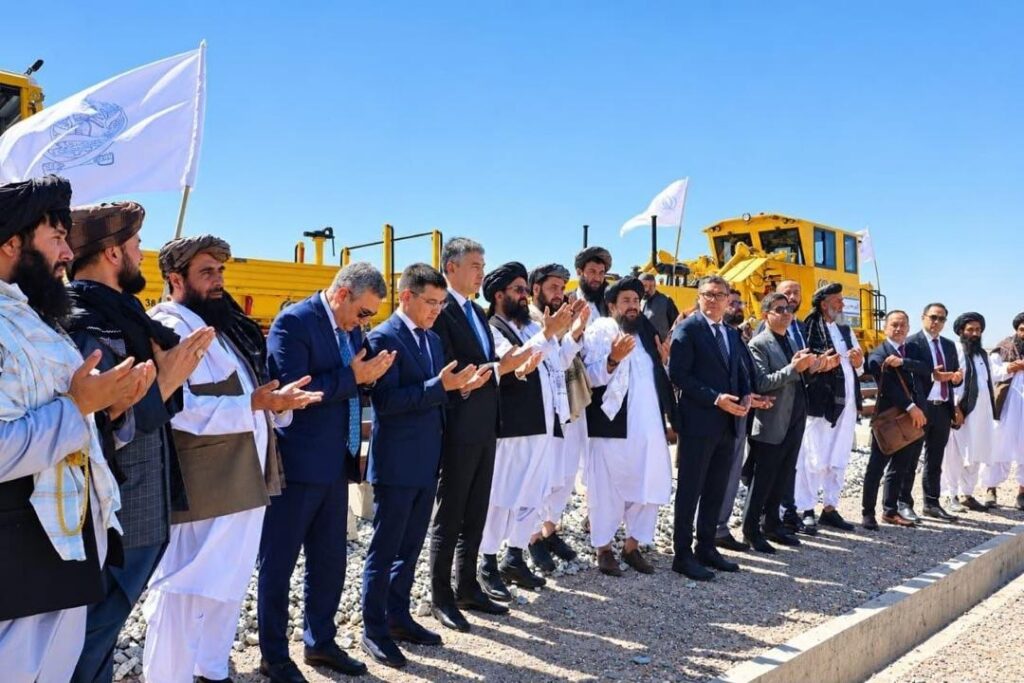
Afghanistan’s integration into the Trans-Caspian International Transport Route (TITR) is extending beyond local logistics and evolving into one of Eurasia’s key geo-economic projects. Amid the global transformation of supply chains, Central Asia has an opportunity to move beyond its role as a transit periphery and become an active participant in shaping new economic corridors, creating a full-fledged “southern dimension” of Eurasian connectivity.
Two Routes: Strategic and Operational
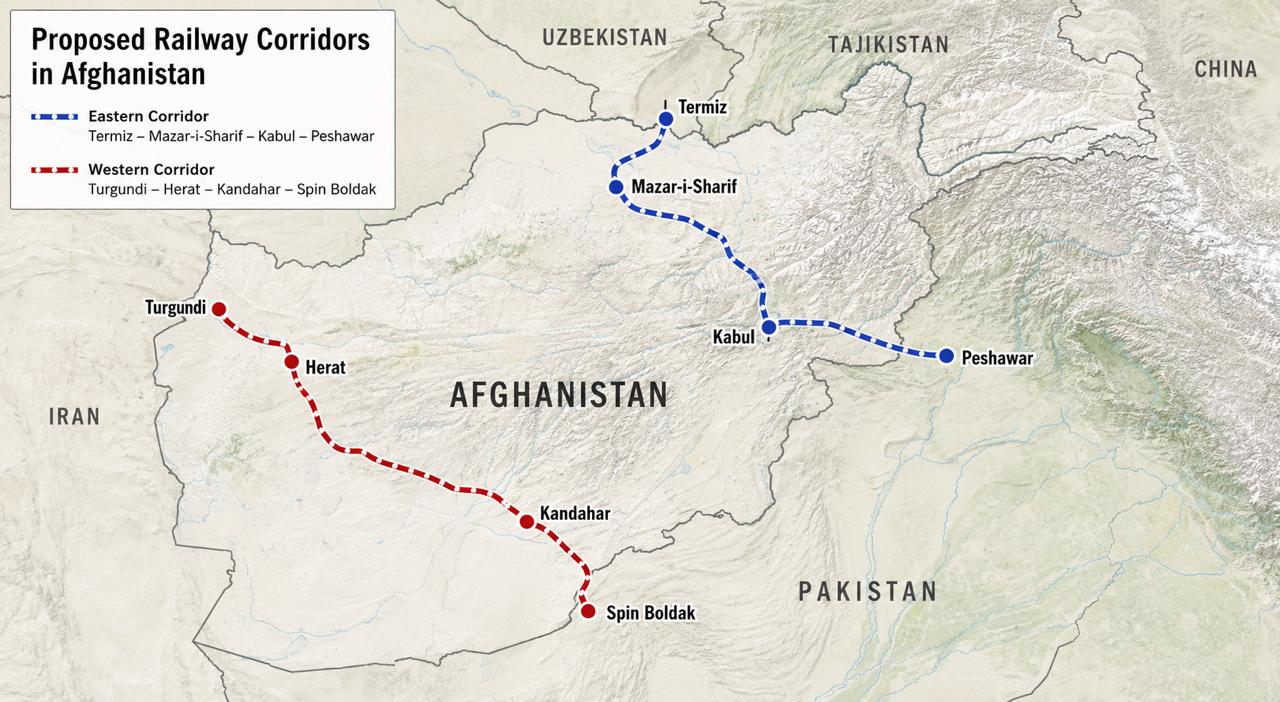
Two main directions for Afghanistan’s integration into the Eurasian transport system are currently under discussion, each reflecting a distinct development logic: strategic and pragmatic.
The “Eastern Branch” (Termez-Mazar-i-Sharif-Kabul-Peshawar) is traditionally viewed as the primary trans-Afghan route. Its key advantage is direct access to the ports of Karachi and Gwadar, providing the shortest connection between Central Asia and the Indian Ocean.
At the same time, geography makes the project highly complex. The route passes through the central and eastern regions of Afghanistan, including the Hindu Kush mountain range, where long tunnels and bridges would be required. This would sharply increase construction and maintenance costs, extend implementation timelines, and heighten security and infrastructure risks.
According to available estimates, the project could cost around $5 billion and handle 15-20 million tons of cargo annually. However, the lengthy investment cycle and dependence on political stability mean implementation remains a long-term prospect.
The “Western Branch” (Turgundi-Herat-Kandahar-Spin Boldak) represents an alternative logistics corridor based on more favorable geography.
Western Afghanistan is characterized by predominantly flat, semi-arid terrain, reducing the need for complex engineering structures and allowing the project to be implemented in phases. This significantly lowers capital costs, shortens construction timelines, and reduces infrastructure risks.
The western route’s initial capacity is estimated at 7-10 million tons of cargo annually, making it the more realistic option for medium-term planning.
An additional advantage is its geo-economic flexibility. Via Herat, the route could be integrated not only southward through Pakistan, but also westward through Iran, providing access to Persian Gulf ports. This would transform it into a multi-directional corridor capable of serving several logistics flows simultaneously.
The Eastern Branch, therefore, remains the strategic option offering the shortest route to the ocean but requiring substantial investment and time. The Western Branch, meanwhile, presents a more pragmatic solution: faster to implement and more flexible from a geo-economic standpoint.
The Role of Turkmenistan and Kazakhstan in the “Western Maneuver”
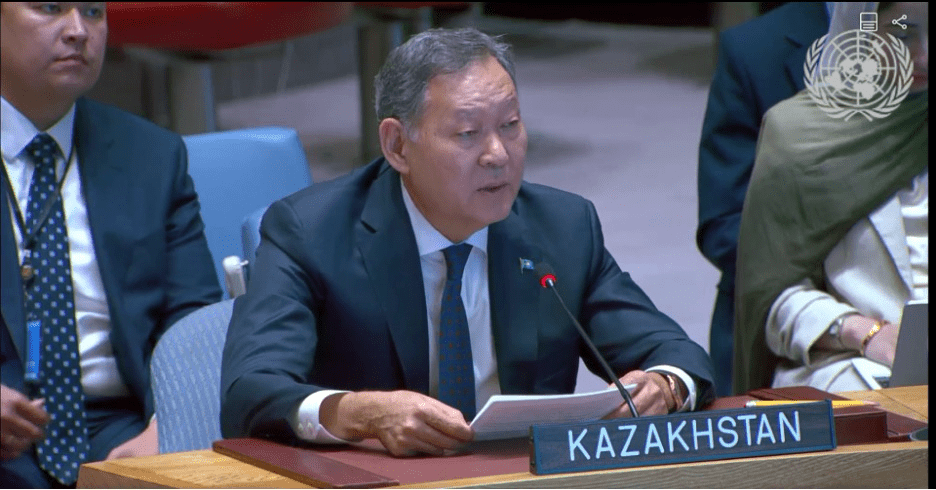
The implementation of the western trans-Afghan corridor depends on close coordination between two key regional players, Kazakhstan and Turkmenistan, which form the northern foundation of the future route by providing access to the Caspian Sea and, beyond it, global markets. Astana and Ashgabat are effectively creating a new geo-economic framework that could transform Central Asia from an isolated region into a strategic crossroads linking the Caspian Sea with the Indian Ocean.
In 2026, Kazakhstan moved toward deeper institutionalization of the initiative, making the route through Herat and Kandahar a government priority. Astana’s strategy is multifaceted. In addition to establishing a permanent interdepartmental commission, Kazakhstan is actively seeking to attract international operators such as the Emirati AD Ports Group. Such cooperation could integrate Kazakhstan’s terminals at Aktau and Kuryk into a single logistics chain linked to the Afghan railway network, while also providing financial stability and international management standards.
In this configuration, Turkmenistan serves as a critical entry point without which the western route cannot function. Ashgabat has assumed the role of primary infrastructure donor during the initial phase, transforming the Turgundi border crossing into a major dry port. Modernization of the hub would synchronize cargo flows from Kazakhstan and Russia with the Afghan railway gauge, creating the capacity needed to transport millions of tons of cargo annually.
Particularly important is the integration of the route with Caspian maritime infrastructure. Close cooperation between the Turkmen port of Turkmenbashi and the Kazakh ports of Aktau and Kuryk could create a largely seamless multimodal corridor. This would allow for flexible logistics, with cargo transported either by rail through Turkmenistan or by sea, reducing congestion risks and optimizing freight costs for exporters of grain, metals, and energy resources.
Economic Impact and Logistical Advantages
The launch of full-scale trans-Afghan routes could significantly reshape the economics of Eurasian transit. Most importantly, cargo delivery from Kazakhstani ports to Pakistani ports could be reduced to 10-12 days, roughly 2.5 to three times faster than the traditional maritime route through the Suez Canal, which typically takes 35-45 days.
Cost reductions are also significant. Overland transit through Afghanistan could lower logistics costs by at least 15-20% during the initial phase, with potential savings rising to 30-40% once railway capacity expands and customs procedures are streamlined.
For Kazakhstan, the route carries strategic importance in terms of export diversification. Kazakhstan’s grain and flour exports to Afghanistan have already reached 1.5 million tons annually. Expanded railway infrastructure would not only increase these volumes but also broaden access to South Asian markets, including India.
China and the Southern Branch of the Middle Corridor
The development of a southern branch of the Middle Corridor through Afghanistan could be of considerable strategic interest to China as part of the diversification of its Belt and Road Initiative.
Against the backdrop of geopolitical risks in the Caucasus, as well as infrastructure and environmental constraints linked to the Caspian Sea, the western trans-Afghan branch could provide an alternative framework for logistical resilience. It would reduce dependence on bottlenecks, expand routing options, and enable the flexible redistribution of cargo flows.
The significance of the route extends beyond the traditional “North-South” framework. A two-way transit system is emerging in which Afghanistan becomes integrated into Eurasian value chains.
On one hand, the route could facilitate exports of Afghan resources to Central Asia, China, and Europe. Given Astana and Kabul’s plans to increase bilateral trade to $3 billion, the corridor could provide a sustainable foundation for that expansion. On the other hand, it would support reverse flows of industrial products, technologies, and investment needed for Afghanistan’s reconstruction and economic development.
Afghanistan’s resource base, including copper, lithium, and rare earth elements, is particularly important. Integrating these resources into a broader transport and logistics system could transform the corridor into part of a wider industrial chain encompassing extraction, processing, and export. For China, this would provide access to strategic raw materials and an opportunity to integrate new territories into its production networks.
This would also address several long-term geo-economic objectives for Beijing.
First, it would reduce reliance on maritime routes, particularly the Strait of Malacca, which remains vulnerable in the event of conflict or blockade. The western trans-Afghan branch could create an alternative overland route to the Indian Ocean via Karachi and Gwadar that would be far more difficult to disrupt.
Second, China could improve access to high-tech raw materials. Afghanistan’s reserves of lithium and copper are critical for producing solar panels, electric vehicles, and other advanced technologies, areas in which China remains the global leader. In this context, infrastructure investment becomes a mechanism for securing direct access to strategic resources.
Third, the route would contribute to a more balanced regional logistics system. Beijing has long relied heavily on the China-Pakistan Economic Corridor, but that route faces both geographic and political limitations. A western trans-Afghan corridor would provide an additional channel, helping distribute risk and increase overall resilience.
Fourth, the Middle Corridor itself would become more diversified. Its current configuration depends heavily on Caspian Sea crossings, which face both capacity and environmental constraints. The southern branch through Afghanistan could partially bypass these limitations or complement existing routes.
Finally, Beijing views regional security through the lens of economic development. Integrating Afghanistan into trade, transit, and resource extraction networks could contribute to the country’s stabilization and reduce instability risks near China’s western borders.
Conclusion
The emergence of a trans-Afghan route shows that the Middle Corridor is gradually evolving from a static transport corridor into a flexible, multi-vector system.
The western branch through Afghanistan represents the first feasible stage of this transformation. It could be developed faster than other options and appears more viable in economic and geographic terms. China’s involvement is a key factor, as the southern branch would reduce logistical risks for Beijing while opening access to new industrial and resource opportunities.
Afghanistan itself is gradually shifting from a peripheral territory to a key link in a new geo-economic architecture, while the Middle Corridor is becoming a platform connecting Europe, Central Asia, South Asia, and China.
More broadly, the focus is no longer solely on individual transport routes, but on the emergence of a new Eurasian economic configuration in which transport, resources, and industrial cooperation are integrated into a single system.
The views expressed in this article are those of the author and do not necessarily reflect the official policy or position of the publication, its affiliates, or any other organizations mentioned.