• KGS/USD = 0.01144 0%
  • KZT/USD = 0.00206 0%
  • TJS/USD = 0.10812 0.37%
  • UZS/USD = 0.00008 0%
  • TMT/USD = 0.28571 0%
  • KGS/USD = 0.01144 0%
  • KZT/USD = 0.00206 0%
  • TJS/USD = 0.10812 0.37%
  • UZS/USD = 0.00008 0%
  • TMT/USD = 0.28571 0%
  • KGS/USD = 0.01144 0%
  • KZT/USD = 0.00206 0%
  • TJS/USD = 0.10812 0.37%
  • UZS/USD = 0.00008 0%
  • TMT/USD = 0.28571 0%
  • KGS/USD = 0.01144 0%
  • KZT/USD = 0.00206 0%
  • TJS/USD = 0.10812 0.37%
  • UZS/USD = 0.00008 0%
  • TMT/USD = 0.28571 0%
  • KGS/USD = 0.01144 0%
  • KZT/USD = 0.00206 0%
  • TJS/USD = 0.10812 0.37%
  • UZS/USD = 0.00008 0%
  • TMT/USD = 0.28571 0%
  • KGS/USD = 0.01144 0%
  • KZT/USD = 0.00206 0%
  • TJS/USD = 0.10812 0.37%
  • UZS/USD = 0.00008 0%
  • TMT/USD = 0.28571 0%
  • KGS/USD = 0.01144 0%
  • KZT/USD = 0.00206 0%
  • TJS/USD = 0.10812 0.37%
  • UZS/USD = 0.00008 0%
  • TMT/USD = 0.28571 0%
  • KGS/USD = 0.01144 0%
  • KZT/USD = 0.00206 0%
  • TJS/USD = 0.10812 0.37%
  • UZS/USD = 0.00008 0%
  • TMT/USD = 0.28571 0%

Viewing results 1 - 6 of 20

Azerbaijan and Kazakhstan Stand Out at COP29

The 29th United Nations Climate Change Conference (COP29), held in Baku from November 11–22, 2024, has underscored the critical role of Azerbaijan and Kazakhstan in advancing Caspian Sea regional energy transitions. Both countries leveraged their positions along the Middle Corridor to present ambitious renewable and nuclear energy strategies.   Azerbaijan: Renewables and the Middle Corridor Azerbaijan, the host and chair of COP29, has positioned itself as a renewable energy connector between Central Asia and Europe. Its energy strategy reflects a pragmatic approach to transitioning from hydrocarbons, which accounted for 88% of government revenues in 2023, to a diversified portfolio incorporating solar, wind, and hydropower. Azerbaijan has prioritized key renewable energy projects to align with its goal of achieving a 30% renewable share in its electricity mix by 2030. Among these is the operational Garadagh Solar Power Plant, a 230-megawatt (MW) facility developed by the UAE's Masdar, which generates 500 million kilowatt-hours (kWh) annually. Complementing this is the planned Alat Solar Project, a 400-MW solar installation expected to be operational by 2027. These projects aim to bolster domestic electricity supply and expand Azerbaijan’s capacity to export renewable energy. The Caspian Offshore Wind Initiative, backed by the European Bank for Reconstruction and Development (EBRD), seeks to harness the Caspian Sea’s favorable wind conditions. A 1-gigawatt (GW) wind farm is under preliminary study, with construction anticipated to begin by 2026. This project could transform Azerbaijan into a renewable energy hub for the Middle Corridor, particularly as Europe reduces its dependency on Russian energy.   Kazakhstan: Nuclear Ambitions and Renewable Diversification Kazakhstan’s energy strategy focuses on nuclear power and renewables, driven by the need to reduce coal dependency, which still accounts for two thirds of its electricity generation. The government’s approval of its first nuclear power plant, following a nationwide referendum in October 2024, is central to this strategy. The planned nuclear reactor, located near Lake Balkhash, will generate 1.2-GW of electricity, replacing approximately 20% of coal-fired generation. This initiative complements Kazakhstan’s status as the world’s largest uranium producer, supplying over 40% of global demand and generating $3.6 billion in export revenues in 2023. Potential consortium members for the project include South Korea’s KEPCO, France’s Orano and EDF, China’s CNNC, and Russia's Rosatom, although economic-sanctions issues complicate Russia’s involvement in the nuclear sector. Kazakhstan is simultaneously scaling up renewable energy projects, with several key initiatives underway. The Zhanatas Wind Farm, operational since 2022, produces 100-MW of power, and the Shelek Solar Park, a 200-MW solar facility near Almaty, is expected to come online in late 2025. Together, these projects aim to increase renewables to 15% of Kazakhstan’s electricity mix by 2030, quintupling the level from 2023.   The Trans-Caspian Electricity Cable Project At the COP29 conference, Azerbaijan and Kazakhstan, along with Uzbekistan, announced an ambitious trans-Caspian electricity cable project through an underwater transmission system. This infrastructure initiative, estimated to cost $2.5 billion, seeks to establish an electricity corridor linking Central Asia with European markets, representing a significant step in regional energy integration. The project...

Dredging Project in Kazakhstan’s Kuryk Port Completed

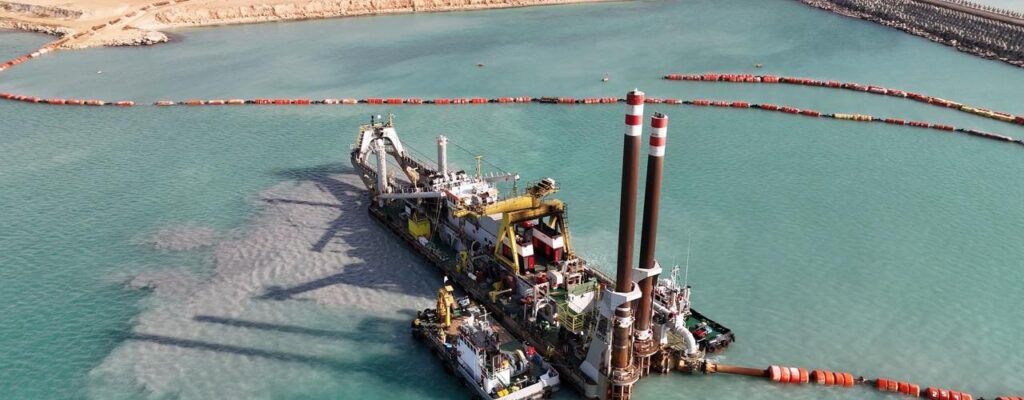
Kazakhstan Temir Zholy, the country’s national railway company, has announced the early completion of dredging works at the Caspian Sea port of Kuryk. The project was completed by its general contractor, Jan De Nul Kazakhstan LLP, in just four months. The dredging operation involved removing over 990,000 cubic meters of soil from the port’s seabed using the Vesalius, the most powerful dredger in the Caspian Sea. As a result, the water depth in the port’s operational area and approach channel has been increased to 7–8 meters. This enhancement allows for an increased draft of vessels entering the port, enabling them to achieve full loading capacity. The project significantly boosts the port's terminal capacity, further strengthening its role as a vital transit hub on the Trans-Caspian International Transport Route (TITR), also known as the Middle Corridor. This strategic route connects China and Europe via Central Asia and the Caucasus. The Kuryk port currently handles up to 6 million tons of cargo annually, including 4.1 million tons through its railway terminal and 1.9 million tons via its automobile terminal.

Kazakhstan’s Caspian Sea Ports Increase Cargo Transportation

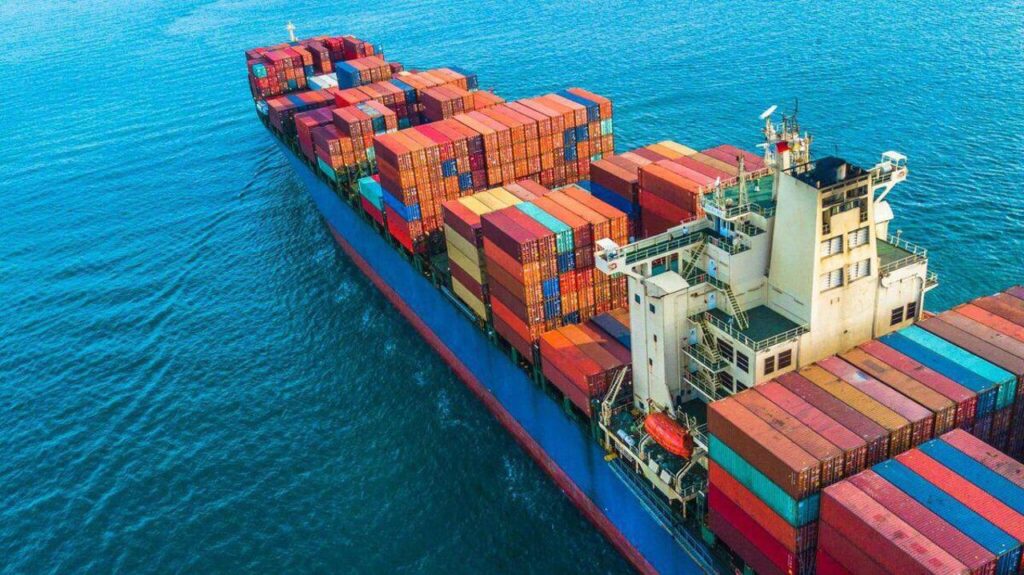
Kazakhstan’s Ministry of Transport has announced that from January to October 2024, the country’s Caspian Sea ports transported 6.2 million tons of cargo, reflecting a 3% increase compared to the same period last year. Transit cargo shipments saw even stronger growth, rising by 18%. Truck transshipment via the Kuryk port’s ferry complex increased by 22%, while container transportation through the Aktau port surged by 84%, with approximately 27,000 containers moved along the East-West transit route. During the same period, the Sarzha terminal at Kuryk port handled 55,000 tons of cargo, including non-ferrous metals, fertilizers, and barley, destined for Turkey and Iran. In October, a new grain terminal with an annual capacity of 1 million tons was inaugurated at the Kuryk port. Efforts to enhance the port’s capacity continue. The Times of Central Asia previously reported that Kazakhstan’s Ministry of Transport has undertaken dredging operations at the Kuryk port to ensure sufficient depth for ship access, bolstering the capacity of the Trans-Caspian International Transport Route (TITR). The dredging project will support further expansion of Kuryk’s terminal capacity, currently set at 6 million tons annually—4 million tons through its railway terminal and 2 million tons via its automobile terminal.

EU and Turkmenistan Launch Coordination Platform of Trans-Caspian Transport Corridor

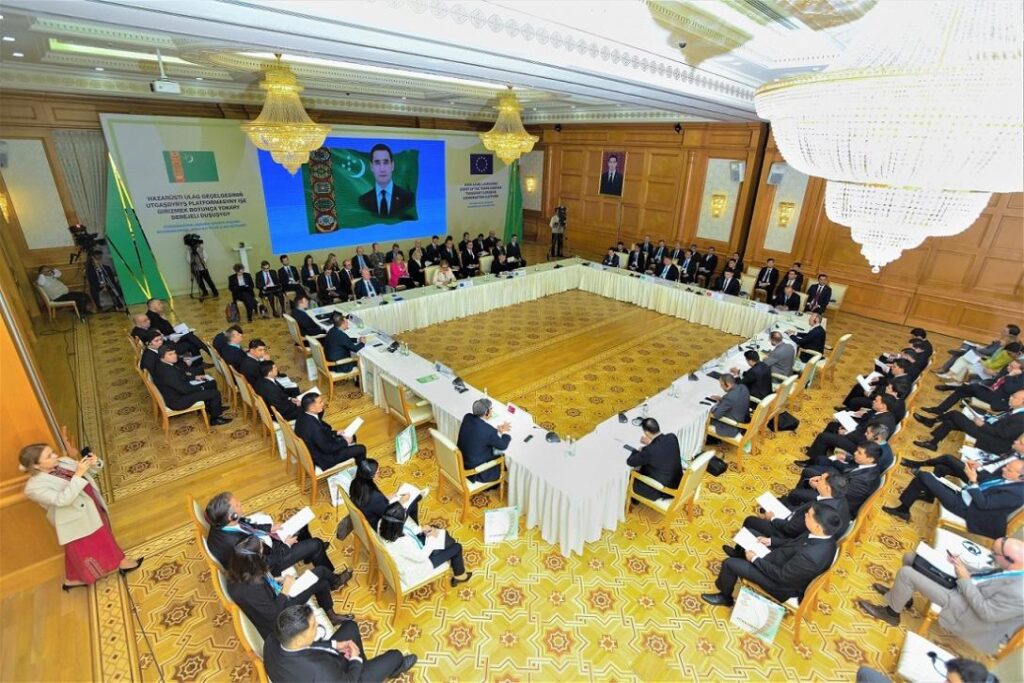
On October 3 in Ashgabat, the European Union and Turkmenistan launched the Trans-Caspian Transport Corridor Coordination Platform. The platform aims to strengthen connectivity by developing transport routes within Central Asia and the European Union. The event brought together the European Union, representatives of the countries along the Trans Caspian Transport Corridor in Central Asia, the South Caucasus, and Türkiye, and international financial institutions. The European Union delegation was led by European Commissioner for International Partnerships Jutta Urpilainen. As reported by the EU Delegation to Turkmenistan, the Trans-Caspian Transport Corridor is a flagship of the EU’s Global Gateway investment strategy, and the establishment of the Coordination Platform is one of the key deliverables of the Global Gateway Investors Forum for EU-Central Asia Transport Connectivity held in January 2024. European and international financial institutions at the Forum committed to mobilizing €10 billion for sustainable transport connectivity in Central Asia. The EU aims to work with partners towards a modern route that boosts trade and facilitates the flow of goods between Central Asia and Europe while driving economic development and regional integration. The platform's main role will be to promote the corridor and coordinate efforts to implement priority projects in hard and soft infrastructure in Central Asia. It will also coordinate with investments and activities in the South Caucasus and Turkey that are relevant to strengthening operational efficiency and seamless connections across the Trans-Caspian Transport Corridor. Urpilainen said: “Central Asia, as a region at the crossroads of Europe and Asia, plays a pivotal role in the EU Global Gateway investment strategy and connectivity vision. The Trans-Caspian Transport Corridor is a critical artery linking Europe and Asia, boosting trade, facilitating exchanges, and driving prosperity across our regions while ensuring improved connectivity, cooperation, and economic growth between all Corridor countries. Harnessing this potential will require massive infrastructure investments in the coming years; I am pleased to see governments from countries along the Corridor, key International Financing Institutions, EU Member States, G7 countries, and other partners coming together.” Urpilainen said that to the European Union, Turkmenistan is an important partner in Central Asia. She also emphasized the European Union's commitment to supporting Turkmenistan's transition to a sustainable, green economy while enhancing its business environment. The EU has further allocated €18 million to strengthen its partnership with Turkmenistan, highlighting its dedication to fostering sustainable development and economic growth.

The Future of Transit in Kazakhstan

Increasing the volume of transit cargo through Kazakhstan is a strategic priority for the nation as it aims to become a transportation and logistics hub in Central Asia and the Caspian region, with its railways at the forefront of this effort. TCA spoke with Asem Mukhamedieva, Managing Director for New Projects at KTZ Express JSC, about the company’s current capabilities, prospects, and new projects in this direction.   Kazakhstan’s Role in Transit Cargo TCA: Kazakhstan, has become a vital land transportation corridor between Asia and Europe. How does Kazakhstan Temir Zholy (KTZ) contribute to further increasing transit cargo, and what trends have you observed? Mukhamedieva-  The volume of transit handled by KTZ Express in the first eight months of this year reached approximately 350,000 twenty-foot equivalent units (TEU). The China-Europe-China route saw a 36% increase, while the China to Central Asia route grew by 17%. Notably, the Trans-Caspian International Transport Route (TITR) dispatched 220 container trains, a twenty-fold increase from last year. TCA: What new routes have been launched, and what is KTZ doing to increase them? - KTZ is continuously expanding its transportation network and logistics services. One significant development is the Trans-Afghan route, which was launched this May. Under a pilot project, containers with aluminosilicate hollow microspheres were shipped from Pavlodar to Jebel Ali Port via Uzbekistan, Afghanistan, Pakistan, and the UAE. Offering competitive terms and tariffs has encouraged more cargo traffic along this route. In July, we cut delivery times in half — down to just five days — on the Xi’an-Altynkol-Tashkent route, compared to the previous 10-12 days. This success is largely due to the new terminal in Xi’an, built by KTZ and its Chinese partners. The terminal consolidates cargo from various Chinese provinces, streamlining logistics processes and significantly improving efficiency. We also launched several new logistics services to boost cargo traffic and strengthen international links. For example, in June, we introduced a regular South Korea-China-Kazakhstan-Central Asia route. We also reopened a previously unprofitable route from China to Iran and back, reducing costs by collaborating with Chinese partners.   The Growing Importance of the Trans-Caspian Route TCA: You mentioned the growth of the TITR. Could you elaborate on the regions of China involved, the types of cargo, and what steps are being taken to attract more shipments? -  The Trans-Caspian International Transport Route (TITR) has become a critical link in Eurasian logistics. This year, the route achieved remarkable growth. In September, we welcomed the 200th train dispatched via TITR at the Port of Aktau. Transit volumes for the first eight months of this year surpassed annual totals from previous years. Xi'an province leads in shipments, accounting for 57% of the total volume on this route. Other key provinces include Yiwu, Chongqing, Sanping, and Henan. Major markets for these shipments are Azerbaijan (62%), Georgia (23%), Turkey (7%), and EU countries (9%). Over 200 different commodity items were transported, with automobiles, components, textiles, and electronics making up 56% of the total. To maintain this momentum, we are working...

Kazakhstan and China to Build Container Hub in the Port of Aktau

Kazakhstan’s national railways company, Kazakhstan Temir Zholy (KTZ), has announced that KTZ Express (a subsidiary of KTZ), China’s Lianyungang Port, and Kazakhstan’s Aktau Sea Trade Port have signed the founding documents of a joint venture to construct a container hub in the port of Aktau. The documents were signed on September 20 in the Chinese city of Xi'an. The project has received support from the governments of Kazakhstan and China as part of China’s Belt and Road initiative. The project will strengthen Kazakhstan's position in the international logistics system. The planned container hub's location on the Trans-Caspian International Transport Route (TITR), or the Middle Corridor, will further increase the route's attractiveness and the volume of transit traffic. The Lianyungang Port is a longstanding partner of KTZ Express. Over the past ten years, they have implemented two joint projects: the Kazakh-Chinese terminal in the Port of Lianyungang and Khorgos Gateway, the largest dry port in Central Asia located on the Kazakh-Chinese border. Also on September 20, a container train departed along the TITR from Xi'an on the route Altynkol—Aktau (Kazakhstan)—Baku (Azerbaijan)—Poti (Georgia)—Burgas (Bulgaria)—Belgrade (Serbia)—Hamburg/Duisburg/Budapest. The heads of the railway administrations of China, Kazakhstan, Azerbaijan, and Georgia attended the departure ceremony. The train, consisting of 55 40-foot containers, was assembled at the Kazakh-Chinese Xi'an terminal. It will travel about 7,000 km to Baku in 8-11 days and then reach its final destination in Budapest in 25 days. The reduced delivery time was made possible by the cooperation of the railway and port administrations of the TITR member countries. The Kazakh-Chinese terminal in the dry port of Xi'an was opened in early 2024. Today, 30% of all container trains from China to Europe via Kazakhstan are formed in the dry port. According to KTZ, thanks to the terminal in Xi'an, cargo transit along the TITR increased 20-fold in the first eight months of this year compared to last year. The delivery time to Azerbaijan has been reduced to 11 days and to Georgia to 14 days.