• KGS/USD = 0.01144 0%
  • KZT/USD = 0.00209 0%
  • TJS/USD = 0.10523 0%
  • UZS/USD = 0.00008 0%
  • TMT/USD = 0.28530 0%
  • KGS/USD = 0.01144 0%
  • KZT/USD = 0.00209 0%
  • TJS/USD = 0.10523 0%
  • UZS/USD = 0.00008 0%
  • TMT/USD = 0.28530 0%
  • KGS/USD = 0.01144 0%
  • KZT/USD = 0.00209 0%
  • TJS/USD = 0.10523 0%
  • UZS/USD = 0.00008 0%
  • TMT/USD = 0.28530 0%
  • KGS/USD = 0.01144 0%
  • KZT/USD = 0.00209 0%
  • TJS/USD = 0.10523 0%
  • UZS/USD = 0.00008 0%
  • TMT/USD = 0.28530 0%
  • KGS/USD = 0.01144 0%
  • KZT/USD = 0.00209 0%
  • TJS/USD = 0.10523 0%
  • UZS/USD = 0.00008 0%
  • TMT/USD = 0.28530 0%
  • KGS/USD = 0.01144 0%
  • KZT/USD = 0.00209 0%
  • TJS/USD = 0.10523 0%
  • UZS/USD = 0.00008 0%
  • TMT/USD = 0.28530 0%
  • KGS/USD = 0.01144 0%
  • KZT/USD = 0.00209 0%
  • TJS/USD = 0.10523 0%
  • UZS/USD = 0.00008 0%
  • TMT/USD = 0.28530 0%
  • KGS/USD = 0.01144 0%
  • KZT/USD = 0.00209 0%
  • TJS/USD = 0.10523 0%
  • UZS/USD = 0.00008 0%
  • TMT/USD = 0.28530 0%

Viewing results 1 - 6 of 165

Central Asia Advances Agenda at Record-Breaking SCO Summit in Tianjin

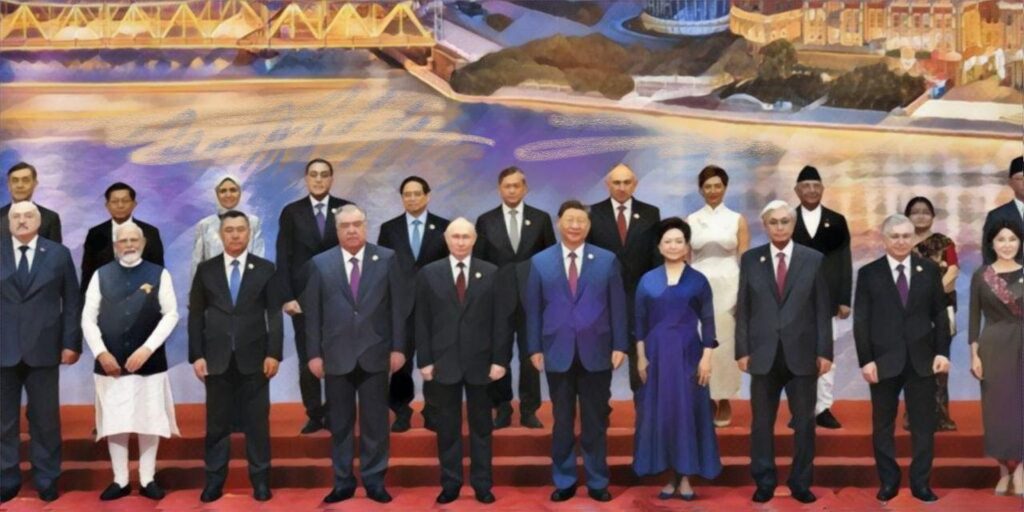
At the opening ceremony of the SCO Summit in Tianjin on August 31, Chinese President Xi Jinping, Russian President Vladimir Putin, and India’s Prime Minister Narendra Modi joined Central Asian leaders in a group photo. The Tianjin summit - China’s second time hosting the SCO and its “largest-ever” summit - was attended by all five Central Asian presidents alongside a host of key countries. In his welcome speech, Xi highlighted that the SCO now bears “greater responsibility” for safeguarding regional peace and stability, and said the summit was expected to produce a new 10-year development strategy. Xi proposed fast-tracking an SCO development bank, pledging 2 billion yuan ($280 million) in aid plus 10 billion yuan in loans to seed the fund. Xi also urged members to oppose a “Cold War mentality” and support an inclusive, multilateral trading system in a pointed rebuke to recent U.S. tariffs. Central Asian Leaders and Their Messages Kazakh President Kassym-Jomart Tokayev opened the summit for his delegation, thanking Xi and praising China’s “consistent policy aimed at strengthening security, stability, economic cooperation, and cultural ties within the SCO framework.” In his address, Tokayev marked the symbolic 80th anniversaries of the end of World War II, noting the value of unity and solidarity which he said the SCO embodies. Tokayev reaffirmed Kazakhstan’s support for a multipolar world order, respect for sovereignty, and mutually beneficial trade and investment, and pledged to keep combating the “three evils” of terrorism, separatism, and extremism. Beyond the opening remarks, Central Asian leaders used the summit to lay out their strategic priorities. Speaking at the heads-of-state meeting, President Shavkat Mirziyoyev of Uzbekistan called for further reform of SCO institutions and expansion of its dialogue partners. Mirziyoyev advocated for new cooperation mechanisms - a regional center for critical materials, a “Unified SCO Transport Space” linked to China’s Belt and Road Initiative, digital platforms, and green energy corridors - and proposed measures to boost intra-regional trade. Notably, Mirziyoyev urged the signing of an Agreement on Trade Facilitation, saying it “will give a boost to the growth of intra-regional trade within the SCO area.” In his closing remarks, he congratulated Kyrgyzstan’s Sadyr Japarov on assuming the SCO chairmanship for 2026, setting up the next summit. Tajik President Emomali Rahmon did not address the leaders’ meeting, but in a pre-summit interview, he highlighted China’s role in the SCO, crediting China with significant investment in Tajik infrastructure and energy, and welcoming Beijing’s proposal to locate an SCO Anti-Drug Center in Dushanbe. "We are confident that the center will make tangible contributions to strengthening regional cooperation and combating illicit drug trafficking," he stated. As a founding member, Rahmon stressed that the SCO’s top priority has long been Central Asian security and said that Tajikistan fully backs China’s Tianjin agenda, citing Beijing’s support for roads, tunnels, and power lines in Tajikistan. The incoming 2026 chair, Sadyr Japarov of Kyrgyzstan, met with Xi on August 31, reviewing plans to deepen all-around cooperation. Xi stated that China will fully support Kyrgyzstan in...

Rails Through the Mountains: Kyrgyzstan Expanding Network in All Directions

On August 25, in the remote village of Kosh-Dobo in central Kyrgyzstan, construction finally started on Kyrgyzstan’s section of a railway that will connect the country to China and Uzbekistan. It is one of the most important projects in Kyrgyzstan’s 34 years of independence. And it is not the only railway project in Kyrgyzstan, as the country is at last moving to better connect by rail, both internally and with its neighbors. Three Dormant Decades For the first 30 years of independence, no new railway tracks were laid in Kyrgyzstan, but that is now changing. Kyrgyzstan is about 90% mountainous. When Kyrgyzstan became independent in late 1991 after the collapse of the Soviet Union, there were two railways leading into Kyrgyzstan. Both came from Uzbekistan to the west. A northern line connected Uzbekistan’s capital, Tashkent, through southern Kazakhstan to Kyrgyzstan’s capital, Bishkek, and from there continued eastward to Issyk-Kul, a large lake and tourist area in the northeastern corner of the country. The other railway extended only a few dozen kilometers from the Uzbek border to Osh in southern Kyrgyzstan. The length of the two railways combined amounted to some 320 kilometers. Work started on the 186-kilometer Balykchy-Kochkor-Kara-Keche railway at the end of March 2022. Balykchy is located at the western tip of Issyk-Kul. Since Soviet times, it has been the last stop on the train that originates in Uzbekistan and travels through Bishkek. Kochkor is a village in Naryn Province, about 63 kilometers southwest of Balykchy. Some 120 kilometers further to the southwest is Kara-Keche, one of Kyrgyzstan’s primary coal-mining sites and the source of much of the coal used in the thermal power plant that supplies heat and electricity to Bishkek. Chairman of Kyrgyzstan’s Cabinet of Ministers Adylbek Ksaymaliyev said in May 2025 that there are already plans to connect this railway line to the China-Kyrgyzstan-China line being built through southern Naryn Province. The Eurasian Development Bank recently agreed to fund a feasibility study for extending the railway from Balykchy to the town of Cholpon-Ata, the main tourist town on the north shore of Issyk-Kul, with a stop at the Issyk-Kul airport at Tamchy. As it stands now, people headed to Cholpon-Ata by rail must switch from the train to car or bus at Balykchy to travel the remaining 80 kilometers to Cholpon-Ata. In May 2024, President Sadyr Japarov called for that railway line to eventually reach the town of Karakol, at the eastern end of Issyk-Kul, some 140 kilometers from Cholpon-Ata. Naryn is the biggest province in Kyrgyzstan in terms of territory, but its connections to the rest of the country are tenuous, particularly in the northeastern part of the province where Kochkor and Kara-Keche are located. Kosh-Dobo is in the southern part of Naryn Province, near the borders of the Jalal-Abad and Osh provinces. The village is located on the route of the long-awaited China-Kyrgyzstan-Uzbekistan (CKU) railway that will run from Kashgar in China’s Xinjiang region to Andijan, Uzbekistan. The project was first proposed some 30...

Tokayev in Bishkek: Deals, Diplomacy, and a Golden Bridge

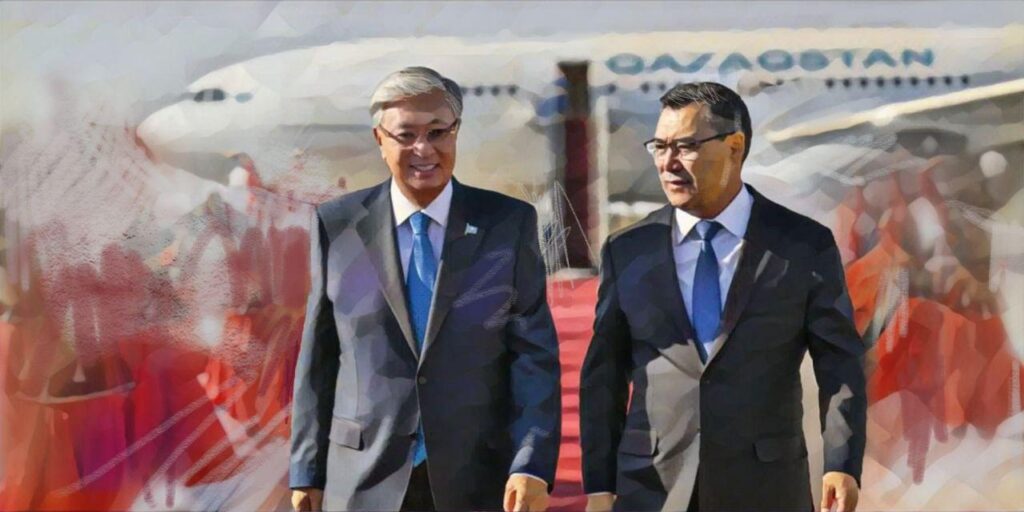
Kazakh President Kassym-Jomart Tokayev arrived in Kyrgyzstan on 21 August for an official visit that rolls into a full day of talks in Bishkek on 22 August, including a session of the Supreme Interstate Council. The Kyrgyz capital implemented rolling traffic restrictions around motorcade routes, a sign of how tightly choreographed the program is. The visit’s centerpiece is a Tokayev–Japarov meeting in both narrow and expanded formats, alongside a packed slate of bilateral events that underscore deepening political, economic, and cultural ties between the neighbors. Tokayev’s schedule blends state protocol with public-facing diplomacy. Alongside presiding over the seventh meeting of the Supreme Interstate Council, the two leaders are set to unveil the “Golden Bridge of Friendship” monument in Bishkek’s Yntymak Park - an attempt to give symbolic form to a relationship both sides have labored to institutionalize over the past two years. The program is also set to include the inauguration of the Consulate General of Kazakhstan in Osh, the launch of a branch of L.N. Gumilyov Eurasian National University in Kyrgyzstan’s south, the third Kyrgyz-Kazakh Youth Forum, and Days of Kazakhstan Cinema - events designed to anchor cooperation beyond chancelleries and boardrooms. This public show of diplomacy is being matched by concrete steps. The new Consulate General in Osh is intended to smooth consular services, support cross-border business, and expand cultural ties in a region where Kazakh–Kyrgyz trade and travel flows are accelerating. Central government, city, and regional officials joined Kazakh diplomats at the ribbon-cutting, underscoring the practical, day-to-day value for citizens who live and work across the southern corridor. Optics aside, the substance is in the talks. Astana and Bishkek have spent the last 18 months upgrading their legal architecture. In April 2024, the presidents signed a Treaty on Deepening and Expanding Allied Relations, moving the relationship beyond the basic language of partnership and into a framework that touches upon security, transport, energy, agriculture, and cultural cooperation. Kazakhstan’s Parliament later approved, and the president signed implementing legislation, putting the allied-relations commitments on a firmer legal footing domestically. This trip is widely viewed in both capitals as a chance to translate that framework into specific projects - some of which are already in motion. Trade and connectivity top the economic agenda. Bilateral trade hit roughly $1.7 billion in 2024, and both governments have repeatedly floated a target of $3 billion within the decade. The composition of flows is familiar: Kazakhstan ships metals, grain, fuels, and construction materials, while Kyrgyzstan supplies gold, coal, light-industry goods, and services. Reaching the next rung, however, will require more predictable border procedures, harmonized standards, and dedicated logistics capacity - areas where ministerial roadmaps are already in circulation. Energy and water cooperation is the other pillar. Kyrgyzstan’s Kambarata-1 hydropower project - envisioned as a 1,860 MW plant on the Naryn River - has become a regional test case for practical integration. Since mid-2024, Kyrgyzstan, Kazakhstan, and Uzbekistan have built a joint track with the World Bank and other partners to complete feasibility work, structure financing,...

How Armenia–Azerbaijan Peace Lowers Corridor Risk for Central Asia

The framework announced on 8 August 2025 in Washington for Armenia–Azerbaijan peace and development resets the security–economics equation in the South Caucasus and holds deep implications for Central Asia. At its core is the mutual recognition of territorial integrity, renunciation of force, and a transit arrangement under Armenian jurisdiction linking mainland Azerbaijan with its exclave of Nakhchivan across the Syunik province. For Central Asia, the immediate significance is the de-risking of the westbound Caspian–Caucasus–Anatolia artery centered on Azerbaijan’s Alat Port and the Baku–Tbilisi–Kars (BTK) rail route. As reported by Azerbaijan Railways, BTK’s operating capacity was lifted to 5 million tons/year (t/y) in May 2024 and has a path for expanding to 17 million tons in later phases. Alat currently lists 13 berths and dedicated ferry roll-on/roll-off (“ro-ro”) facilities. A dependable Armenian-jurisdiction link would create a second, legally unambiguous passage across the South Caucasus. Single-route dependence through Georgia would be reduced, as would the variance of end-to-end journey times. That reliability directly benefits Kazakhstan and Turkmenistan, whose westbound flows move by rail-ferry from Aktau/Kuryk to Alat and from Turkmenbashi to Alat before continuing overland toward Türkiye. Peace Reframes the Middle Corridor These developments also strengthen the business case for incremental investments in ports, ferries, rail paths, and energy interconnectors tied to the Middle Corridor, including swap-based energy routing already practiced between Azerbaijan and Kazakhstan. At Alat, confirmed as the hinge of the Middle Corridor, political risk converts into bankable time, which prices into contracts, which later in turn finances small but decisive capacity steps; bankable time begets bankable trade. Conflict risk in the South Caucasus has been a priced variable since 2020. A durable peace narrows that risk band and yields three operational effects with country-specific salience. First, marine war-risk and cargo premiums in nearby high-risk theaters such as the Gulf, typically ranging from 0.2–0.3% of hull value, rose to 0.5% during recent tensions. This figure offers a benchmark for how underwriters re-price routes as perceived closure risk changes. Second, forwarders can trim buffer time, improving asset utilization for rail paths and ro-ro (roll on, roll off) rotations pairing the Caspian ports (Alat, Aktau/Kuryk, Turkmenbashi). Third, carriers gain confidence to publish regular rotations and pre-position equipment; the Azerbaijan Caspian Shipping Company notes 1–2-day intervals in favorable conditions and shows multiple departures on a given day (e.g., August 15 listed Alat–Kuryk, Alat–Turkmenbashi, etc.). Lower variance is not cosmetic; it is collateral for contracts. Banks recognize collateral. Insurers do, too. When variability falls, rate discovery improves; as a result, multi-month slots or rail-path agreements become financeable. This is precisely the mechanism exporters from Kazakhstan and Turkmenistan need to secure predictable capacity into Azerbaijan and onward to Türkiye. Reliability also changes routing choices. At Alat, rail-ferry cargo arriving from Aktau/Kuryk or Turkmenbashi can be planned to run either via Georgia or via Syunik toward Kars, whichever route minimizes dwell time and schedule variance for the onward leg. Even where pure distance savings are modest, gains in reliability reduce movements of empty containers. They also...

ValueLBH Fund to Invest Up to $1.5 Billion in Kazakhstan’s Economy

Kazakhstan is exploring joint investment projects worth up to $1.5 billion with international investment firm ValueLBH Fund, targeting key sectors of the national economy. Talks were held in Astana between Gabidulla Ospankulov, Chairman of the Investment Committee under the Ministry of Foreign Affairs of Kazakhstan, and Shimon Ben Hamo, Chairman of the Board of Directors of Dan Capital and Managing Director and Partner at ValueLBH Fund. The discussions focused on expanding investment cooperation and launching projects in transport and logistics infrastructure, agriculture, raw materials processing, renewable energy, oil refining, and high-tech manufacturing. According to Kazakhstan’s Ministry of Foreign Affairs, the two sides examined specific initiatives such as the construction and modernization of logistics hubs linked to international transport corridors, the deployment of advanced technologies in agriculture, the creation of joint ventures in solar and wind energy, and the development of domestic oil refining capacities. Ospankulov stated that Kazakhstan is prepared to offer a comprehensive range of state support measures while ensuring access to global markets. “Partnerships with leading investment funds create valuable opportunities for Kazakhstan to diversify its economy and introduce cutting-edge technologies,” he said. Ben Hamo underscored the country’s strategic location and stable macroeconomic fundamentals, highlighting its potential for integration into global supply chains. The parties agreed to continue consultations and explore the signing of framework agreements. ValueLBH Fund operates across real estate, energy, infrastructure, and agribusiness, with a strong commitment to environmental sustainability and social responsibility. As previously reported by The Times of Central Asia, the Eurasian Development Bank (EDB) recently launched the Eurasian Transport Network Observatory, a database tracking 325 infrastructure projects across 13 countries, representing a combined investment of $234 billion as of July 1, 2025.

EU–Kazakhstan Relations: Strategic Cooperation Amid Geopolitical Shifts

In a recent podcast discussion, EU Ambassador to Kazakhstan Aleška Simkić and Kazakhstan’s Ambassador to the EU and NATO, Roman Vassilenko, discussed the evolving relationship between the European Union and Kazakhstan and broader Central Asia. Their exchange offered insight into the shared strategic interests driving EU–Kazakhstan cooperation across trade, energy, critical raw materials, connectivity, and mobility. Trade and Investment: A Stable Foundation Trade and investment continue to underpin the relationship; the European Union remains Kazakhstan’s largest trading partner and top foreign investor. Bilateral trade reached $49.7 billion in 2024, with the majority comprising energy exports from Kazakhstan, highlighting its role as a key supplier to European markets. The EU collectively accounts for a significant share of Kazakhstan’s FDI, equal to €54.8 billion in 2022, representing approximately 50–55% of Kazakhstan’s total FDI. The Enhanced Partnership and Cooperation Agreement (EPCA), in effect since 2020, underpins the EU–Kazakhstan bilateral relationship, providing a legal framework for cooperation across 29 sectors. As noted by both ambassadors, it enables structured dialogue on trade, energy, governance, and sustainability. While political engagement has increased, both sides acknowledge that deeper implementation is needed to fully leverage the EPCA in line with the EU’s broader strategy for Central Asia. Roman Vassilenko acknowledged the recent momentum: “I think the relationship between Kazakhstan and the EU has strengthened tremendously over the past three and a half years. With a relatively new Commission in place in Brussels, and with the President of Kazakhstan committed to strengthening ties with the European Union as part of our balanced and pragmatic foreign policy, we are at a moment where we can truly advance, deepen, and strengthen our relations in many ways.” [caption id="attachment_34435" align="aligncenter" width="1431"] EU Ambassador to Kazakhstan, Aleška Simkić (left) with Kazakhstan’s Ambassador to the EU and NATO, Roman Vassilenko (right); Image: EU Delegation to Kazakhstan.[/caption] Energy and Raw Materials: Strategic Realignment While energy has long anchored EU–Kazakhstan ties, both ambassadors emphasized a shift toward broader, forward-looking cooperation. Ambassador Vassilenko identified critical raw materials and green hydrogen as emerging areas of strategic importance, offering Kazakhstan opportunities to diversify its economy while supporting the EU’s green transition. Kazakhstan, with its mineral wealth and renewable energy potential, is well-positioned to contribute to Europe’s supply chain resilience in clean technologies. The country’s abundant reserves of critical minerals—such as rare earths, copper, lithium, and cobalt—align with Europe’s need to diversify sources for its green transition. Coupled with growing investment in renewable energy and deepening cooperation with European partners, Kazakhstan stands out as a strategic supplier for clean-tech industries. Both envoys stressed the importance of moving from basic resource exports toward long-term industrial partnerships — including local processing, infrastructure development, and regulatory alignment — as a means of ensuring mutual benefit. Connectivity: The Middle Corridor and Infrastructure Links Connectivity also features prominently. The Trans-Caspian International Transport Route, or “Middle Corridor,” is increasingly viewed as a viable overland route connecting China to Europe via Kazakhstan. Cargo volumes have risen, and both the EU and regional stakeholders are investing in capacity...