• KGS/USD = 0.01144 0%
  • KZT/USD = 0.00207 0%
  • TJS/USD = 0.10429 0.1%
  • UZS/USD = 0.00008 0%
  • TMT/USD = 0.28530 0%
  • KGS/USD = 0.01144 0%
  • KZT/USD = 0.00207 0%
  • TJS/USD = 0.10429 0.1%
  • UZS/USD = 0.00008 0%
  • TMT/USD = 0.28530 0%
  • KGS/USD = 0.01144 0%
  • KZT/USD = 0.00207 0%
  • TJS/USD = 0.10429 0.1%
  • UZS/USD = 0.00008 0%
  • TMT/USD = 0.28530 0%
  • KGS/USD = 0.01144 0%
  • KZT/USD = 0.00207 0%
  • TJS/USD = 0.10429 0.1%
  • UZS/USD = 0.00008 0%
  • TMT/USD = 0.28530 0%
  • KGS/USD = 0.01144 0%
  • KZT/USD = 0.00207 0%
  • TJS/USD = 0.10429 0.1%
  • UZS/USD = 0.00008 0%
  • TMT/USD = 0.28530 0%
  • KGS/USD = 0.01144 0%
  • KZT/USD = 0.00207 0%
  • TJS/USD = 0.10429 0.1%
  • UZS/USD = 0.00008 0%
  • TMT/USD = 0.28530 0%
  • KGS/USD = 0.01144 0%
  • KZT/USD = 0.00207 0%
  • TJS/USD = 0.10429 0.1%
  • UZS/USD = 0.00008 0%
  • TMT/USD = 0.28530 0%
  • KGS/USD = 0.01144 0%
  • KZT/USD = 0.00207 0%
  • TJS/USD = 0.10429 0.1%
  • UZS/USD = 0.00008 0%
  • TMT/USD = 0.28530 0%

Viewing results 1 - 6 of 25

End of the Trolleybus: Bishkek Authorities Abandon Eco-Friendly Transport Option

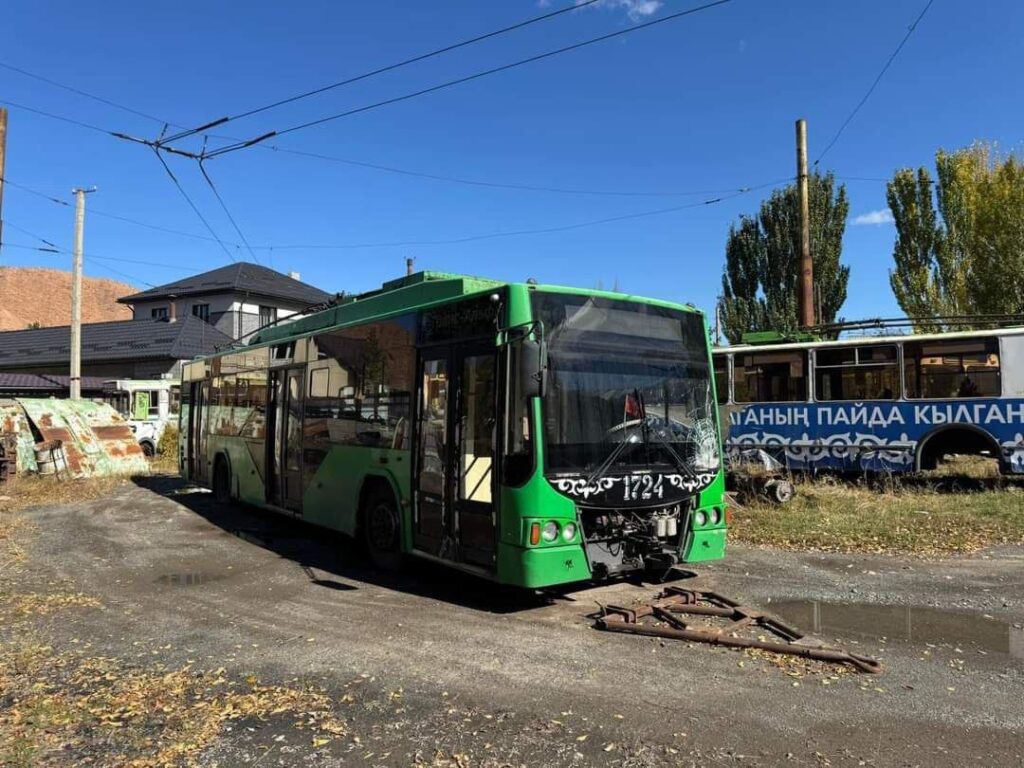
Bishkek authorities are phasing out trolleybuses in favor of buses, sparking criticism from residents and environmental advocates. Activists allege that municipal workers are dismantling trolleybus infrastructure, prompting lawsuits and complaints to the European Bank for Reconstruction and Development (EBRD), which funded trolleybus purchases for the city. The Shift to Electric Buses In defense of the decision, Mayor Aibek Junushaliyev argued that trolleybuses no longer meet the city’s needs, citing frequent breakdowns and their inability to operate effectively in Bishkek’s outskirts. Instead, the city plans to transition to large electric buses, with 120 units ordered from China’s Ankai Automobile Co., set to arrive in mid-2025. For now, public transport is provided by gasoline and gas-powered buses. The existing trolleybuses are being transferred to Osh, with approximately 100 slated for relocation. The Bishkek Trolleybus Department signed a contract with Ankai in 2022 to deliver the electric buses and charging infrastructure. The move is supported by funding from the Asian Development Bank (ADB), which has allocated $50 million to the project. [caption id="attachment_25888" align="aligncenter" width="1280"] Photo: Bermet Borubayeva[/caption] Activists Push Back Public opposition to the trolleybus phaseout is growing. Activist Bermet Borubayeva insists that Bishkek officials have no legal authority to transfer the trolleybuses. She highlighted that many were purchased using a $23.5 million EBRD loan ratified by Kyrgyzstan’s parliament, which stipulated that the vehicles must remain in Bishkek. “Citizens repay these loans through taxes, and without the EBRD’s consent, the municipality cannot transfer the trolleybuses elsewhere,” Borubayeva explained. She accused city officials of deliberately damaging trolleybus infrastructure. “They cut the wires in various places, rendering the system unusable. This violates both domestic and international laws,” she said. Despite these challenges, Borubayeva noted that activists have mobilized a significant resistance movement to preserve the trolleybuses. Environmental and Social Concerns Trolleybuses carried 20 million passengers last year without producing carbon emissions, making them vital to Bishkek’s eco-friendly public transportation. In a city grappling with severe air pollution, critics argue that phasing out trolleybuses exacerbates environmental problems. Borubayeva also questioned the city’s claims about ADB funding. “The mayor’s office says the electric bus project will replace the entire trolleybus fleet, but ADB documents indicate that only 20 trolleybuses are affected. Either the mayor’s office is misleading us, or the ADB is,” she asserted. According to ADB’s memorandum, the project includes a $59 million budget, with $50 million provided as a credit line and $15 million as a grant. The funds are primarily for electric bus procurement, along with infrastructure construction and consulting services. However, ADB representatives clarified to activists that the funding is for additional infrastructure, not an outright replacement of trolleybuses. Public Transportation in Crisis The dismantling of the trolleybus system has left Bishkek residents struggling with inadequate transportation. Buses have yet to fill the gap, leading to mounting public frustration. “We must address the public transportation crisis urgently,” MP Dastan Bekeshev said during a parliamentary session. “People cannot get to work or school on time. The trolleybuses need to be brought back into...
ADB to Help Upgrade Strategic Road in Kazakhstan

The Asian Development Bank (ADB) has approved a sovereign-guaranteed local currency loan of up to $291.49 million for KazAvtoZhol, the company overseeing the planning, construction, operation, and maintenance of Kazakhstan's national highways. This loan will support reconstructing a 208-kilometer road connecting Kyzylorda and Zhezkazgan in central Kazakhstan. The project will upgrade the existing two-lane highway to a higher-standard, climate-resilient two-lane road, providing all-weather access and reducing travel time from 4 to 2 hours. The reconstruction will also improve domestic and regional connectivity and road safety and promote national and international trade. ADB Director General for Central and West Asia Yevgeniy Zhukov commented: “By improving the Kyzylorda–Zhezkazgan corridor, we are addressing critical infrastructure constraints that hinder Kazakhstan’s economic growth and balanced regional economic development. The project road is also crucial for leveraging Kazakhstan’s geostrategic advantage and boosting regional and global integration.” Kazakhstan, the largest economy in Central Asia, is well-positioned to become a bridge between Asia and Europe. However, due to inefficiencies and high transport and logistics costs, the country needs help leveraging its strategic position. The country has also seen a high traffic fatality rate, with 12.2 deaths per 100,000 people in 2021. The ADB project incorporates rumble strips, safer pedestrian crossings, and interchanges to improve road safety. These measures are expected to significantly reduce accidents and enhance the overall safety of the road corridor.

Kazakhstan and China to Increase Cargo Transportation Along Trans-Caspian Route

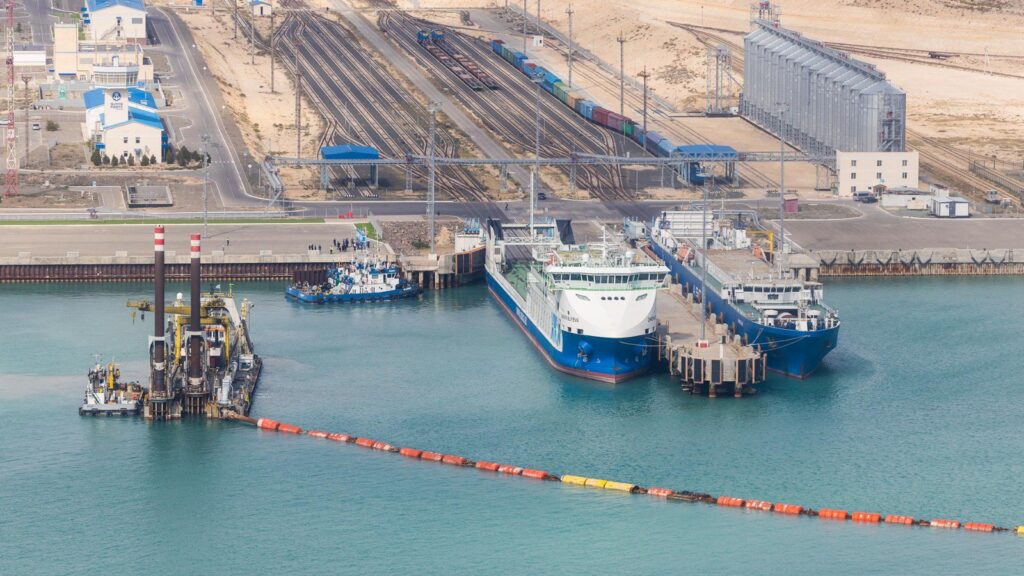
On September 25, Kazakhstan and China held the first meeting of a joint working group on cargo transportation along the Trans-Caspian International Transport Route (TITR), also known as the Middle Corridor, connecting China and Europe via Central Asia and the Caucasus. According to Kazakhstan’s Ministry of Transport, the members agreed on the projected volumes of cargo transportation from China to Europe and in the opposite direction along the TITR until the end of 2029. Kazakhstan and China will increase the volume of cargo transportation along the TITR to 600 container trains per year in 2025 and 2026. In 2027, there will be 1,000 container trains, and in 2029, there will be 2,000. Given the increase in transit container trains, the Kazakh side has committed to ensuring the appropriate infrastructure in its Caspian ports to ensure timely transportation and prevent delays. At least 50,000 standard containers will be handled (transshipped) at Kazakh ports in 2025. An increase to 85,000 containers per year is expected for 2026-2029. According to Kazakhstan's Ministry of Transport, in 2023, the volume of transit transportation between China and Europe through Kazakhstan amounted to 2.76 million tons, 65% more than in 2022 (1.7 million tons). Kazakhstan is now working to increase the transit capacity of the Aktau and Kuryk seaports. A container hub will be built in the port of Aktau, increasing transportation volume to 300,000 TEU (twenty-foot equivalent units) per year. A grain terminal will be launched in Kuryk's port later this year. Dredging of the Kuryk port is underway to ensure sufficient depth for ships to enter the harbor. Dredging works are also planned in the port of Aktau. Altogether, these measures will increase the throughput capacity of Kazakhstan’s ports by 10 million tons of cargo annually, to reach 30 million tons annually.

French Cargo Airline Plans to Use Uzbekistan’s Navoi Airport

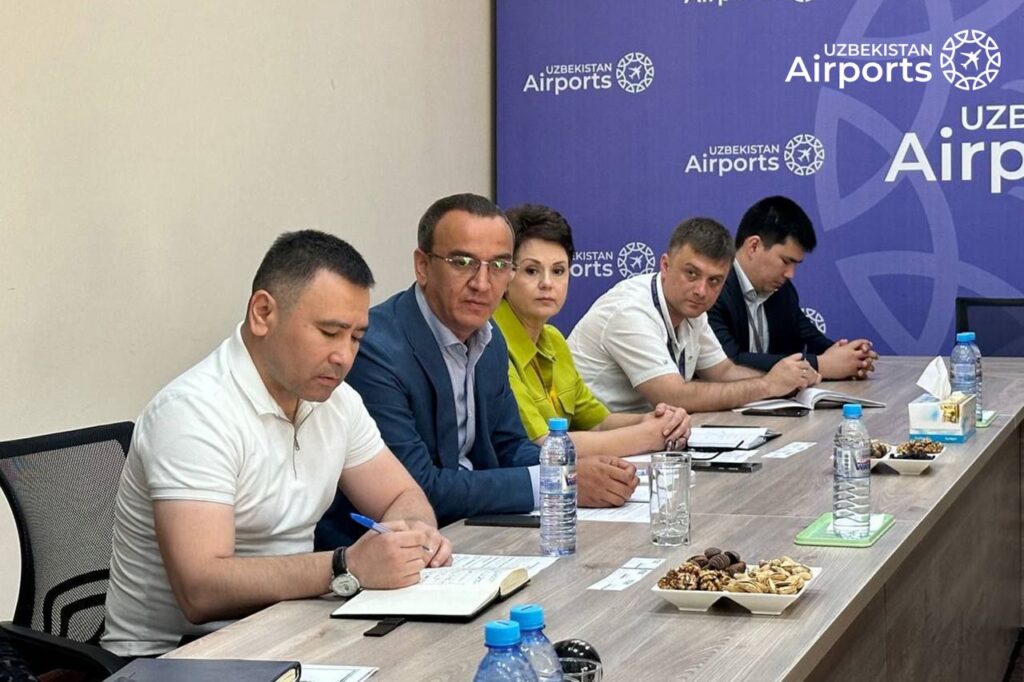
CMA CGM Air Cargo, a French cargo airline, plans to deliver cargo from China to Europe via Uzbekistan. The carrier intends to use Navoi Airport as a transit point. Representatives of Uzbekistan Airports, Uzaviation, and Uzaeronavigatsia Center recently met with the French CMA CGM Air Cargo delegation, headed by General Director Damien Mazauder, in Tashkent. The airline will carry out five flights a week on Airbus A330 aircraft, and Navoi Airport will become a transit point for technical landings, refueling, and crew changes. CMA CGM Air Cargo is headquartered in Paris; it was established in 2021 as an air division of the CMA CGM transportation group.

Uzbekistan Continues Switching Public Transport to Electric-Powered

Uzbekistan is charging ahead in 2024 on a course it began a few years ago to modernize public transport systems. Metro lines have been completed and several new stations opened in both remote and densely populated areas of Tashkent, and a plan is being developed to bring the most environmentally-friendly form of urban transport, the streetcar back to the capital. The bus fleet in Tashkent has also been significantly upgraded; now, it's mostly comprised of newer, more comfortable buses and electric buses. Against a background of serious air quality problems, the issue of reducing the number of cars on the roads has become particularly urgent. Thus, in the capital and other major cities, authorities are opting for electric modes of urban transport. The first bus powered by electricity hit the streets of Tashkent back in 2019. Last year, officials in the capital agreed to purchase 2,000 buses from China: half of them will be used in the regions and the rest in Tashkent. In early 2024, the European Bank for Reconstruction and Development (EBRD) issued a loan to Uzbekistan to buy 100 Yutong electric buses from China for the Samarkand Region. Tashkent will buy 673 electric buses - out of 1,063 total planned purchases - by 2025. From now on, only electric buses will be purchased for Uzbekistan's capital. By 2025, their share of the public transport mix of Tashkent should be 49%. It is a major component that city authorities are counting on as part of a plan to reduce the amount of carbon dioxide (CO2) in the atmosphere, reduce noise levels in the city, and improve transport safety. Uzbekistan plans to not only buy pre-assembled buses but to also produce its own. a memorandum has been signed with Lanzhou Guangtong New Energy Automobile of China to start the joint production of 2,000 electric buses annually in Uzbekistan. Uzbekistan's continued efforts at electrification of the public transport network comes against a backdrop of the low headline costs of using that transport. Numbeo, the world's largest database on the cost of living, publishes data on the cost of public transportation in different countries. according to their data, the cost of a one-way fare in Uzbekistan is $0.13. In Kazakhstan, the fare is slightly more at $0.20. Currently, there is no data on other Central Asian republics. The top three are most expensive places are Switzerland ($4), Norway ($3.76), and the Netherlands ($3.66).