• KGS/USD = 0.01144 0%
  • KZT/USD = 0.00215 0%
  • TJS/USD = 0.10599 -0.28%
  • UZS/USD = 0.00008 0%
  • TMT/USD = 0.28571 0%
  • KGS/USD = 0.01144 0%
  • KZT/USD = 0.00215 0%
  • TJS/USD = 0.10599 -0.28%
  • UZS/USD = 0.00008 0%
  • TMT/USD = 0.28571 0%
  • KGS/USD = 0.01144 0%
  • KZT/USD = 0.00215 0%
  • TJS/USD = 0.10599 -0.28%
  • UZS/USD = 0.00008 0%
  • TMT/USD = 0.28571 0%
  • KGS/USD = 0.01144 0%
  • KZT/USD = 0.00215 0%
  • TJS/USD = 0.10599 -0.28%
  • UZS/USD = 0.00008 0%
  • TMT/USD = 0.28571 0%
  • KGS/USD = 0.01144 0%
  • KZT/USD = 0.00215 0%
  • TJS/USD = 0.10599 -0.28%
  • UZS/USD = 0.00008 0%
  • TMT/USD = 0.28571 0%
  • KGS/USD = 0.01144 0%
  • KZT/USD = 0.00215 0%
  • TJS/USD = 0.10599 -0.28%
  • UZS/USD = 0.00008 0%
  • TMT/USD = 0.28571 0%
  • KGS/USD = 0.01144 0%
  • KZT/USD = 0.00215 0%
  • TJS/USD = 0.10599 -0.28%
  • UZS/USD = 0.00008 0%
  • TMT/USD = 0.28571 0%
  • KGS/USD = 0.01144 0%
  • KZT/USD = 0.00215 0%
  • TJS/USD = 0.10599 -0.28%
  • UZS/USD = 0.00008 0%
  • TMT/USD = 0.28571 0%

Viewing results 1 - 6 of 197

Rubio Hosts Critical Minerals Meeting; Central Asia Is Key to U.S. Vision

The United States welcomed delegations from dozens of countries to a meeting in Washington, D.C. on Wednesday that was aimed at strengthening and diversifying supply chains for critical minerals. With large reserves of these minerals, Central Asia is emerging as a key player in U.S. plans to secure components deemed necessary for advances in technology, economic development, and national security. "I don’t need to explain to anybody here that critical minerals are vital to the devices that we use every single day,” U.S. Secretary of State Marco Rubio said in his opening remarks at the minister-level conference. “They power our infrastructure, our industry, and our national defense… Our goal is to have a global market that's secure, a global supply that's enduring and is available to everyone, every nation, at an affordable price.” U.S. Vice President JD Vance also spoke at the event, saying the United States wants to form a trading bloc among allies and partners that expands production of critical minerals in an environment of stable prices and supply chains immune from disruption. “By regulating imports to preserve free and fair competition within the preferential trading zone, we will elevate our nation’s miners and refiners, our investors and producers alike,” Vance said. “We are all on the same team, and we need to create the economic incentives that reward people for investing and building in our countries.” The United States is seeking to counter China’s dominance of the critical minerals market. China is a key trading partner for Central Asia, whose countries aim to diversify their relationships among the major powers. Foreign Minister Yermek Kosherbayev of Kazakhstan was among those slated to attend the critical minerals conference in the United States. The visit follows intensifying discussions involving the United States and Central Asian countries on how to develop trade and investment. On Wednesday, business leaders and government officials from Central Asia and the United States gathered in Kyrgyzstan’s capital, Bishkek, for the start of the second B5+1 Business Forum.

B5+1 Forum Opens as U.S. Companies Expand Economic Footprint in Central Asia

Business leaders and government officials from Central Asia and the United States gathered in Kyrgyzstan’s capital on February 4 for the start of the second B5+1 Business Forum. Co-organized by the Kyrgyz government and the Center for International Private Enterprise (CIPE), the event is intended to bring together private companies, business associations, officials, and experts interested in expanding U.S.–Central Asia commercial ties. More than 50 U.S. companies are participating in the event. The B5+1 is the business-track counterpart to the C5+1 diplomatic format that links the United States with Kazakhstan, Kyrgyzstan, Tajikistan, Turkmenistan, and Uzbekistan. The B5+1 brings companies and policymakers together to identify barriers to investment and propose cross-border regulatory changes. This week’s meeting in Bishkek follows the inaugural B5+1 forum held in Almaty on March 14–15, 2024, which drew more than 250 stakeholders from across Central Asia and the United States. It produced 21 private-sector recommendations aimed at easing trade, improving regulations, and building regional economic integration. The Bishkek agenda is built around reviewing progress on those recommendations and setting priorities for the next phase of work. Central Asian officials have used the event to signal interest in region-wide coordination rather than country-by-country deals. In comments made in Bishkek, Kazakhstan’s Minister of Industry and Construction, Ersaiyn Nagaspaev, emphasized that foreign investors increasingly assess Central Asia as a single market, reflecting a push to align regulations and investment conditions across borders. Nagaspaev noted that more than 600 U.S. companies currently operate in Kazakhstan. Kyrgyzstan, meanwhile, used the forum to highlight domestic economic performance within that regional context. In a speech at the forum, Kyrgyzstan’s First Deputy Chairman of the Cabinet of Ministers, Daniyar Amangeldiev, said Kyrgyzstan’s economy grew by 11.1% in 2025, which he described as one of the highest growth rates in the region. Addressing the forum, U.S. Special Envoy for South and Central Asia Sergio Gor stated that the United States intends to expand its economic engagement with Central Asia. “The private sector, not intergovernmental agreements, will become the key instrument of interaction," he told those in attendance, identifying electronic commerce, artificial intelligence, critical minerals, agriculture, and transport infrastructure as priority areas. Gor noted that the American companies present at the forum represent the largest and most comprehensive U.S. commercial delegation ever to visit Central Asia. The U.S. recognizes the importance of Central Asia in global trade and connectivity, he stated. "The United States is open for business. We're open for peace. We're opening to strengthen our ties around the world. So that’s why it's fitting that the first C5 event in 2026 is this B5 + 1 forum,” Gor said, linking the Bishkek discussions to economic commitments made at the C5+1 summit in Washington in November 2025. “The Transport Corridor for Peace and Prosperity will provide reliable connectivity from Central Asia through the South Caucasus to global markets,” Gor said. “This is a historic opportunity to strengthen economic integration and long-term prosperity across the region.” During his visit to Bishkek, Gor also met with Kyrgyz President...

Jackson-Vanik Repeal Gains Momentum as U.S. Courts Central Asia

For many years, U.S. relations with Central Asia were primarily political in nature, while economic ties developed slowly. However, in the past year, engagement has intensified significantly, with recent agreements suggesting the U.S. is poised to strengthen its economic presence in the region. A recent statement by U.S. Secretary of State Marco Rubio reinforces this outlook. Calls to repeal the outdated Jackson-Vanik trade restrictions have been framed by U.S. officials as a way to facilitate trade with Central Asia and strengthen U.S. energy security. The Jackson-Vanik Amendment The Jackson-Vanik Amendment, enacted in 1974, restricts trade with countries that limit their citizens’ right to emigrate. At the time of its passage, Central Asia was still part of the Soviet Union.  The amendment prohibits granting most-favored-nation (MFN) status, government loans, and credit guarantees to countries that violate their citizens’ right to emigrate, and allows for discriminatory tariffs and fees on imports from non-market economies. The amendment was repealed for Ukraine in 2006, and for Russia and Moldova in 2012. However, it remains in effect for several countries, including Azerbaijan, Kazakhstan, Tajikistan, Turkmenistan, and Uzbekistan, which continue to receive only temporary normal trade relations. In May 2023, a bill proposing the establishment of permanent trade relations with Kazakhstan, which included repealing the Jackson-Vanik Amendment, was introduced in the U.S. Congress. A follow-up bill with similar provisions was submitted in February 2025. Then-nominee and now Secretary of State Marco Rubio previously noted that some policymakers viewed the amendment as a tool to extract concessions on human rights or to push Central Asian states toward the U.S. and away from Russia. However, he characterized such thinking as outdated, stating that, “In some cases, it is an absurd relic of the past.”  Rubio has consistently supported expanding U.S. ties with Central Asia. Expanding Cooperation In 2025, relations between the U.S. and Central Asia deepened significantly, particularly with Kazakhstan and Uzbekistan, which are seen by analysts as the primary beneficiaries of this cooperation. In late October 2025, U.S. Deputy Secretary of State Christopher Landau and U.S. Special Representative for South and Central Asia Sergio Gor visited Kazakhstan and Uzbekistan. One of the year’s major events was the Central Asia-U.S. (C5+1) summit held in Washington on November 6. Leaders of the five Central Asian states met with President Donald Trump and members of the U.S. business community. Uzbekistani President Shavkat Mirziyoyev also met with U.S. Senator Steve Daines, co-chair of the Senate Central Asia Caucus, with both sides focusing heavily on economic cooperation. At the summit, Uzbekistan finalized major commercial agreements with U.S. companies, including aircraft orders by Uzbekistan Airways and deals spanning aviation, energy, and industrial cooperation. Kazakhstan signed agreements worth $17 billion with U.S. companies in sectors including aviation, mineral resources, and digital technologies. This included a deal granting American company Cove Kaz Capital Group a 70% stake in a joint venture to develop one of Kazakhstan’s largest tungsten deposits, an agreement valued at $1.1 billion.  Further agreements were signed on critical minerals exploration. Kazakhstan and the...

Astana and Tashkent Engage Washington’s Central Asia Vector

On January 22 at the World Economic Forum in Davos, Kazakhstan’s President Kassym-Jomart Tokayev and Uzbekistan’s President Shavkat Mirziyoyev signed President Donald Trump’s new Board of Peace charter. The document matters less than what their participation signifies: recognized access to the White House and a willingness to be publicly associated with a U.S.-led initiative. This is all the more significant as Washington’s relations with several long-standing partners have recently become more fraught and publicly contested. The Central Asian response is part of that story. Their participation indicates that the Trump White House regards them as interlocutors of consequence, and that both Central Asian capitals are embracing that status. On December 1, Washington assumed the G20 presidency for 2026 and set three priorities: limiting regulatory burdens, strengthening affordable and secure energy supply chains, and advancing technology and innovation. It has also scheduled the leaders’ summit for December 14–15, 2026, in the Miami area. On December 23, Trump said that he was inviting Tokayev and Mirziyoyev to attend as guests. That invitation places Kazakhstan and Uzbekistan inside a host-defined agenda whose working tracks overlap with their strongest external bargaining assets, including energy, critical minerals potential, and transport connectivity. Trump publicly tied the invitations to discussions of peace, trade, and cooperation, which is in line with his subsequent Board of Peace invitations. Diplomatic Logic and Multi-Vectorism It is worthwhile situating these developments in the context of Central Asian cooperation, which Kazakhstan and Uzbekistan have driven as the regional core. At the August 2024 Consultative Meeting in Astana, all five leaders signed a Roadmap for the development of regional cooperation for 2025–2027, and adopted a “Central Asia 2040” conceptual framework. Tokayev and Mirziyoyev referenced their 2022 allied-relations agreement and announced plans to adopt a strategic partnership program through 2034, including large-scale joint economic and energy projects. Moscow’s preoccupation with the war in Ukraine has widened the room for maneuver by other external actors, and Central Asian capitals have pursued these opportunities selectively. For example, the EU’s then foreign-policy chief Josep Borrell visited Kazakhstan and Kyrgyzstan in early August 2024, Japan has pursued its “Central Asia plus Japan” line as a counterweight to China’s influence, and Azerbaijan has been building an energy bridge between Central Asia and Europe via the South Caucasus with Kazakhstan and Uzbekistan. Washington’s main channel into this complex is the C5+1, and the current U.S. emphasis is to create routines that survive individual summits. The U.S. Special Envoy for South and Central Asian Affairs Sergio Gor and Deputy Secretary of State Christopher Landau travelled to Kazakhstan and Uzbekistan in October 2025 ahead of the Washington summit that Trump hosted the following month for the five leaders. Such formats can concentrate attention on the implementation of standardized procurement procedures and regularized dispute resolution that new supply-chain corridors require for interoperable paperwork and predictable customs treatment. Kyrgyzstan is scheduled to host the second B5+1 forum (the business counterpart to C5+1) on February 4–5, 2026. This has already been prepared by a joint briefing...

Kazakhstan, Uzbekistan, and Azerbaijan Join Trump-Initiated Board of Peace

A new international organization, the Board of Peace, was formally established yesterday on the initiative of U.S. President Donald Trump. The charter for the board was signed on the sidelines of the World Economic Forum in Davos by representatives from 19 countries. Joining Kazakhstan and Uzbekistan as founding signatories, the other parties are Argentina, Armenia, Azerbaijan, Bahrain, Bulgaria, Hungary, Indonesia, Jordan, Qatar, Saudi Arabia, Turkey, the United Arab Emirates, Morocco, Mongolia, Pakistan, Kosovo, and Vietnam. The United States is not counted among the 19 signatories, acting instead as the initiative’s convener and chair. The Board of Peace is designed as a consultative platform rather than a treaty-based organization, with no enforcement powers and voluntary participation by member states. Following the signing, a comprehensive development plan for the Gaza Strip was unveiled, which envisions transforming the enclave into a regional economic hub by 2035, with a projected GDP of over $10 billion under the proposal. The plan includes restoring water, electricity, sewage systems, and hospitals, creating jobs, and developing coastal tourism. The concept was presented by entrepreneur Jared Kushner, Trump’s son-in-law. Kushner will serve on the Board of Peace’s executive board, alongside U.S. Secretary of State Marco Rubio, Special Envoy Steve Witkoff, World Bank President Ajay Banga, and former British Prime Minister Tony Blair, among others. The inclusion of Kazakhstan and Uzbekistan, the two largest economies in Central Asia, as founding members underscores their growing role in global diplomacy. Azerbaijan, which has recently expressed interest in joining the Central Asia-focused C5 regional format, also signed the charter. Separately, observers have begun referring to the growing cooperation between Central Asia and Azerbaijan as the “C6,” which could pave the way for greater collaboration on the development of the Trans-Caspian International Transport Route, including the Zangezur Corridor through Armenia. [caption id="attachment_42672" align="aligncenter" width="1280"] Image: president.uz[/caption] Uzbekistan’s participation reflects Tashkent’s increasingly active multi-vector foreign policy under President Shavkat Mirziyoyev, which has sought to expand the country’s diplomatic footprint beyond its immediate neighborhood. In recent years, Uzbekistan has stepped up engagement with the United States, the European Union, and the Middle East, while positioning itself as a pragmatic regional actor on development, connectivity, and post-conflict reconstruction initiatives. During the signing ceremony, President Kassym-Jomart Tokayev of Kazakhstan and Trump reportedly had a brief but cordial exchange. In a statement to the press, Ruslan Zheldibay, spokesperson for the Kazakh president, said Tokayev pointed out that Kazakhstan’s accession to the Abraham Accords was listed as item 177 in a document titled 365 Victories of President Donald Trump in 365 Days, distributed at the Davos Forum. Tokayev also wished Trump success in pursuing a “common sense” domestic policy. Trump, in turn, thanked Tokayev for supporting the Board of Peace initiative. [caption id="attachment_42673" align="aligncenter" width="2560"] Image: Akorda.kz[/caption] The press service of Akorda, the presidential residence of Kazakhstan, later clarified that joining the Board of Peace is based on a sovereign decision and entails a standard three-year term. Participation does not require a financial contribution, though the charter allows member states...

U.S. Envoy Gor Visits Turkmenistan As American Outreach to Central Asia Deepens

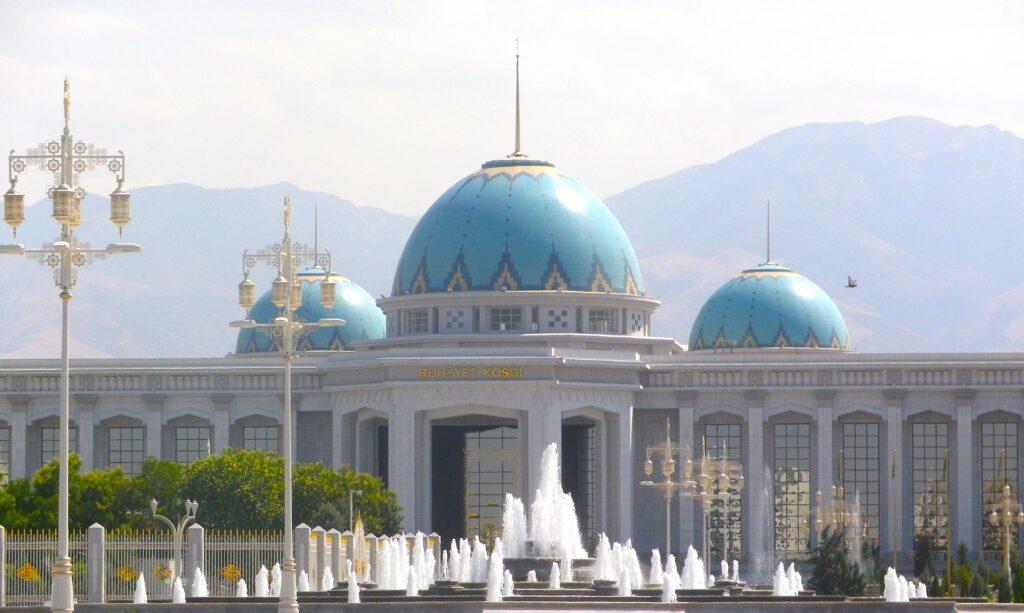
Sergio Gor, the U.S. special envoy for South and Central Asia, is on a trip to Turkmenistan as the United States expands its relationships with Central Asian countries. Gor is traveling to Turkmenistan on Thursday and Friday and will meet top government officials and business leaders to discuss regional stability and economic collaboration, the U.S. State Department said. “The United States looks forward to engaging with Turkmenistan on new opportunities for collaboration that will benefit both our nations and contribute to prosperity and security across the region,” the agency said. Turkmenistan has some of the largest natural gas reserves in the world, though the government’s tight internal controls have made it difficult for multinational companies to operate there. Gor and U.S. Deputy Secretary of State Christopher Landau traveled to Kazakhstan and Uzbekistan in October, ahead of a Washington summit that President Donald Trump hosted the following month for the leaders of those two countries, as well as Kyrgyzstan, Tajikistan and Turkmenistan. The United States is building deeper trade ties with Central Asia, aiming to benefit from its energy and other natural resources while contesting Russian and Chinese influence in the region. For their part, Central Asia countries are diversifying their relationships with the big powers while looking for opportunities to collaborate as a regional bloc.