• KGS/USD = 0.01143 0%
  • KZT/USD = 0.00206 0%
  • TJS/USD = 0.10811 -0.09%
  • UZS/USD = 0.00008 0%
  • TMT/USD = 0.28571 0%
  • KGS/USD = 0.01143 0%
  • KZT/USD = 0.00206 0%
  • TJS/USD = 0.10811 -0.09%
  • UZS/USD = 0.00008 0%
  • TMT/USD = 0.28571 0%
  • KGS/USD = 0.01143 0%
  • KZT/USD = 0.00206 0%
  • TJS/USD = 0.10811 -0.09%
  • UZS/USD = 0.00008 0%
  • TMT/USD = 0.28571 0%
  • KGS/USD = 0.01143 0%
  • KZT/USD = 0.00206 0%
  • TJS/USD = 0.10811 -0.09%
  • UZS/USD = 0.00008 0%
  • TMT/USD = 0.28571 0%
  • KGS/USD = 0.01143 0%
  • KZT/USD = 0.00206 0%
  • TJS/USD = 0.10811 -0.09%
  • UZS/USD = 0.00008 0%
  • TMT/USD = 0.28571 0%
  • KGS/USD = 0.01143 0%
  • KZT/USD = 0.00206 0%
  • TJS/USD = 0.10811 -0.09%
  • UZS/USD = 0.00008 0%
  • TMT/USD = 0.28571 0%
  • KGS/USD = 0.01143 0%
  • KZT/USD = 0.00206 0%
  • TJS/USD = 0.10811 -0.09%
  • UZS/USD = 0.00008 0%
  • TMT/USD = 0.28571 0%
  • KGS/USD = 0.01143 0%
  • KZT/USD = 0.00206 0%
  • TJS/USD = 0.10811 -0.09%
  • UZS/USD = 0.00008 0%
  • TMT/USD = 0.28571 0%

Viewing results 1 - 6 of 13

Central Asia Enters the Minerals Race

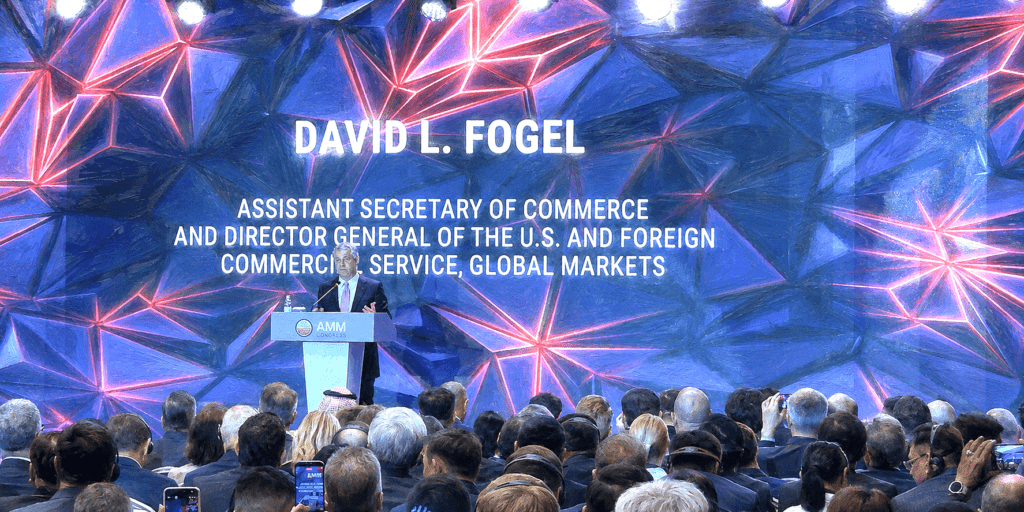
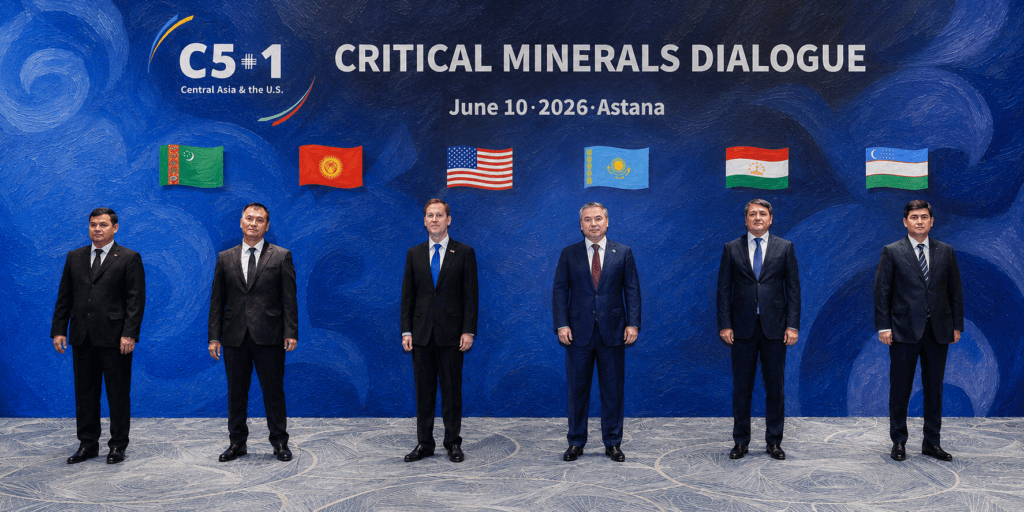
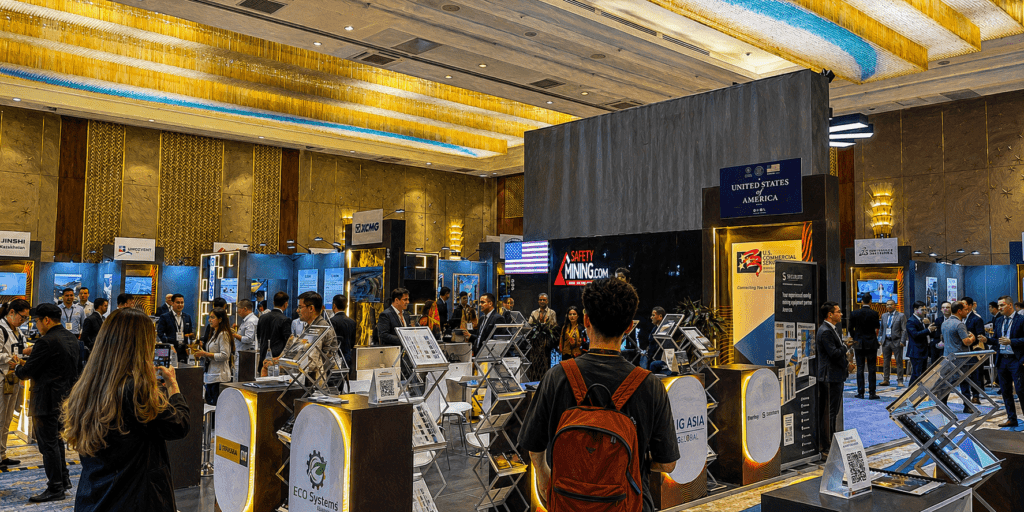
Central Asia is entering the critical minerals race at a time when deposits alone no longer confer strategic advantage. The Astana Mining & Metallurgy Congress, scheduled for June 11–12 at Hilton Astana, gives the issue operational form: supply chains, investment, and commercial projects. U.S. Under Secretary Jacob Helberg will participate there and in the preceding C5+1 Critical Minerals Dialogue on June 10–11. The Astana agenda also puts Central Asia’s role in global supply chains directly into view. The test is how quickly governments, investors, and industrial buyers can finance, process, move, and purchase minerals before they are locked into industrial supply chains. The G7 is moving in the same direction, but through institutional design rather than industrial action. The group is discussing a permanent critical minerals secretariat to maintain continuity across changing G7 presidencies, possibly at either the International Energy Agency or the OECD. The proposal acknowledges a real deficiency in Western coordination, but it also reveals the larger problem: continuity is useful only if it becomes execution. At the same time, reports have circulated about disagreements over stockpiling and leadership, including European resistance to both a single shared stockpile and a U.S.-led structure. For Central Asia, the practical question is not institutional architecture alone, but whether such coordination produces finance, processing capacity, and long-term offtake. The June dialogue in Astana is part of a wider C5+1 movement from diplomacy toward operational cooperation. Its participants are trying to convert the platform from a talk shop into a vehicle for business transactions. As TCA has reported, U.S. engagement in the region is increasingly tied to business mechanisms, export-credit support, and project finance. Kazakhstan has already moved into this framework track. Kazakhstan and the United States signed a memorandum of understanding on critical minerals cooperation during Tokayev’s November 2025 visit to Washington, and the agreement took immediate shape through the Tau-Ken Samruk–Cove Capital tungsten project. Kazakhstan’s Foreign Ministry later described the MOU as the first agreement of its kind in Central Asia, providing for processing capacity in Kazakhstan, technology transfer, and expanded access for Kazakh products to the U.S. market. In February 2026, Uzbekistan followed with its own U.S. critical minerals track: TCA reported that Tashkent signed a critical minerals MOU on February 4, and that DFC heads of terms for a Joint Investment Framework followed on February 19. Central Asian governments are not passive terrain for outside competition. Kazakhstan, with Central Asia’s most developed mining and metallurgical base, and Uzbekistan, with a rapidly expanding minerals program, are using minerals competition to attract capital and build processing capacity. They are seeking to diversify partners and move beyond dependence on raw material exports. The regional objective is industrial upgrading while preserving room for maneuver between China, Russia, the United States, Europe, and other partners. The minerals question cannot be separated from the larger Eurasian setting. Central Asia is trying to widen its own field of choice before its options are narrowed by what Hudson Institute senior fellow Ken Moriyasu called, in comments to...

Opinion: The U.S. Still Doesn’t Know Where Central Asia Belongs

Washington cannot decide where Central Asia belongs. Is it part of Europe? Asia? The Middle East? The confusion is on full display in how the House of Representatives has reassigned the region across subcommittees in rapid succession. In the 116th Congress, which convened in 2019, Central Asia fell under the Subcommittee on Europe, Eurasia, Energy and the Environment. Two years later, in the 117th Congress, it was moved to the Subcommittee on Asia, the Pacific, Central Asia and Nonproliferation. That arrangement barely settled before the 118th Congress shifted it again—this time to the Subcommittee on the Middle East, North Africa, and Central Asia. Now, in the 119th Congress, it has been relocated to the Subcommittee on South and Central Asia. On the banks of the Potomac, Central Asia has taken on a nomadic life of its own—constantly on the move, never quite settling in one place. At the State Department, Central Asia is grouped under the Bureau of South and Central Asian Affairs alongside Afghanistan, India, Pakistan, and Sri Lanka. At the Pentagon, by contrast, the Middle East team oversees relations with Central Asia, alongside countries like Israel, Saudi Arabia, Iran, and Pakistan. These mismatches are not just clumsy; they are strategically dangerous. By misplacing Central Asia, Washington is misreading the geography of China’s rise. It is time for Washington to stop the bureaucratic musical chairs and place Central Asia within a coherent grand strategy. Far from being an afterthought, the region is one of the most consequential pieces of the geopolitical puzzle facing the United States: how to respond to China’s strategy. This is because Central Asia sits at the heart of China’s decades-long effort to move its critical lifelines away from the Indo-Pacific and onto the Eurasian landmass. Over the past 15 years, China has quietly reoriented its energy routes, reducing reliance on maritime pathways vulnerable to U.S. naval dominance—particularly chokepoints such as the Strait of Hormuz and the Strait of Malacca—and expanded overland imports across Eurasia. Today, China imports significant volumes of natural gas via pipelines from Turkmenistan and Russia, as well as crude oil from Kazakhstan. These continental routes are largely insulated from maritime interdiction, giving Beijing strategic resilience. Central Asia should be understood through this lens. For China, the region is not peripheral—it is essential. The pipelines, railways and trade corridors that underpin China’s resilience all pass through Xinjiang and Central Asia. In this sense, Central Asia is not merely adjacent to China; it is embedded in China’s vision of the future. This is why Washington’s practice of grouping Central Asia with South Asia misses the mark. The two regions operate under fundamentally different strategic logics. South Asia is centered on the Indian subcontinent, shaped by maritime dynamics and the India‑Pakistan rivalry. Central Asia, by contrast, is a continental crossroads—defined by overland connectivity, energy flows and great‑power competition across Eurasia. India, meanwhile, is geographically constrained—lacking direct land access to Central Asia due to territory administered by Pakistan and separated from China by the Himalayas—leaving it...

Daines Retirement Leaves Uncertainty for Senate Central Asia Caucus

Senator Steve Daines has announced that he will not seek re-election in 2026, a decision that could have implications for congressional initiatives focused specifically on Central Asia. Daines has been among the most active advocates in Congress for strengthening U.S. engagement with the region, particularly on trade policy and economic cooperation with Kazakhstan, Kyrgyzstan, Tajikistan, Turkmenistan, and Uzbekistan. In 2024, Daines partnered with Democratic Senator Gary Peters to launch the U.S. Senate Central Asia Caucus, a bipartisan forum intended to raise the region’s profile in Washington and encourage cooperation on trade, investment, and security. The initiative reflected growing interest in Congress as Central Asia has gained strategic importance amid shifting global supply chains and efforts by governments in the region to diversify partnerships beyond Russia and China. One of the caucus’s key policy priorities has been the repeal of the Cold War-era Jackson–Vanik Amendment, which still applies to multiple former Soviet states. Its continued presence in U.S. law is widely viewed as an outdated barrier to deeper economic engagement. Momentum for its repeal has grown as policymakers seek to expand trade with Central Asia and modernize the legal framework governing U.S. economic relations with the region. Supporters argue that removing the amendment would encourage American investment in sectors such as energy, infrastructure, and critical minerals while aligning U.S. trade policy with Washington’s broader strategic outreach to Central Asia. Debate in Washington over normalizing trade relations has increasingly been framed as part of a wider push to strengthen economic ties with the region. With both Daines and Peters expected to leave the Senate by 2027, the caucus’s founding leadership will soon depart Capitol Hill, potentially narrowing the window for congressional action on the issue.

Breaking into Project Vault: A U.S. Role for Central Asia’s Strategic Minerals

The Trump Administration has decided to go head-to-head with Beijing to secure an independent supply chain for critical minerals and insulate U.S. industries from supply shocks. Among many initiatives, the United States launched Project Vault on February 2 to establish a U.S. Strategic Critical Minerals Reserve. The public-private stockpile is expected to secure essential minerals and metals for U.S. national security purposes and high-technology industries. The effort formalizes the U.S. strategy to diversify critical mineral supply chains away from rival China and, in the process, harness broader global capacity. As part of this effort, mineral-rich Central Asia is already factoring heavily in U.S. foreign and economic policy thinking. Participating in the front row of the 2026 Critical Minerals Summit, Kazakhstan and Uzbekistan were invited to engage in Washington’s global effort to build resilient global supply chains. But Project Vault is a critical and separate component of the administration’s focus. Formally approved by the Export-Import Bank of the United States (EXIM) on February 2, Project Vault will be backed with up to $10 billion in long-term financing and an additional $2 billion in private sector participation. In sites across the country, the initiative will establish stores of critical minerals and rare earth elements essential for aerospace, defense, semiconductors, advanced manufacturing, renewables, and electric vehicles. The stockpile’s structure will be operated as a public-private partnership that enables manufacturers, trading firms, and private capital providers to jointly participate. Rare earths, copper, lithium, titanium, scandium, gallium, and germanium are all key minerals highlighted by the U.S. Department of the Interior that underpin modern technologies and demonstrate U.S. vulnerability to supply chain disruptions. Why a Strategic Mineral Reserve? The initiative is a direct response to perceived risks posed by China’s relative control of global critical mineral supply chains and markets, as well as Beijing’s use of trade restrictions, protectionism, and the weaponization of access to certain critical minerals. China controls a commanding share of the mining, refining, and processing of rare earths and related materials. Due to years of strategic planning and investment, Beijing has leveraged state subsidies and pricing controls to develop and secure between 80%-100% of rare earth processing capacities that have dominated international markets and disincentivized competitors for decades. Past export controls and export-license restrictions imposed by Beijing have underscored how critical mineral supply can become a tool of geopolitical leverage. China has at times restricted rare earth exports to Japan, Sweden and the United States in what is defined by many as supply-chain protectionism. Such actions can disrupt U.S. production for industries that rely on stable supplies to manufacture semiconductors, defense systems, and clean energy technologies. Project Vault is, therefore, conceived not merely as a reserve but as a mechanism to stabilize U.S. markets, to reduce reliance on China, and to signal a long-term commitment to diversified supply chains. Much like the U.S. Strategic Petroleum Reserve acts to cushion energy price shocks, the mineral reserve is expected to serve as a similar buffer. Operational and Financial Dimensions Project Vault’s financing model expects a...

What the U.S. Really Wants in Central Asia: Behind the B5+1 Forums

The B5+1 business forum continued in Kyrgyzstan’s capital on February 5, as government officials, regional business leaders, and a sizable U.S. delegation met to discuss trade, investment, and regulatory barriers shaping economic ties between Central Asia and the United States. As Washington signals a more pragmatic, commercially driven approach to the region, questions persist over why U.S. investment has lagged behind political engagement and which markets are truly seen as priorities. The Times of Central Asia spoke with Dmitry Orlov, director of the Strategy: East–West analytical center, about the structural obstacles deterring American capital, the shift in U.S. policy thinking, and how Central Asian states are positioned within Washington’s evolving economic calculus. TCA: What serious U.S. capital investments in Central Asia can we talk about today? ORLOV: It is important to understand the main point. Talk of large investments, the arrival of American business, and long-term economic cooperation only makes sense in one case: if the U.S. repeals the Jackson-Vanik amendment, which was adopted back in the 1970s and extended to all former Soviet republics after the collapse of the USSR. Today, it remains a formal and, in many ways, psychological obstacle to a fully-fledged business partnership. At the same time, it is necessary to establish contacts at a business level right now. This is because if the amendment is repealed - and such statements are regularly heard in Washington - it is difficult to predict which countries in the region will receive investment flows and in what volumes. Recent international forums, including Davos, have shown that Kazakhstan and Uzbekistan are of the greatest interest to the U.S. in Central Asia. Their economies are developing more dynamically, and they can offer large-scale projects and a clear export base. The other countries in the region, Kyrgyzstan, Tajikistan, and Turkmenistan, are still perceived by investors as lower priorities. TCA: Previously, the U.S. actively promoted a political agenda in the region, including human rights and freedom of speech. Now these are rarely mentioned. Why do you think this is the case? ORLOV: The approach has become more pragmatic. The history of U.S. foreign policy shows that strategic and economic interests have always taken precedence. If a territory is attractive in terms of resources or transit routes, a format for cooperation will be found. In Europe, relatively speaking, the rule of law prevails. In Asia, the situation is different, and the Americans understand this perfectly well. Issues of ideology and human rights can move to the background if economic expediency comes first. This is especially true in Central Asia, where many issues are resolved through personal agreements and informal connections. Washington understands this. TCA: What exactly can Central Asia offer the U.S.? ORLOV: In terms of individual countries, Kazakhstan and Uzbekistan are again in the lead. They offer oil, gas, and, no less importantly, control over transit routes. There is currently a lot of discussion about rare earths and critical minerals, but their development is always long and expensive. As a result, interest in...

Rubio Hosts Critical Minerals Meeting; Central Asia Is Key to U.S. Vision

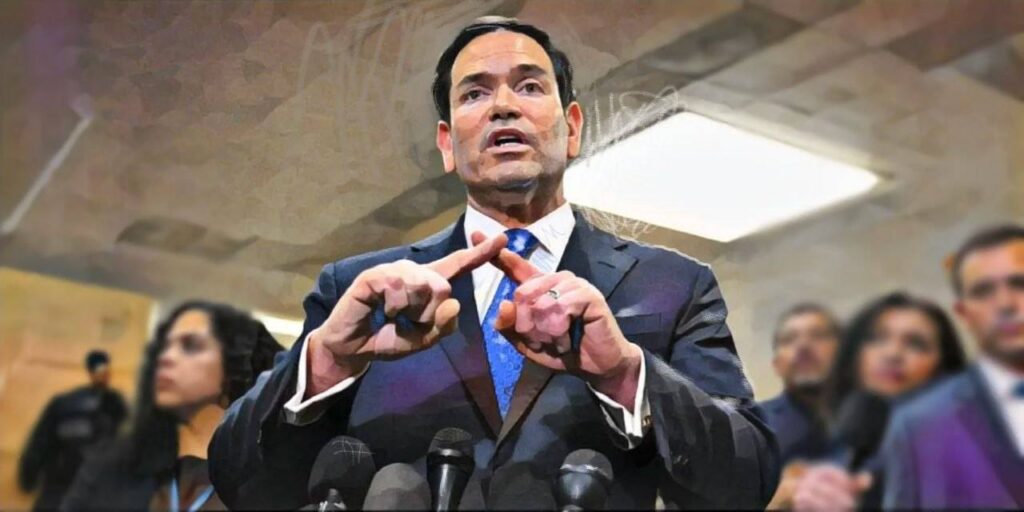
The United States welcomed delegations from dozens of countries to a meeting in Washington, D.C. on Wednesday that was aimed at strengthening and diversifying supply chains for critical minerals. With large reserves of these minerals, Central Asia is emerging as a key player in U.S. plans to secure components deemed necessary for advances in technology, economic development, and national security. "I don’t need to explain to anybody here that critical minerals are vital to the devices that we use every single day,” U.S. Secretary of State Marco Rubio said in his opening remarks at the minister-level conference. “They power our infrastructure, our industry, and our national defense… Our goal is to have a global market that's secure, a global supply that's enduring and is available to everyone, every nation, at an affordable price.” U.S. Vice President JD Vance also spoke at the event, saying the United States wants to form a trading bloc among allies and partners that expands production of critical minerals in an environment of stable prices and supply chains immune from disruption. “By regulating imports to preserve free and fair competition within the preferential trading zone, we will elevate our nation’s miners and refiners, our investors and producers alike,” Vance said. “We are all on the same team, and we need to create the economic incentives that reward people for investing and building in our countries.” The United States is seeking to counter China’s dominance of the critical minerals market. China is a key trading partner for Central Asia, whose countries aim to diversify their relationships among the major powers. Foreign Minister Yermek Kosherbayev of Kazakhstan was among those slated to attend the critical minerals conference in the United States. The visit follows intensifying discussions involving the United States and Central Asian countries on how to develop trade and investment. On Wednesday, business leaders and government officials from Central Asia and the United States gathered in Kyrgyzstan’s capital, Bishkek, for the start of the second B5+1 Business Forum.