• KGS/USD = 0.01144 0%
  • KZT/USD = 0.00213 0%
  • TJS/USD = 0.10562 0%
  • UZS/USD = 0.00008 0%
  • TMT/USD = 0.28530 0%
  • KGS/USD = 0.01144 0%
  • KZT/USD = 0.00213 0%
  • TJS/USD = 0.10562 0%
  • UZS/USD = 0.00008 0%
  • TMT/USD = 0.28530 0%
  • KGS/USD = 0.01144 0%
  • KZT/USD = 0.00213 0%
  • TJS/USD = 0.10562 0%
  • UZS/USD = 0.00008 0%
  • TMT/USD = 0.28530 0%
  • KGS/USD = 0.01144 0%
  • KZT/USD = 0.00213 0%
  • TJS/USD = 0.10562 0%
  • UZS/USD = 0.00008 0%
  • TMT/USD = 0.28530 0%
  • KGS/USD = 0.01144 0%
  • KZT/USD = 0.00213 0%
  • TJS/USD = 0.10562 0%
  • UZS/USD = 0.00008 0%
  • TMT/USD = 0.28530 0%
  • KGS/USD = 0.01144 0%
  • KZT/USD = 0.00213 0%
  • TJS/USD = 0.10562 0%
  • UZS/USD = 0.00008 0%
  • TMT/USD = 0.28530 0%
  • KGS/USD = 0.01144 0%
  • KZT/USD = 0.00213 0%
  • TJS/USD = 0.10562 0%
  • UZS/USD = 0.00008 0%
  • TMT/USD = 0.28530 0%
  • KGS/USD = 0.01144 0%
  • KZT/USD = 0.00213 0%
  • TJS/USD = 0.10562 0%
  • UZS/USD = 0.00008 0%
  • TMT/USD = 0.28530 0%

Viewing results 1 - 6 of 65

Tokayev Calls for Global Action at UN LLDC3 Summit in Turkmenistan

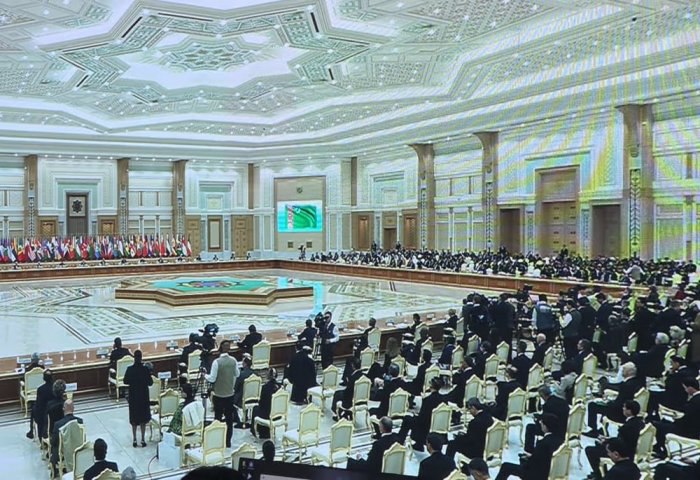
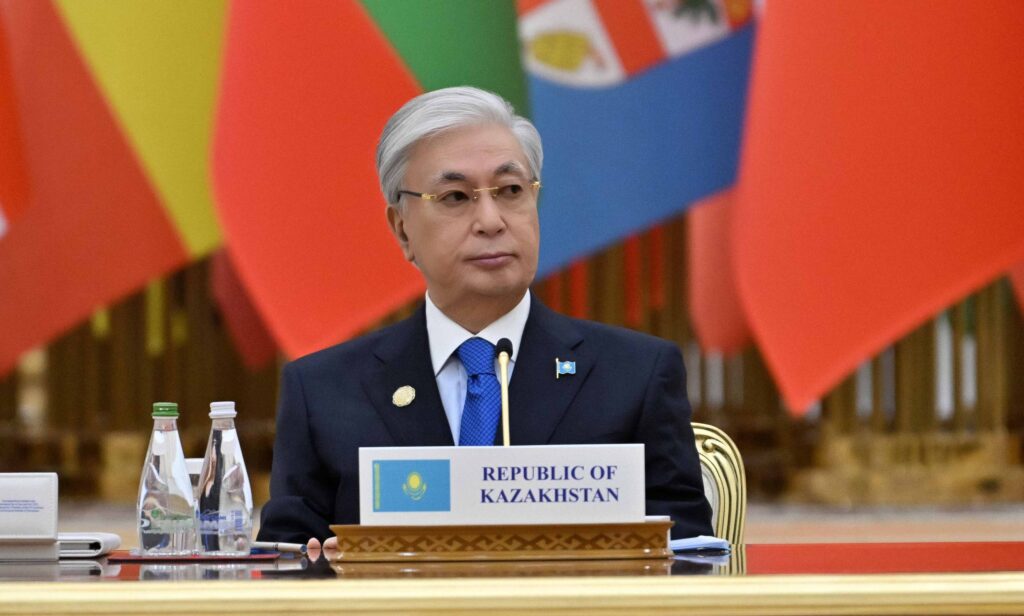
At the Third United Nations Conference on the Landlocked Developing Countries (LLDC3), held from August 5-8 in the Turkmen resort town of Awaza, Kazakhstan’s President Kassym-Jomart Tokayev urged the international community to deepen cooperation, enhance regional connectivity, and take decisive collective action in support of the 32 countries that lack direct access to the sea and remain on the periphery of global trade. A Global Call for Equality and Interconnectedness Speaking at the plenary session, Tokayev highlighted Kazakhstan’s leadership in advancing the LLDC agenda. In 2003, Almaty hosted the first UN conference on landlocked countries, which culminated in the Almaty Programme of Action (APoA). Two decades later, the president noted, structural barriers, such as limited market access, underdeveloped infrastructure, and high exposure to geopolitical shocks, remain largely unchanged. “Landlocked countries should be seen as equal and promising partners in global development,” Tokayev said. “Our voice must be louder and our cooperation deeper.” [caption id="attachment_34680" align="alignnone" width="300"] @akorda[/caption] The Awaza Action Programme: A Roadmap for 2024-2034 The centerpiece of LLDC3 was the adoption of the Awaza Action Programme for the coming decade, structured around five strategic priorities: structural transformation of economies, development of sustainable infrastructure, trade facilitation, regional integration, and resilience. Kazakhstan endorsed the plan and called for stronger political and financial support from transit countries, international institutions, and private investors. Tokayev emphasized the need for innovative financing tools to mobilize investment in transport, energy, and digital infrastructure. Addressing the Climate Challenge The president also highlighted the disproportionate climate-related vulnerabilities faced by LLDCs, including water scarcity, glacial melt, and desertification. He called for a balanced and inclusive approach to climate policy and invited participants to the Regional Environmental Summit, scheduled for April 2026 in Astana, to be co-hosted with the United Nations. Tokayev also pointed to Kazakhstan’s recent achievements in digital innovation and sustainability, citing the launch of the Alem.AI Artificial Intelligence Center and the commissioning of a new national supercomputer. “We are open to international scientific cooperation,” he said. [caption id="attachment_34681" align="alignnone" width="300"] @akorda[/caption] Central Asia as a Model of Regional Resilience Despite geographic constraints, Tokayev presented Central Asia as a case study in overcoming isolation through cooperation. “Geography does not determine destiny,” he said. “With political will, strategic investment, and international partnership, lack of access to the sea can become not a barrier but a source of growth.” Kazakhstan is investing heavily in transport corridors such as the Middle Corridor (Trans-Caspian International Route) and the North-South Corridor, strengthening its role in the Eurasian logistics network. Energy Diplomacy and Regional Projects On the sidelines of the conference, Central Asian leaders convened for informal talks, where they discussed priority areas of cooperation, including energy. Topics included development of Turkmenistan’s Galkynysh Gas Field, one of the world’s largest, and ongoing transport projects such as the Kazakhstan-Turkmenistan-Iran railway and the Turkmenbashi-Garabogaz-Kazakhstan border highway. According to the UN, trade costs in LLDCs are 74% higher than in coastal states, and cross-border shipping takes twice as long. Collectively, these countries account for only 1.2% of...

UN’s Guterres Back in Central Asia for Meetings About Development

United Nations Secretary-General António Guterres is traveling to Central Asia this weekend to help promote stability and transformation in the region, his office says.  Guterres will be in Kazakhstan on Sunday to witness, alongside President Kassym-Jomart Tokayev, the signing of a host country agreement for a U.N. regional center for sustainable development goals for Central Asia and Afghanistan. Kazakhstan’s envoy to the U.N., Kairat Umarov, has said that the initiative aims to strengthen regional economies and trade networks, create jobs and cut migration flows.   “We are confident that over time, economic stability will pave the way for a gradual political transformation of Afghanistan, including progress in the field of women’s rights,” Umarov has said.  Trade between Central Asia and Afghanistan is increasing, but there are international concerns about Taliban-ruled Afghanistan’s humanitarian crisis, the threat of terrorism and human rights violations, particularly toward women and girls.  After the stop in Kazakhstan, Guterres will go to Awaza, Turkmenistan, to attend a U.N. conference on landlocked, developing countries.  “He will reaffirm the need to help the landlocked developing countries overcome physical barriers and connect to global markets, including by leveraging artificial intelligence to strengthen early warning systems,” said Farhan Haq, deputy spokesman for Guterres.  The August 5-8 conference will explore ways to expand the economic potential of countries that lack direct ocean access and rely on transit nations, thereby facing obstacles to trade and development. Countries that are classified as landlocked and developing by the conference include Afghanistan, ​Kazakhstan, Kyrgyzstan, Tajikistan, Turkmenistan and Uzbekistan.

UN Adopts AI Resolution for Central Asia at Tajikistan’s Initiative

On July 25, 2025, the United Nations General Assembly unanimously adopted a resolution titled “The Role of Artificial Intelligence in Creating New Opportunities for Sustainable Development in Central Asia.” The resolution was spearheaded by Tajikistan. A Historic Decision by the General Assembly According to Tajikistan’s Ministry of Foreign Affairs, the resolution sets a “historic precedent” in shaping a global framework for the ethical and secure use of artificial intelligence. It also emphasizes the importance of responsible governance, including mechanisms for national and regional self-regulation and oversight of AI technologies. Regional AI Center to Be Established in Dushanbe A central component of the resolution is the proposal to establish a Regional Artificial Intelligence Center in Dushanbe. The center will coordinate AI-related efforts across Central Asian countries, facilitating joint research, startup development, specialist training, and regulatory alignment. The center’s key objectives include: Launching joint educational initiatives and supporting AI start-ups via regional technology parks; Promoting scientific and applied research at universities, laboratories, and research institutes throughout Central Asia; Creating a unified data center network to improve access to computational resources; Harmonizing national monitoring and self-regulation systems in AI; Advancing international cooperation with global partners and specialized organizations. Tajikistan Steps onto the Global AI Stage The resolution stresses the need to develop “safe, trustworthy, and transparent AI systems,” promoting a balance between innovation and regulatory oversight. This, it states, will support sustainable development and digital transformation across the region. Tajikistan’s initiative, culminating in this UN resolution, marks a significant step in the country’s aspirations to position itself as a regional hub for artificial intelligence.

Melting Mountains, Drying Futures: Central Asia Confronts Water Emergency

Central Asian countries are mobilizing against an emerging water crisis as a United Nations report highlights the vulnerability of mountain water systems to climate change. Identifying ranges like the Tien Shan and the Pamirs, the UN World Water Development Report 2025 – Mountains and Glaciers: Water Towers – warns that rapid glacier melt and erratic snowfall are threatening vital freshwater supplies worldwide. According to the report, mountains provide up to 60% of the world’s annual freshwater flows, with over two billion people depending directly on water from mountain sources. This risk is particularly acute in Central Asia: a UN drought outlook noted that rising temperatures and shrinking snowpack in the high mountains of Tajikistan and Kyrgyzstan are accelerating glacier retreat, posing a “long-term threat to the region’s water security.” Half of rural mountain communities in developing countries already face food insecurity, and receding glaciers could impact two-thirds of all irrigated agriculture globally – a dire scenario for Central Asia’s irrigation-dependent economies. Rivers like the Amu Darya and Syr Darya are fed by glacier runoff and support downstream agriculture, hydropower, and municipal needs in Uzbekistan, Kazakhstan, and Turkmenistan. But climate-driven glacial retreat, inefficient irrigation, and aging infrastructure have already pushed the region toward a breaking point. [caption id="attachment_33952" align="aligncenter" width="2560"] Lake Karakul in Tajikistan is expanding due to melting glaciers; image: TCA, Stephen M. Bland[/caption] Kazakhstan Steps Up Leading the regional response, Kazakhstan has launched sweeping reforms to modernize its water infrastructure and governance. The country has committed to building 42 new reservoirs, refurbishing 14,000 kilometers of irrigation canals, and investing heavily in digital water monitoring and conservation. Established in September 2023, the Ministry of Water Resources and Irrigation is coordinating the overhaul under an updated national Water Code. The government has also launched an integrated water portal, hydro.gov.kz, and pledged to digitize more than 3,500 kilometers of canals for precise flow tracking. In an address at the Astana International Forum, Deputy Prime Minister Kanat Bozumbayev framed water as a “powerful driver of cooperation, sustainable development and regional stability,” urging closer regional coordination. Kazakhstan is also leading environmental restoration efforts. As the current chair of the International Fund for Saving the Aral Sea (IFAS), it is overseeing projects to rehabilitate the North Aral Sea, including raising the Kokaral Dam to restore water levels and fisheries. In 2024 alone, local irrigation reforms in Kyzylorda saved 200 million cubic meters of water, which was redirected toward the shrinking sea. [caption id="attachment_12017" align="aligncenter" width="2560"] The Kokaral Dam in Kazakhstan; image: TCA, Stephen M. Bland[/caption] International Support and Financing Kazakhstan’s strategy has been backed by a plethora of international partners. The European Bank for Reconstruction and Development (EBRD) has financed over €255 million in water and wastewater projects in Kazakhstan, including a €96.4 million sovereign loan for a new treatment plant in Aktobe. Meanwhile, the Eurasian Development Bank (EDB) and UNDP have launched a regional partnership to expand access to modern irrigation, digitize water flows, and establish training centers. “We must act very quickly and...

Uzbekistan Rejects UN Allegations in Gulnara Karimova Case

The government of Uzbekistan has formally rejected allegations by the United Nations Human Rights Council’s Working Group on Arbitrary Detention concerning the case of Gulnara Karimova, the eldest daughter of the country’s late president, Islam Karimov. The UN body had earlier declared that Karimova’s 2014 detention was arbitrary and lacked a legal basis. In a response published by Uzbekistan’s National Center for Human Rights, the government asserted that all criminal proceedings against Karimova were conducted in full compliance with national legislation and international obligations, including the International Covenant on Civil and Political Rights. “The government is concerned that the Working Group formed its opinion based on one-sided and subjective information provided by the source, while Uzbekistan’s official response was not taken into account due to procedural deadlines,” the statement read. “This approach undermines the principles of impartiality that UN bodies must observe.” Legal Process and Rights of the Defendant According to the statement, Karimova had access to legal counsel throughout the legal process. She retained the right to choose or be appointed a lawyer, to review case materials, to appeal court decisions, and to consult privately with her legal representative. The government rejected claims that she had been subjected to extended house arrest without due process or that she faced a so-called “kitchen trial.” Officials maintained that all procedures and hearings were held lawfully. “At present, she has the right to appeal court decisions as provided by law,” the statement noted. Authorities also dismissed any suggestion that the prosecution was politically motivated. “All actions by law enforcement and judicial authorities were based solely on legal and factual grounds confirming the defendant’s guilt, and were unrelated to her economic activities, political status, or views,” the statement read. Karimova was convicted of tax evasion, money laundering, illegal appropriation of state property, fraud, and other serious crimes. According to the government, these actions resulted in significant financial losses to the state. Officials stated that all verdicts were supported by evidence and issued by competent courts. International Cooperation and Asset Repatriation The statement also drew attention to the 2022 agreement between Uzbekistan and Switzerland to establish the Vision 2030 Fund, financed by assets previously associated with Karimova. The fund supports Uzbekistan’s national reform agenda and the UN Sustainable Development Goals and is administered through the UN Multi-Partner Trust Fund. In closing, the government reaffirmed its commitment to international human rights obligations and expressed its willingness to maintain constructive dialogue with UN mechanisms. “The government reserves the right to defend its reputation in international institutions and to convey reliable information to all interested parties,” the statement concluded.

Almosi Valley in Tajikistan Recognized as Global Agricultural Heritage Site

The Almosi mountain valley in Tajikistan’s Gissar district has been designated as a Globally Important Agricultural Heritage System (GIAHS) by the Food and Agriculture Organization (FAO) of the United Nations. The decision was announced on July 8 during a meeting of the FAO’s Scientific Advisory Group. A Milestone for Central Asia Tajikistan is now the first country in the post-Soviet space to have one of its agricultural landscapes recognized by the GIAHS program. Until now, only 12 agroecosystems across five European nations, Austria, Spain, Italy, Portugal, and Andorra, had received such recognition. Tajikistan’s inclusion marks a significant acknowledgment of Central Asia’s rich agricultural legacy and its global relevance. GIAHS sites are selected not only for their scenic beauty but also for their enduring agricultural practices and deep-rooted human-nature interaction. According to FAO materials, these systems demonstrate high levels of agrobiodiversity, sustainable production, centuries-old agricultural knowledge, and strong community ties to the environment. Almosi exemplifies these values. In its mountainous terrain, farmers engage in transhumant sheep herding and the cultivation of crops such as wheat, barley, vegetables, and the prized pink Taifi grape, used for raisins, syrups, juice, and wine. The valley is also home to the Gissar sheep breed, developed for resilience in high-altitude conditions. Preserving Tradition and Biodiversity Agriculture in Almosi relies on traditional techniques, including contour planting, organic fertilization, and irrigation through ancient canal systems. Farmers monitor natural indicators to optimize water use and adapt to climatic shifts, ensuring both productivity and environmental preservation. Community organization is another hallmark of the Almosi model. Farming is managed through mahalla committees, cooperatives, family farms, and even remnants of collective farming structures. This supports intergenerational knowledge transfer, shared resource management, and social cohesion. GIAHS designation not only affirms Almosi’s global agricultural significance but also opens avenues for sustainable development. Opportunities include eco-tourism, enhanced agricultural investment, and broader recognition of Tajikistan’s rural heritage. With new entries from Tajikistan, South Korea, and Portugal, the GIAHS network now includes 99 recognized systems in 29 countries. Almosi stands as the first in the Commonwealth of Independent States (CIS), a testament to the region’s enduring agricultural traditions and its capacity for innovation grounded in history.